
Close Menu
    Facebook X (Twitter) Instagram
    SciTechDaily
    • Biology
    • Chemistry
    • Earth
    • Health
    • Physics
    • Science
    • Space
    • Technology
    Facebook X (Twitter) Pinterest YouTube RSS
    SciTechDaily
    Home»Science»Lab Experiment to Determine if Antimatter Weighs More than Baryonic Matter
    Science

    Lab Experiment to Determine if Antimatter Weighs More than Baryonic Matter

    By SciTechDailyJanuary 28, 2012No Comments2 Mins Read
    Facebook Twitter Pinterest Telegram LinkedIn WhatsApp Email Reddit
    Share
    Facebook Twitter LinkedIn Pinterest Telegram Email Reddit
    CERN-antimatter
    Researchers are conducting lab experiments to investigate whether antimatter behaves differently in gravity compared to baryonic matter.

    Physicists at the University of California, Riverside, have set forward lab experiments to determine if antimatter behaves differently in gravity than baryonic matter. This could provide an explanation why the Universe doesn’t seem to have much antimatter and why it’s expanding at an ever-increasing rate.
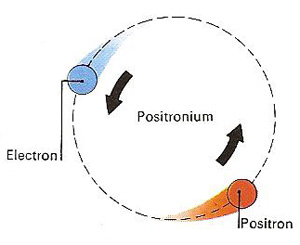
    positronium-electron-positronThe researchers are trying to measure the free fall of positronium, a bound state between a positron and an electron. Positrons are the antimatter equivalent of electrons, and have identical mass, but a positive charge. When a positron and electron collide, they annihilate and produce two gamma rays.

    David Cassidy and Allen Mills separated the positron from the electron in positonium in order to have enough time to measure the effect of gravity on it. The unstable system has to resist annihilation long enough for this to happen.

    Lasers were used to excite positronium into a Rydberg state, rendering the atom very weakly bound. This stopped them from destroying each other for a while, allowing enough time for lab experiments to be performed.

    At the Rydberg level, the positronium’s lifetime increases by a factor of 10 to 100. They plan on using a technique that imparts high angular momentum to Rydberg atoms, allowing for a lifetime of about 10 milliseconds, an increase of 10,000.

    Once they have attained this, they will use the positronium to make a beam and look at its deflection as a function of light. If antimatter and matter don’t behave in the same way, it would come as a surprise as this is what has been assumed. Since there hasn’t been much antimatter discovered, scientists have been trying to find explanations why this is the case.

    Never miss a breakthrough: Join the SciTechDaily newsletter.
    Follow us on Google and Google News.

    Antimatter Dark Matter Matter Particle Physics Weight
    Share. Facebook Twitter Pinterest LinkedIn Email Reddit

    Related Articles

    Illuminating Dark Matter Through Glimmers of Antimatter in Cosmic Rays

    Cracking One of the Universe’s Biggest Mysteries: “The Most Precise Measurement Yet” of Electron’s Permanent Electric Dipole Moment

    Electron Asymmetry and the Mystery of Matter’s Existence: A Record-Breaking Study

    41-Million-Pixel Vertex Locator May Unlock Some of the Most Enduring Mysteries of the Universe

    Dark Matter Detection: Repurposing Optomechanical Accelerometers to Search for Dark Matter

    Underground Dark Matter Search Experiment Reaches Major Milestone

    New Antimatter Experiment at Large Hadron Collider Will Help With the Search for Dark Matter

    LUX Dark Matter Detector Completes First 90-Days of Operation

    The Search for the God Particle Narrows

    Leave A Reply Cancel Reply

    • Facebook
    • Twitter
    • Pinterest
    • YouTube

    Don't Miss a Discovery

    Subscribe for the Latest in Science & Tech!

    Trending News

    Scientists Discover 132-Million-Year-Old Dinosaur Tracks on South Africa’s Coast

    Scientists Uncover the Secret Ingredient Behind the Spark That May Have Started Life on Earth

    Physicists Observe Matter in Two Places at Once in Mind-Bending Quantum Experiment

    Stanford Scientists Discover Hidden Brain Circuit That Fuels Chronic Pain

    New Study Reveals Why Ozempic Works Better for Some People Than Others

    Climate Change Is Altering a Key Greenhouse Gas in a Way Scientists Didn’t Expect

    New Study Suggests Gravitational Waves May Have Created Dark Matter

    Scientists Discover Why the Brain Gets Stuck in Schizophrenia

    Follow SciTechDaily
    • Facebook
    • Twitter
    • YouTube
    • Pinterest
    • Newsletter
    • RSS
    SciTech News
    • Biology News
    • Chemistry News
    • Earth News
    • Health News
    • Physics News
    • Science News
    • Space News
    • Technology News
    Recent Posts
    • Groundbreaking Enzyme Atlas Rewrites Decades of Biology Research
    • New “Nanozyme Hypothesis” Could Rewrite the Story of Life’s Origins
    • Anatomy Isn’t Finished: The Human Body Still Holds Secrets
    • Researchers Discover Long-Lost Words of Ancient Greek Philosopher After 2,000 Years
    • New Study Warns: Asia’s Lifeline Water Source Is Rapidly Draining
    Copyright © 1998 - 2026 SciTechDaily. All Rights Reserved.
    • Science News
    • About
    • Contact
    • Editorial Board
    • Privacy Policy
    • Terms of Use

    Type above and press Enter to search. Press Esc to cancel.