
Scientists at Stowers Institute collaborate to discover an underlying cause of male infertility.
Infertility affects countless couples globally, and in half of these cases, the problem lies with the male partner. Specifically, about 10% of these men face the challenge of producing minimal or no sperm. Recent research conducted jointly by the Stowers Institute for Medical Research and the Wellcome Centre for Cell Biology at the University of Edinburgh are providing insights into the malfunctions occurring during sperm development. This research opens doors to new hypotheses regarding potential treatment methods.
“A significant cause of infertility in males is that they just cannot make sperm,” said Stowers Investigator Scott Hawley, Ph.D. “If you know exactly what is wrong, there are technologies emerging right now that might give you a way to fix it.”
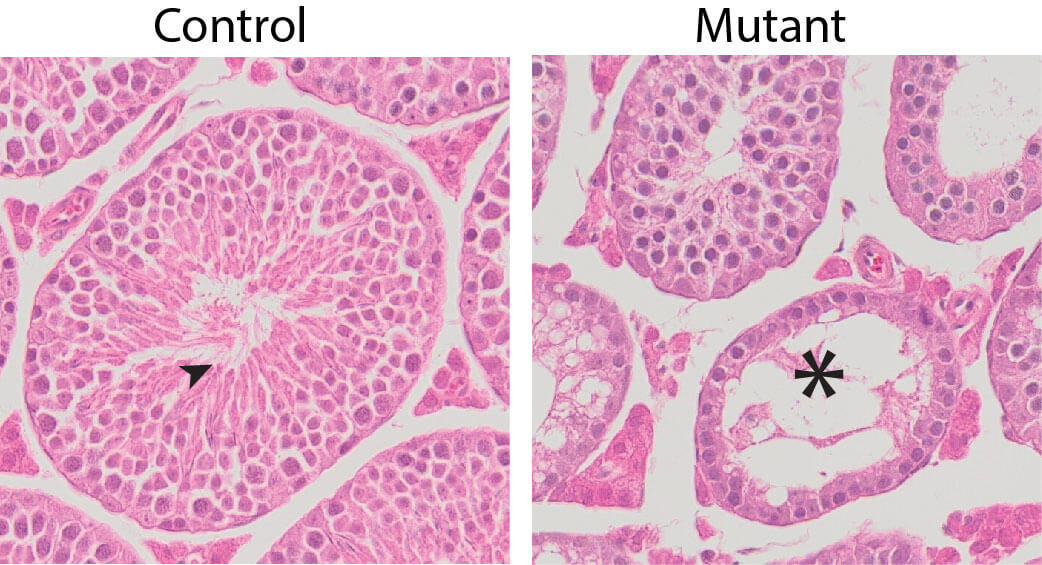
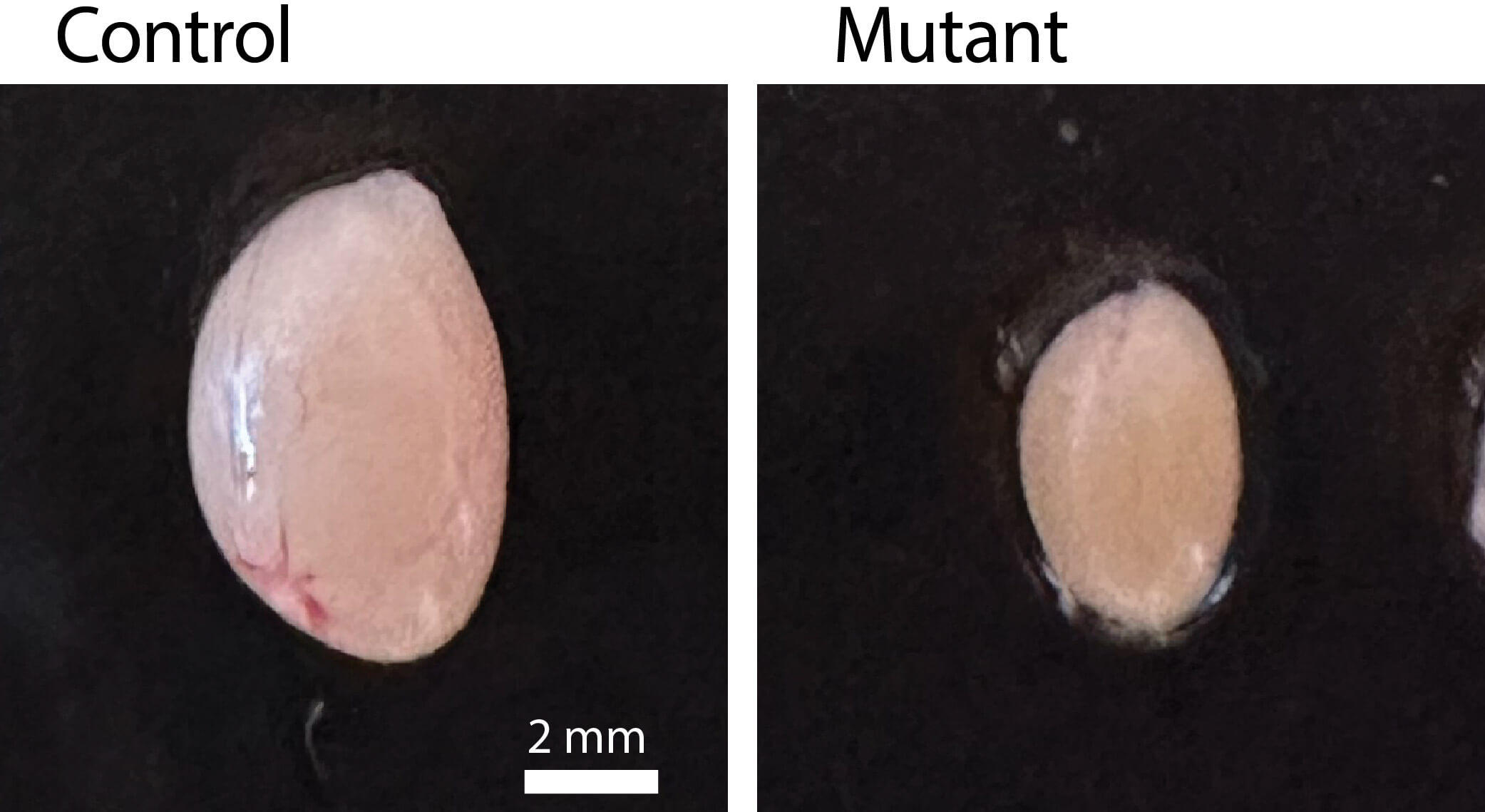
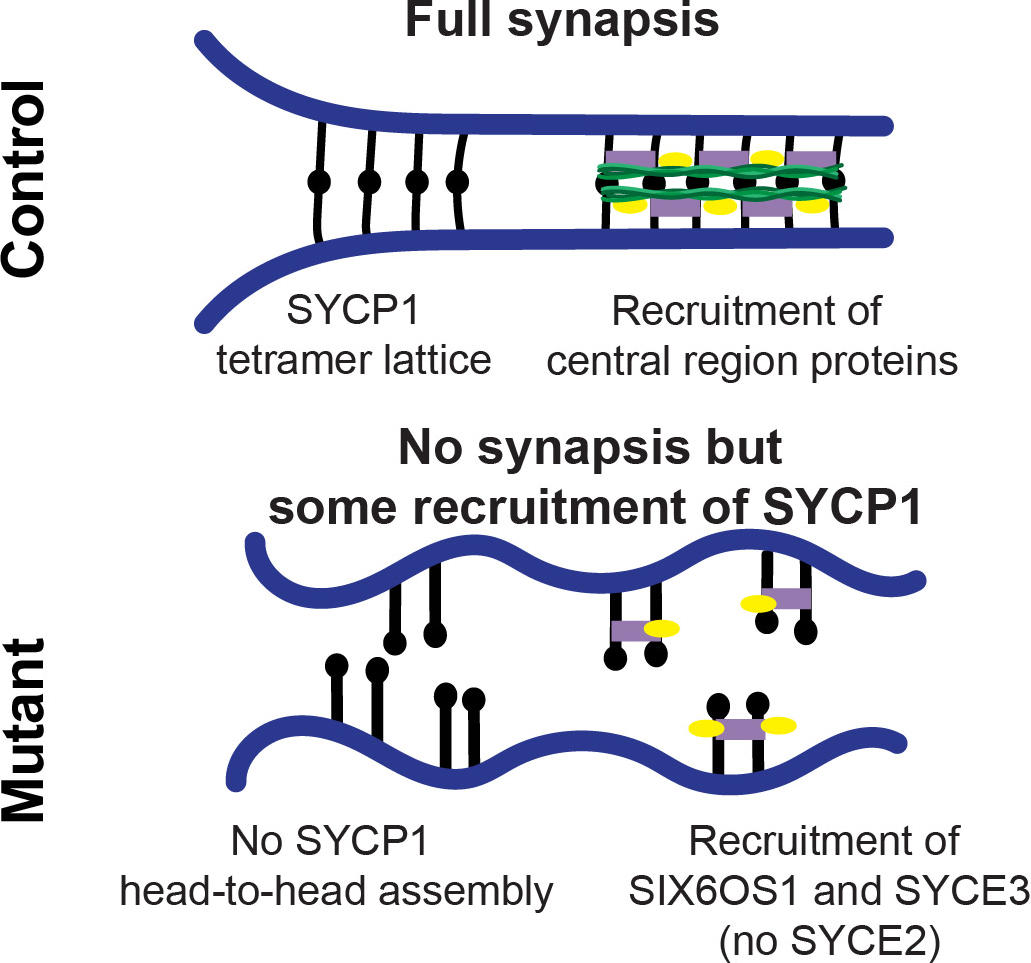
The study recently published in Science Advances from the Hawley Lab and Wellcome Centre Investigator Owen Davies, Ph.D., may help explain why some men do not make enough sperm to fertilize an egg. In most sexually reproducing species, including humans, a critical protein structure resembling a lattice-like bridge needs to be built properly to produce sperm and egg cells. The team led by former Postdoctoral Research Associate Katherine Billmyre, Ph.D., discovered that in mice, changing a single and very specific point in this bridge caused it to collapse, leading to infertility and thus providing insight into human infertility in males due to similar problems with meiosis.
A video explaining the findings. Credit: Stowers Institute for Medical Research
The Role of Meiosis in Reproductive Health
Meiosis, the cell division process giving rise to sperm and eggs, involves several steps, one of which is the formation of a large protein structure called the synaptonemal complex. Like a bridge, the complex holds chromosome pairs in place enabling necessary genetic exchanges to occur that are essential for the chromosomes to then correctly separate into sperm and eggs.
“A significant contributor to infertility is defects in meiosis,” said Billmyre. “To understand how chromosomes separate into reproductive cells correctly, we are really interested in what happens right before that when the synaptonemal complex forms between them.”
Previous studies have examined many proteins comprising the synaptonemal complex, how they interact with each other, and have identified various mutations linked to male infertility. The protein the researchers investigated in this study forms the lattices of the proverbial bridge, which has a section found in humans, mice, and most other vertebrates suggesting it is critical for assembly. Modeling different mutations in a potentially crucial region in the human protein enabled the team to predict which of these might disrupt protein function.
The authors used a precise gene editing technique to make mutations in one key synaptonemal complex protein in mice, which allowed the researchers, for the first time, to test the function of key regions of the protein in live animals. Just a single mutation, predicted from the modeling experiments, was verified as the culprit of infertility in mice.
“We’re talking about pinpoint surgery here,” said Hawley. “We focused on a tiny little region of one protein in this gigantic structure that we were pretty sure could be a significant cause of infertility.”
Implications for Human Health
Mice have long been used as models for human diseases. From the modeling experiments using human protein sequences, along with the high conservation of this protein structure across species, the precise molecule that caused infertility in mice likely functions the same way in humans.
“What is really exciting to me is that our research can help us understand this really basic process that is necessary for life,” said Billmyre.
For Hawley, this research is a true representation of the versatility of the Institute. Hawley’s lab typically conducts research in fruit flies, yet the protein discovered in this study was not present in fruit flies and demanded a different research organism to continue. Because of the resources and Technology Centers at the Institute, it was possible to quickly pivot and test the new infertility hypothesis in mice.
“I can’t imagine another place where this could happen,” said Hawley. “I think it’s an amazing example of how the Stowers Institute’s dedication toward discovery can yield big results providing important leaps forward in understanding.”
Reference: “SYCP1 head-to-head assembly is required for chromosome synapsis in mouse meiosis” by Katherine Kretovich Billmyre, Emily A. Kesler, Dai Tsuchiya, Timothy J. Corbin, Kyle Weaver, Andrea Moran, Zulin Yu, Lane Adams, Kym Delventhal, Michael Durnin, Owen Richard Davies and R. Scott Hawley, 20 October 2023, Science Advances.
DOI: 10.1126/sciadv.adi1562
Additional authors include Emily A. Kesler, Dai Tsuchiya, Ph.D., Timothy J. Corbin, Kyle Weaver, Andrea Moran, Zulin Yu, Ph.D., Lane Adams, Kym Delventhal, Michael Durnin, Ph.D., and Owen Richard Davies, Ph.D.
This work was funded by the Wellcome Centre for Cell Biology (award: 203149), the Wellcome Senior Research Fellowship (award: 219413/Z/19/Z), and by institutional support from the Stowers Institute for Medical Research.
Never miss a breakthrough: Join the SciTechDaily newsletter.
Follow us on Google and Google News.
1 Comment
What the World needs now is more infertile men and women. Get it?