
Close Menu
    Facebook X (Twitter) Instagram
    SciTechDaily
    • Biology
    • Chemistry
    • Earth
    • Health
    • Physics
    • Science
    • Space
    • Technology
    Facebook X (Twitter) Pinterest YouTube RSS
    SciTechDaily
    Home»Space»Why NASA’s PACE Team Is Nocturnal This Week
    Space

    Why NASA’s PACE Team Is Nocturnal This Week

    By Erica McNamee, NASA’s Goddard Space Flight CenterFebruary 5, 2024No Comments3 Mins Read
    Facebook Twitter Pinterest Telegram LinkedIn WhatsApp Email Reddit
    Share
    Facebook Twitter LinkedIn Pinterest Telegram Email Reddit
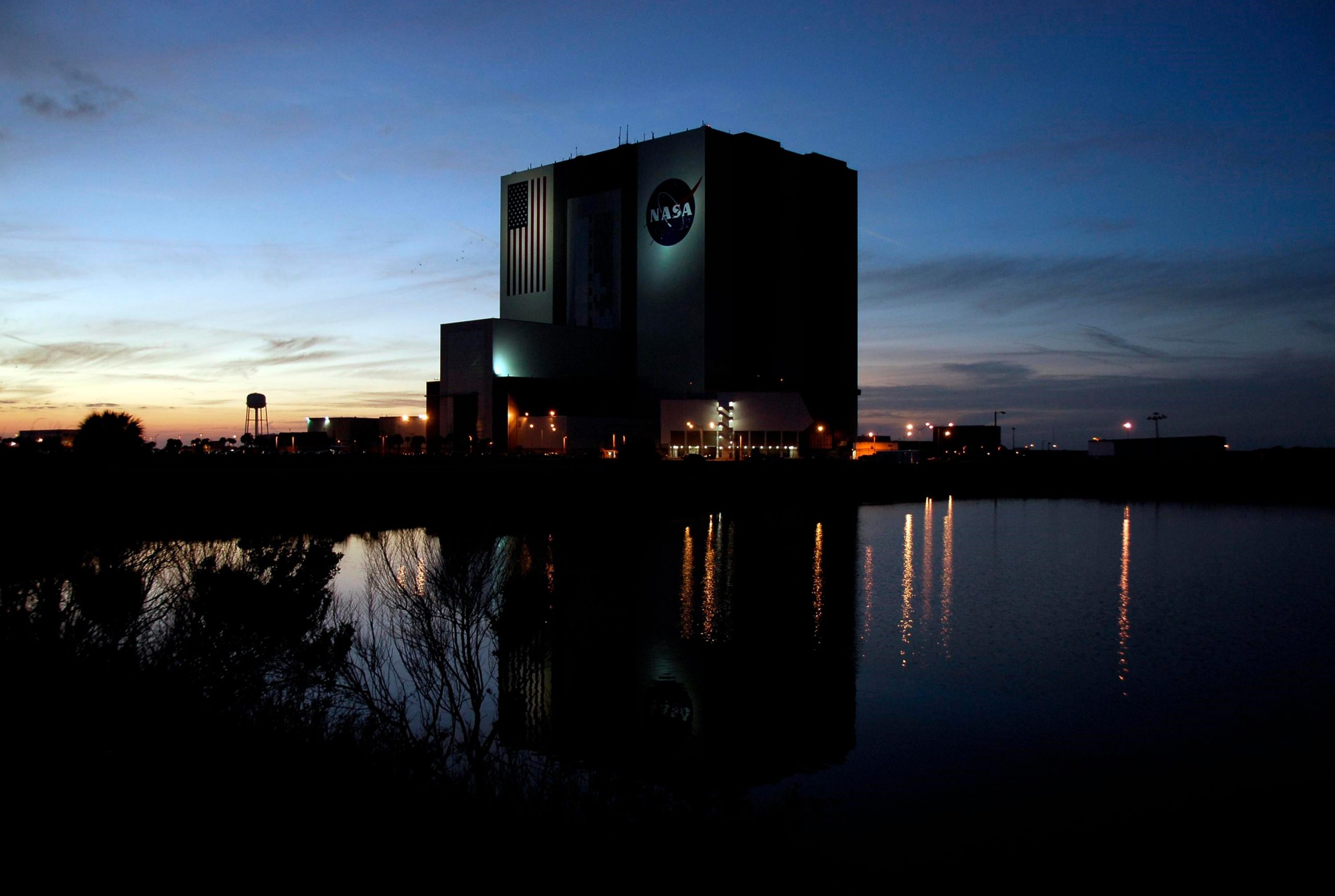
    NASA Kennedy Space Center After Sunset
    The dark water of the turn basin at NASA’s Kennedy Space Center mirrors the night lights and the Vehicle Assembly Building and Launch Control Center, silhouetted against the post-sunset sky. Credit: NASA/Kim Shiflett

    NASA’s PACE satellite launch is timed for early morning to achieve a Sun-synchronous orbit, ensuring consistent sunlight for accurate Earth monitoring. Precise calculations ensure optimal positioning for ocean data collection, with a tight launch window highlighting the mission’s precision.

    There’s a good reason why NASA’s PACE satellite is launching in the early morning hours. Late tonight, I’ll venture out in the chilly Merritt Island air to catch a glimpse of a historic sight. At 1:33 a.m. EST , February 6, (now delayed to 1:33 a.m. on February 7) NASA is slated to launch the Plankton, Aerosol, Cloud, ocean Ecosystem (PACE) satellite atop SpaceX’s Falcon 9 rocket.

    Why so early in the morning? The launch is timed to accommodate the satellite’s orbit around Earth.

    PACE will be in a Sun-synchronous orbit, meaning it’s synced to always maintain the same position relative to the Sun. This also means it will cross Earth’s equator at the same local time for each orbit, and the angle at which the sun illuminates Earth will be consistent for each image that it takes. This allows scientists to collect consistent data.

    “An Earth-observing satellite generally wants the Sun well overhead during observations,” said Scott Patano, flight dynamics system development lead for PACE at NASA’s Goddard Space Flight Center in Greenbelt, Maryland.
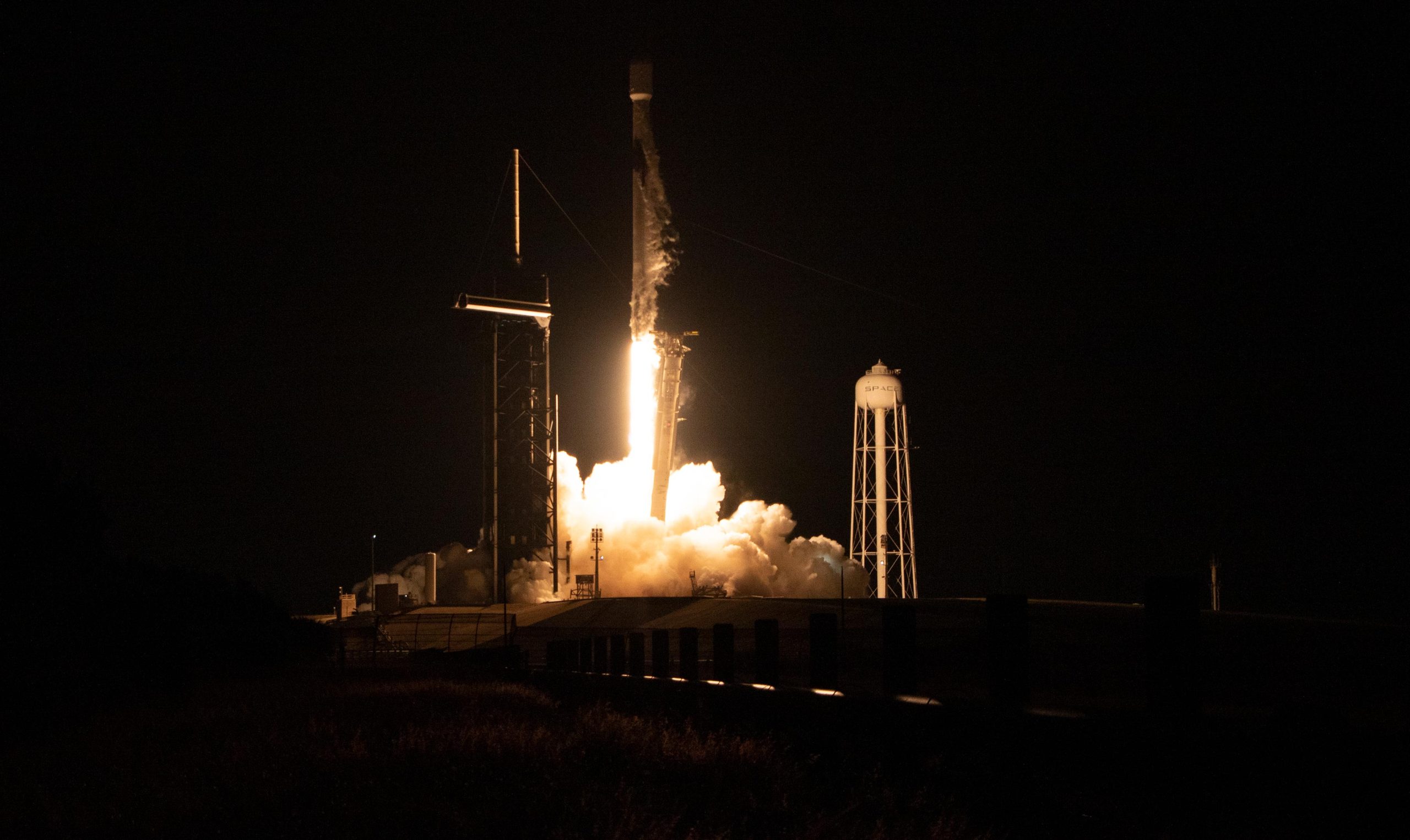
    NASA IXPE Launch SpaceX Falcon 9 Rocket
    A previous night launch at NASA’s Kennedy Space Center in Florida. A SpaceX Falcon 9 rocket launches with NASA’s Imaging X-ray Polarimetry Explorer (IXPE) spacecraft onboard from Launch Complex 39A, Thursday, December 9, 2021. Launch occurred at 1:00 a.m. EST. Credit: NASA/Joel Kowsky

    To get this level of lighting during its orbit, PACE wants the Sun to be almost behind it as it observes the Earth. However, if the Sun happens to be directly behind the satellite, there may be glare or reflections off the ocean, which isn’t ideal, especially considering one of its main purposes is to collect ocean data. To prevent glare, PACE will be slightly offset – not directly in front of the Sun. If you imagine the Sun is at the 12:00 angle, PACE will orbit at 1:00.

    So why the 1:33 a.m. launch? The best answer to that question is… math. Really cool math. By launching south out of Florida on the dark side of the Earth, the math works out perfectly to get the satellite right into place on the approaching India as it crosses the equator for the first time on the daylight side of the Earth by 1:00 p.m. local time.

    While some satellites launch first into a temporary orbit, before moving into their permanent position, PACE will be directly injected into its final orbit, “an effectively instantaneous launch,” said Joel Parker, flight dynamics lead for PACE at Goddard.

    This leaves little wiggle room for the launch time: a mere 90-second window for the launch to proceed. A tense minute and a half for years of striking data.

    So while I’ll be prescribing a late afternoon nap for myself, I know that when I wake up, I’ll be getting ready to see PACE rocketed up to its new home – where it will provide a stunning new view of ours.

    Never miss a breakthrough: Join the SciTechDaily newsletter.
    Follow us on Google and Google News.

    NASA NASA Goddard Space Flight Center
    Share. Facebook Twitter Pinterest LinkedIn Email Reddit

    Related Articles

    NASA’s DAVINCI Mission: A Daring Dive Into Venus’ Inferno

    Life on Mars? NASA’s Curiosity Rover Finds Prebiotic Clues in a 3.7-Billion-Year-Old Rock

    NASA’s Parker Solar Probe: The Fastest Spacecraft Ever Just Skimmed the Sun at 430,000 MPH

    The Andromeda Mystery: Hubble Discovers Strange Galactic Behavior

    NASA’s EZIE Mission Will Track Earth’s Hidden Electric Highways to Predict Space Storms

    3.7 Billion Miles Away: Hubble Uncovers a Hidden Trio That Could Rewrite Kuiper Belt History

    NASA’s PUNCH Is About to Capture Solar Storms Like Never Before

    Massive Solar Storm Unleashes Mysterious New Radiation Belts

    NASA Spots a Star and Planet Racing at 1.2 Million MPH – A Record-Breaking Discovery

    Leave A Reply Cancel Reply

    • Facebook
    • Twitter
    • Pinterest
    • YouTube

    Don't Miss a Discovery

    Subscribe for the Latest in Science & Tech!

    Trending News

    Why Popular Diabetes Drugs Like Ozempic Don’t Work for Everyone: The “Genetic Glitch”

    Scientists Stunned After Finding Plant Thought Extinct for 60 Years

    Scientists Discover Tiny New Spider That Hunts Prey 6x Its Size

    Natural Component From Licorice Shows Promise for Treating Inflammatory Bowel Disease

    Scientists Warn: Popular Sweetener Linked to Dangerous Metabolic Effects

    Monster Storms on Jupiter Unleash Lightning Beyond Anything on Earth

    Scientists Create “Liquid Gears” That Spin Without Touching

    The Simple Habit That Could Help Prevent Cancer

    Follow SciTechDaily
    • Facebook
    • Twitter
    • YouTube
    • Pinterest
    • Newsletter
    • RSS
    SciTech News
    • Biology News
    • Chemistry News
    • Earth News
    • Health News
    • Physics News
    • Science News
    • Space News
    • Technology News
    Recent Posts
    • 5 Simple Ways To Remember More and Forget Less
    • This Common Habit Could Signal Serious Health Problems in Later Life
    • Common Food Preservative Linked to Rising Suicide Deaths Among Young People
    • Seeing the Invisible: Scientists Develop New Way To Track Particles in 3D
    • The Atomic Gap That Could Cost the Semiconductor Industry Billions
    Copyright © 1998 - 2026 SciTechDaily. All Rights Reserved.
    • Science News
    • About
    • Contact
    • Editorial Board
    • Privacy Policy
    • Terms of Use

    Type above and press Enter to search. Press Esc to cancel.