
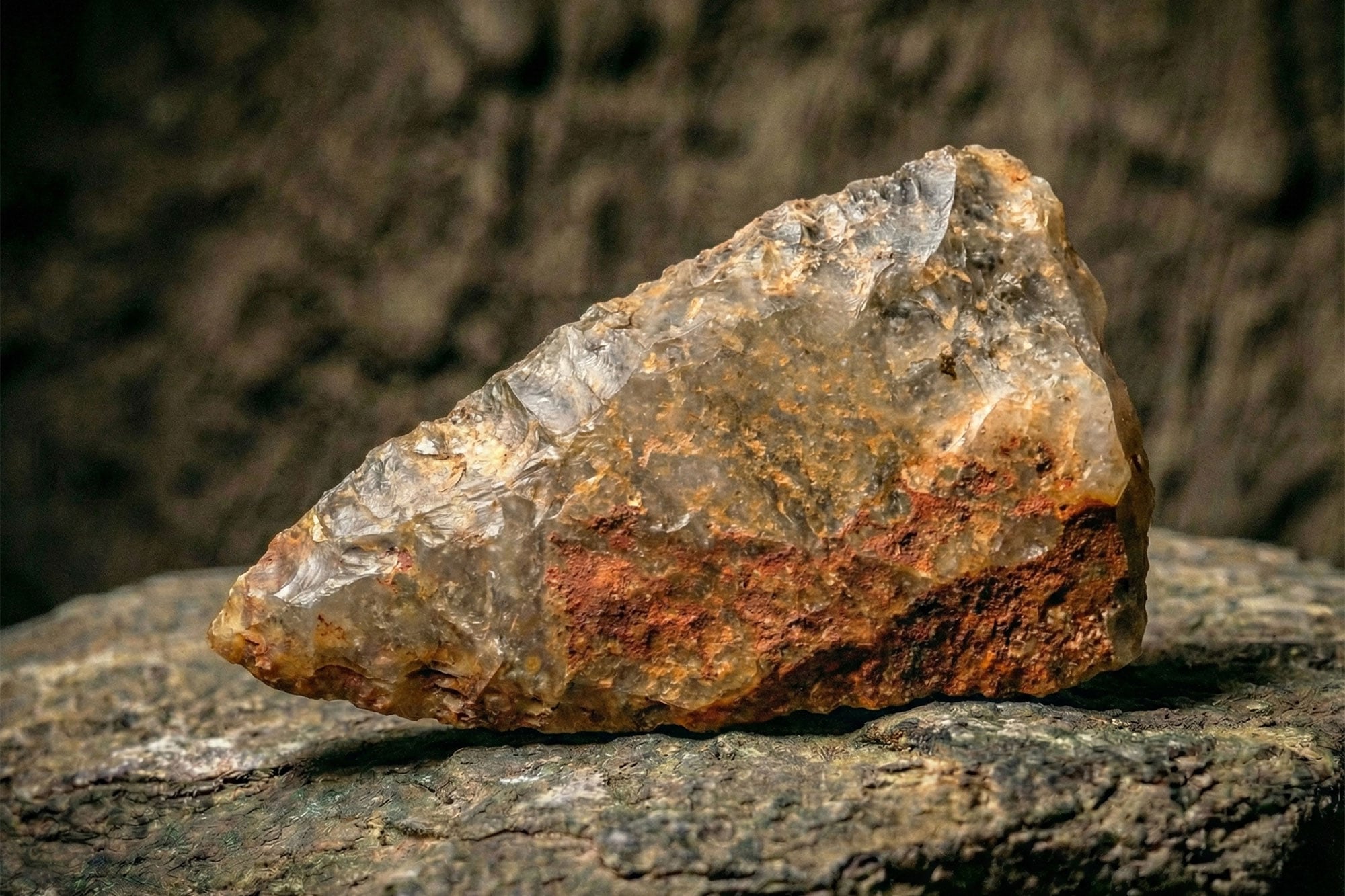
Traces of plant poison on ancient African arrowheads provide the oldest direct evidence of poisoned weapons.
Scientists have discovered chemical traces of plant-based poison on Stone Age arrowheads from South Africa, representing the earliest known example of poisoned arrows. Reported in the journal Science Advances, the findings show that people living in southern Africa 60,000 years ago had already developed detailed knowledge of toxic plants and understood how to apply that knowledge to hunting.
The study was conducted by an international research team from South Africa and Sweden. The researchers analyzed 60,000-year-old quartz arrowheads recovered from Umhlatuzana Rock Shelter in KwaZulu-Natal, South Africa, where they detected chemical residues linked to gifbol (Boophone disticha), a poisonous plant that is still used by some traditional hunters today.
“This is the result of a long and close collaboration between researchers in South Africa and Sweden. Being able to identify the world’s oldest arrow poison together has been a complex undertaking and is incredibly encouraging for continued research,” says Professor Sven Isaksson at the Archaeological Research Laboratory, Stockholm University, an expert in the analysis of organic residues in archaeological materials who carried out the chemical analyses.
Oldest evidence of arrow poison
“This is the oldest direct evidence that humans used arrow poison. It shows that our ancestors in southern Africa not only invented the bow and arrow much earlier than previously thought, but also understood how to use nature’s chemistry to increase hunting efficiency,” says Professor Marlize Lombard, a researcher at the Palaeo-Research Institute at the University of Johannesburg.
Laboratory tests identified the alkaloids buphanidrine and epibuphanisine on the arrowheads. These compounds are characteristic of the plant Boophone disticha, also known as gifbol (i.e. poisonous onion), which has long been recognized by local hunting communities for its potent toxic effects.
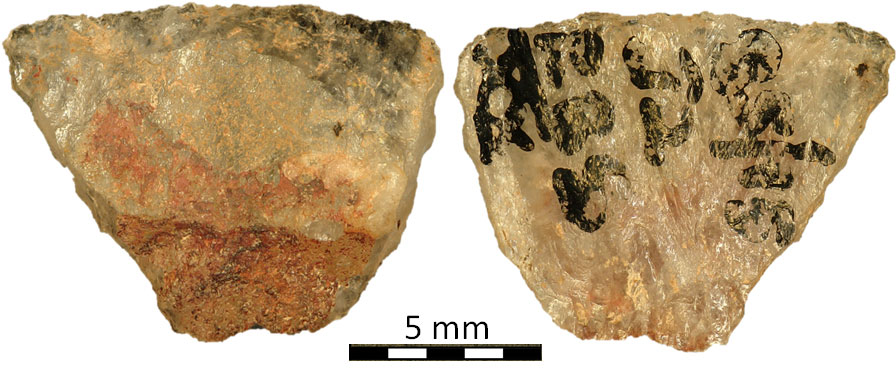
Similar substances were also found on 250-year-old arrowheads in Swedish collections, which were collected by travelers during the 18th century. The fact that the same plant poison was used in both historical and prehistoric times indicates a long continuity of knowledge and tradition.
“Finding traces of the same poison on both prehistoric and historical arrowheads was crucial,” says Professor Sven Isaksson. “By carefully studying the chemical structure of the substances and thus drawing conclusions about their properties, we were able to determine that these particular substances are stable enough to survive this long in the ground,” he continues. “It’s also fascinating that people had such a deep and long-standing understanding of the use of plants.”
Advanced planning abilities
Previously, indirect traces of poison have been used to interpret hunting practices, but the findings from Umhlatuzana Rock Shelter constitute the first direct evidence of hunting with poisoned arrows. The study shows that these early hunters not only had technical skills but also advanced planning abilities and an understanding of how poisons work over time – characteristics that reflect modern human cognition.
“Using arrow poison requires planning, patience, and an understanding of cause and effect. It is a clear sign of advanced thinking in early humans,” says Professor Anders Högberg at the Department of Cultural Sciences, Linnaeus University.
Reference: “Direct evidence for poison use on microlithic arrowheads in Southern Africa at 60,000 years ago” by Sven Isaksson, Anders Högberg and Marlize Lombard, 7 January 2026, Science Advances.
DOI: 10.1126/sciadv.adz3281
Never miss a breakthrough: Join the SciTechDaily newsletter.
Follow us on Google and Google News.
1 Comment
But HOW did they discover that the plant they used could be used as a poison to kill others? That would seem to be a much more interesting story!
I imagine that some people tried to eat the subject plant and they became paralyzed or died. This gave others the clue they needed to realize that they could kill their enemies, even if they only hit them in say, the arm, if they coated their arrowheads with the residue of the plant.
Of course, they also figured out how to make the poison more concentrated and potent as their development work progressed.
And such was the birth of science.