
Existing blanket technology can protect an isolated building from a short wildfire attack, but technological advancements are needed for severe situations.
Wrapping a building in a fire-protective blanket is a viable way of protecting it against wildfires, finds the first study to scientifically assess this method of defense.
By rigorously testing different fabric materials in the laboratory and using them to shield structures that were exposed to fires of increasing magnitude, this research, published in Frontiers in Mechanical Engineering, confirms that existing blanket technology can protect structures from a short wildfire attack. For successful deployment against severe fires and in areas of high housing density, technological advancement of blanket materials and deployment methods, as well as multi-structure protection strategies, are needed.
“The whole-house fire blanket is a viable method of protection against fires at the wildland-urban interface,” says lead study author Fumiaki Takahashi, a professor at Case Western Reserve University, Cleveland, Ohio, USA, who teamed up with the NASA Glenn Research Center, U.S. Forest Service, New Jersey Forest Fire Service, and Cuyahoga Community College for this study.
He continues, “Current technology can protect an isolated structure against a relatively short wildfire attack and further technological developments are likely to enable this method to be applied to severe situations.”
A burning need
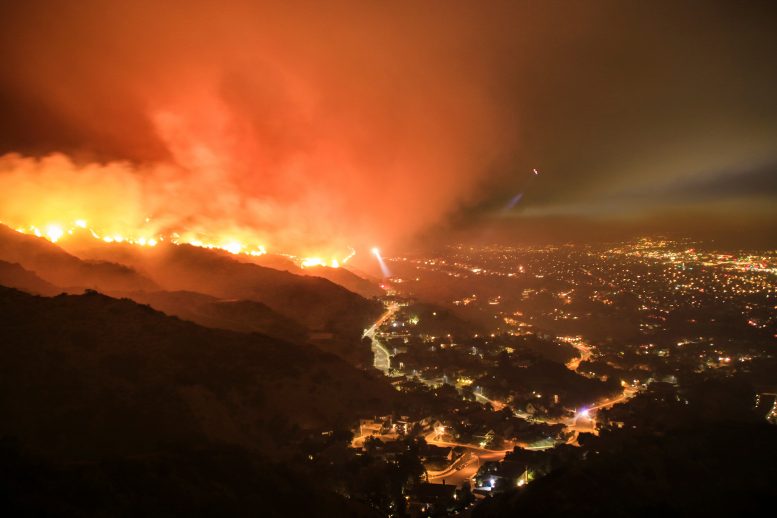
Wildfires in urban and suburban settings can have a devastating effect on communities and pose one of the greatest fire challenges of our time.
People living and working in fire-risk areas contacted Professor Takahashi to find out if commercial products are available to help reduce the likelihood of structure ignition, which would reduce fire damage and improve public and firefighter safety. These pleas motivated the research and an initial investigation revealed that the concept of whole-structure fire blankets has been around for quite some time.
“I thought about a means to reduce wildland fire damage and found a U.S. patent ‘conflagration-retardative curtain’ i.e., a fire blanket, issued during World War Two. In addition, the U.S. Forest Service firefighters managed to save a historic forest cabin by wrapping it with their fire shelter materials,” Takahashi reports.
An old flame-retardant
While there are anecdotal reports on the ability of fire blankets to protect buildings from fires, Takahashi’s research highlighted a severe lack of scientific evidence to back up these claims. To rectify this, funded by a research grant from the U.S. Department of Homeland Security, the team conducted several experiments to test the ability of different blanket materials to shield structures against fires of increasing magnitude.
“The fire exposure tests determined how well the fire blankets protected various wooden structures, from a birdhouse in a burning room to a full-size shed in a real forest fire. We tested four types of fabric materials: aramid, fiberglass, amorphous silica, and pre-oxidized carbon, each with and without an aluminum surface. In addition, we conducted laboratory experiments under controlled heat exposure and measured the heat-insulation capabilities of these materials against direct flame contact or radiation heat.”
A hot new industry
The laboratory and real-fire assessments demonstrate that fire blankets could protect structures from a short exposure to a wildfire, but also highlight the technical limitations of their existing form. Further technological advancements are needed in the areas of material composition, deployment methods and multi-structure protection strategies.
Takahashi explains, “The fiberglass or amorphous silica fabrics laminated with aluminum foil performed best, due to high reflection/emission of radiation and good thermal insulation by the fabric. New technology is needed to enhance the fire blankets’ heat-blocking capability for an extended period to prevent structure-to-structure ignition. In addition, it will be more effective If dozens or hundreds of homes are protected by such advanced fire blankets at the same time, particularly in high housing-density Wildland-Urban Interface communities.”
He concludes by suggesting communities potentially affected by wildfires work together to turn the concept of whole-building fire blankets into a reality.
“Fire blanket protection will be significant to those living and fighting fires at the Wildland-Urban Interface and presents entrepreneurs and investors with business opportunities. The implication of the present findings is that the technical community, the general public, and the fire service must work together to take a step-by-step approach toward the successful application of this technology.”
Reference: “Whole-House Fire Blanket Protection from Wildland-Urban Interface Fires” by Fumiaki Takahashi, Frontiers in Mechanical Engineering.
DOI: 10.3389/fmech.2019.00060
Never miss a breakthrough: Join the SciTechDaily newsletter.
Follow us on Google and Google News.
2 Comments
RNG Performance Materials manufactures various types of Fire blankets made with Aluminized Fiberglass, Aluminized Kevlar, Fiberglass, Silicone Coated Fiberglass
Helicopters can drop tent like coverings over homes in front of the fire lines. Also use potable, transportable easy to roll and unroll fire blanket walls distributed along highways to stop the progress of the fire. Read the Facebook Page of Ron McCune from Chicago, Illinois to smore ideas