
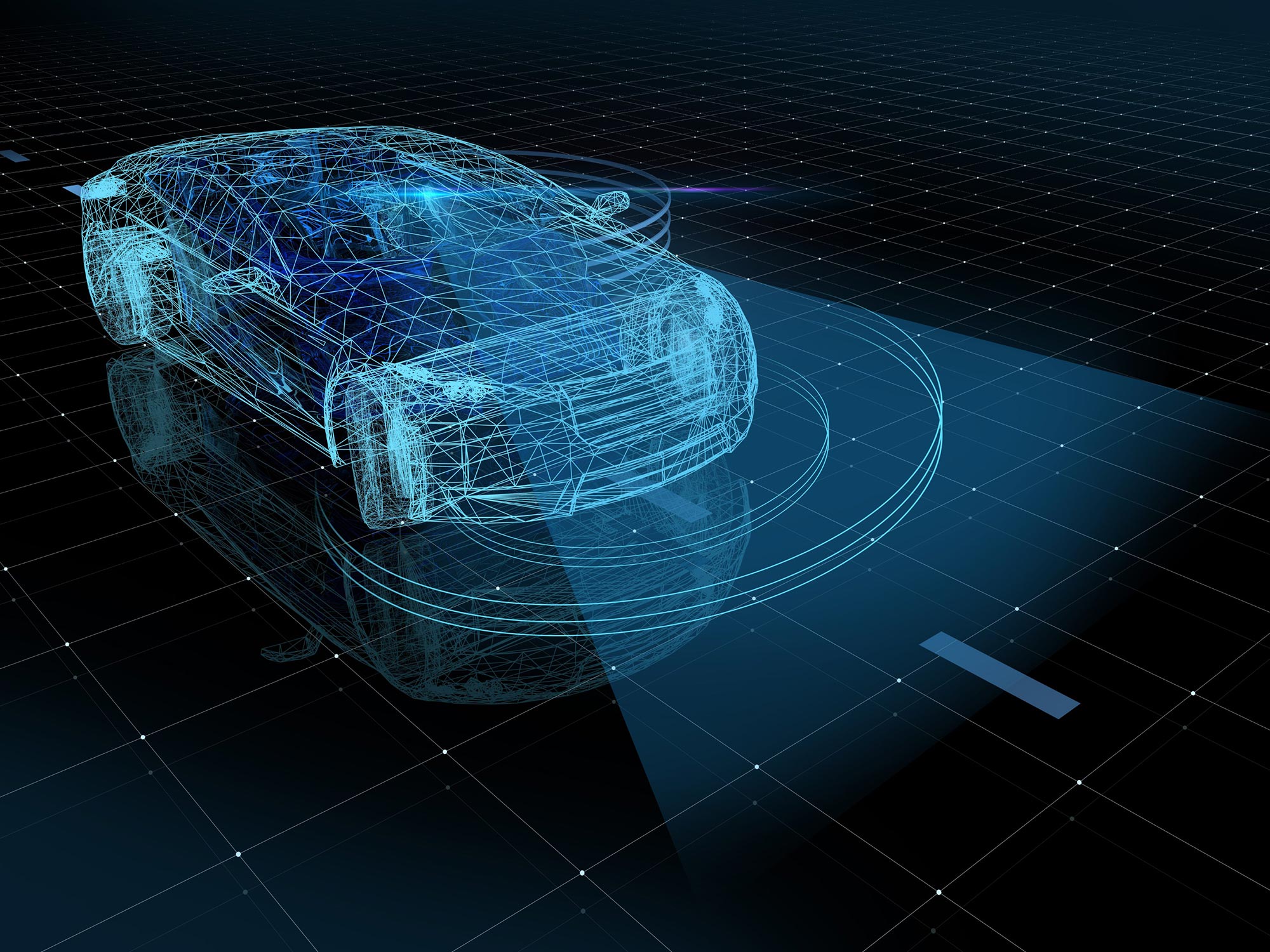
NASA’s DRF helps machines from different sectors share data securely and make smarter decisions – turning everyday travel into a coordinated, predictive experience.
Imagine cars that don’t just respond to what’s in front of them, but predict what’s coming – thanks to real-time conversations with road signs, weather systems, and other vehicles. This futuristic vision is getting closer, thanks to NASA’s Data & Reasoning Fabric (DRF), a powerful framework enabling secure, intelligent data-sharing across diverse technologies. Originally designed for autonomous drones, DRF is now being adapted for safer, smarter ground transportation, where collaboration between systems can make travel more efficient and intuitive.
Smarter Roads Through Communication
Imagine your car could communicate with traffic signals, other vehicles, and road systems as you drive. These real-time conversations would allow your car to anticipate what’s ahead, such as a truck slowing down to make a turn or a hidden traffic light turning red. At the same time, the system could navigate you toward the nearest charging or fuel station and prepare your brakes and windshield wipers for incoming rain based on weather updates.
Making this kind of intelligent travel possible requires seamless communication between a wide range of system, from private companies to government agencies, each using their own proprietary technology. The challenge is finding a way for all of them to securely share data in real-time, while maintaining safety, privacy, and efficiency.

NASA’s Innovative Framework: DRF
At NASA’s Ames Research Center in California’s Silicon Valley, technologists have developed a solution: the Data & Reasoning Fabric (DRF). DRF is a software framework that includes infrastructure, tools, protocols, and policies designed to support secure data sharing and decision-making across different machines and organizations. Originally created to help autonomous drones make complex decisions, the technology is now being adapted for use in other domains—including connected, intelligent transportation.
This means that one day, DRF-informed technology could allow your car to receive traffic data safely and securely from nearby stoplights and share data with other vehicles on the road. In this scenario, DRF is the choreographer of a complex dance of moving objects, ensuring each moves seamlessly in relation to one another towards a shared goal. The system is designed to create an integrated environment, combining data from systems that would otherwise be unable to interact with each other.
“DRF is built to be used behind the scenes,” said David Alfano, chief of the Intelligent Systems Division at Ames. “Companies are developing autonomous technology, but their systems aren’t designed to work with technology from competitors. The DRF technology bridges that gap, organizing these systems to work together in harmony.”
Traffic enhancements are just one use case for this innovative system. The technology could enhance how we use autonomy to support human needs on Earth, in the air, and even on the Moon.
Supporting Complex Logistics
To illustrate the technology’s impact, the DRF team worked with the city of Phoenix on an aviation solution to improve transportation of critical medical supplies from urban areas out to rural communities with limited access to these resources. An autonomous system identified where supplies were needed and directed a drone to pick up and transport supplies quickly and safely.
“All the pieces need to come together, which takes a lot of effort. The DRF technology provides a framework where suppliers, medical centers, and drone operators can work together efficiently,” said Moustafa Abdelbaky, senior computer scientist at Ames. “The goal isn’t to remove human involvement, but help humans achieve more.”
The DRF technology is part of a larger effort at Ames to develop concepts that enable autonomous operations while integrating them into the public and commercial sectors to create safer, efficient environments.
“At NASA, we’re always learning something. There’s a silver lining when one project ends, you can identify a new lesson learned, a new application, or a new economic opportunity to continue and scale that work,” said Supreet Kaur, lead systems engineer at Ames. “And because we leverage all of the knowledge we’ve gained through these experiments, we are able to make future research more robust.”
Choreographed Autonomy
Industries like modern mining involve a variety of autonomous and advanced vehicles and machinery, but these systems face the challenge of communicating sufficiently to operate in the same area. The DRF technology’s “choreography” might help them work together, improving efficiency. Researchers met with a commercial mining company to learn what issues they struggle with when using autonomous equipment to identify where DRF might provide future solutions.
“If an autonomous drill is developed by one company, but the haul trucks are developed by another, those two machines are dancing to two different sets of music. Right now, they need to be kept apart manually for safety,” said Johnathan Stock, chief scientist for innovation at the Ames Intelligent Systems Division. “The DRF technology can harmonize their autonomous work so these mining companies can use autonomy across the board to create a safer, more effective enterprise.”
Further testing of DRF on equipment like those used in mines could be done at the NASA Ames Roverscape, a surface that includes obstacles such as slopes and rocks, where DRF’s choreography could be put to the test.
Stock also envisions DRF improving operations on the Moon. Autonomous vehicles could transport materials, drill, and excavate, while launch vehicles come and go. These operations will likely include systems from different companies or industries and could be choreographed by DRF.
As autonomous systems and technologies increase across markets, on Earth, in orbit, and on the Moon, DRF researchers are ready to step on the dance floor to make sure everything runs smoothly.
“When everyone’s dancing to the same tune, things run seamlessly, and more is possible.”
Never miss a breakthrough: Join the SciTechDaily newsletter.
Follow us on Google and Google News.
1 Comment
How odd that people can predict what might happen to the car they drive and what could happen amidst the traffic that surrounds them.