
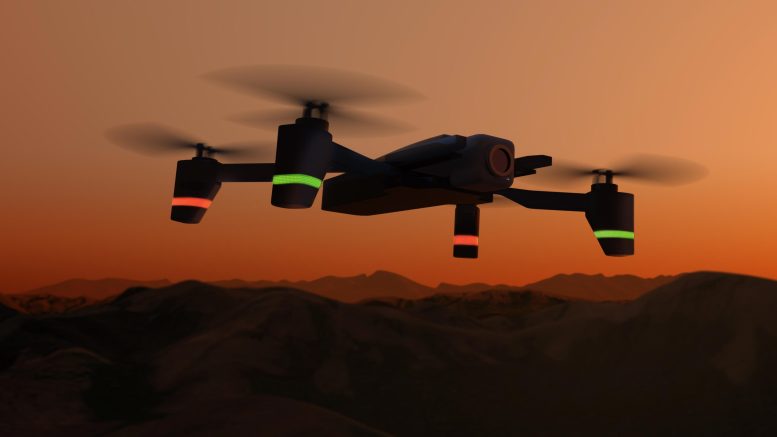
NASA’s ACERO project uses drones and advanced aviation technologies to improve wildland fire coordination and operations, extending the window for aerial suppression and developing airspace management technologies for better communication between aircraft and ground crews. ACERO is also exploring drone use for prescribed burns, offering a safer, cheaper alternative to traditional methods.
Each year, thousands of wildfires release large amounts of planet-warming carbon dioxide into the atmosphere and burn roughly 1.5 million acres of forests and grasslands throughout the country, according to the U.S. Forest Service. Suppressing these blazes is a complex and costly operation – with suppression costs averaging $2.9 billion over a five-year period. Containing and responding to these fires also requires collaboration among firefighters and ground crews, and the coordination of dozens of aircraft operated by multiple government agencies.
NASA’s Advanced Capabilities for Emergency Response Operations (ACERO) project — led by the agency’s Ames Research Center in Silicon Valley, California — is using drones and advanced aviation technologies to improve wildland fire coordination and operations.
Current aerial firefighting operations are limited to times when aircraft have clear visibility – otherwise, pilots run the risk of flying into terrain or colliding with other aircraft. That means aircraft are grounded during the night and during periods of heavy smoke. Drones can help expand the window of time available for aerial suppression because they can be safely operated by pilots on the ground. Using drones for aerial suppression operations would reduce safety risks to pilots and make aerial wildfire operations more effective.
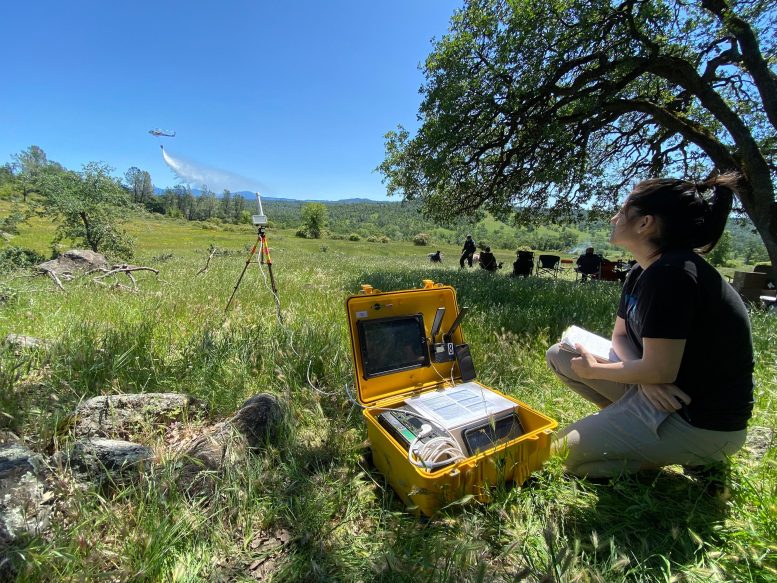
Though drones and other aviation technologies have rapidly advanced over the last decade, emergency responders have been slow to adopt them. One significant barrier that continues to prevent this adoption is lack of tools and situational awareness for responders to see where firefighting drones are operating. To address this issue, ACERO is developing airspace management technologies to share information between crewed aircraft, drone operators, and ground crews during wildfire responses. These technologies will provide all responders with common situational awareness and ensure there are no conflicts with aircraft operations. ACERO-developed aircraft safety software will also reduce the likelihood of encountering airborne hazards. Having this situational awareness will enable responders to safely integrate drones into wildfire operations and continuously suppress and monitor a fire over its entire lifetime, which is not currently possible.
ACERO’s advancements in aerial communication and information-sharing tools and concepts will improve airspace management during wildland fires and provide response crews more timely information to support decision-making during emergency response. These advancements are critical for enabling new drone missions for aerial wildfire response, like fire suppression, delivering gear to ground crews, and providing communication relays in areas with limited connectivity.
Drones could also be used for prescribed burns, or fires set and controlled by experts designed to burn away the dead brush that acts as fuels and can lead to large-scale wildland fires. Currently, these types of burns are set by a combination of piloted helicopters, ground grew, and a very limited amount of drones. Remotely operating drones for these operations would be safer and cheaper than deploying ground crews and helicopters. It would also enable crews to execute controlled burns over larger acreages of land each year.
The Future of Wildland Fire Response
ACERO is collaborating with other government agencies, the science community, and commercial industries to develop a concept of operations for the future of wildland fire management. The project’s team leads an interagency working group to assess and identify the concepts and technologies needed to address the challenges ahead. ACERO will work with other government agencies to help integrate these technologies into wildland fire operations.
In the coming years, NASA will partner with industry and wildfire response agencies to perform joint field demonstrations of newly developed ACERO-led aviation technologies. These demonstrations will highlight developments from the agency’s Aeronautics Research Mission Directorate, Science Mission Directorate, and Space Technology Mission Directorate.
ACERO builds on previous NASA Aeronautics research including Scalable Traffic Management for Emergency Response Operations project and the Unmanned Aircraft System Traffic Management project. ACERO’s aviation advancements for wildland fire operations support NASA’s contributions to the U.S. goal of reaching net zero aviation greenhouse gas emissions by 2050. The project also supports the NASA’s Advanced Air Mobility research, which will guide industry’s development of electric air taxis and drones and assist the Federal Aviation Administration in safely integrating such vehicles into the national airspace.
ACERO is funded by NASA’s Aeronautics Research Mission Directorate, managed by the agency’s Airspace Operations and Safety Program.
Never miss a breakthrough: Join the SciTechDaily newsletter.
Follow us on Google and Google News.