
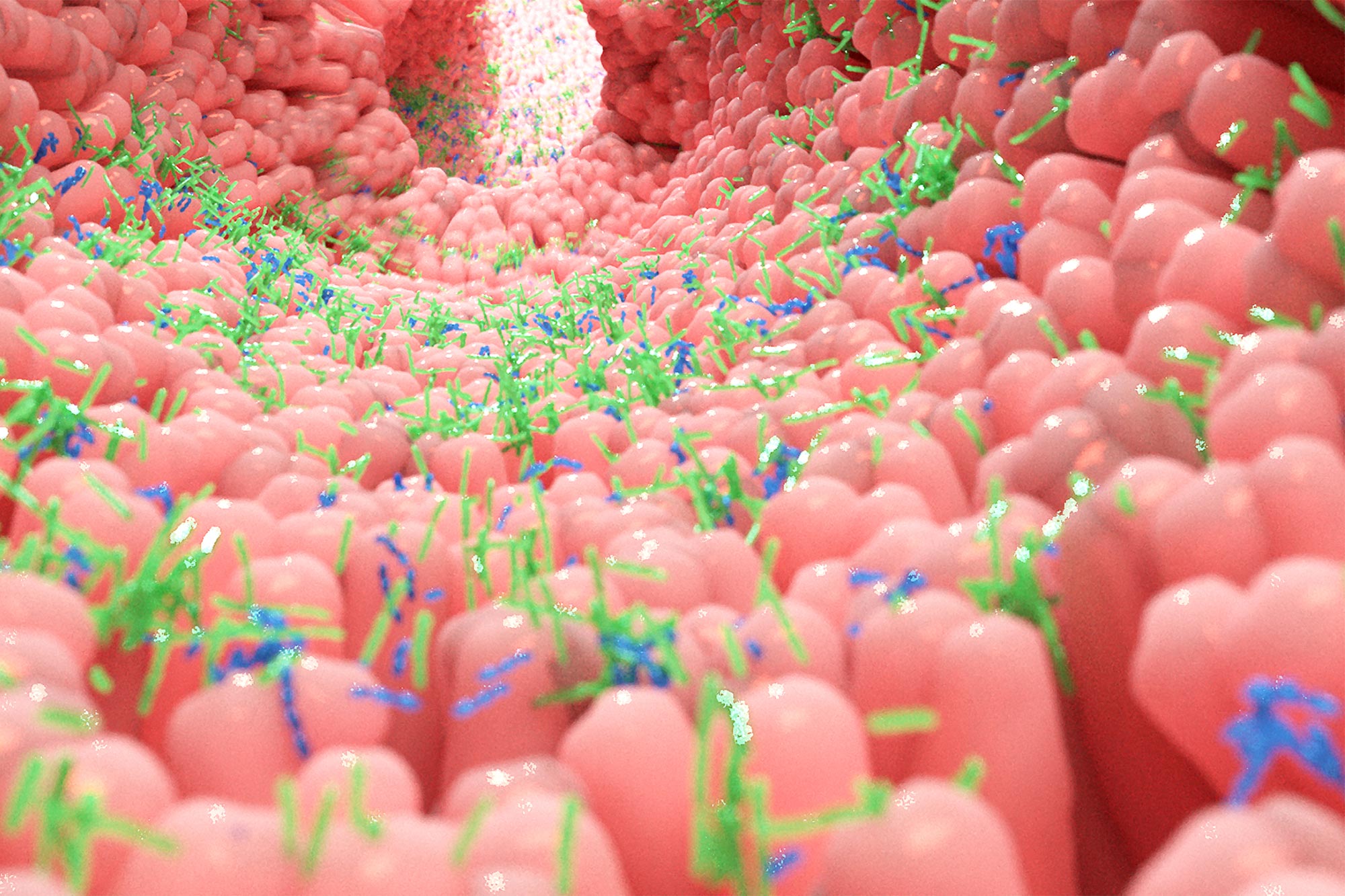
Your gut bacteria are constantly sensing, moving, and sharing nutrients to keep the microbiome thriving.
The gut microbiome, also called the gut flora, is essential to human health. This vast and constantly changing community of microorganisms depends on a web of chemical exchanges. Microbes communicate not only with one another but also with the human body that hosts them. To function properly, gut bacteria must detect nutrients and signaling molecules in their surroundings. However, scientists still do not fully understand the wide range of chemical signals that bacterial receptors are able to recognize.
A key question remains: which of these signals are most important for beneficial gut bacteria?
Moving Beyond Pathogens in Bacterial Research
Most research on bacterial sensing has focused on model organisms, particularly disease-causing microbes. Far less attention has been given to commensals, the non-pathogenic and often beneficial bacteria that naturally live in humans. This has left an important gap in understanding what kinds of chemical signals these helpful microbes actually detect in the gut.
An international team led by Victor Sourjik sought to answer that question. The researchers, from the Max Planck Institute for Terrestrial Microbiology, the University of Ohio, and Philipps-University Marburg, investigated Clostridia. These motile bacteria are abundant in the intestinal flora and play a major role in maintaining gut health.
Gut Bacteria Recognize a Wide Range of Nutrients
The team found that receptors from bacteria in the human gut microbiome respond to a surprisingly broad range of metabolic compounds. These include breakdown products of carbohydrates, fats, proteins, DNA, and amines. Through systematic screening, the scientists observed that different types of bacterial sensors show clear preferences for specific classes of chemicals.
This indicates that gut bacteria are selectively tuned to certain metabolic signals rather than reacting randomly to everything in their environment.
Lactate and Formate Emerge as Key Signals
Using a mix of laboratory experiments and bioinformatic analysis, the researchers identified multiple chemical ligands that bind to sensory receptors controlling bacterial movement. These receptors allow motile bacteria to detect valuable nutrients. The findings suggest that movement in these microbes is primarily driven by the search for food.
Among all the substances tested, lactic acid (lactate) and formic acid (formate) appeared most often as stimuli. This suggests they may be especially important nutrients that support bacterial growth in the gut.
Cross-Feeding Strengthens the Gut Ecosystem
Interestingly, some gut bacteria can produce lactate and formate themselves. This supports the concept of ‘cross-feeding’, a process in which one bacterial species releases metabolites that serve as nutrients for other species. Such interactions help sustain a balanced and cooperative microbial community.
“These domains appear to be important for interactions between bacteria in the gut and could play a key role in the healthy human microbiome,” explains Wenhao Xu, a postdoctoral researcher in Victor Sourjik’s research group and the study’s first author.
Discovery of New Sensory Domains
By systematically analyzing multiple sensor types, the researchers identified several previously unknown groups of sensory domains. These newly described sensors are specific for lactate, dicarboxylic acids, uracil (a RNA building block) and short-chain fatty acids (SCFAs).
The team also determined the crystal structure of a newly identified dual sensor that binds both uracil and acetate. This structural insight allowed them to understand how these molecules attach to the receptor. The sensor belongs to a large family of sensory domains with diverse specificities.
Further evolutionary analysis revealed that ligand specificity within this family can change relatively easily over time. This flexibility highlights how bacterial sensory receptors adapt to shifts in their surrounding environment.
“Our research project has significantly expanded the understanding of sensory abilities of beneficial gut bacteria,” says Victor Sourjik. “To our knowledge, this is the first systematic analysis of the sensory preferences of non-model bacteria that colonise a specific ecological niche. Looking ahead, our approach can be similarly applied to systematically investigate sensory preferences in other microbial ecosystems.”
Reference: “Specificities of chemosensory receptors in the human gut microbiota” by Wenhao Xu, Ekaterina Jalomo-Khayrova, Vadim M. Gumerov, Patricia A. Ross, Tania S. Köbel, Daniel Schindler, Gert Bange, Igor B. Zhulin and Victor Sourjik, 26 August 2025, Proceedings of the National Academy of Sciences.
DOI: 10.1073/pnas.2508950122
Never miss a breakthrough: Join the SciTechDaily newsletter.
Follow us on Google and Google News.