

Close Menu
    Facebook X (Twitter) Instagram
    SciTechDaily
    • Biology
    • Chemistry
    • Earth
    • Health
    • Physics
    • Science
    • Space
    • Technology
    Facebook X (Twitter) Pinterest YouTube RSS
    SciTechDaily
    Home»Science»Zapping Hunger: The Next Big Thing in Weight Loss?
    Science

    Zapping Hunger: The Next Big Thing in Weight Loss?

    By National Research Council of Science & TechnologyAugust 24, 20241 Comment5 Mins Read
    Facebook Twitter Pinterest Telegram LinkedIn WhatsApp Email Reddit
    Share
    Facebook Twitter LinkedIn Pinterest Telegram Email Reddit
    Weight Loss Measuring Tape Concept
    Dr. Ki-young Shin’s team at KERI is advancing research on neuromodulation technology, specifically transcranial random noise stimulation (tRNS), to treat metabolic syndrome by suppressing appetite through non-invasive electrical stimulation. Their clinical trials have shown promising results in reducing appetite and emotional eating, with further phases aimed at validating and commercializing the technology.

    Research led by Dr. Ki-young Shin on using neuromodulation technology for appetite suppression in metabolic syndrome shows promising clinical results. The technology aims to reduce side effects compared to traditional treatments and may soon enter further research and commercial phases.

    Metabolic syndrome is a complex of multiple metabolic abnormalities, including obesity, high blood pressure, and high triglycerides, often caused by poor diet and lack of exercise. According to the World Health Organization (WHO), one in eight people worldwide is overweight, making obesity treatment one of the most prominent markets currently. Although there are various types of obesity treatments including drug injections and pharmaceuticals, these chemical treatments often come with potential side effects when taken over for a long period.
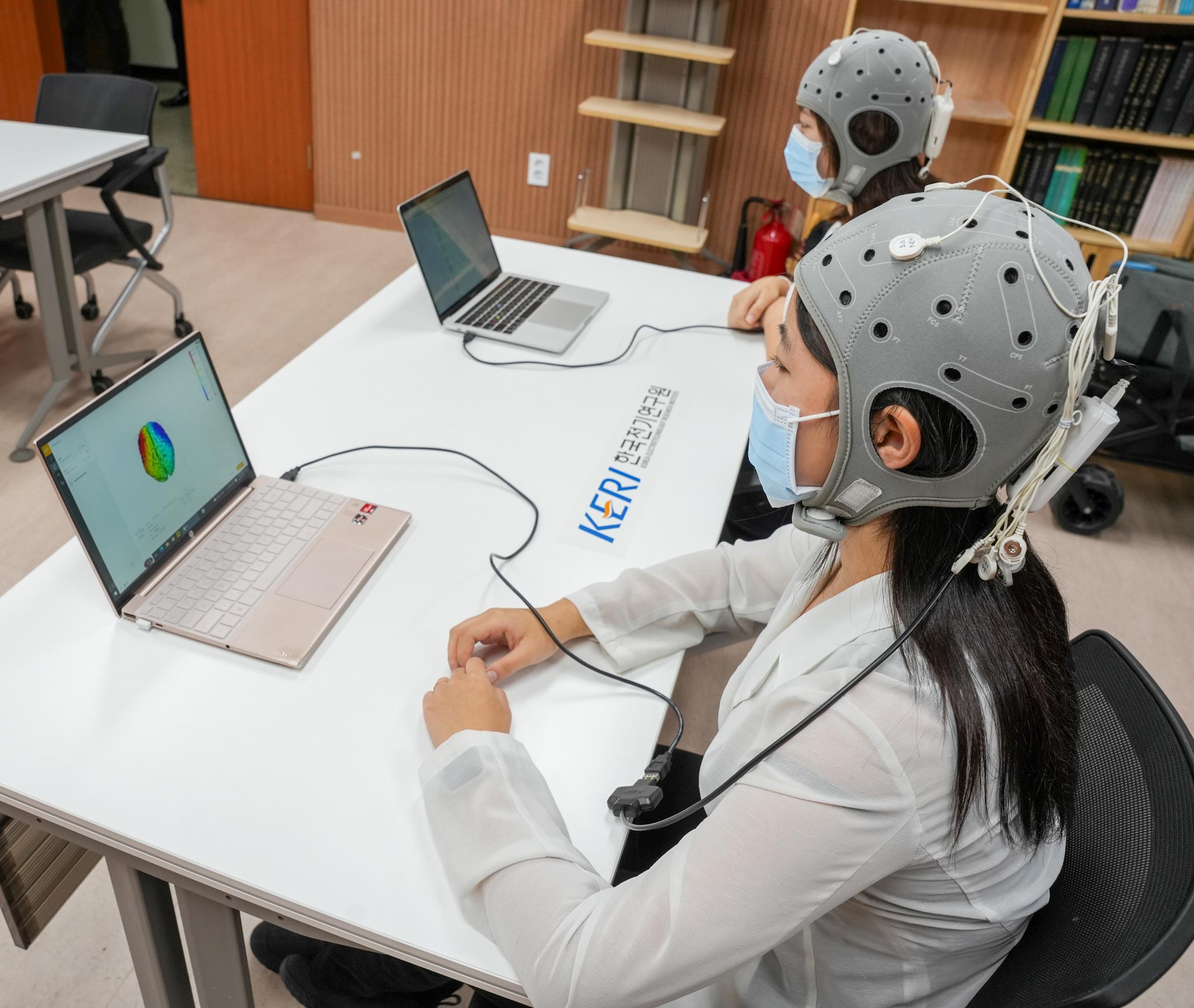
    Neuromodulation Technology Research at Seoul National University Hospital
    Research on the therapy to induce appetite suppression is being conducted at Seoul National University Hospital with the Korea Electrotechnology Research Institute (KERI). Credit: Korea Electrotechnology Research Institute (KERI)

    Innovative Treatments: Electrical Stimulation

    Now, a team of researchers led by Dr. Ki-young Shin of the Human Care Electro-Medical Device Research Center, Electro-Medical Equipment Research Division of KERI has proposed a novel approach: suppressing appetite by stimulating the cerebral cortex electrically through the scalp.

    The electrical stimulation method is officially known as transcranial random noise stimulation (tRNS). After extensive research, the team discovered that non-invasive electrical stimulation of the dorsolateral prefrontal cortex—a portion of the frontal lobe that controls execution function, planning, flexibility, and abstract thinking—using tRNS technology could lead to appetite suppression.
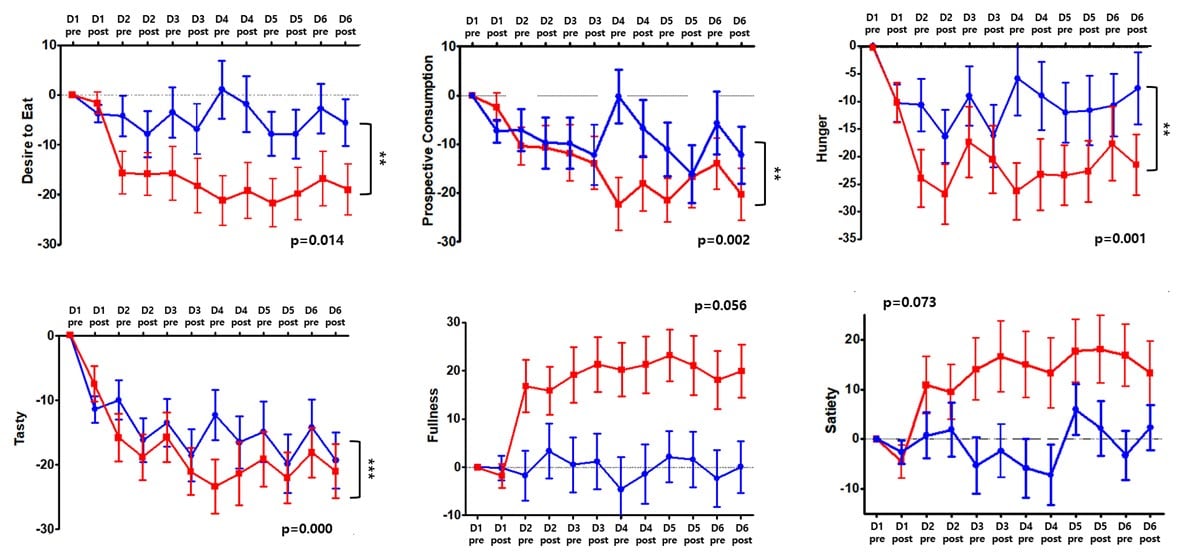
    tRNS Treatment and Control Groups
    According to clinical trial results, the tRNS (red) group treated with KERI’s electrical stimulation had less appetite and hunger, and a greater sense of satiety than the active sham (blue) group. Credit: Korea Electrotechnology Research Institute (KERI)

    Clinical Trials and Technological Development

    Three key technologies are required for such studies.

    • A technology that can accurately deliver the right electrical stimulation to the specific area of interest
    • An electrode technology that can penetrate the space between the hairs and make contact with the scalp
    • A monitoring technology that can confirm that the electrical stimulation has been delivered to the target point and has triggered a change in brain activity

    All of these are currently under development by Dr. Shin’s team and the team possesses an advanced level of technologies.

    KERI conducted a clinical trial with Professor Hyung-jin Choi’s team at Seoul National University Hospital to demonstrate the clinical utility of tRNS stimulation using commercially available electrical stimulators. The goal of the clinical trial was to prove that tRNS stimulation effectively reduces appetite. The trial included 60 female volunteers, 30 in the tRNS group and 30 in the active sham group. The trial consisted of six sessions of electrical stimulation with two to three days of interval for two weeks. The electrical stimulation utilized a barely perceptible current of 2 mA for 20 minutes per session.
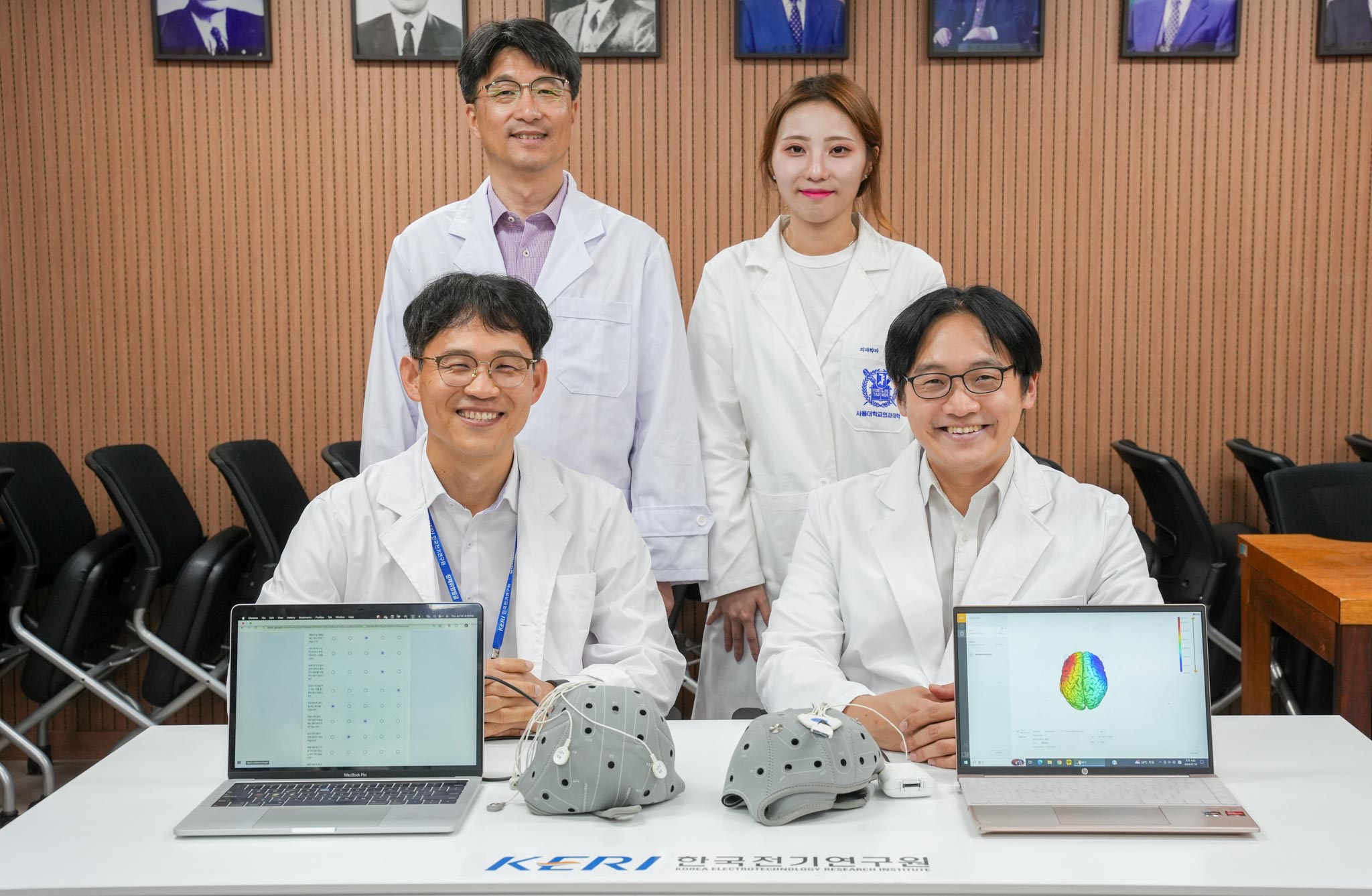
    Ki-young Shin, Hyung-jin Choi, and Team
    Dr. Ki-young Shin (front row, left) of KERI and Professor Hyung-jin Choi (front row, right) of Seoul National University Hospital are leading their research team in applying transcranial Random Noise Stimulation (tRNS) technology for the treatment and management of obesity in clinical trials. Credit: Korea Electrotechnology Research Institute (KERI)

    Implications and Future Directions

    The results showed that the tRNS treatment group exhibited a reduction in appetite, willingness to eat, and hunger compared to the placebo group. The clinical trial also showed that tRNS can help treat emotional eating, meaning that the tendency to eat to process or relieve emotions such as stress, depression, anxiety, and joy was significantly reduced. As the trial was conducted only for two weeks, the long-term weight loss effect was not confirmed but participants reported significant appetite suppression.

    Dr. Shin said, “Although the technology is not yet complete and needs further research and verification, if this electrostimulation treatment equipment with far fewer side effects than existing obesity treatments is commercialized and can be used at home instead of in hospitals, it will provide an easy and simple method for daily appetite suppression management.”

    He added, “Especially when people are under stress or difficulty, many people eat food due to emotional hunger, and if digital healthcare technology that combines electrostimulation treatment and exercise therapy is introduced, it will enhance weight loss effects and help individuals manage their health more effectively.”

    The research team is scheduled to complete the first phase of the project (2022-2024) this year and aims to validate the developed technology academically and clinically through follow-up research, including the second phase of the project, and promote technology transfer to companies.

    Never miss a breakthrough: Join the SciTechDaily newsletter.
    Follow us on Google and Google News.

    Metabolic Syndrome Neuroscience Obesity Popular Weight Loss
    Share. Facebook Twitter Pinterest LinkedIn Email Reddit

    Related Articles

    Scientists Find Hidden Switch Controlling Hunger

    Scientists Flip the Brain’s “Fat-Off” Switch – Weight Loss Without Side Effects

    Unexpected New Clues to Fighting Obesity: Scientists Identify Brain Circuit That May Help Burn Fat

    Obesity Breakthrough: Scientists Discover Brain’s “Stop Eating” Switch

    Neuroscience Reveals Why Diet or Exercise Isn’t Just Willpower

    Munchies Mystery Solved: Cannabis Lights Up Brain’s Hunger Circuit

    New Way To Develop Drugs Without Side Effects – To Treat Obesity, Pain, Osteoporosis, and Neurological Disorders

    Say Goodbye to Binge Eating: Signal Pathway in Brain That Controls Food Intake Discovered

    The Hunger Games: Scientists Uncover the Secret of the Hunger Switch in the Brain

    1 Comment

    1. Samuel Bess on August 25, 2024 2:40 pm

      Solution: eat no junk or processed foods and control the amount consumed.

      Reply
    Leave A Reply Cancel Reply

    • Facebook
    • Twitter
    • Pinterest
    • YouTube

    Don't Miss a Discovery

    Subscribe for the Latest in Science & Tech!

    Trending News

    Bone-Strengthening Discovery Could Reverse Osteoporosis

    Scientists Uncover Hidden Trigger Behind Stem Cell Aging

    Scientists Find Way to Reverse Fatty Liver Disease Without Changing Diet

    Could Humans Regrow Limbs? New Study Reveals Promising Genetic Pathway

    Scientists Reveal Eating Fruits and Vegetables May Increase Your Risk of Lung Cancer

    Scientists Reverse Brain Aging With Simple Nasal Spray

    Scientists Uncover Potential Brain Risks of Popular Fish Oil Supplements

    Scientists Discover a Surprising Way To Make Bread Healthier and More Nutritious

    Follow SciTechDaily
    • Facebook
    • Twitter
    • YouTube
    • Pinterest
    • Newsletter
    • RSS
    SciTech News
    • Biology News
    • Chemistry News
    • Earth News
    • Health News
    • Physics News
    • Science News
    • Space News
    • Technology News
    Recent Posts
    • Europe’s Most Active Volcano Just Got Stranger – Here’s Why Scientists Are Rethinking It
    • Why Are Giant Ants Letting Tiny Ants Crawl All Over Them?
    • Revolutionary Technique Sends Healthy Mitochondria Exactly Where They’re Needed
    • This Student Recreated the Universe in a Bottle. What She Discovered Could Help Reveal How Life Started on Earth
    • Alzheimer’s Symptoms May Start Outside the Brain, Study Finds
    Copyright © 1998 - 2026 SciTechDaily. All Rights Reserved.
    • Science News
    • About
    • Contact
    • Editorial Board
    • Privacy Policy
    • Terms of Use

    Type above and press Enter to search. Press Esc to cancel.