
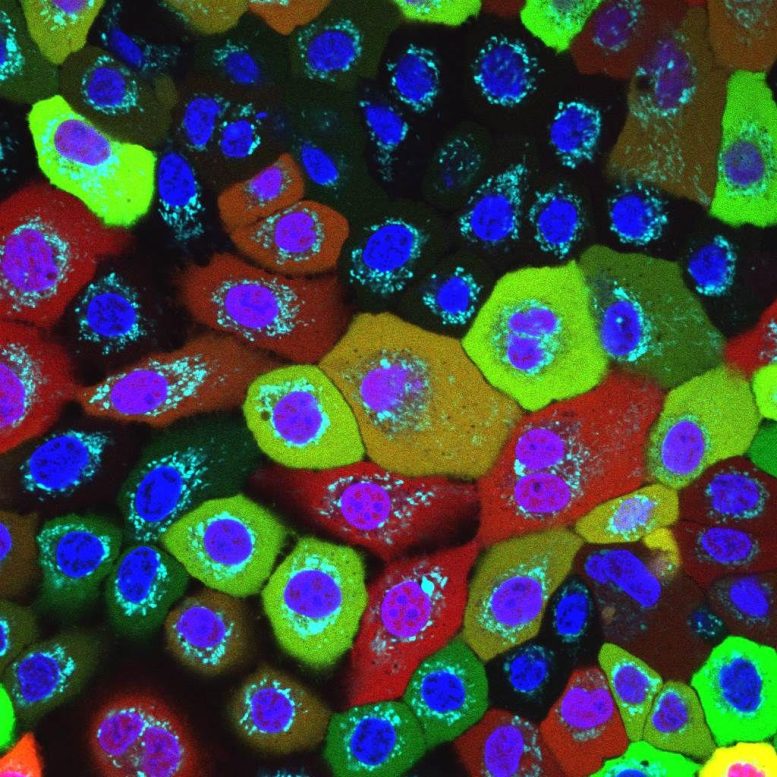
A research project carried out by the University of Bonn holds promise for the development of treatments for skin and gut disorders in the medium term.
Scientists at the University of Bonn and the National University of Singapore have uncovered a novel intracellular “smoke detector.” This sensor alerts the cell of damage to the mitochondria – the cellular powerhouses that provide energy. Dysfunction of this sensor can lead to chronic skin conditions. The discovery may also have implications for the maintenance of healthy heart and intestinal function. The findings have recently been published in the journal Nature Immunology.
Every cell in the body has numerous sensors that monitor its function. Some sound the alarm after a virus attack, for instance; others kick in when any kind of damage threatens the cell’s survival. “We have now discovered that a molecule called NLRP10 also acts as a sensor,” explains Prof. Dr. Eicke Latz, head of the Institute of Innate Immunity at the University Hospital Bonn. “This was completely unknown until now.”
Figuratively speaking, NLRP10 detects when the mitochondria in the cell start to smoke due to some malfunction. These are the microscopic power plants that provide the energy for cellular functions. As soon as an NLRP10 sensor detects damage to mitochondria, it sets off a complicated process. This creates a so-called inflammasome, a complex molecular machine. Its activity ultimately causes the cell to perish and be disposed of by summoned immune cells.
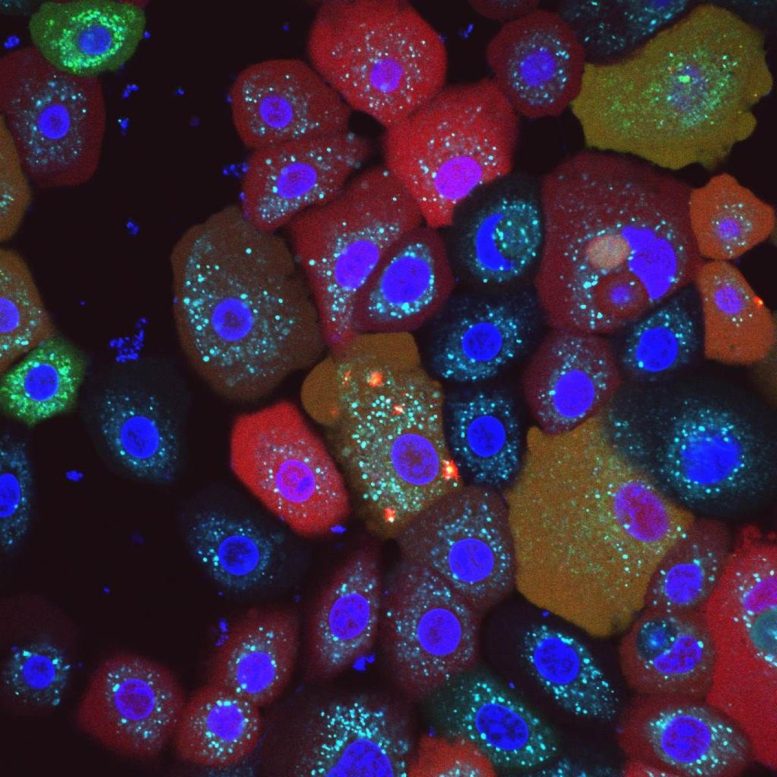
Fire Alarm Prevents Long-Lasting Smoldering Fire
“This process is hugely important,” explains Latz, who is also the spokesperson for the Cluster of Excellence ImmunoSensation2 and a member of the Transdisciplinary Research Area “Life and Health” at the University of Bonn. This is because the inflammasome ensures that the fire is stamped out straight away, which prevents a prolonged smoldering fire that would damage other parts of the tissue. “Disruption of this mechanism can result in chronic inflammation,” the researcher emphasizes. “Killing cells with mitochondrial defects may sound drastic. Ultimately, however, this step prevents more serious consequences.”
Not all cells in the body have an NLRP10 sensor. The “fire detector” occurs primarily in the outermost skin layer, the stratum granulosum. The skin is directly exposed to environmental stimuli such as UV radiation, but also pathogens. This could potentially result in accumulated damage. The mechanism ensures that affected cells are effectively disposed of. “If a mutation causes the NLRP10 sensor to malfunction, this can result in a chronic skin inflammation called atopic dermatitis,” explains Dr. Tomasz Próchnicki, who performed an important part of the experiments for his doctorate in Latz’s research group.
The Sensor Is Also Found in the Intestinal Wall and Heart
Large quantities of NLRP10 are also found in the intestinal wall cells. These also have regular contact with pathogens and potentially harmful substances. Another organ in which the sensor can be detected is the heart: It is particularly dependent on a well-functioning energy supply. This may make it especially important to quickly kill and replace cells with defective mitochondria.
The study may potentially also open up new therapeutic perspectives. “It is conceivable to specifically modulate the NLRP10 sensor using certain substances in order to stimulate the formation of inflammasomes,” Latz explains. “This approach might enable chronic skin diseases to be better controlled.”
Reference: “Mitochondrial damage activates the NLRP10 inflammasome” by Tomasz Próchnicki, Matilde B. Vasconcelos, Kim S. Robinson, Matthew S. J. Mangan, Dennis De Graaf, Kateryna Shkarina, Marta Lovotti, Lena Standke, Romina Kaiser, Rainer Stahl, Fraser G. Duthie, Maximilian Rothe, Kateryna Antonova, Lea-Marie Jenster, Zhi Heng Lau, Sarah Rösing, Nora Mirza, Clarissa Gottschild, Dagmar Wachten, Claudia Günther, Thomas A. Kufer, Florian I. Schmidt, Franklin L. Zhong and Eicke Latz, 20 March 2023, Nature Immunology.
DOI: 10.1038/s41590-023-01451-y
In addition to the University Hospital and the University of Bonn, the Skin Research Institute of Singapore, the Technical University of Dresden and the University of Hohenheim were involved in the work. The study was funded by the German Research Foundation (DFG), by EU funds under the European Union’s Horizon 2020 program, by the Helmholtz Association, and by the Nation Research Foundation in Singapore.
Never miss a breakthrough: Join the SciTechDaily newsletter.
Follow us on Google and Google News.