
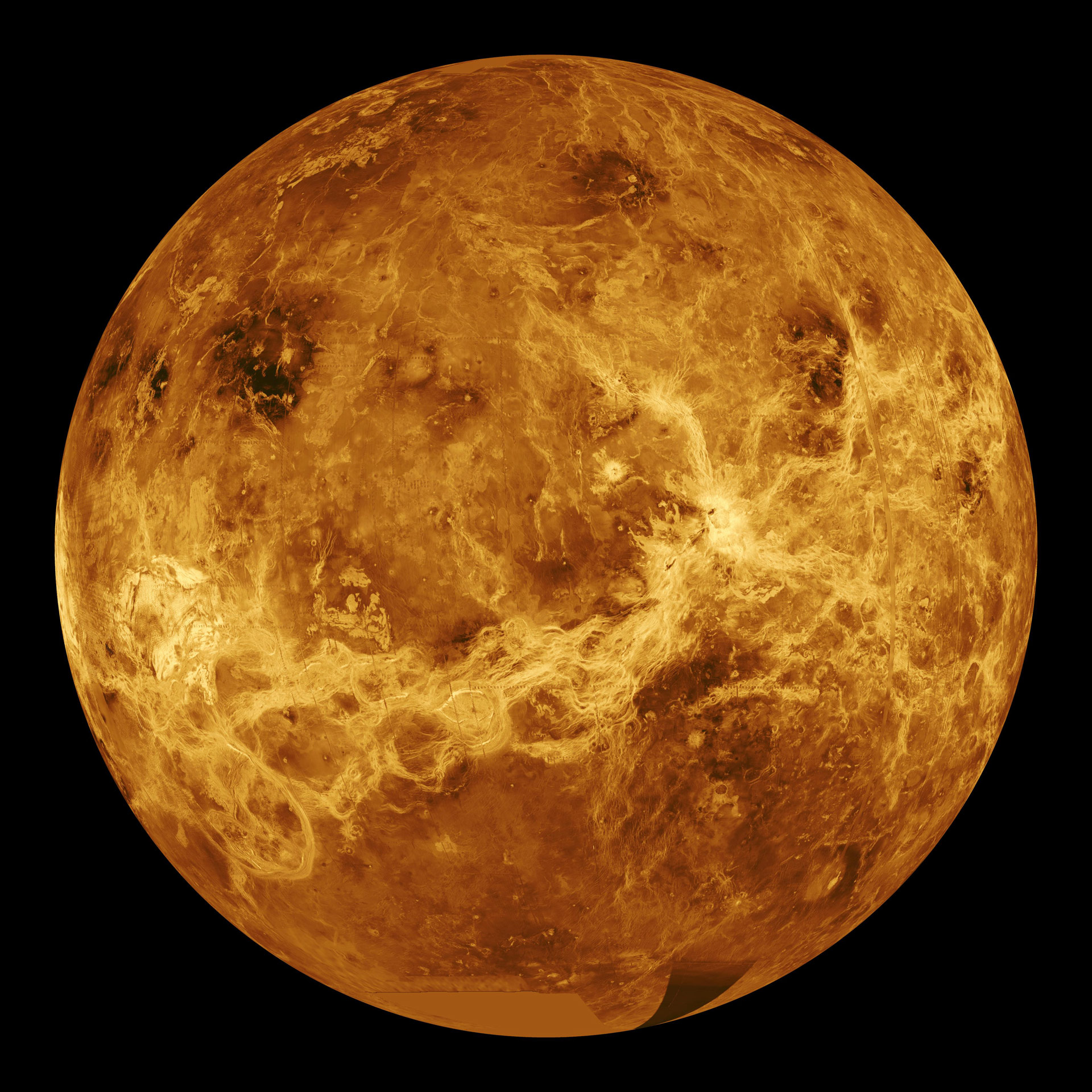
Using data from NASA’s twin STEREO spacecrafts, scientists have confirmed the existence of a circumsolar dust ring that encircles the Sun and closely follows the orbit of Venus.
Research by The Open University and the University of Central Lancashire (UCLan) has confirmed the existence of a circumsolar dust ring – with a diameter of 220 million kilometers (137 million miles) – which encircles the Sun and closely follows the orbit of the planet Venus. The new discovery, which is reported in the journal Science on November 22, will help scientists to understand more about a similar resonance ring of dust that exists around the Earth’s orbit, as well as investigate in more detail how this dust moves in space.
A circumsolar dust ring is created when dust from asteroid collisions and comet debris is repeatedly tugged by a planet’s gravity to form a ring close to the orbit of that planet. Researchers from the OU and the University of Central Lancashire realized that they could use the Heliospheric Imager (HI) instruments on the STEREO-A and STEREO-B spacecraft to search for this ring. They knew that a dust ring near Venus would be very faint so they combined many images, taken over 10-day intervals, to create long-exposure pictures to analyze.
Dr. Mark Jones, Senior Lecturer at The Open University, who led the project said: “The resulting images show a bright feature close to where we have an edge-on view of Venus’ orbit and is what we’d expect to see from a dust ring following that orbit. We cross-referenced the images from STEREO-A with those compiled from the STEREO-B spacecraft and saw the same feature in the same place – giving us confidence that this was a real physical structure in the solar system.”
Dr. Daniel Brown, Senior Lecturer at the University of Central Lancashire explains: “Using STEREO data has allowed us to observe large segments of Venus’ dust ring. The STEREO spacecraft sit outside the ring, so as they orbit the Sun they are able to view different parts of the ring. This allows us to build up a more complete picture of the ring’s structure. In comparison, the dust ring at Earth’s orbit was observed from the Earth, and so only the parts of the ring closest to Earth have been studied. Because of our unique view, we have found that the structure of Venus’ ring is very different to that of the Earth’s.”
Dr. Danielle Bewsher, Senior Lecturer at the University of Central Lancashire continues: “The HI instruments were originally designed to study coronal mass ejections as they travel from the Sun to the Earth, but we realized when we started to analyze the HI observations that they contained a rich collection of secondary features such as comets, stars and asteroids. Pushing the instrument to the limit of its capabilities has allowed us to detect the faint signal of the dust ring in the orbit of Venus.”
Dr. Jones concludes: “This is an important discovery not only because it is a newly confirmed feature of our solar system, but also because understanding resonance rings will help us to interpret future images of exoplanetary systems. Also, while the Venus ring is far too faint to be seen from the surface of Earth, if we could see it, this ring would stretch across half the visible sky.”
Reference: “Imaging of a Circumsolar Dust Ring Near the Orbit of Venus” by M. H. Jones, D. Bewsher and D. S. Brown, 22 November 2013, Science.
DOI: 10.1126/science.1243194
Never miss a breakthrough: Join the SciTechDaily newsletter.
Follow us on Google and Google News.
1 Comment
This circum-solar dust ring near the planet Venus could be the debris of comets which always travel towards the Sun and gets disintegrated a bit for billions of years. Don’t we find Leonoid mateoric showers periodically from such debris of a comet? Thank You.