
Close Menu
    Facebook X (Twitter) Instagram
    SciTechDaily
    • Biology
    • Chemistry
    • Earth
    • Health
    • Physics
    • Science
    • Space
    • Technology
    Facebook X (Twitter) Pinterest YouTube RSS
    SciTechDaily
    Home»Biology»Researchers Develop Vaccine to Help Control Autism-Associated Gut Bacteria
    Biology

    Researchers Develop Vaccine to Help Control Autism-Associated Gut Bacteria

    By University of GuelphApril 25, 20131 Comment3 Mins Read
    Facebook Twitter Pinterest Telegram LinkedIn WhatsApp Email Reddit
    Share
    Facebook Twitter LinkedIn Pinterest Telegram Email Reddit
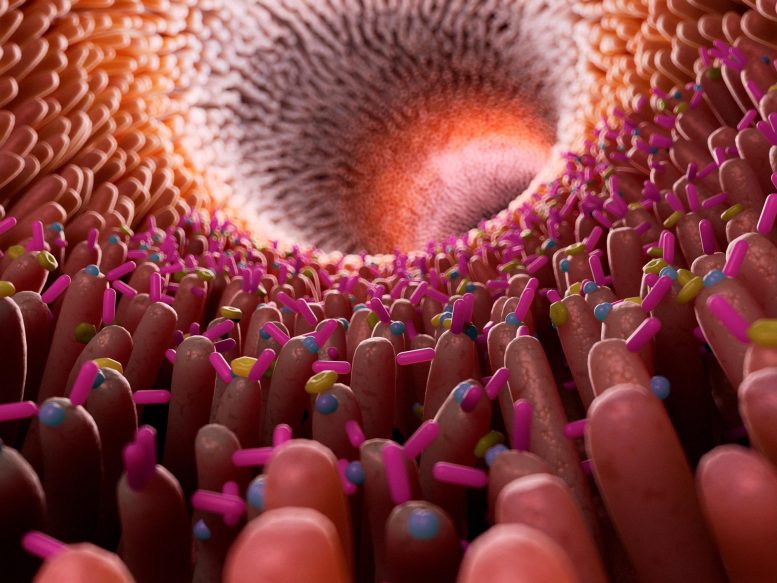
    Human Gut Microbiome Illustration
    Illustration of the human gut microbiome. A vaccine made from carbohydrates has been created by scientists from the University of Guelph to combat Clostridium bolteae, a gut bacterium. This marks the first vaccine that aims to manage symptoms of diarrhea and constipation that may be caused by C. bolteae, as well as potentially alleviate autism-related symptoms associated with the microbe.

    Scientists at the University of Guelph have developed a carbohydrate-based vaccine against the gut bug Clostridium bolteae. This is the first vaccine designed to control constipation and diarrhea potentially caused by C. bolteae and perhaps control autism-related symptoms associated with this microbe.

    University of Guelph researchers have created a first-ever vaccine for gut bacteria common in autistic children.

    The groundbreaking study by Brittany Pequegnat and Guelph chemistry professor Mario Monteiro appears this month in the journal Vaccine.

    They developed a carbohydrate-based vaccine against the gut bug Clostridium bolteae.

    C. bolteae is known to play a role in gastrointestinal disorders, and it often shows up in higher numbers in the GI tracts of autistic children than in those of healthy kids.

    More than 90 percent of children with autism spectrum disorders suffer from chronic, severe gastrointestinal symptoms. Of those, about 75 percent suffer from diarrhea, according to current literature.

    “Little is known about the factors that predispose autistic children to C. bolteae,” said Monteiro. Although most infections are handled by some antibiotics, he said, a vaccine would improve current treatment.

    “This is the first vaccine designed to control constipation and diarrhea potentially caused by C. bolteae and perhaps control autism-related symptoms associated with this microbe,” he said.

    Autism cases have increased almost sixfold over the past 20 years, and scientists don’t know why. Although many experts point to environmental factors, others have focused on the human gut.

    Some researchers believe toxins and/or metabolites produced by gut bacteria, including C. bolteae, may be associated with symptoms and severity of autism, especially regressive autism.

    Pequegnat, a master’s student, and Monteiro used bacteria grown by Mike Toh, a Guelph microbiology PhD student.

    The new anti- C. bolteae vaccine targets the specific complex polysaccharides, or carbohydrates, on the surface of the bug.

    The vaccine effectively raised C. bolteae-specific antibodies in rabbits. Doctors could also use the vaccine-induced antibodies to quickly detect the bug in a clinical setting, said Monteiro.

    The vaccine might take more than 10 years to work through preclinical and human trials, and it may take even longer before a drug is ready for market, Monteiro said.

    “But this is a significant first step in the design of a multivalent vaccine against several autism-related gut bacteria,” he said.

    Monteiro has studied sugar-based vaccines for two other gastric pathogens: Campylobacter jejuni, which causes travelers’ diarrhea; and Clostridium difficile, which causes antibiotic-associated diarrhea.

    Reference: “A vaccine and diagnostic target for Clostridium bolteae, an autism-associated bacterium” by Brittany Pequegnat, Martin Sagermann, Moez Valliani, Michael Toh, Herbert Chow, Emma Allen-Vercoe and Mario A. Monteiro, 18 April 2013, Vaccine.
    DOI: 10.1016/j.vaccine.2013.04.018

    The research was supported by the Natural Sciences and Engineering Research Council.

    Never miss a breakthrough: Join the SciTechDaily newsletter.
    Follow us on Google and Google News.

    Autism Spectrum Disorder Disease Microbiology University of Guelph Vaccine
    Share. Facebook Twitter Pinterest LinkedIn Email Reddit

    Related Articles

    Using Zebrafish to Decipher the Roles of Genes Associated With Autism

    Transgenic Mosquitoes Can’t Transmit Malaria

    Understanding the Internal Process That Makes Salmonella Dangerous

    Increasing Th17 Cells in the Gut May Improve the Control of HIV Growth

    Imbalance Between Neuronal Excitation and Inhibition May Account for Seizure Susceptibility in Angelman Syndrome

    Engineered Algae to Produce Potential Candidates for Malaria Vaccine

    VPM1002 Tuberculosis Vaccine in Phase II Trial

    Widespread Presence of Antibiotic Resistant Bacteria in Agricultural Soils

    Rett Syndrome Could be Reversed by Bone-marrow Transplant

    1 Comment

    1. Linda on October 23, 2015 8:08 am

      Are you freaking kidding me? Wakefield and a group of doctors he worked with observed gut imbalances in kids with autism. So where’s the apology?

      Reply
    Leave A Reply Cancel Reply

    • Facebook
    • Twitter
    • Pinterest
    • YouTube

    Don't Miss a Discovery

    Subscribe for the Latest in Science & Tech!

    Trending News

    Scientists Discover Stem Cells That Could Regrow Teeth and Bone

    Early Cannabis Use May Stall Key Brain Skills in Teens

    Popular Vitamin D Supplement Has “Previously Unknown” Negative Effect, Study Finds

    Study Reveals Malaria’s Hidden Role in Human Evolution

    The Hidden Risk of Taking Breaks From Weight-Loss Drugs Like Ozempic

    Scientists Warn That This Common Pet Fish Can Wreck Entire Ecosystems

    Scientists Make Breakthrough in Turning Plastic Trash Into Clean Fuel Using Sunlight

    This Popular Supplement May Interfere With Cancer Treatment, Scientists Warn

    Follow SciTechDaily
    • Facebook
    • Twitter
    • YouTube
    • Pinterest
    • Newsletter
    • RSS
    SciTech News
    • Biology News
    • Chemistry News
    • Earth News
    • Health News
    • Physics News
    • Science News
    • Space News
    • Technology News
    Recent Posts
    • Researchers Unveil Groundbreaking Sustainable Solution to Vitamin B12 Deficiency
    • Scientists Identify Immune Protein That Could Mimic Anti-Aging Effects of Calorie Restriction
    • This Tiny Creature Survived a World of Dinosaurs and Changed What Came Next
    • Millions of People Have Osteopenia Without Realizing It – Here’s What You Need To Know
    • Researchers Discover Boosting a Single Protein Helps the Brain Fight Alzheimer’s
    Copyright © 1998 - 2026 SciTechDaily. All Rights Reserved.
    • Science News
    • About
    • Contact
    • Editorial Board
    • Privacy Policy
    • Terms of Use

    Type above and press Enter to search. Press Esc to cancel.