
Close Menu
    Facebook X (Twitter) Instagram
    SciTechDaily
    • Biology
    • Chemistry
    • Earth
    • Health
    • Physics
    • Science
    • Space
    • Technology
    Facebook X (Twitter) Pinterest YouTube RSS
    SciTechDaily
    Home»Technology»Self-Assembling Polymer Increases Hard Drive Capacity Fivefold
    Technology

    Self-Assembling Polymer Increases Hard Drive Capacity Fivefold

    By SciTechDailyNovember 22, 2012No Comments3 Mins Read
    Facebook Twitter Pinterest Telegram LinkedIn WhatsApp Email Reddit
    Share
    Facebook Twitter LinkedIn Pinterest Telegram Email Reddit
    block-copolymer-dots
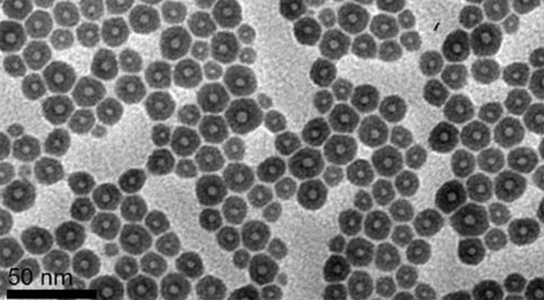
    Close-up of a metal surface coated with block copolymers. Credit: Sravani Gullapalli, Jason M Grider, Hitesh G Bagaria, Kyu-Sung Lee, Minjung Cho, Vicki L Colvin, Ghassan E Jabbour and Michael S Wong

    Synthetic chemists have designed self-assembling polymers, which require heat in order to rearrange themselves. This technology has the potential to increase hard drive storage capacity fivefold.

    The scientists published their findings in the journal Nanotechnology. Currently, information is stored by printing the 1s and 0s of binary data as magnetic dots onto a metal surface. The amount of information that can be stored is relative to the spacing of the dots. The closer the dots are positioned, the more data can be stored. The dots have become so close together with current technology that reducing the spacing in between them would cause instability due to neighboring dots’ magnetic fields. However, if there was a way to protect the dots from neighboring magnetic fields, they could be moved even closer together, creating more storage space.
    copolymer-top-coat
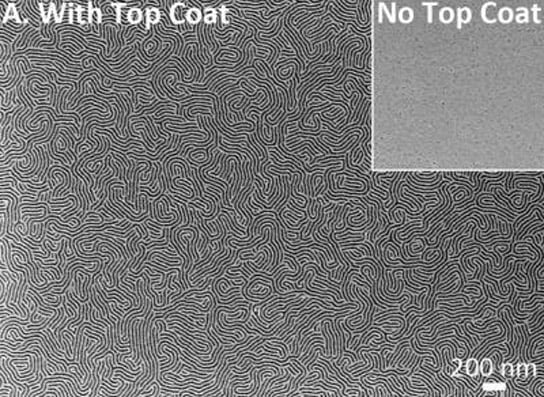
    Surface with top coat and surface without. Credit: Sravani Gullapalli, Jason M Grider, Hitesh G Bagaria, Kyu-Sung Lee, Minjung Cho, Vicki L Colvin, Ghassan E Jabbour, and Michael S Wong

    A team of chemists and engineers at the University of Texas have teamed up to apply a block copolymer, a grouping of polymers made out of more than one bondable molecule, onto a metal surface. If delicately coated with heat, the block copolymers are able to reorganize themselves into a regular pattern and will follow a pattern if the surface contains a guide. Magnetic dots on hard drives provide an example of such a guide, and the copolymers provide just enough shielding from magnetic fields, allowing the dots to be moved closer together without worrying about data corruption.

    Until now, this self-assembly process was only able to double storage space. The process was refined by the researchers to allow a fivefold increase of storage. A special top coat that was created helps the polymer form using a proper orientation and is activated by a bit of heat.

    Since the consumer market is orientated towards SSDs, this could provide a different outlook for HDDs, which could store up to 20TB of data using current techniques. HDDs could be used for long-term storage, while SSDs would be used for data that is used a lot.

    Reference: “Molten-droplet synthesis of composite CdSe hollow nanoparticles” by Sravani Gullapalli, Jason M Grider, Hitesh G Bagaria, Kyu-Sung Lee, Minjung Cho, Vicki L Colvin, Ghassan E Jabbour and Michael S Wong, 16 November 2012, Nanotechnology.
    DOI: 10.1088/0957-4484/23/49/495605

    Never miss a breakthrough: Join the SciTechDaily newsletter.
    Follow us on Google and Google News.

    Capacity Engineering Materials Science Storage Synthetic Chemistry
    Share. Facebook Twitter Pinterest LinkedIn Email Reddit

    Related Articles

    Stanford Engineers Improve Flexible Carbon Nanotube Circuits

    Solid Concepts 3D Prints First Metal Gun

    Engineers Build a Carbon Nanotube Computer

    Stanford Scientists Generate Electricity from Sewage

    Engineers Develop a New Approach for Graphene Logic Circuits

    Researchers Develop One-Kilobit Memory Chips Based on Silicon Oxide

    Printing Innovation Improves Organic Semiconductor Efficiency 10-Fold

    New 3D Form of Graphene May Lead to Flexible Electronics

    Superhydrophobic Coating Allows Boiling Water without the Creation of Bubbles

    Leave A Reply Cancel Reply

    • Facebook
    • Twitter
    • Pinterest
    • YouTube

    Don't Miss a Discovery

    Subscribe for the Latest in Science & Tech!

    Trending News

    Scientists Discover Game-Changing New Way To Treat High Cholesterol

    This Small Change to Your Exercise Routine Could Be the Secret to Living Longer

    Scientists Discover 430,000-Year-Old Wooden Tools, Rewriting Human History

    AI Could Detect Early Signs of Alzheimer’s in Under a Minute – Far Before Traditional Tests

    What if Dark Matter Has Two Forms? Bold New Hypothesis Could Explain a Cosmic Mystery

    This Metal Melts in Your Hand – and Scientists Just Discovered Something Strange

    Beef vs. Chicken: Surprising Results From New Prediabetes Study

    Alzheimer’s Breakthrough: Scientists Discover Key Protein May Prevent Toxic Protein Clumps in the Brain

    Follow SciTechDaily
    • Facebook
    • Twitter
    • YouTube
    • Pinterest
    • Newsletter
    • RSS
    SciTech News
    • Biology News
    • Chemistry News
    • Earth News
    • Health News
    • Physics News
    • Science News
    • Space News
    • Technology News
    Recent Posts
    • Researchers Discover Unknown Beetle Species Just Steps From Their Lab
    • Jellyfish Caught Feasting on Exploding Sea Worms for the First Time
    • Ancient “Spaghetti” in Dogs’ Hearts Reveals Heartworm’s Shocking Origins
    • Milk Nanoparticles Could Revolutionize Treatment for Deadly Bile Duct Cancer
    • Largest-Ever Study Finds Medicinal Cannabis Ineffective for Anxiety, Depression, PTSD
    Copyright © 1998 - 2026 SciTechDaily. All Rights Reserved.
    • Science News
    • About
    • Contact
    • Editorial Board
    • Privacy Policy
    • Terms of Use

    Type above and press Enter to search. Press Esc to cancel.