
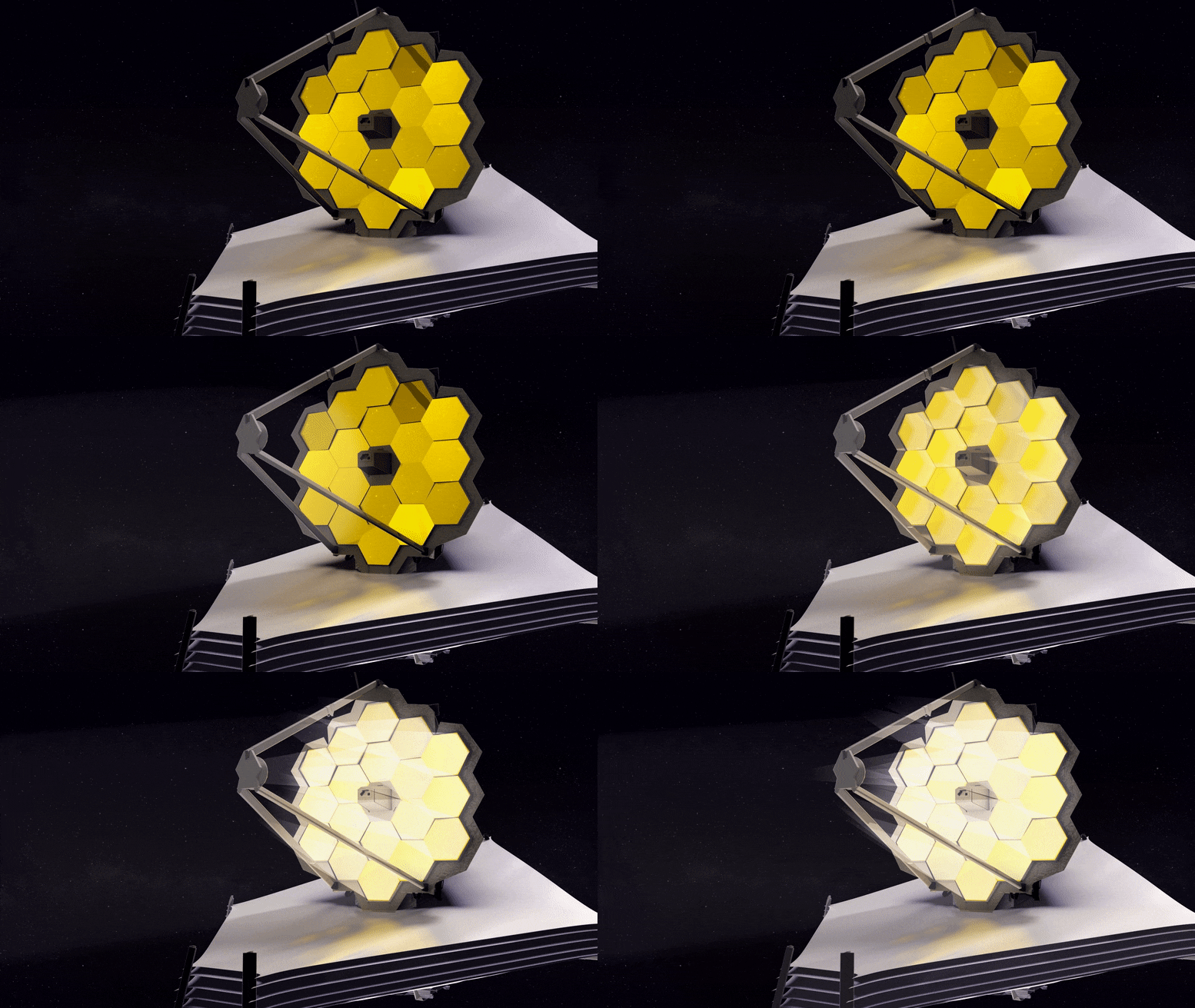
The James Webb Space Telescope is nearing completion of the first phase of the months-long process of aligning the observatory’s primary mirror using the Near Infrared Camera (NIRCam) instrument.
The team’s challenge was twofold: confirm that NIRCam was ready to collect light from celestial objects, and then identify starlight from the same star in each of the 18 primary mirror segments. The result is an image mosaic of 18 randomly organized dots of starlight, the product of Webb’s unaligned mirror segments all reflecting light from the same star back at Webb’s secondary mirror and into NIRCam’s detectors.
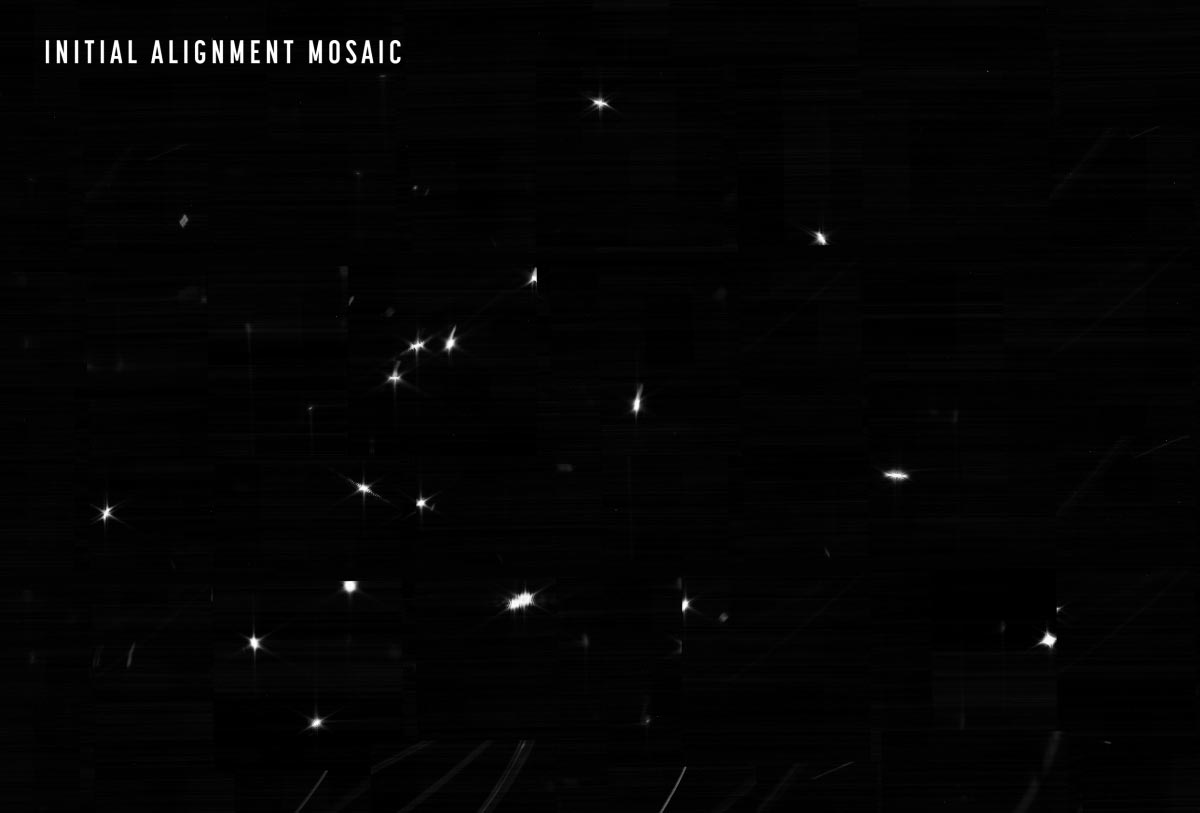
What looks like a simple image of blurry starlight now becomes the foundation to align and focus the telescope in order for Webb to deliver unprecedented views of the universe this summer. Over the next month or so, the team will gradually adjust the mirror segments until the 18 images become a single star.
“The entire Webb team is ecstatic at how well the first steps of taking images and aligning the telescope are proceeding. We were so happy to see that light makes its way into NIRCam,” said Marcia Rieke, principal investigator for the NIRCam instrument and regents professor of astronomy, University of Arizona.
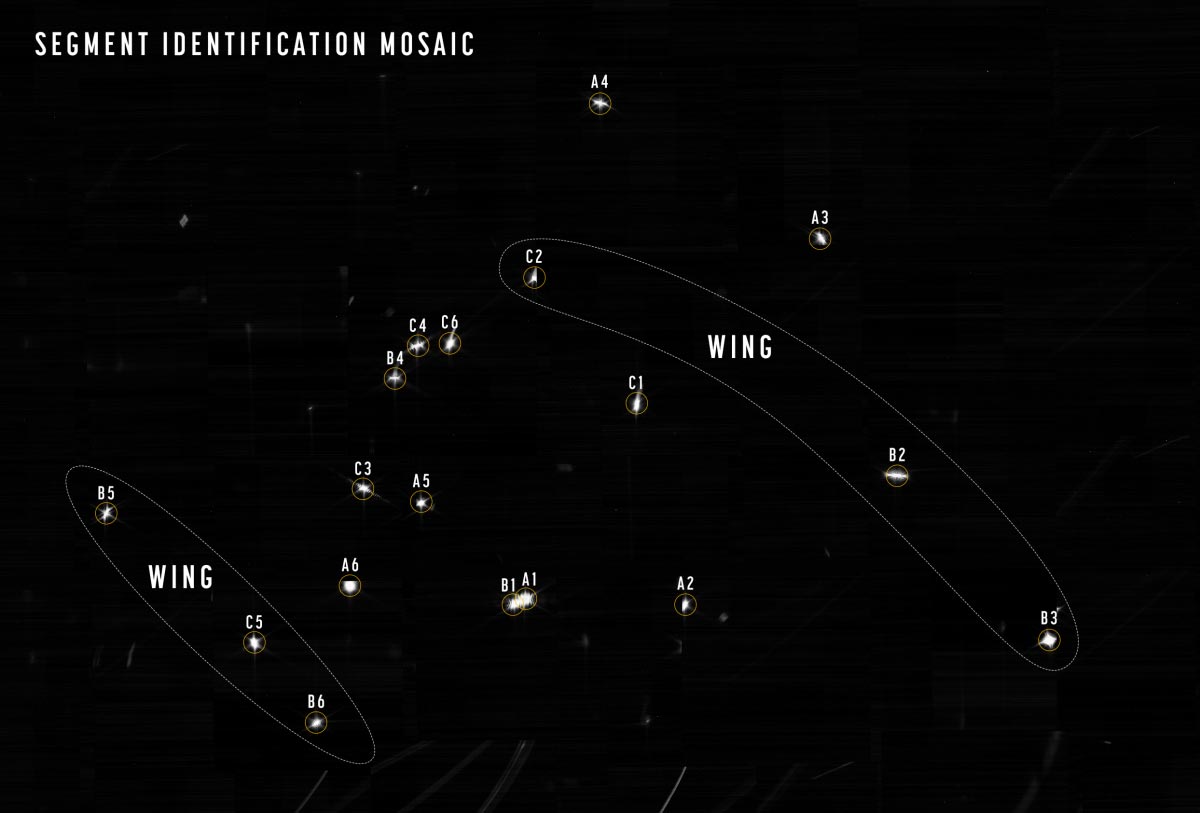
During the image capturing process that began February 2, Webb was repointed to 156 different positions around the predicted location of the star and generated 1,560 images using NIRCam’s 10 detectors, amounting to 54 gigabytes of raw data. The entire process lasted nearly 25 hours, but notedly the observatory was able to locate the target star in each of its mirror segments within the first six hours and 16 exposures. These images were then stitched together to produce a single, large mosaic that captures the signature of each primary mirror segment in one frame. The images shown here are only a center portion of that larger mosaic, a huge image with over 2 billion pixels.
“This initial search covered an area about the size of the full Moon because the segment dots could potentially have been that spread out on the sky,” said Marshall Perrin, deputy telescope scientist for Webb and astronomer at the Space Telescope Science Institute. “Taking so much data right on the first day required all of Webb’s science operations and data processing systems here on Earth working smoothly with the observatory in space right from the start. And we found light from all 18 segments very near the center early in that search! This is a great starting point for mirror alignment.”
Lee Feinberg, Webb optical telescope element manager at NASA’s Goddard Space Flight Center, explains the early stages of the mirror alignment process.
Each unique dot visible in the image mosaic is the same star as imaged by each of Webb’s 18 primary mirror segments, a treasure trove of detail that optics experts and engineers will use to align the entire telescope. This activity determined the post-deployment alignment positions of every mirror segment, which is the critical first step in bringing the entire observatory into a functional alignment for scientific operations.
NIRCam is the observatory’s wavefront sensor and a key imager. It was intentionally selected to be used for Webb’s initial alignment steps because it has a wide field of view and the unique capability to safely operate at higher temperatures than the other instruments. It is also packed with customized components that were designed to specifically aid in the process. NIRCam will be used throughout nearly the entire alignment of the telescope’s mirrors. It is, however, important to note that NIRCam is operating far above its ideal temperature while capturing these initial engineering images, and visual artifacts can be seen in the mosaic. The impact of these artifacts will lessen significantly as Webb draws closer to its ideal cryogenic operating temperatures.
“Launching Webb to space was of course an exciting event, but for scientists and optical engineers, this is a pinnacle moment, when light from a star is successfully making its way through the system down onto a detector,” said Michael McElwain, Webb observatory project scientist, NASA’s Goddard Space Flight Center.
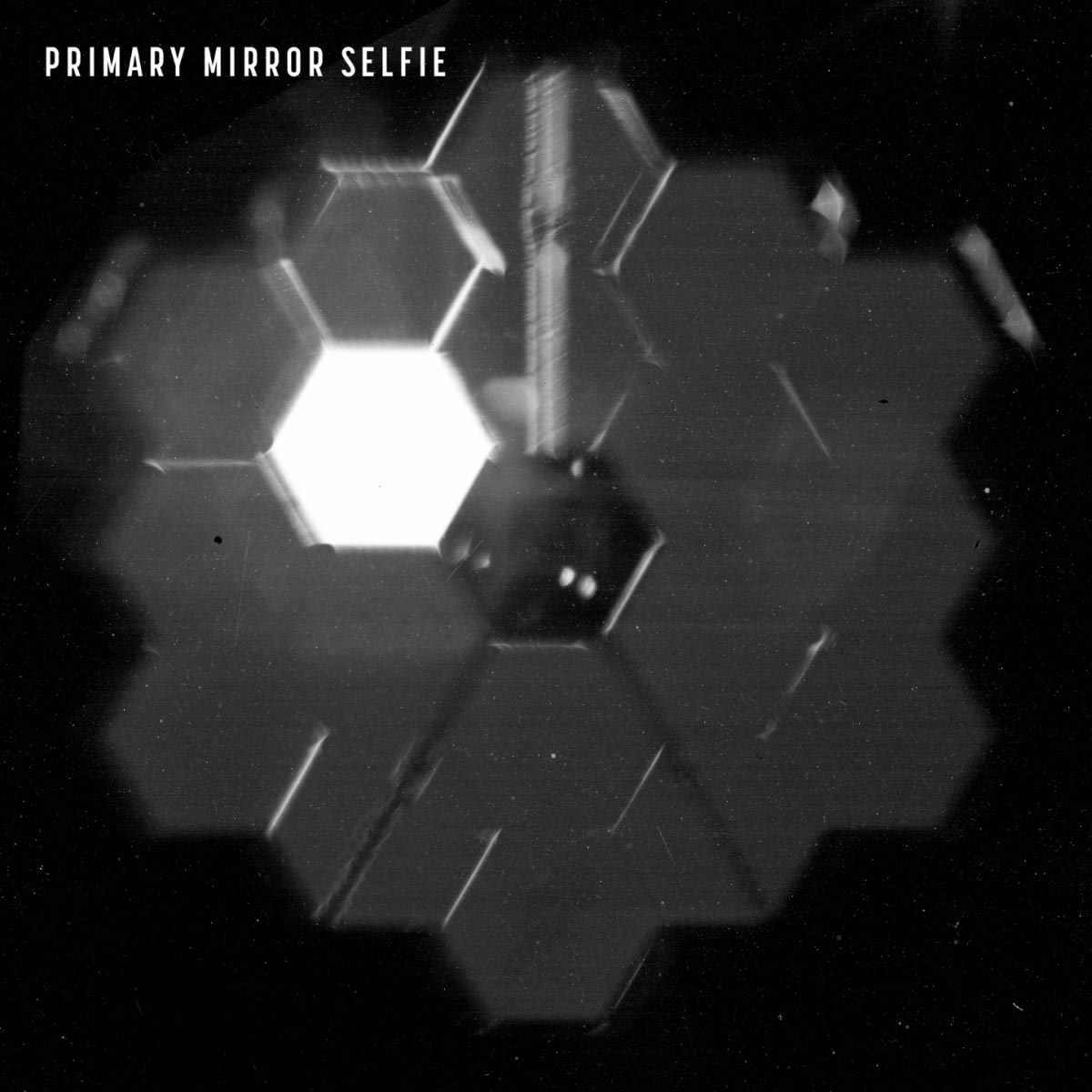
Moving forward, Webb’s images will only become clearer, more detail-laden, and more intricate as its other three instruments arrive at their intended cryogenic operating temperatures and begin capturing data. The first scientific images are expected to be delivered to the world in the summer. Though this is a big moment, confirming that Webb is a functional telescope, there is much ahead to be done in the coming months to prepare the observatory for full scientific operations using all four of its instruments.
Never miss a breakthrough: Join the SciTechDaily newsletter.
Follow us on Google and Google News.
10 Comments
What looks like a simple image of blurry starlight now becomes the foundation to align and focus the telescope in order for Webb to deliver unprecedented views of the universe this summer. Over the next month or so, the team will gradually adjust the mirror segments until the 18 images become a single star.
“The entire Webb team is ecstatic at how well the first steps of taking images and aligning the telescope are proceeding. We were so happy to see that light makes its way into NIRCam,” said Marcia Rieke, principal investigator for the NIRCam instrument and regents professor of astronomy, University of Arizona.
The music is distracting/annoying making it difficult to understand the dialog. Otherwise, wow!
10 billion dollars and it still looks like it was captured using a flip phone camera 🤣🤣. That could of ended hunger, provided housing for the homeless, housed single mothers and etc.. but nope we’re wasting it on this crap 💀
You for real?
We as the human race are in a time of great discovery. There is going to be new data compiled for future generations to pour over with the earnest of greater understanding of the known and now the unknown universe. With this greater understanding these future generations will be able to look back to these days and say such devices and the forward looking people who designed and developed them are the pioneers of universal discovery and the greater knowledge we all as human beings seek after. So I say now on this day. May there be great discoveries and even greater knowledge gained which helps us in our understanding of our place in this universe. I believe that someday we as human beings are going to find life is universal.
No problem amount of money will ever fix hunger. It will always be. But money well spent (on the web) it is the most important thing we as humans have done so far. In my opinion. The things the scientist will discover will be out of this world.
..
Go Web
Wow…..billions of our tax dollars and a 20+ hour exposure and it can’t do better than a ninety year old without their glasses and a 1700’s spy glass. That was not a colossal waste of citizens money at all!
Unfortunate that some people are so against spending money for scientific furthering of our knowledge of the cosmos.
I would gladly spend another billions of my tax dollars,I can hardly wait until summer when we will be able to see the fruits of our money. Gerald Miller, Chief, U S Navy, retired.
Haters will hate… Webb will be the greatest discovery tool ever invented. It will answered many questions and perhaps save humanity one day…all for $10B. I think that’s a great deal
I have been self taught in studying the cosmos for 50 years.The JWT will find the answers to questions I have not come up with.Can not wait.