
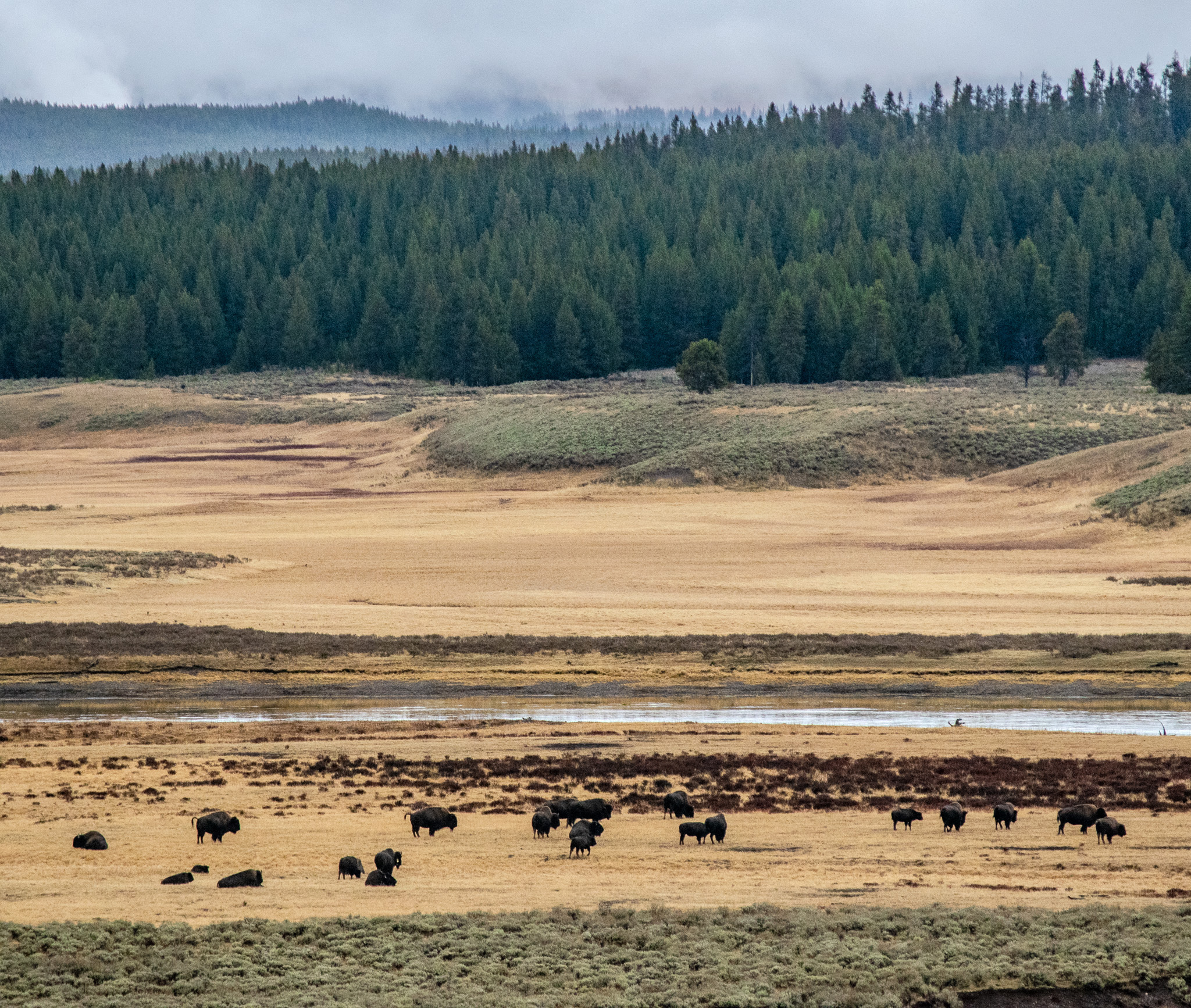
Chemicals from buried dung in lake sediments indicate their presence and reveal their ecological impacts.
A recent analysis of chemicals preserved in lake sediments reveals that large herbivores, such as bison and elk, have inhabited the Yellowstone National Park region continuously for approximately 2,300 years. John Wendt from Oklahoma State University, along with his colleagues, shared these findings in the open-access journal PLOS ONE on October 30, 2024.
The near-extinction of bison in North America in the 19th and 20th centuries was a major ecological catastrophe and little is known about where and how these animals lived before European colonization. In the new study, researchers attempted to determine the dominant large herbivores that lived in the northern Yellowstone National Park area by analyzing steroids from animal dung in lake sediments dating from about 238 B.C. to the present time.
Steroid Analysis as a Tool for Herbivore Identification
To perform this analysis, researchers first determined which types of steroids occur in the dung of several large herbivores believed to have lived in the region, including bison, elk, moose, mule deer, and pronghorn. They found they could identify moose, pronghorn, and mule deer based on the steroids in their dung alone, but that bison and elk were harder to differentiate from each other. When the researchers analyzed steroids from different layers of lake sediments, they saw that either bison, elk, or a combination of the two, were the primary large herbivore species in the watershed for the last 2,300 years.
The analysis also showed high steroid levels in the 20th century, a time when hunting was banned, bison and elk were discouraged from migrating in winter, and their natural predators were eliminated. Based on the levels of plant pollen, microalgae, or plankton detected in these sediments, the researchers concluded that the expanded animal populations likely ate up local forage plants, like willow and Idaho fescue, and that their dung may have fertilized the growth of diatoms in the lake, changing the local ecosystem. Provisions of winter hay in nearby meadows, provided by park managers, also kept animals in the area for longer, resulting in impacts to the watershed.
The new research demonstrates that the analysis of steroids from lake sediments is a promising tool that can help wildlife managers and conservationists understand how communities of hoofed animals and their impacts have shifted over time. While the results shed light on historical changes within a single watershed, researchers expect that extending this approach to a network of sites could provide much-needed information on past grazing animal communities at Yellowstone National Park and beyond.
The authors add: “We developed a 2,300-year record of wild herbivore activity in northern Yellowstone National Park with fossil biomarkers found in lake sediments. This information is critical for understanding long-term dynamics of ecologically and culturally important herbivores such as bison and elk.”
Reference: “A 2000-year record of fecal biomarkers reveals past herbivore presence and impacts in a catchment in northern Yellowstone National Park, USA” by John A. F. Wendt, Elena Argiriadis, Cathy Whitlock, Mara Bortolini, Dario Battistel and David B. McWethy, 30 October 2024, PLOS ONE.
DOI: 10.1371/journal.pone.0311950
The scientists acknowledge funding from the American Museum of Natural History to J.A.F.W. (www.amnh.org/research/richard-gilder-graduate-school), Montana Institute on Ecosystems to J.A.F.W and D.B.M. (www.montana.edu/ioe), and the National Science Foundation grant EAR-2149482 to C.W. and D.B.M (www.nsf.gov).
Never miss a breakthrough: Join the SciTechDaily newsletter.
Follow us on Google and Google News.