
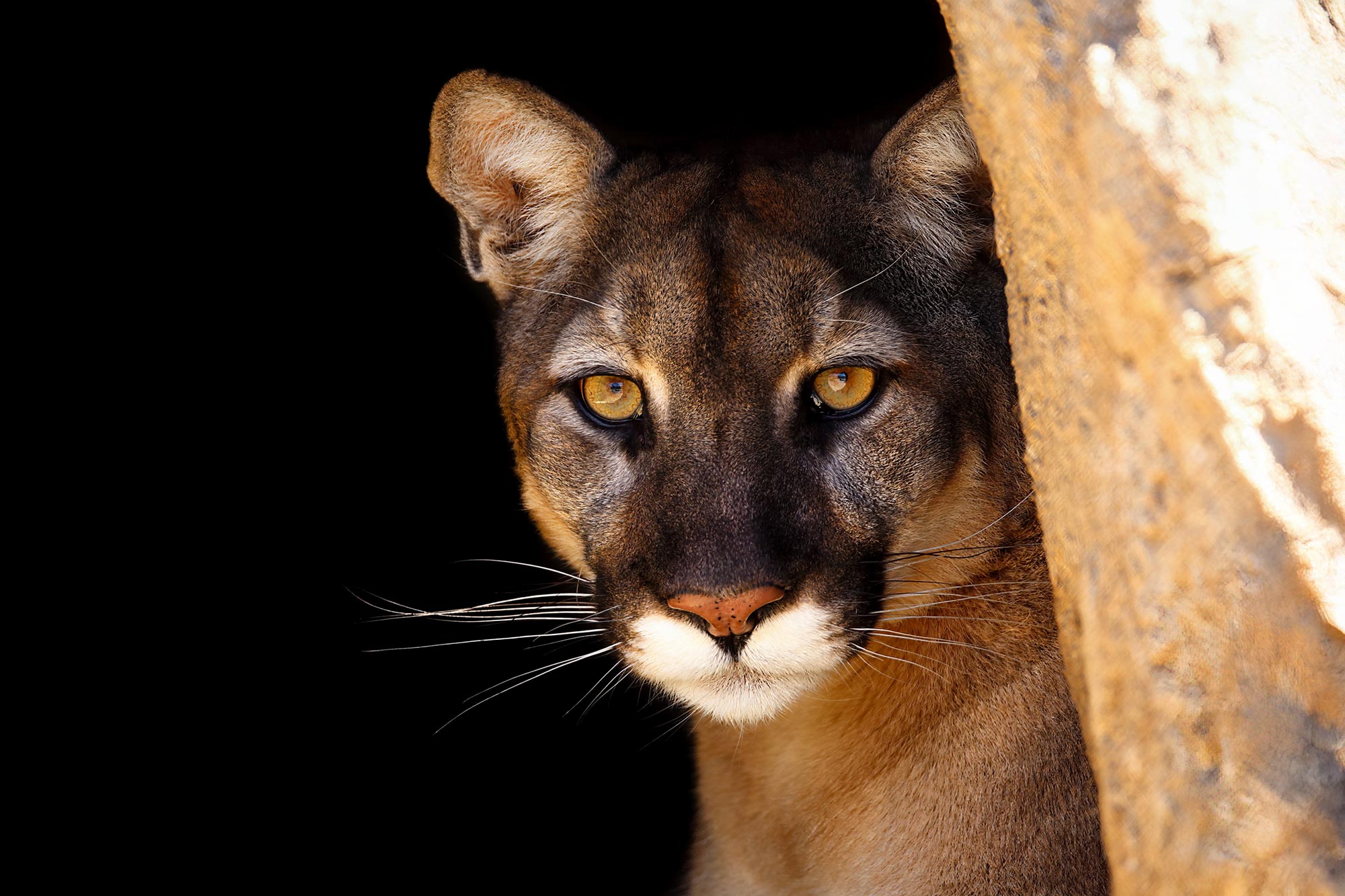
In Yellowstone, cougars coexist with wolves by changing what they eat and where they hunt, minimizing conflict driven largely by prey theft.
New research shows that encounters between wolves and cougars in Yellowstone National Park are shaped mainly by wolves taking over prey that cougars have already killed. The study also finds that cougars reduce the risk of these encounters by shifting their diet toward smaller animals, which they can consume more quickly and abandon before wolves arrive.
The findings come as cougar and wolf ranges increasingly overlap across the western United States. While wolves were observed killing cougars on rare occasions, the researchers found no evidence of cougars killing wolves, underscoring an uneven balance in their interactions.
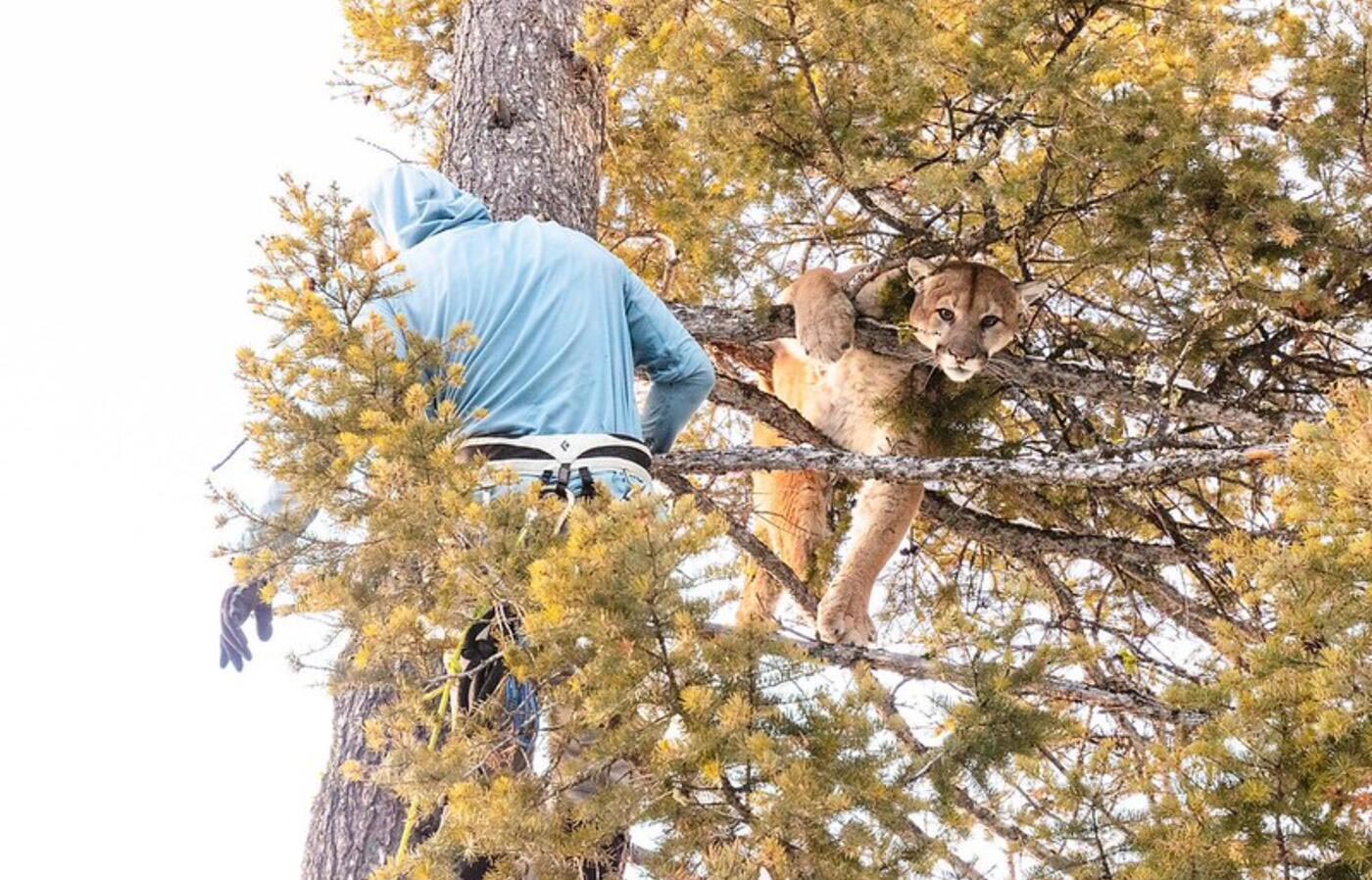
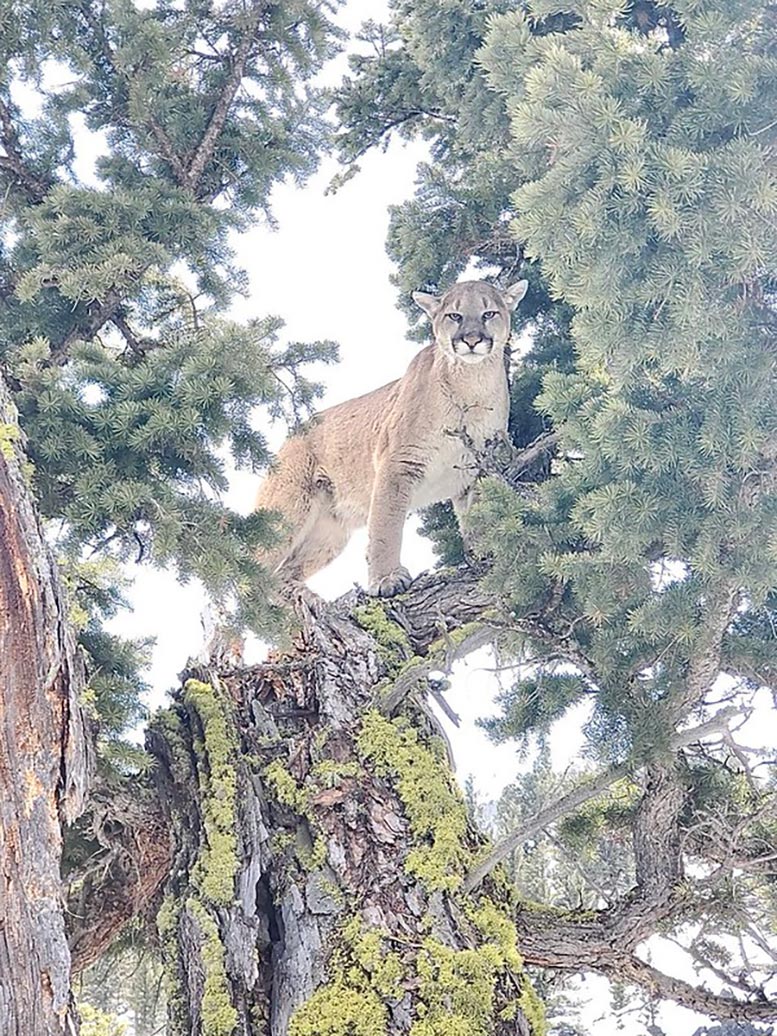
Cougars appear to manage this pressure through behavior rather than confrontation. They tend to steer clear of areas where wolves have recently made kills and stay near escape terrain, such as climbable trees. As elk numbers declined in Yellowstone, cougars killed more deer, a change that shortened feeding times and further reduced the chances of running into wolves.
Coexistence hinges on avoidance, not dominance
Published January 26, 2026, in PNAS, the study is based on nine years of GPS tracking data from collared wolves and cougars, along with field investigations of nearly 4,000 suspected kill sites in Yellowstone. Together, these data suggest that coexistence between the two predators depends less on how much prey is available overall and more on having a mix of prey species and access to terrain that allows cougars to escape.
“In North America and worldwide, carnivore communities are undergoing major changes,” said Wesley Binder, a doctoral student at Oregon State University and lead author of the study. “Our research provides insight into how two apex predators compete, which informs recovery efforts.”
The relationship between wolves and cougars is also shaped by their shared history. During much of the 20th century, both species were nearly wiped out in the United States due to government policies. Cougars began recovering in the 1960s and 1970s under legal protection, while wolves were reintroduced in 1995, including in Yellowstone. Today, as both species continue to recolonize large parts of the western U.S., understanding how they coexist has become increasingly important for wildlife management.
“You’ve had these places that in the last 20, 30 years have had cougars come back, and now wolves are coming back as well,” Binder said. “There are a lot of people asking questions like, ‘What are our ecological communities going to look like now that we have both of these large carnivores back on the landscape?’”
A changing predator landscape sets the rules
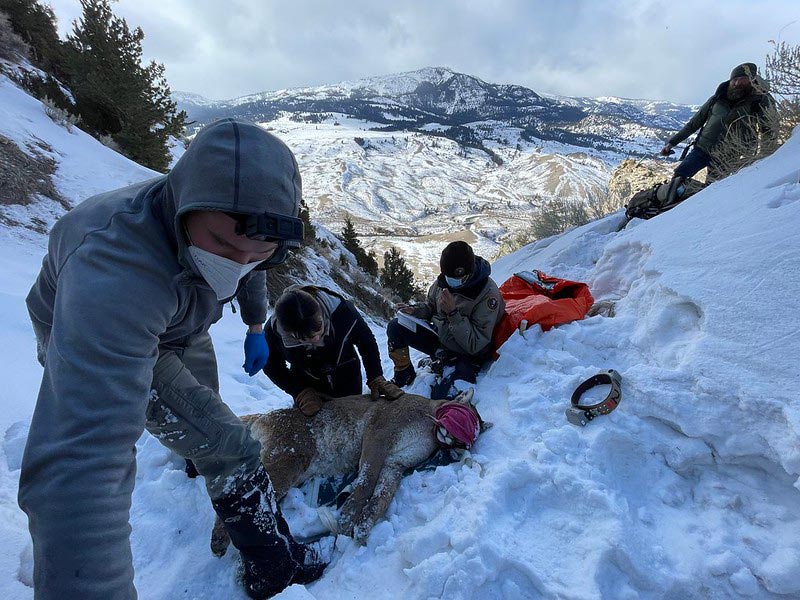
Binder began his doctorate at Oregon State in 2022 after nearly a decade working on cougar monitoring in Yellowstone as part of the Yellowstone Cougar Project. His work included setting up a system of 140 remote cameras in the northern part of the park and catching and collaring cats.
The new study builds on decades of research showing that wolves dominate interactions because they live in packs, while cougars are solitary. Previous studies have demonstrated how subordinate carnivores exhibit a tradeoff with dominant carnivores; they suffer mortalities but also benefit from scavenging their kills. Yet cougars seldom scavenge other carnivore kills and are instead efficient hunters themselves, leading to unclear principles that govern their interactions with wolves.
Findings from the new paper provide some answers:
- Researchers examined 3,929 potential wolf and cougar kill sites. Of these, 852 were wolf feeding events and 520 were cougar feeding events.
- Wolves made 716 kills and scavenged 136 times, feeding mostly on elk (542), bison (201), and deer (90).
- Cougars made 513 kills and scavenged seven times, with most kills involving elk (272) and deer (220).
- A comparison of data from 1998-2005 and 2016-2024 showed clear shifts in prey use over time.
- Among wolves, bison consumption rose from 1% to 10%, while elk declined from 95% to 63%.
- Among cougars, elk fell from 80% to 52%, while deer increased from 15% to 42%.
Diet shifts reveal a survival strategy
These kill site investigations were then used to train machine learning models that used GPS data to predict wolf and cougar kill sites. This allowed researchers to pair all wolf and cougar movements with probable kill sites and identify the drivers of their interactions. They found wolf-cougar interactions were highly asymmetric: 42% occurred at predicted sites where cougars killed prey, and only one happened at a site where a wolf killed prey.
The researchers documented 12 adult cougar deaths from 2016-24, two of which were caused by wolves. In both events, no escape terrain was available, and the wolves didn’t consume the cougars but ate the elk the cats had killed. They recorded 90 wolf deaths during the same period, none of which were attributed to cougars. Most were due to natural causes or human actions.
Reference: “Diets, dominance hierarchies, and kleptoparasitism drive asymmetrical interactions between wolves and cougars” by Wesley Binder, Joel S. Ruprecht, Jack Rabe, Matthew C. Metz, Rebecca Hutchinson, Daniel R. Stahler and Taal Levi, 26 January 2026, Proceedings of the National Academy of Sciences.
DOI: 10.1073/pnas.2511397123
Funding for this work was provided by the NSF Graduate Research Fellowship Program, NSF LTREB, Yellowstone Forever, and the National Park Service.
Never miss a breakthrough: Join the SciTechDaily newsletter.
Follow us on Google and Google News.
2 Comments
Bravo: no mention of climate change, for once.
We always hear about the ice age in the northern hemisphere. What was happening in the southern hemisphere at the same time? For some reason it is never discussed
0