
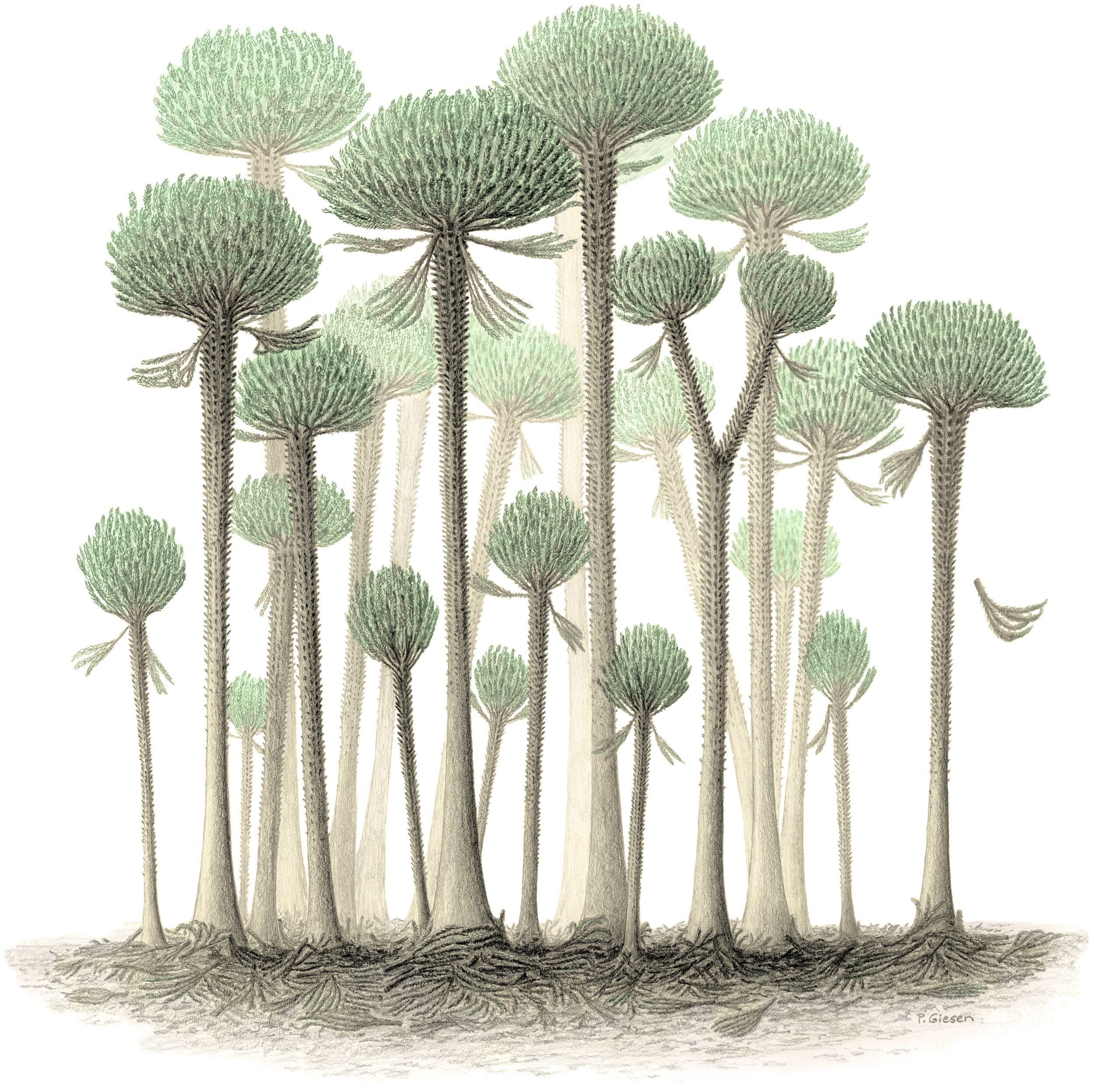
The oldest fossilized forest ever discovered on Earth, dating back 390 million years, has been located within the towering sandstone cliffs of the Devon and Somerset coast in South West England.
The fossils, discovered and identified by researchers from the Universities of Cambridge and Cardiff, are the oldest fossilized trees ever found in Britain, and the oldest known fossil forest on Earth. This fossil forest is roughly four million years older than the previous record holder, which was found in New York State.
The fossils were found near Minehead, on the south bank of the Bristol Channel, near what is now a Butlin’s holiday camp. The fossilized trees, known as Calamophyton, at first glance, resemble palm trees, but they were a ‘prototype’ of the kinds of trees we are familiar with today. Rather than solid wood, their trunks were thin and hollow in the center. They also lacked leaves, and their branches were covered in hundreds of twig-like structures.
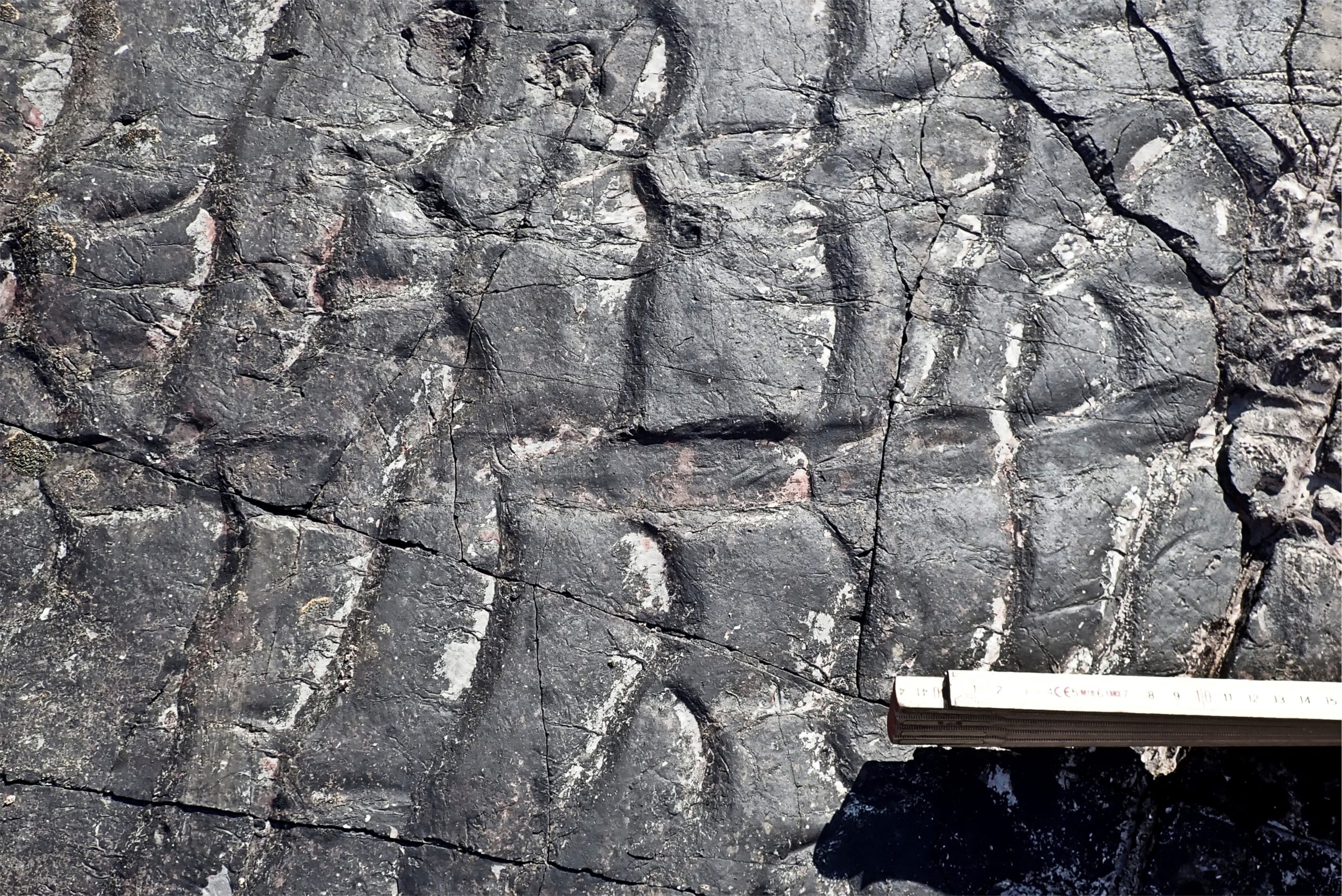
These trees were also much shorter than their descendants: the largest were between two and four meters tall. As the trees grew, they shed their branches, dropping lots of vegetation litter, which supported invertebrates on the forest floor.
Geological Significance
Scientists had previously assumed this stretch of the English coast did not contain significant plant fossils, but this particular fossil find, in addition to its age, also shows how early trees helped shape landscapes and stabilize riverbanks and coastlines hundreds of millions of years ago. The results are reported in the Journal of the Geological Society.
The forest dates to the Devonian Period, between 419 million and 358 million years ago, when life started its first big expansion onto land: by the end of the period, the first seed-bearing plants appeared and the earliest land animals, mostly arthropods, were well-established.
“The Devonian period fundamentally changed life on Earth,” said Professor Neil Davies from Cambridge’s Department of Earth Sciences, the study’s first author. “It also changed how water and land interacted with each other, since trees and other plants helped stabilize sediment through their root systems, but little is known about the very earliest forests.”
Ecological Insights and Research Methodology
The fossil forest identified by the researchers was found in the Hangman Sandstone Formation, along the north Devon and west Somerset coasts. During the Devonian period, this region was not attached to the rest of England, but instead lay further south, connected to parts of Germany and Belgium, where similar Devonian fossils have been found.
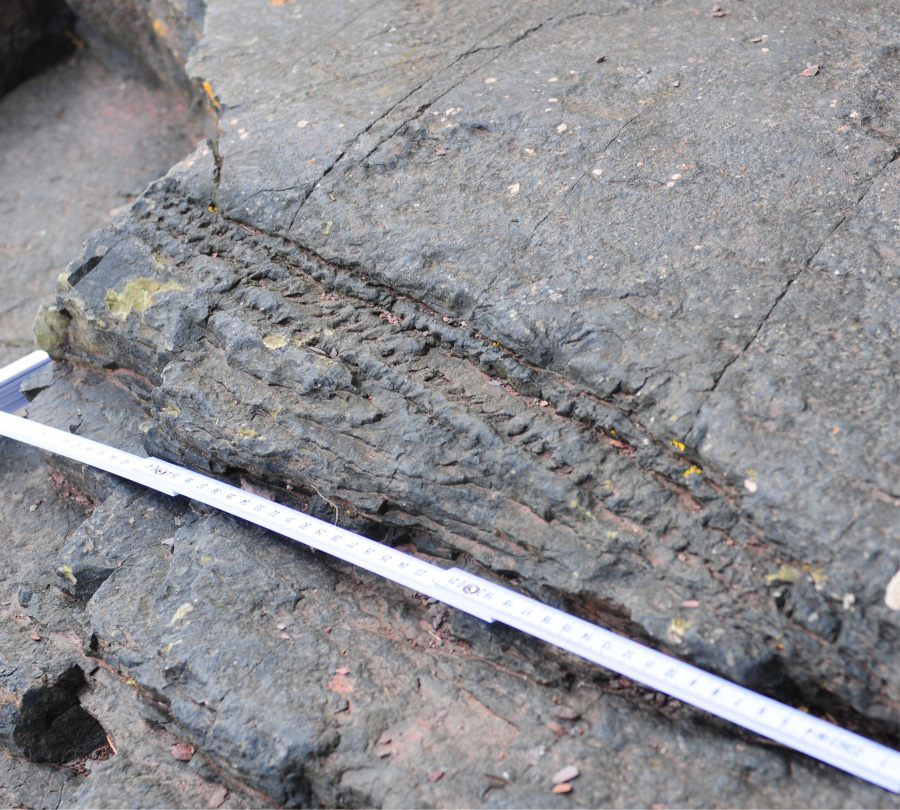
“When I first saw pictures of the tree trunks I immediately knew what they were, based on 30 years of studying this type of tree worldwide,” said co-author Dr Christopher Berry from Cardiff’s School of Earth and Environmental Sciences. “It was amazing to see them so near to home. But the most revealing insight comes from seeing, for the first time, these trees in the positions where they grew. It is our first opportunity to look directly at the ecology of this earliest type of forest, to interpret the environment in which Calamophyton trees were growing, and to evaluate their impact on the sedimentary system.”
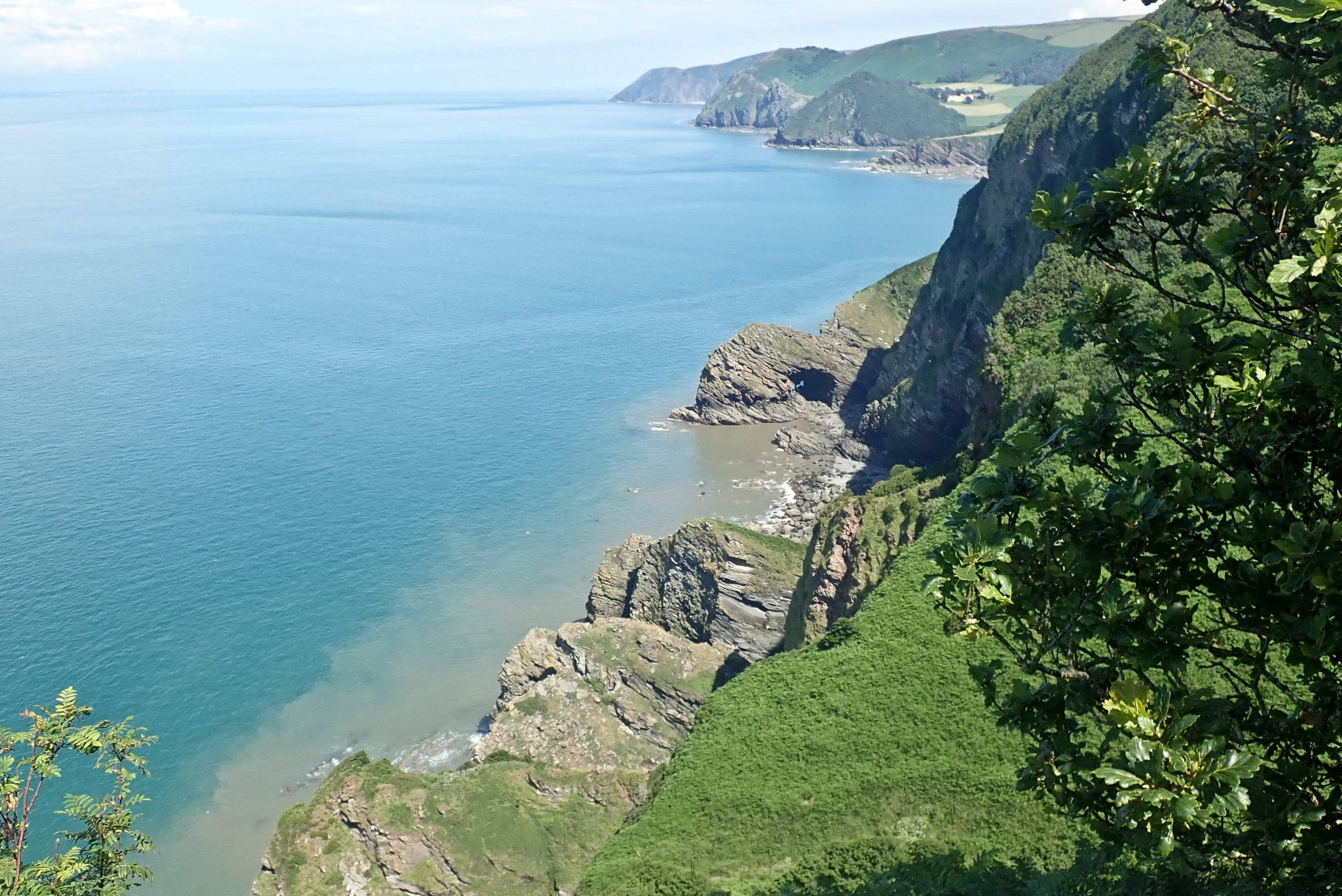
The fieldwork was undertaken along the highest sea cliffs in England, some of which are only accessible by boat, and revealed that this sandstone formation is in fact rich with plant fossil material from the Devonian period. The researchers identified fossilized plants and plant debris, fossilized tree logs, traces of roots, and sedimentary structures, preserved within the sandstone. During the Devonian, the site was a semi-arid plain, crisscrossed by small river channels spilling out from mountains to the northwest.
“This was a pretty weird forest – not like any forest you would see today,” said Davies. “There wasn’t any undergrowth to speak of and grass hadn’t yet appeared, but there were lots of twigs dropped by these densely-packed trees, which had a big effect on the landscape.”
This period marked the first time that tightly-packed plants were able to grow on land, and the sheer abundance of debris shed by the Calamophyton trees built up within layers of sediment. The sediment affected the way that the rivers flowed across the landscape, the first time that the course of rivers could be affected in this way.
“The evidence contained in these fossils preserves a key stage in Earth’s development, when rivers started to operate in a fundamentally different way than they had before, becoming the great erosive force they are today,” said Davies. “People sometimes think that British rocks have been looked at enough, but this shows that revisiting them can yield important new discoveries.”
Reference: “Earth’s earliest forest: fossilized trees and vegetation-induced sedimentary structures from the Middle Devonian (Eifelian) Hangman Sandstone Formation, Somerset and Devon, SW England” by Neil S. Davies, William J. McMahon and Christopher M. Berry, 23 February 2024, Journal of the Geological Society.
DOI: 10.1144/jgs2023-204
The research was supported in part by the Natural Environment Research Council (NERC), part of UK Research and Innovation (UKRI). Neil Davies is a Fellow of Churchill College, Cambridge.
Never miss a breakthrough: Join the SciTechDaily newsletter.
Follow us on Google and Google News.
1 Comment
Our Logical Hopes:
Nature is comprised of existences (energy mass) and non-existences (infinite emptiness). I concieve, infinite emptiness is the real existence and energy mass is virtual.
There’s a simple proof that we ignore. Isn’t the infinite emptiness eternal (unchanged & real) and energy mass temporal (changeable & virtual). This is logical.