
Trilobites Had a Leg Up on Breathing
A new study has found the first evidence of sophisticated breathing organs in 450-million-year-old sea creatures. Contrary to previous thought, trilobites were leg breathers, with structures resembling gills hanging off their thighs.
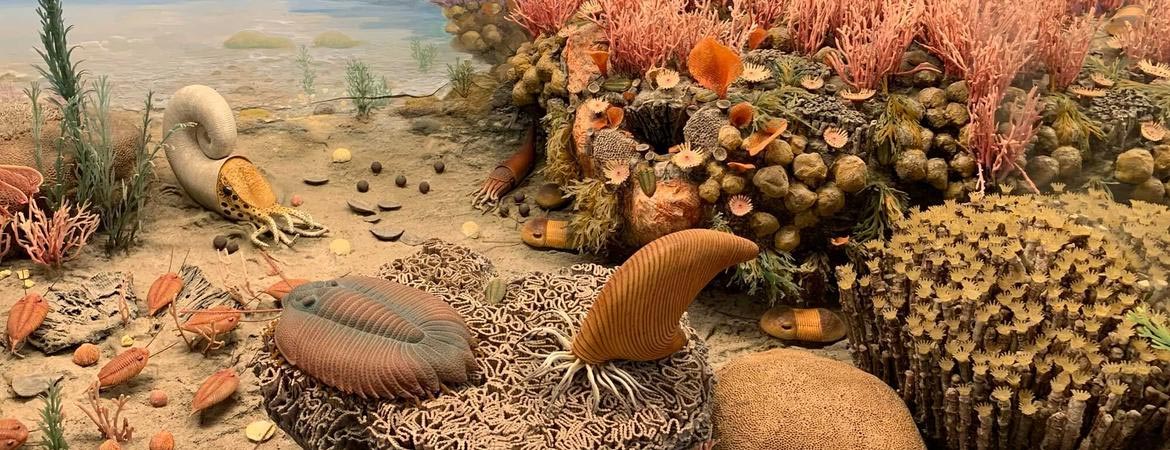
Trilobites were a group of marine animals with half-moon-like heads that resembled horseshoe crabs, and they were wildly successful in terms of evolution. Though they are now extinct, they survived for more than 250 million years — longer than the dinosaurs.
Thanks to new technologies and an extremely rare set of fossils, scientists from UC Riverside can now show that trilobites breathed oxygen and explain how they did so. Published in the journal Science Advances, these findings help piece together the puzzle of early animal evolution.
“Up until now, scientists have compared the upper branch of the trilobite leg to the non-respiratory upper branch in crustaceans, but our paper shows, for the first time, that the upper branch functioned as a gill,” said Jin-Bo Hou, a UCR paleontology doctoral student who led the research.
Among the oldest animals on earth, this work helps situate trilobites on the evolutionary tree more securely in between older arthropods, a large group of animals with exoskeletons, and crustaceans.
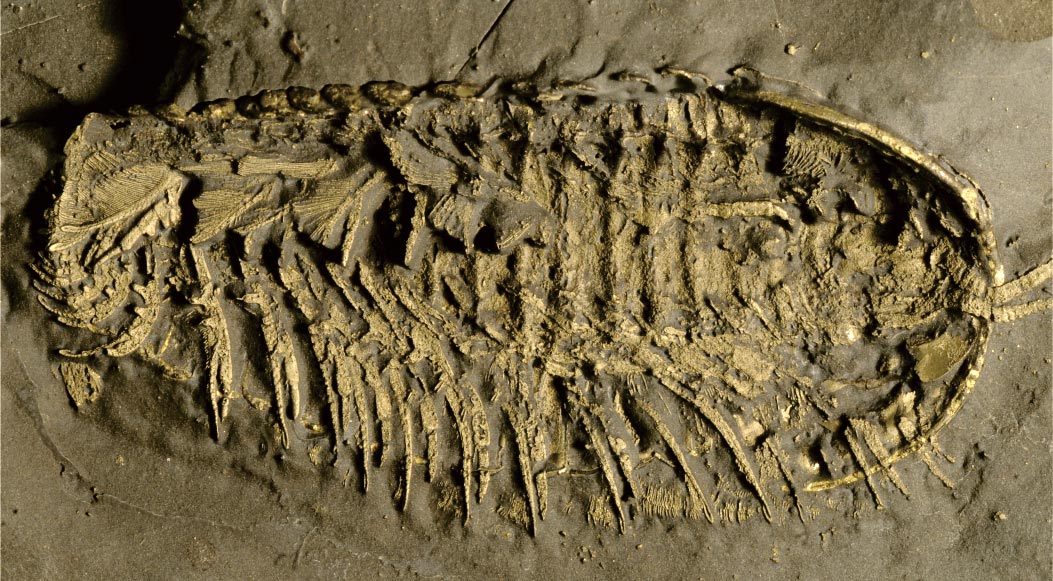
The research was possible, in part, because of unusually preserved fossil specimens. There are more than 22,000 trilobite species that have been discovered, but the soft parts of the animals are visible in only about two dozen.
“These were preserved in pyrite — fool’s gold — but it’s more important than gold to us, because it’s key to understanding these ancient structures,” said UCR geology professor and paper co-author Nigel Hughes.
A CT scanner was able to read the differences in density between the pyrite and the surrounding rock and helped create three-dimensional models of these rarely seen gill structures.

“It allowed us to see the fossil without having to do a lot of drilling and grinding away at the rock covering the specimen,” said paleontologist Melanie Hopkins, a research team member at the American Museum of Natural History.
“This way we could get a view that would even be hard to see under a microscope — really small trilobite anatomical structures on the order of 10 to 30 microns wide,” she said. For comparison, a human hair is roughly 100 microns thick.
Though these specimens were first described in the late 1800s and others have used CT scans to examine them, this is the first study to use the technology to examine this part of the animal.
Breathing Through Their Legs: Gills Revealed
The researchers could see how blood would have filtered through chambers in these delicate structures, picking up oxygen along its way as it moved. They appear much the same as gills in modern marine arthropods like crabs and lobsters.
Comparing the specimens in pyrite to another trilobite species gave the team additional detail about how the filaments were arranged relative to one another, and to the legs.
Most trilobites scavenged the ocean floor, using spikes on their lower legs to catch and grind prey. Above those parts, on the upper branch of the limbs, were these additional structures that some believed were meant to help with swimming or digging.
“In the past, there was some debate about the purpose of these structures because the upper leg isn’t a great location for breathing apparatus,” Hopkins said. “You’d think it would be easy for those filaments to get clogged with sediment where they are. It’s an open question why they evolved the structure in that place on their bodies.”
New Insights Into Early Life and Earth’s Atmosphere
The Hughes lab uses fossils to answer questions about how life developed in response to changes in Earth’s atmosphere. Roughly 540 million years ago, there was an explosive diversification in the variety and complexity of animals living in the oceans.
“We’ve known theoretically this change must have been related to a rise in oxygen, since these animals require its presence. But we have had very little ability to measure that,” Hughes said. “Which makes findings like these all the more exciting.”
Reference: “The trilobite upper limb branch is a well-developed gill” by Jin-bo Hou, Nigel C. Hughes and Melanie J. Hopkins, 31 March 2021, Science Advances.
DOI: 10.1126/sciadv.abe7377
Never miss a breakthrough: Join the SciTechDaily newsletter.
Follow us on Google and Google News.