
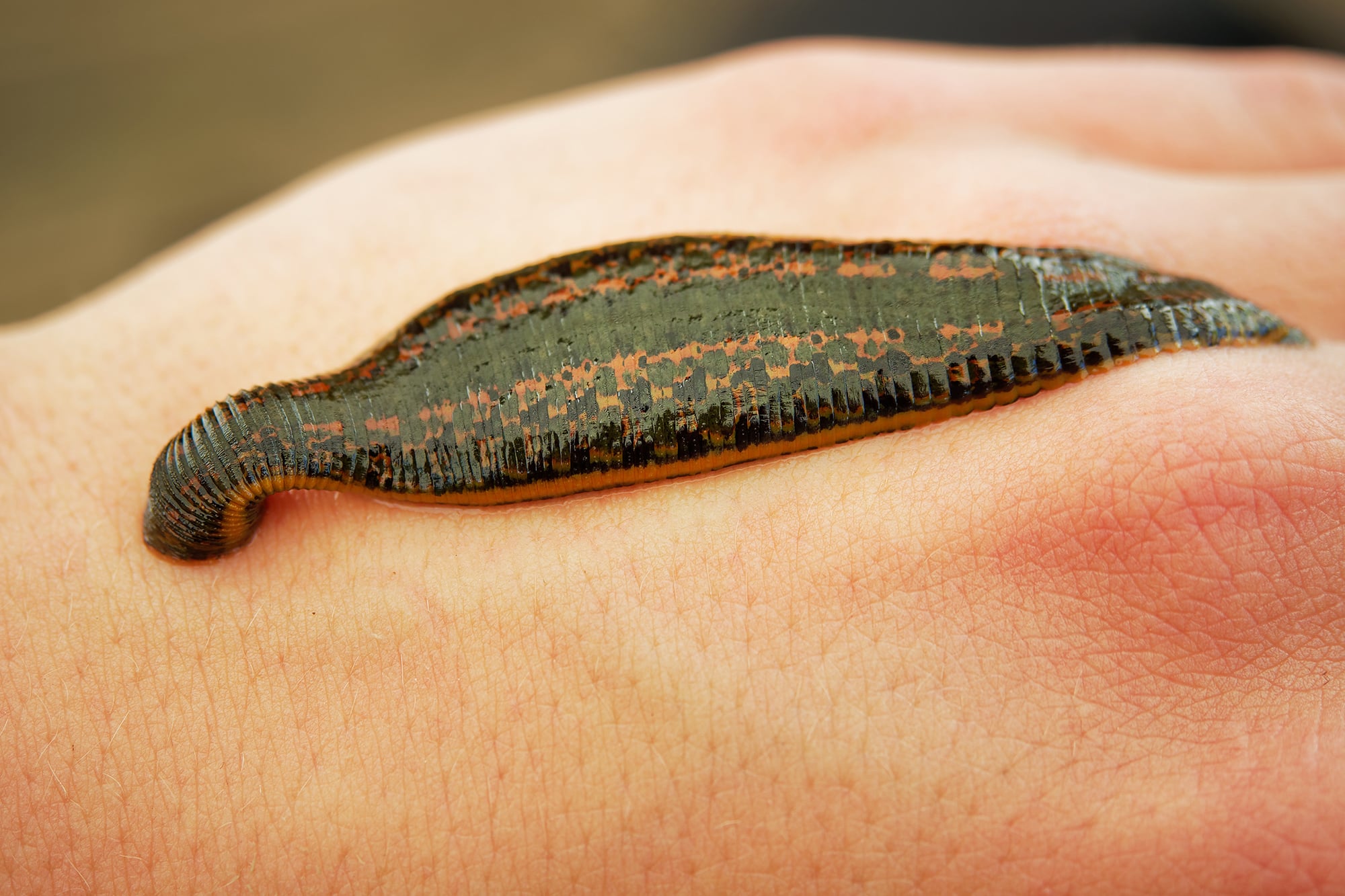
A 430-million-year-old fossil has pushed the origin of leeches back by more than 200 million years, revealing that these ancient creatures began as marine hunters, not bloodsuckers.
Discovered in Wisconsin’s Waukesha biota, the rare fossil preserves a tail sucker but lacks the forward sucker used by modern leeches to pierce skin. This suggests early leeches swallowed small sea animals whole or drank their fluids.
Early Leeches Lived Much Earlier Than Expected
A newly analyzed fossil shows that leeches originated far earlier than researchers once believed, extending their history by at least 200 million years. The find also indicates that the first members of this group likely fed on small marine organisms rather than on blood.
“This is the only body fossil we’ve ever found of this entire group,” said Karma Nanglu, a paleontologist with the University of California, Riverside. He collaborated with colleagues from the University of Toronto, University of São Paulo, and Ohio State University on the PeerJ paper that formally describes the specimen.
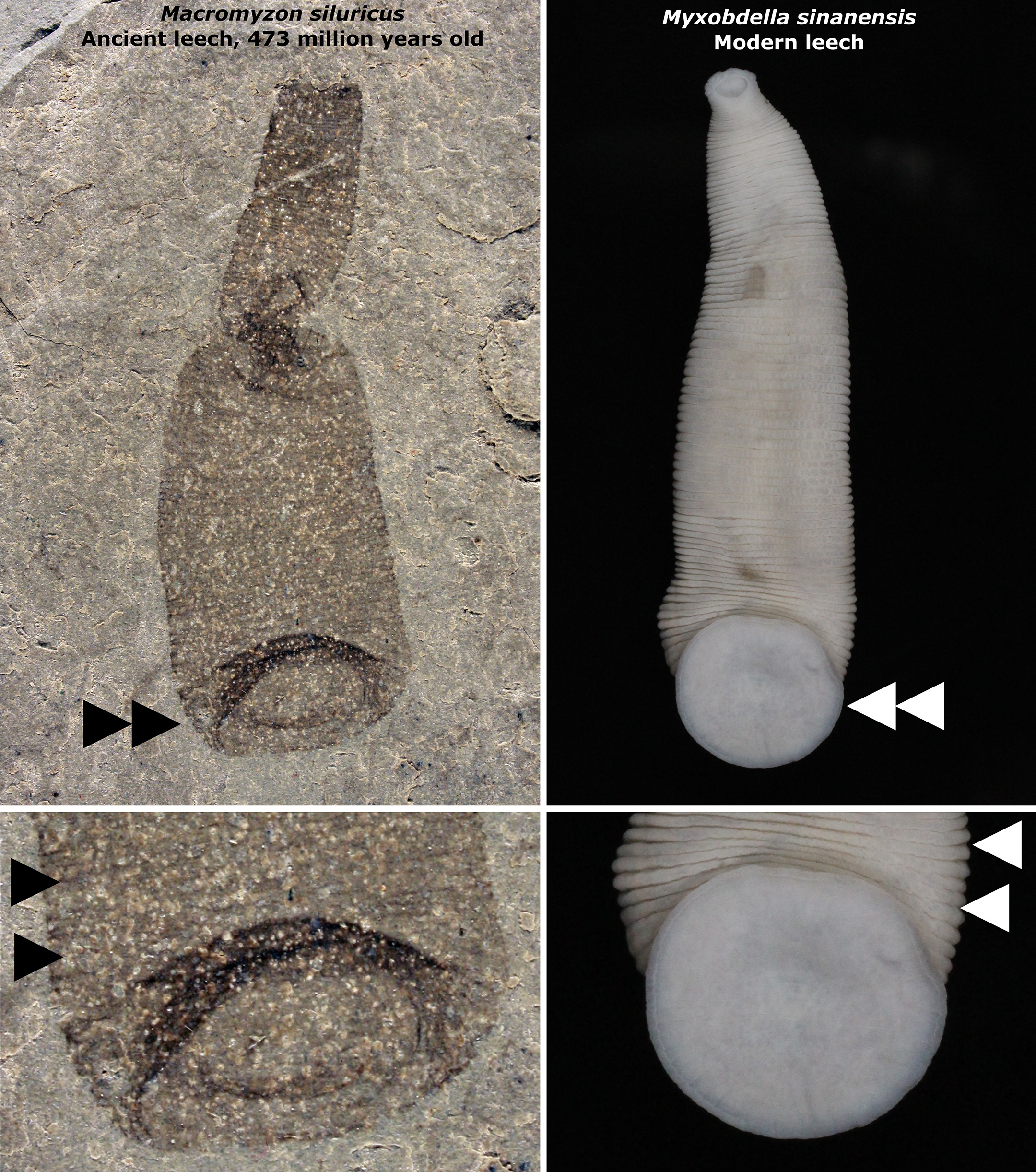
Anatomy of a 430 Million-Year-Old Leech
The fossil, which dates to roughly 430 million years ago, preserves a large tail sucker that is still characteristic of modern leeches, along with a segmented, teardrop-shaped body. One feature common in many living species is absent, however: the forward sucker used to pierce skin and remove blood.
The lack of this front sucker, combined with evidence that the animal lived in a marine environment, points to a very different way of life for early members of Hirudinida. Instead of drawing blood from vertebrates such as mammals or reptiles, these ancient leeches may have hunted soft-bodied creatures in the ocean or consumed their internal fluids.
“Blood feeding takes a lot of specialized machinery,” Nanglu said. “Anticoagulants, mouthparts, and digestive enzymes are complex adaptations. It makes more sense that early leeches were swallowing prey whole or maybe drinking the internal fluids of small, soft-bodied marine animals.”
A Timeline Pushed Deep Into the Past
Before this discovery, scientists generally thought leeches originated 150 to 200 million years ago. The fossil from the Waukesha biota in Wisconsin extends that timeline by at least 200 million years. This sedimentary deposit is known for preserving the remains of soft-bodied creatures that would normally decay before fossilization could occur.
Preserving a leech is unusual because these animals lack hard structures like bones, shells, or exoskeletons that typically survive over geologic time. Fossils of this kind rely on a precise combination of circumstances, including rapid burial, minimal oxygen exposure, and specific chemical conditions.
“A rare animal and just the right environment to fossilize it — it’s like hitting the lottery twice,” Nanglu said.
Identifying a Remarkable Specimen
The fossil surfaced during a broader investigation of the Waukesha site conducted by researchers at Ohio State University, who also contributed to the study. At first, its significance was not recognized, but its unusual features drew Nanglu’s attention during the early pandemic period.
He consulted with leech experts, including lead author Danielle de Carle of the University of Toronto, to determine whether the specimen truly represented a leech. The presence of a tail sucker and distinct body segmentation ultimately confirmed its identity, since this combination appears only in leeches.
What Modern Leeches Reveal About Their Ancient Relatives
Leeches today inhabit freshwater, marine, and terrestrial environments, and they display a wide range of feeding strategies that include scavenging, predatory behavior, and parasitic blood feeding. Tracing their earliest history has been difficult because organisms without hard parts almost never fossilize.
Nanglu, whose research often focuses on soft-bodied species missing from typical fossil records, said this discovery supports broader efforts to understand how complex life first developed and to reevaluate long-held assumptions.
“We don’t know nearly as much as we think we do,” he said. “This paper is a reminder that the tree of life has deep roots, and we’re just beginning to map them.”
“It’s a beautiful specimen,” Nanglu added. “And it’s telling us something we didn’t expect.”
Reference: “The first leech body fossil predates estimated hirudinidan origins by 200 million years” by Danielle de Carle, Rafael Eiji Iwama, Andrew J. Wendruff, Loren E. Babcock and Karma Nanglu, 1 October 2025, PeerJ.
DOI: 10.7717/peerj.19962
Never miss a breakthrough: Join the SciTechDaily newsletter.
Follow us on Google and Google News.