
Ocean sediment cores reveal climate-related fluctuations in the Antarctic Circumpolar Current in past epochs.
The Antarctic Circumpolar Current significantly influences the global overturning circulation, the interchange of heat and CO2 between the ocean and the atmosphere, and the stability of Antarctica’s ice sheets. A global research collaboration, led by the Alfred Wegener Institute and the Lamont-Doherty Earth Observatory, has analyzed sediments from the South Pacific to reconstruct the current’s flow speed over the past 5.3 million years.
Their data show that during glacial periods, the current slowed; during interglacials, it accelerated. Consequently, if the current global warming intensifies in the future, it could mean that the Southern Ocean stores less CO2 and that more heat reaches Antarctica. The study was just released in the journal Nature.
What moves 100 times as much water as all the Earth’s rivers combined, measures 2,000 kilometers across at its widest point, and extends all the way down to the deep sea? The Antarctic Circumpolar Current (ACC). In the past, this ocean current system, the most powerful on Earth, was subject to substantial natural fluctuation, as recent analyses of sediment cores have revealed. Colder phases in the Pliocene and subsequent Pleistocene, during which the ACC slowed, correlate to advances of the West Antarctic Ice Sheet. In warmer phases the ACC accelerated, accompanied by the retreat of the ice sheet.
“This loss of ice can be attributed to increased heat transport to the south,” says Dr Frank Lamy, a researcher in the Marine Geology Division of the Alfred Wegener Institute, Helmholtz Centre for Polar and Marine Research (AWI) and first author of the Nature study. “A stronger ACC means more warm deep water reaches the ice-shelf edge of Antarctica.”
Climate Response and Data Collection
“The ACC has a major influence on heat distribution and CO2 storage in the ocean. Until recently, it remained unclear how the ACC responds to climate fluctuations, and whether changes in the ACC offset or amplify the effects of warming,” says Lamy. “Therefore, to improve forecasts of our future climate and the stability of the Antarctic Ice Sheet using computer simulations, we need paleo-data that can tell us something about the intensity of the ACC in past warm phases in Earth’s history.”
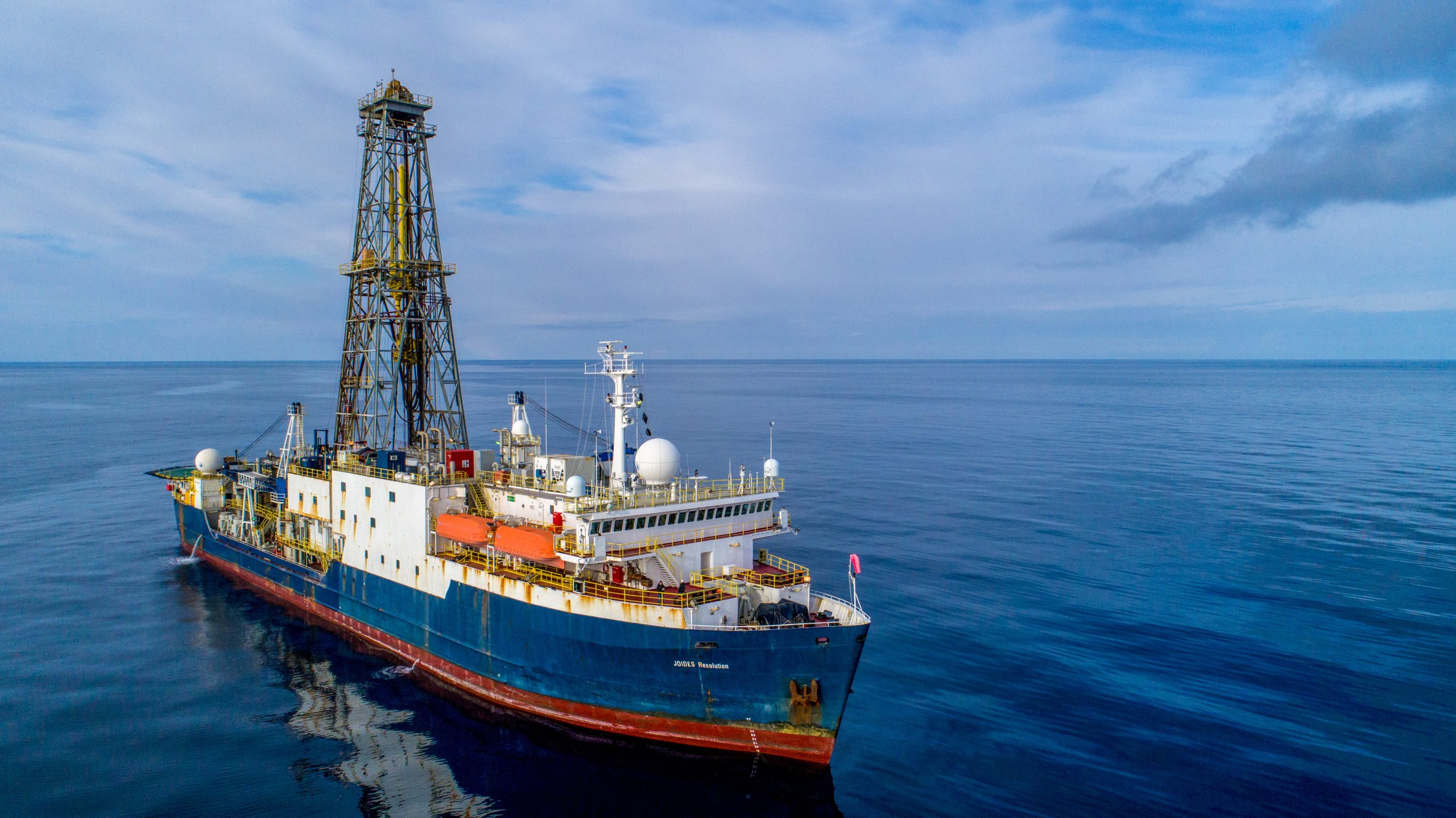
To gather that data, in 2019 an international expedition led by Lamy and geochemist Prof Gisela Winckler from the Lamont-Doherty Earth Observatory, Columbia University (USA) ventured to the central South Pacific on board the drilling ship JOIDES Resolution. There, in the subantarctic zone, the research team extracted two extensive drill cores, gathered at a depth of 3600 meters. “The drill sites are in the vicinity of Point Nemo, the point on the Earth that is farthest from any landmass or island, where the ACC flows without any influences from continental landmasses,” explains Prof Helge Arz, a marine geologist at the Leibniz Institute for Baltic Sea Research in Warnemünde and one of the study’s main authors. “Using the sediment deposits in this region, we can reconstruct its mean flow speed in the past.”
The 145- and 213-meter-deep drill cores in the South Pacific were part of the International Ocean Discovery Program (IODP), the goal of which is to unlock Earth’s history on the basis of geochemical traces left behind in marine sediments and rock formations under the seafloor. They were preceded by extensive reconnaissance work done on various expeditions with the research vessel Polarstern. The sediment cores date back 5.3 million years and encompass three entire epochs:
- the Pliocene, during which it was up to three degrees warmer than today and the atmospheric CO2 concentration, at more than 400 ppm, was similar to today’s;
- the Pleistocene, which began 2.6 million years ago and was characterized by alternating ice ages (glacials) and warm periods (interglacials);
- and the Holocene, a warm period that began roughly 12,000 years ago, following the last ice age, and continues up to the present.
Drawing on the layers in the cores, which correspond to different epochs, the experts analyzed the size distribution of the sediment particles, which are deposited differently on the seafloor, depending on the water’s flow speed. This allowed them to trace the evolution of the ACC since the early Pliocene, when a prolonged cooling of the climate began. Sediment cores from previous Polarstern cruises to the South Pacific offered additional clues on the dynamics of the ACC.
Historical Insights from Sediment Cores
Their findings show that, up to three million years ago in the Pliocene, the ACC first accelerated as the Earth gradually cooled. This was due to a growing temperature gradient between the Equator and Antarctica, which produced powerful westerly winds – the main motor of the ACC. Despite the prolonged cooling, it then began to slow. “The switch came at a time when the climate and the circulation in the atmosphere and the ocean experienced major changes,” says Frank Lamy. “2.7 million years ago, at the end of the Pliocene, broad expanses of the Northern Hemisphere were covered in ice and the Antarctic ice sheets expanded. This was due to changes in ocean currents, set off by tectonic processes, together with a long-term cooling of the ocean and decreasing atmospheric CO2 levels.”
With regard to the last 800,000 years, in which the atmospheric CO2 levels varied from 170 to 300 ppm, the researchers were able to identify a close connection between ACC strength and glacial cycles: during warm periods, in which the atmospheric CO2 levels rose, the flow speed increased by up to 80 percent compared to the present; during ice ages, it decreased by up to 50 percent. At the same time, during transitions between interglacials and glacials there was a shift in the ACC’s position and therefore in the upwelling of nutrient-rich deep water in the Southern Ocean, as geochemical sediment analyses revealed. They show that the silicate shells of diatoms – the most important phytoplankton in the Southern Ocean – were deposited on the seafloor farther north in ice ages than in warm periods.
“A weaker ACC and lower atmospheric CO2 levels during the ice ages of the Pleistocene indicate less pronounced upwelling and more stratification in the Southern Ocean, that is, more CO2 storage,” says Gisela Winckler. Due to anthropogenic climate change, the study concludes, the ACC could grow stronger in the future. This could impact the CO2 balance of the Southern Ocean and lead to accelerated melting of Antarctic ice.
Background: the Antarctic Circumpolar Current
As a circular current flowing clockwise around Antarctica, the Antarctic Circumpolar Current (ACC) connects the Atlantic, Pacific, and Indian Oceans. As such, it has a pivotal role in global ocean circulation and, through the Atlantic conveyor belt, ultimately influences the climate in Europe. Driven by the powerful westerly winds of the subantarctic zone, and by temperature and salinity differences between the subtropics and the Southern Ocean, the ACC forms a barrier for the warm surface water of the subtropics on its way to the Antarctic. At the same time, comparatively warm deep water from the Atlantic and Pacific flows into it.
Large ocean gyres that are formed in the ACC and wander south, together with the upwelling of deep water, transport heat to the ice shelves on the continental margin, especially in the Pacific sector of the Antarctic. Moreover, the upwelling produced by the ACC brings nutrients to the surface, which drives algal growth while amplifying biological carbon export to the deep sea in the process – but also the transport of CO2, which is released into the atmosphere.
Reference: “Five million years of Antarctic Circumpolar Current strength variability” by Frank Lamy, Gisela Winckler, Helge W. Arz, Jesse R. Farmer, Julia Gottschalk, Lester Lembke-Jene, Jennifer L. Middleton, Michèlle van der Does, Ralf Tiedemann, Carlos Alvarez Zarikian, Chandranath Basak, Anieke Brombacher, Levin Dumm, Oliver M. Esper, Lisa C. Herbert, Shinya Iwasaki, Gaston Kreps, Vera J. Lawson, Li Lo, Elisa Malinverno, Alfredo Martinez-Garcia, Elisabeth Michel, Simone Moretti, Christopher M. Moy, Ana Christina Ravelo, Christina R. Riesselman, Mariem Saavedra-Pellitero, Henrik Sadatzki, Inah Seo, Raj K. Singh, Rebecca A. Smith, Alexandre L. Souza, Joseph S. Stoner, Maria Toyos, Igor M. Venancio P. de Oliveira, Sui Wan, Shuzhuang Wu and Xiangyu Zhao, 27 March 2024, Nature.
DOI: 10.1038/s41586-024-07143-3
Never miss a breakthrough: Join the SciTechDaily newsletter.
Follow us on Google and Google News.