
Ancient wolves found on a human-occupied Baltic island reveal unexpected and complex forms of prehistoric human-animal interaction.
Researchers have uncovered wolf remains dating back thousands of years on a small and remote island in the Baltic Sea. Because the island is naturally isolated, the animals could only have arrived there with human involvement.
The study, published in Proceedings of the National Academy of Sciences by scientists from the Francis Crick Institute, Stockholm University, the University of Aberdeen, and the University of East Anglia, suggests that gray wolves may have been deliberately managed or controlled by prehistoric communities.
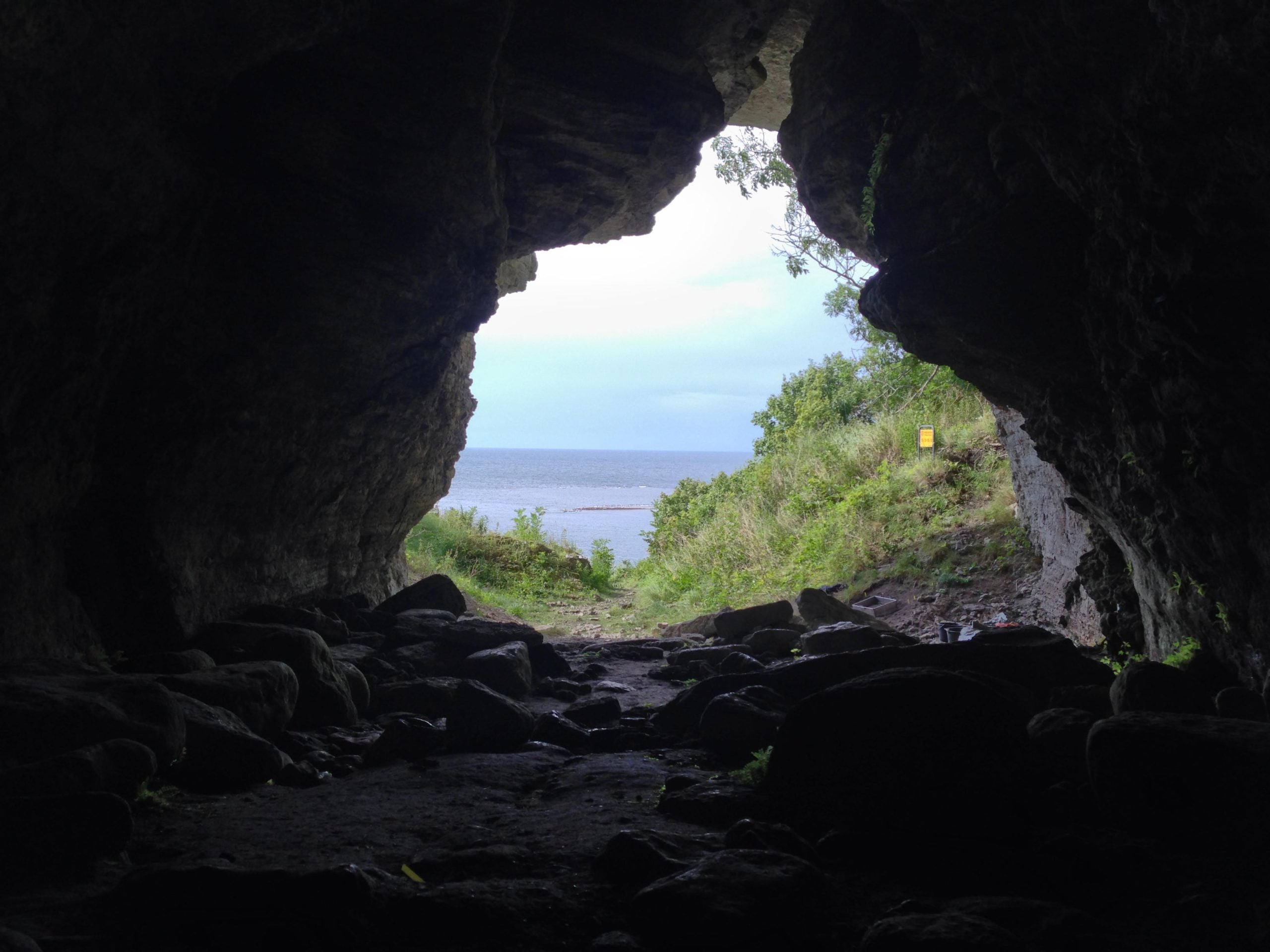
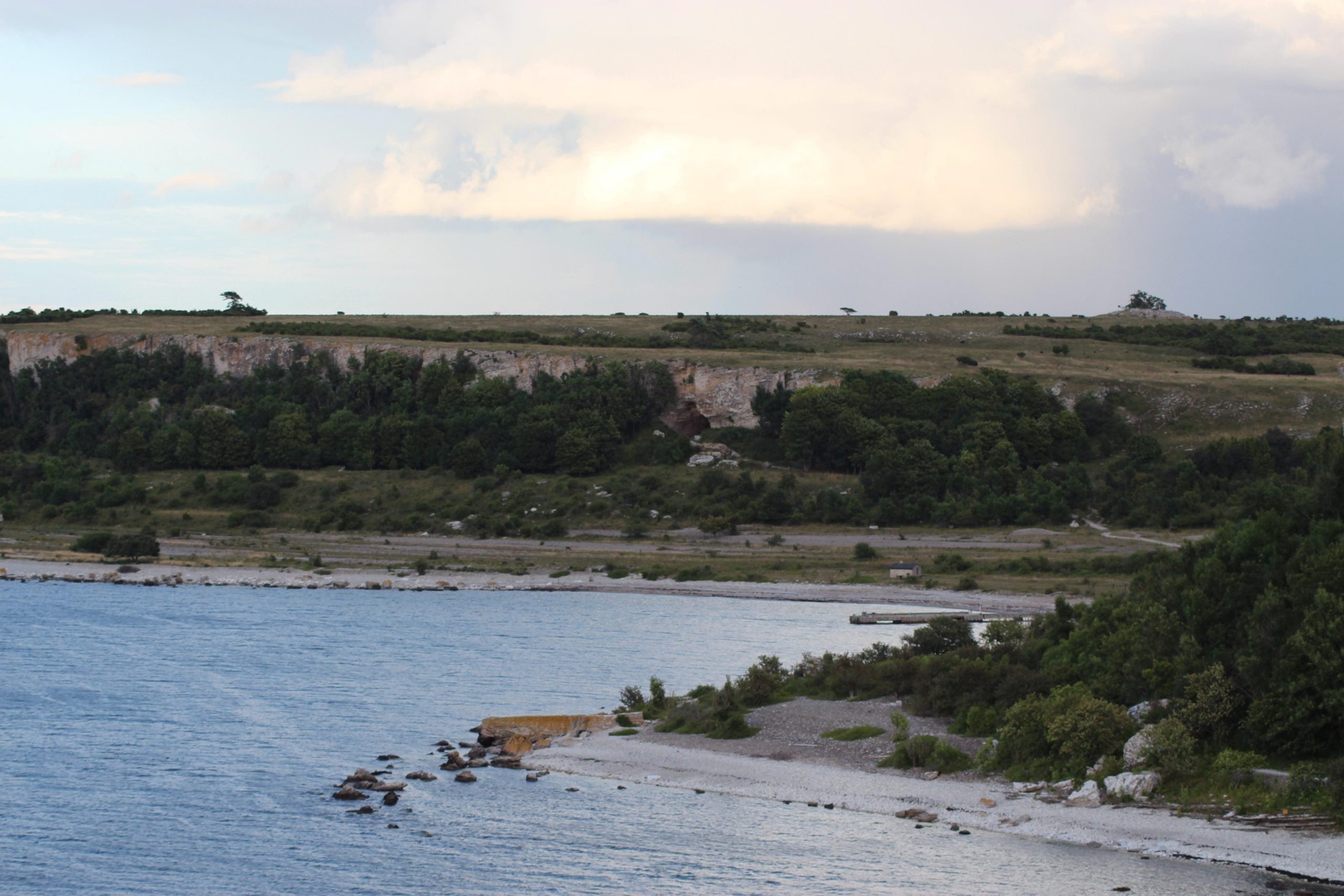
The remains, estimated to be between 3,000 and 5,000 years old, were discovered in the Stora Förvar cave on the Swedish island of Stora Karlsö. This site was heavily used by seal hunters and fishers during the Neolithic and Bronze Ages. The island spans just 2.5 square kilometers and has no native land mammals, indicating that any large terrestrial animals found there must have been brought by people.
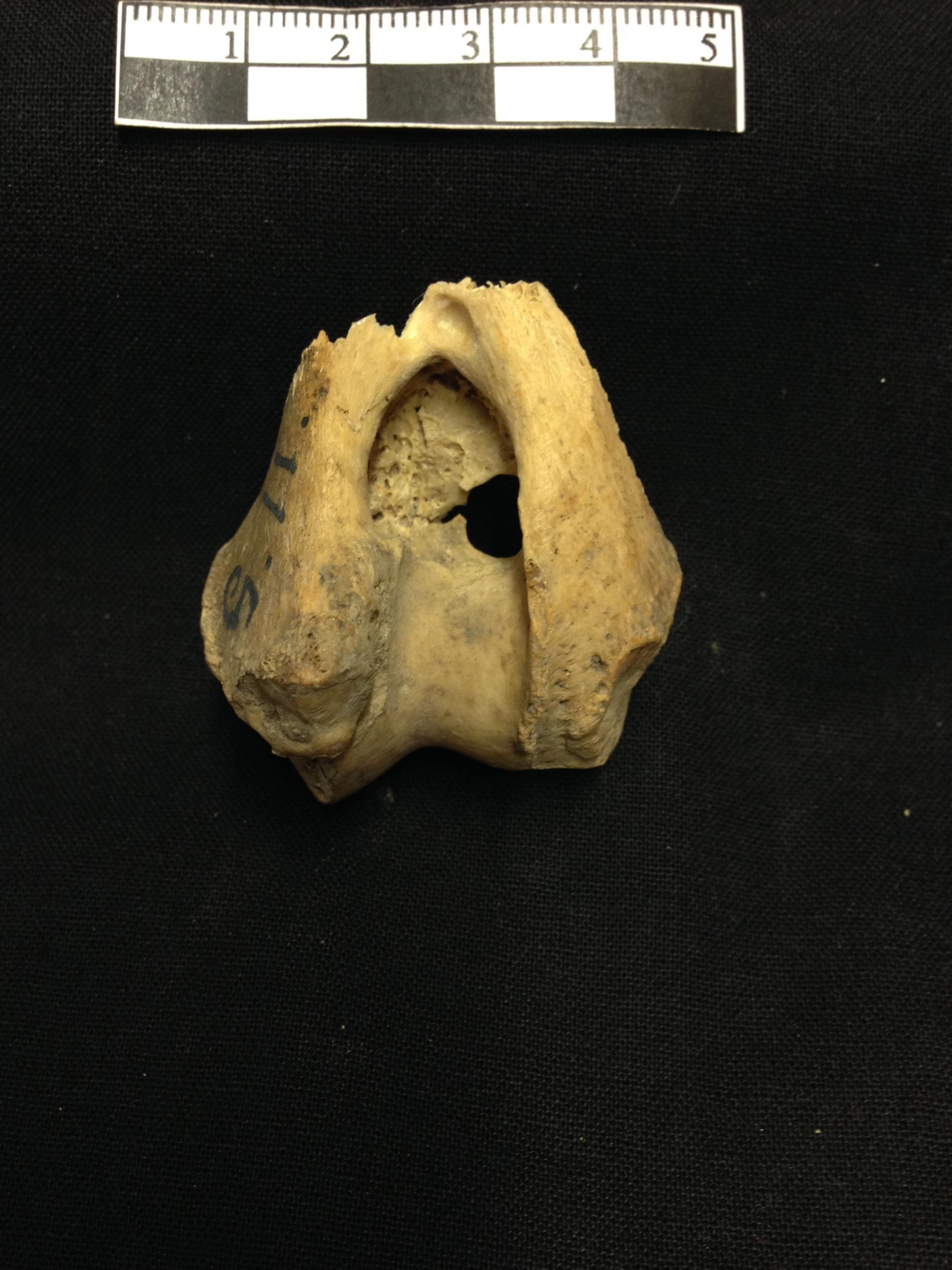
Detailed genomic analysis of two canid specimens confirmed that they were wolves rather than dogs, with no trace of dog ancestry. Despite this, the animals showed characteristics commonly linked to close proximity with humans. Isotope analysis of the bones revealed a diet rich in marine foods, including seals and fish, closely matching what people on the island consumed and suggesting that the wolves were fed by humans.
The animals were also smaller than most mainland wolves, and one individual displayed notably low genetic diversity, which is often seen in isolated populations or in cases of controlled breeding.
Wolves living alongside humans
“The discovery of these wolves on a remote island is completely unexpected,” said Dr. Linus Girdland-Flink of the University of Aberdeen, a lead author of the study. “Not only did they have ancestry indistinguishable from other Eurasian wolves, but they seemed to be living alongside humans, eating their food, and in a place they could only have reached by boat. This paints a complex picture of the relationship between humans and wolves in the past.”
The findings challenge traditional views of how humans and wolves interacted and how dog domestication unfolded. Although it is still unclear whether the animals were tamed, kept in captivity, or managed in another way, their long-term presence on a human-inhabited and isolated island points to intentional and ongoing interaction between people and wolves.

“It was a complete surprise to see that it was a wolf and not a dog,” said Pontus Skoglund of the Ancient Genomics Laboratory at the Francis Crick Institute and senior author. “This is a provocative case that raises the possibility that in certain environments, humans were able to keep wolves in their settlements, and found value in doing so.”
Anders Bergström of the University of East Anglia and co-lead author, commented: “The genetic data is fascinating. We found that the wolf with the most complete genome had low genetic diversity, lower than any other ancient wolf we’ve seen. This is similar to what you see in isolated or bottlenecked populations, or in domesticated organisms. While we can’t rule out that these wolves had low genetic diversity for natural reasons, it suggests that humans were interacting with and managing wolves in ways we hadn’t previously considered.”
May have been cared for
One of the wolf specimens, dated to the Bronze Age, also showed advanced pathology in a limb bone, which would have limited its mobility. This suggests it may have been cared for or was able to survive in an environment where it did not need to hunt large prey.
Rethinking prehistoric human–wolf relationships
The combination of osteology and genetic analyses has provided unique information not available separately. “The combination of data has revealed new and very unexpected perspectives on Stone Age and Bronze Age human-animal interactions in general and specifically concerning wolves and also dogs,” says Jan Storå, Professor of Osteoarchaeology at Stockholm University.
The study suggests that human-wolf interactions in prehistory were more diverse than previously thought, extending beyond simple hunting or avoidance to include complex relations and interactions that, in this case, mirror new aspects of domestication without leading to the canines we know as dogs today.
Reference: “Gray wolves in an anthropogenic context on a small island in prehistoric Scandinavia” by Linus Girdland-Flink, Anders Bergström, Jan Storå, Erik Ersmark, Jan Apel, Maja Krzewińska, Love Dalén, Anders Götherström and Pontus Skoglund, 24 November 2025, Proceedings of the National Academy of Sciences.
DOI: 10.1073/pnas.2421759122
Ancient genome sequencing was supported by SciLifeLab National Projects and the Erik Philip Sörensen Foundation (to P.S.). P.S. was supported by the UKRI Horizon guarantee (APP45780), the European Molecular Biology Organisation, the Vallee Foundation, the European Research Council (Grant no. 852558), the Wellcome Trust (217223/Z/19/Z), and Francis Crick Institute core funding (FC001595) from Cancer Research UK, the UK Medical Research Council, and the Wellcome Trust.
Never miss a breakthrough: Join the SciTechDaily newsletter.
Follow us on Google and Google News.
77 Comments
Wolves routinely swim to islands or cross on sea ice. So, it’s ridiculous to say these wolves could only have gotten there with human help.
You are right, i’ve spent a lot of time.It does not fit with a narrative.They’re projecting
Projecting much!? The science is fact based, how else?
Read the paper, then explain how the observed facts are “projecting”.
You can’t say it’s fact based when they take into account no other theories or postulates and just draw conclusion from a couple bones to say they know the entire migration scenario
People back then were one with the land and animals. It is surprising for us that this happened but would have been natural for them. They often saw other species as just different tribes. Wolves and men competed and the possibility of cooperation would have been beneficial to both. Ravens will lead wolves to prey
Fascinating! Your study is very provocative. I have so many questions now. Thank you.
This is a hypothesis ( an educated guess only ). Unless they were there 5,003 years ago they are guessing with the limited scientific data they clump together.
Icebreakers needed to keep shipping going in harsh winters. The food stuff argumentnis stronger than the “had to arrive by boat” theory.
I believe anything is possible.
Wolves have always fascinated me from Childhood on.that’s why this article caught my eye. Why would we not expect that wolves and humans interacted and lived together. I honestly believe that this was as common as we are with dogs today. In my opinion
For whatever reason wolves became isolated when dogs became domesticated pushing them farther and farther from us
I think it’s you that is projecting. That water is very cold. Any animal, especially one as intelligent as a wolf, wouldn’t jump in extremely cold water just to find out what’s on another island. That is ridiculous! As far as walking across sea ice, well, that’s a possibility but improbable. Again, why would they do that?
“As far as walking across sea ice, well, that’s a possibility but improbable.”
On what do you base that opinion? Over the years, wolves and moose in mainland Canada have been known to cross the ice to reach Isle Royale National Park in Lake Superior.
because they were fleeing from a forest fire or some other threat . an asteroid a pack of saber tooth tigers a time lord from dr who…
because they were fleeing from a forest fire or some other threat . an asteroid a pack of saber tooth tigers a time lord from dr who…
Wolves, which were extirpated in California, have started to come back to the state. Apparently, no more than a genetic imperative to expand the species is needed to go great distances or endure hardships. The effort isn’t always rewarded with success. However, that doesn’t seem to stop the effort to push the boundaries of where a species is established.
Wolves cross sea ice looking for food.
Except if they were coming and going at will they wouldn’t all have had the genomes of wolves that were isolated and together for generations, How likely would they have been found in a single cave just like a big kennel.
Thats what the words meant to me.
The Baltic Sea was created by a glacier receding creating a lake and then bursts of glacier mix jutting out at times. This process ended around 11,000 years ago and the beginning cap on these wolves is 5,000 years ago. I’m guessing that since that because even today, the Baltic sea is near 0° celcius, the wolves weren’t fond of it because it was literally freezing.
Freezing water and 145km to land
It is an obvious conclusion since Stora Karlsö is a small island next to the larger Gotland, neither of which had endemic mammals after they were uncovered after the last ice age around 12,000 years ago. The paper states this clearly, if you bother to read it:
” Stora Karlsö is a small, round-shaped limestone island (ca 2.5 sq km) located about 5 km west of the larger island of Gotland and around 80 km east of mainland Sweden (Fig. 1A). The islands were never connected to mainland Scandinavia, and consequently, mammals currently inhabiting the larger island of Gotland such as hares, foxes, wild or feral pigs (now extinct), and hedgehogs were never native but likely introduced by humans (12). Importantly, as there are no bones of wolf or of large canids in any of the faunal assemblages from Gotlandic Neolithic or Bronze Age sites (13, 14), the presence of wolves at Stora Förvar would imply that they were brought to the island by humans.”
Also this: “While crossing ice remains a possibility, the minimum distance to the mainland (~80 km) would be at the extreme upper edge of what has been documented or deemed plausible (24).”
What you and the authors are overlooking is that sea level was probably about 10m (33 feet) lower 5,000 years ago and the coastline would have been more extensive with more exposed land. Also, there may have been additional islands exposed by the lower sea level, providing opportunities for migrating wolves to haul out to rest and warm up. What that means is that the minimum distance to the mainland was not as great then as it is now. Implicit in the unstated assumptions is that the pair of wolves referred to in the research made it to the island in one epic swim. Instead, it might have been several generations of island-hopping wolves, with the bones belonging to the last of those in a long line of coastal wolves. Have you seen the picture on the internet of an Arctic Fox stranded on a small iceberg and was rescued by fishermen?
I find it to be counter-evidential that there is no evidence that the humans who supposedly transported the wolves to the island didn’t share any bones or less palatable parts of seals with their ‘companions.’
Something else that the authors ignored is tides. The Bay of Fundy has tides with a range of up to 8m presently. I don’t know what it was like in the locality of the fossil site, but we can probably consider that an upper-bound on the tidal range. That is, it contributed to an estimate of transient sea level that would have significantly increased the available shoreline for wolves to roam and exposed 4m-high domes that are currently submerged part of the day.
“There is something fascinating about science. One gets such wholesale returns of conjecture out of such a trifling investment of fact.”
― Mark Twain
They swam in the summer when water is not freezing, and its close to hundred kilometers… thats what you mean ???
It would be far more likely that rhey deifted on a peice of wood, dueing s storm, and via currents were placed on the island…think darwins finches that siverged feom the mainland population having been brought to a neigbor island, isolated upon storm winds. It is very possible thst a pup who was orphaned or a geoup of pups )'( littwrs) could have easiky been raised by humans, henxe rheir reason for licinf alongside humans. Even today himans have raised tiger kittens, snd bear cubs and ao forth. We believed rhst for manny mamy thousands of years wolves had gathered nesr humans ro get leftovers and to earm themselces by the fire. Once famikisr withh people they wrre trainable, could protect humans from other predatoes, ans even helped humans hunt
Rule #1: Those bumps you feel on the F & J keys of your input apparatus are there for a reason. They are the proper location for your 2 index fingers. AKA, the home key row. (Assuming you typed that mess on an actual keyboard.)
Rule#2: Proofread!
You are all in disbelief that wolves could swim that far.
I’m honestly more astounded that there’s wolves that have lived for 5000 years.
😆
The earth was not always shaped the way we view it to be now. For example, have you noticed the familiarity between Asians, some Russians, & Alaskan Natives? In some cases if you see them standing side by side, you cannot tell the difference until they speak. The shortest way to get to Asia is a flight from Alaska, and Russia & Alaska are only 3 miles apart at little diomede & big diomede.
There was a time that man was herbivores instead of being carnivorous. That is just the beginning of being able to scratch the surface to understand and grasp the concept that is discussed here,
Our planet, our existence on it, or our relationship with each other & animals at a certain period of time, did not resemble anything like our existence today..
Exactly. The wolf packs on the north end of Vancouver Island also eat fish they hunt themselves. Check out YouTube for videos of the pack.
This is a hypothesis ( an educated guess only ). Unless they were there 5,003 years ago they are guessing with the limited scientific data they clump together.
All info is what scientists call different levels of evidence. You can only accept or reject them from theory based on propositions/hypotheses according to how strong the evidence is categorized or refuting evidence is found and organized. That is why the informed, enlightened mind keeps searching for more corroborating constructive info in nature and will also consider refutations in comparison not simply because someone or tradition has led him unilaterally to be arbitrarily confrontational.
… It also helps that you might proofread and edit your posts so that we can decipher them and understand your points more easily. Otherwise, if you don’t think they are worth doing so, then why should we pay attention to them?
Why is that so hard to believe
they were a pack clan that hunted and protectected family
They are scientists, I’m sure they’ve ruled that out as extremely unlikely, otherwise they would have mentioned it.
I am a falconer. Reading this article made it all clear to me. Our ancestors would take wolf pups and hand raise them, called human imprinting, to help in the hunt of large game mammals. Wolves and dogs can smell hiding deer, elk and other game species that humans cannot. Lead out on leashes, the wolves would alert the human hunters, of the scent. When led to where the wolves indicated the game would be, the wolves would be released much in the manner of how falconry was born about this same time long ago. The wolves would attack the game slowing it down enough for the humans to spear or shoot it with arrows. Then they would all share in the feast. Of course this is how domestication of wolves came about
Why didn’t I think of this? The remains of wolves found here were animals used in the hunting of game that no longer exists in the island or the small island was used as a large kennel, as any wolves left here would be as captive as if kept in a cage.
Don’t forget protection and early warning for polar bears etc
But how would the game have got there if the island was isolated?
Would they all swim there ?
There wasn’t any game mammals on Stora Karlsö, and very few and small types that humans had transported to the relatively nearby (5 km) larger Gotland island. Like how they had to transport these “comfort” wolves for company.
Additionally, the wolves were not fed much mammals but mostly fish, according to the bone isotope ratios.
Emotional Support Wolves were guaranteed a place on the longboats
Viking Longboats date from the 4th C CE. Humans living in that area 5,000 years ago more likely used boats made from marine mammal skins stretched over driftwood frames, similar to what the natives in Greenland still used when discovered in more modern times.
I believe anything is possible.
Wolves have always fascinated me from Childhood, on. that’s why this article caught my eye. Why would we not expect that wolves and humans interacted and lived together. I honestly believe that this was as common as we are with dogs today. In my opinion
For whatever reason wolves became isolated when dogs became domesticated pushing them farther and farther from us
wolves were free they hinted in packs to get bigger pray i respect them they are very smart
Wow, and I thought my 17-year-old was old
I have heard it postulated that we humans may have learned some of our hunting skills by watching wolves. I believe this is quite possible, if not probable. I also believe the contact was mutual. Too bad we humans have almost wiped wolves off the planet, to put it bluntly
The game was sea mammal as stated in the article.
We can see in so many early cultures man symbolically adopting the characteristics of creatures they admire.
Wolves, big cats, Eagles, and so many others.
Plus they could learn from them too.
Also let’s not forget that when we train our animals to hunt we also teach them not to eat what they catch.
no we have national parks for them free
Didn’t Dracula jump off a boat as a wolf. Obviously boats are coming and going from this island back when these wolves was alive this island could have been a training ground for wolf pups to be sold on the mainland as protectors and hunters possibly leading to mixing and domesticated family pets. Just a thought provoking possibility.
Wolves that are not familiar with hunting are badly trained as hunters (or “protectors”, which no wolves are known to have been used for).
Could the people and their wolves have depleted what was there?
Not likely. Besides that mammals were not endemic to Stora Karlsö (apart from seals, which are not depleted even today), these wolves had little mammals but lots of fish in their feed, one of the wolves had a mobility limiting pathology in a leg, and the mammal bone finds in the cave was limited:
“The cultural layers in the Stora Förvar cave are entirely anthropogenic and the assemblage comprises thousands of skeletal fragments—all likely representing food waste—from numerous species, dominated by seals. Domestic or commensal animals occur in the upper layers, including cattle, sheep, goat, pig, horse, but also mice, and fox (9). Scattered human remains were also found in the layers (15), as was a domestic dog (I.5) (11), and the wolves hypothesized to be under human control (9).”
The same is implied for the larger nearby Gotland island. ” The islands were never connected to mainland Scandinavia, and consequently, mammals currently inhabiting the larger island of Gotland such as hares, foxes, wild or feral pigs (now extinct), and hedgehogs were never native but likely introduced by humans (12).”
“one of the wolves had a mobility limiting pathology in a leg,”
That would probably have prevented that animal from swimming any distance. But why would early humans, who might have been more quick to eat a lame wolf than bring it along on a hunting trip, transport a pair of wolves to a temporary hunting camp when space would have been precious on the small boats of the time? If the pathology was not congenital, then swimming to the island is still a possibility.
A possibility that was not even considered is that after getting to the island, by whatever means, the wolf had an accident that reduced its ability to forage effectively, and an inability to leave on its own. If the animal was a valuable hunting companion, why not bring it back to where it came from and allow it to heal an injury? I think that the authors are working too hard to convince their peers that they have evidence for wolves and men being pals despite apparently already having domesticated dogs. There are too many loose ends in the narrative.
wrong
How do they know how old they are. Did they carbon date them or just ask them? And how did they live to be 5000 years old?
Wolves on the west coast of Canada routinely swim between islands. No need for people to help out. They look the same as the other wolves in the interior of British Columbia, but prefer to hunt and forage for food on the seashore and are excellent long distance ocean swimmers.
@ George: You imply you don’t trust the dating observations (“just ask them”, “live to be 5000 years old”), so does it matter for you? For those of us who likes the observed facts of nature, the dating was primarily radiocarbon on the bones but also the DNA fragmenting and need for UDG (uracil DNA glycosylase) treatment before sequencing of archaic sequence material.
The treatment is needed to mitigate the effects of water induced reversal deamination of cytosine (C) to uracil (U). This deamination is concentrated to the ends of the DNA fragments of archaic genome materials and is a characteristic “U-curve” pattern that sequencing specialists recognize. The original sequencing was done as part of a larger effort to elucidate “Origins and Genetic Legacy of Prehistoric Dogs” so I don’t want to dig deep in this, but that paper did not up front signal any dating discrepancy.
I should note that since the cave material is extensively researched, I doubt these bones are the only dated material. But since it was taken – probably out of context , since not mentioned in the paper – from a museum material, they are themselves the best dating material.
@Derek: But note the paper discussion on how unlikely the upper extreme end of swimming ability is to explain the long term fish fed survival and inbreeding of these Nordic not-fishing wolves, one with limited mobility to boot.
Wolves are dogs! Wolves can breed with domesticated dogs successfully. Hence they are the same species. Isolated populations have limited gene pools just like any other species regardless of the kingdom to which they belong. ( ie: plant or animal )
Domesticated dog’s must feel so cheated. Most barley are lucky to live 20 years!
Wolves were seeing this and were going: “They are doomesticated. Doomesticated, I tell you!”
We can see in so many early cultures man symbolically adopting the characteristics of creatures they admire.
Wolves, big cats, Eagles, and so many others.
Plus they could learn from them too.
They mean they were from 5000 years ago. Not that they lived to be 5000 years old, they’d still be there if that was the case.
It’s normal in archeology to say how how old bones are. That’s the main part of the job. Oivah
They didn’t live for 5,000 years that’s impossible. The cave preserved their remains for about 5,000 years.
It is an interesting find of an independent, aborted attempt of canid domestication (placing the canids, feeding them, feeding the reduced mobility individual, and likely having inbreeding happen on the island). The wolves had to be transported from the mainland many kilometers away.
Human excrement is highly attractive to canines. That is where the story starts…
Every camp needs a clean up crew.
Great, tell everyone where they are at. Humans are so responsible when it comes to wildlife it won’t be a problem at all.
People back then were one with the land and animals. It is surprising for us that this happened but would have been natural for them. They often saw other species as just different tribes. Wolves and men competed and the possibility of cooperation would have been beneficial to both. Ravens will lead wolves to prey
That sounds like a good opening to a fantasy story about dragons and dire wolves. Don’t forget about how different animals can morph into other creatures irrespective of their different sizes.
Do we know if the humans were there full time or seasonally? And if seasonally I suspect it matched pupping season. That might naturally bring wolves and humans together. And from the sound of the paper there isn’t much else to hunt.
They may have lived for 5000 years. Vampire-wolves! And they obviously changed into bats and flew to the island, duh!
Seriously though, that’s a lot to extrapolate from a couple of bones. Without way more evidence this is, and will remain, nothing but a rather far-fetched theory. The island itself is way too small for any amount of meaningful prey animals to exist, especially being hunted by wolf, man, and whatever other predators that may have been there – birds of prey most likely.
To belabor a point – “pre-digested” human food.
I’m thinking that Wolf may have been their sirloin steak… Kept, and raised as a renewable food source. Any takers?
Native Americans were not above eating even their dogs if other food was scarce. And then there was the warning from Robin Williams (Good Morning Vietnam) not to eat in a restaurant next door to the dog pound.
Wolves and humans, both pack animals so it makes sense to work together.