

Three fossils found in a lignite mine in southeastern Yunan Province, China, are about 6.4 million years old, indicate monkeys existed in Asia at the same time as apes, and are probably the ancestors of some of the modern monkeys in the area, according to an international team of researchers.
“This is significant because they are some of the very oldest fossils of monkeys outside of Africa,” said Nina G. Jablonski, Evan Pugh University Professor of Anthropology, Penn State. “It is close to or actually the ancestor of many of the living monkeys of East Asia. One of the interesting things from the perspective of paleontology is that this monkey occurs at the same place and same time as ancient apes in Asia.”
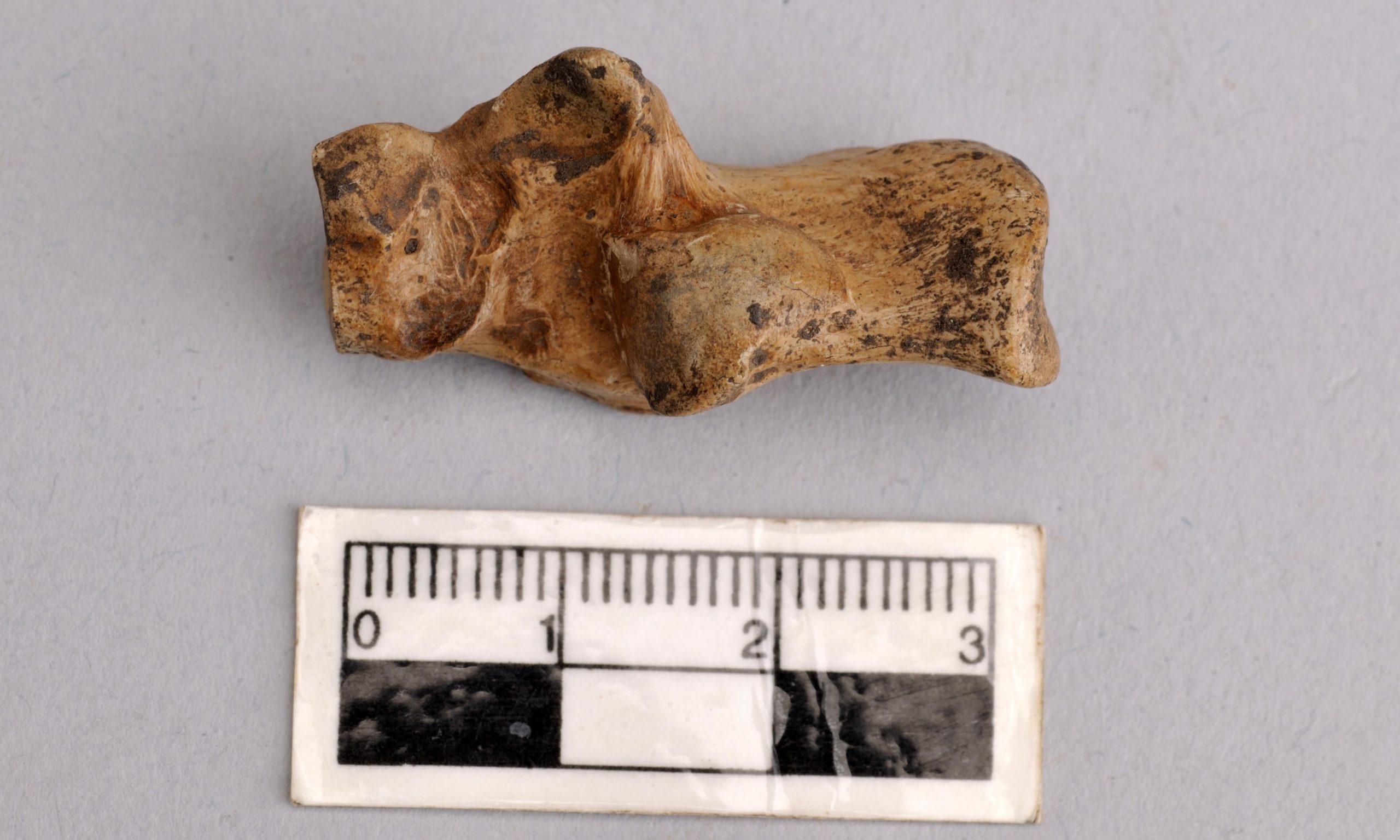
The researchers, who included Jablonski and long-time collaborator Xueping Ji, department of paleoanthropology, Yunnan Institute of Cultural Relics and Archaeology, Kunming, China, studied the fossils unearthed from the Shuitangba lignite mine that has yielded many fossils. They report that “The mandible and proximal femur were found in close proximity and are probably of the same individual,” in a recent issue of the Journal of Human Evolution. Also uncovered slightly lower was a left calcaneus — heel bone — reported by Dionisios Youlatos, Aristotle University of Thessaloniki, Greece, in another paper online in the journal, that belongs to the same species of monkey, Mesopithecus pentelicus.
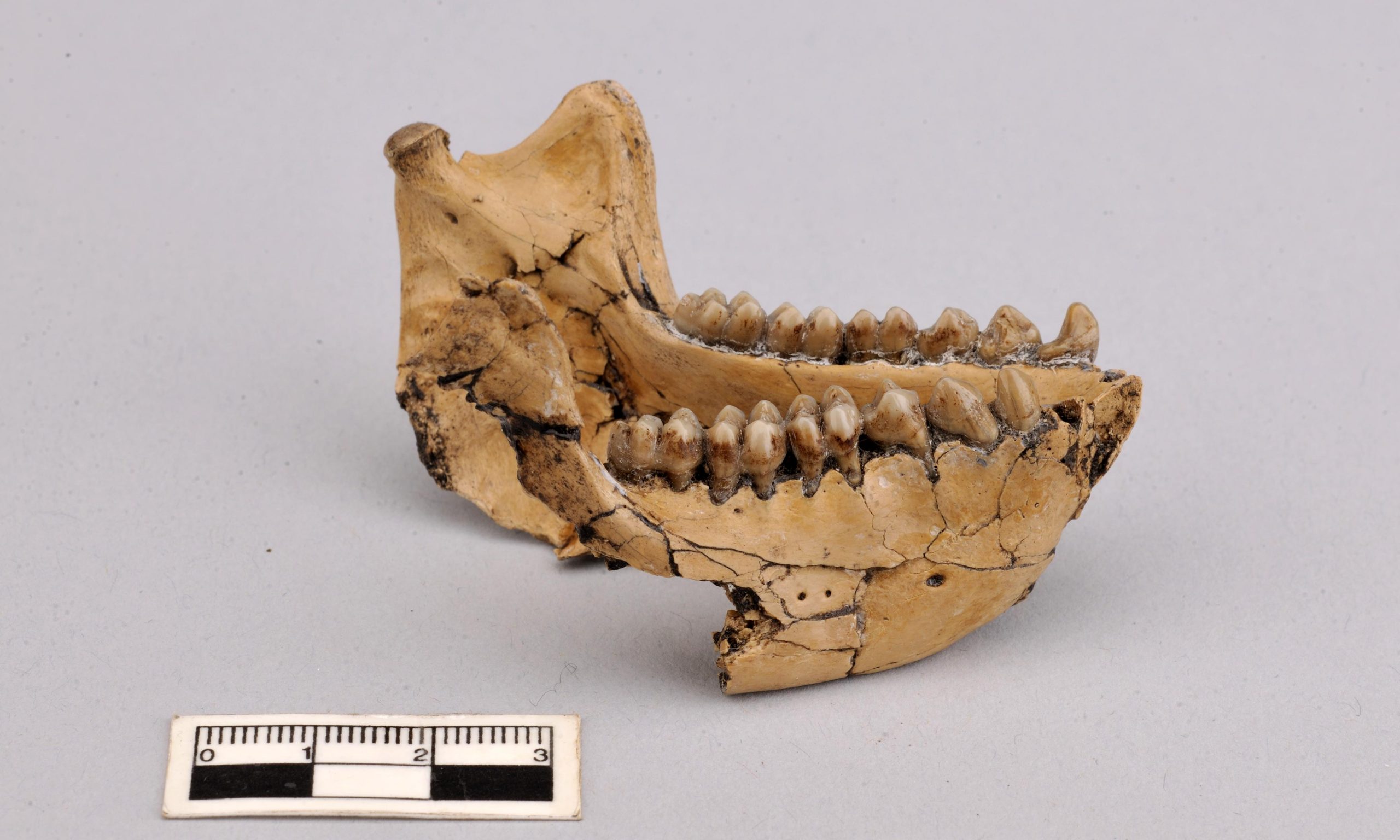
“The significance of the calcaneus is that it reveals the monkey was well adapted for moving nimbly and powerfully both on the ground and in the trees,” said Jablonski. “This locomotor versatility no doubt contributed to the success of the species in dispersing across woodland corridors from Europe to Asia.”
The lower jawbone and upper portion of the leg bone indicate that the individual was female, according to the researchers. They suggest that these monkeys were probably “jacks of all trades” able to navigate in the trees and on land. The teeth indicate they could eat a wide variety of plants, fruits and flowers, while apes eat mostly fruit.
“The thing that is fascinating about this monkey, that we know from molecular anthropology, is that, like other colobines (Old World monkeys), it had the ability to ferment cellulose,” said Jablonski. “It had a gut similar to that of a cow.”
These monkeys are successful because they can eat low-quality food high in cellulose and obtain sufficient energy by fermenting the food and using the subsequent fatty acids then available from the bacteria. A similar pathway is used by ruminant animals like cows, deer and goats.
“Monkeys and apes would have been eating fundamentally different things,” said Jablonski. “Apes eat fruits, flowers, things easy to digest, while monkeys eat leaves, seeds and even more mature leaves if they have to. Because of this different digestion, they don’t need to drink free water, getting all their water from vegetation.”
These monkeys do not have to live near bodies of water and can survive periods of dramatic climatic change.
“These monkeys are the same as those found in Greece during the same time period,” said Jablonski. “Suggesting they spread out from a center somewhere in central Europe and they did it fairly quickly. That is impressive when you think of how long it takes for an animal to disperse tens of thousands of kilometers through forest and woodlands.”
While there is evidence that the species began in Eastern Europe and moved out from there, the researchers say the exact patterns are unknown, but they do know the dispersal was rapid, in evolutionary terms. During the end of the Miocene when these monkeys were moving out of Eastern Europe, apes were becoming extinct or nearly so, everywhere except in Africa and parts of Southeast Asia.
“The late Miocene was a period of dramatic environmental change,” said Jablonski. “What we have at this site is a fascinating snapshot of the end of the Miocene — complete with one of the last apes and one of the new order of monkeys. This is an interesting case in primate evolution because it testifies to the value of versatility and adaptability in diverse and changing environments. It shows that once a highly adaptable form sets out, it is successful and can become the ancestral stock of many other species.”
Reference: “Mesopithecus pentelicus from Zhaotong, China, the easternmost representative of a widespread Miocene cercopithecoid species” by Nina G. Jablonski, Xueping Ji, Jay Kelley, Lawrence J. Flynn, Chenglong Deng and Denise F. Su, 6 August 2020, Journal of Human Evolution.
DOI: 10.1016/j.jhevol.2020.102851
Also working on this project were Jay Kelley, Institute of Human Origins and School of Human Evolution and Social Change, Arizona State University and Department of Human Evolutionary Biology, Harvard University; Lawrence J. Flynn, Department of Human Evolutionary Biology, Harvard University; Chenglong Deng, Institute of Geology and Geophysics, Chinese Academy of Sciences; and Denise F. Su, Department of Paleobotany and Paleoecology, Cleveland Museum of Natural History.
The National Science Foundation, Penn State and Bryn Mawr funded this research.
Never miss a breakthrough: Join the SciTechDaily newsletter.
Follow us on Google and Google News.
1 Comment
The title of this article is very misleading. The oldest monkey fossils outside of Africa are Platyrrhine fossils in the Americas dated at around 34 million years old. https://www.newscientist.com/article/2240325-monkeys-made-their-way-from-africa-to-south-america-at-least-twice/#:~:text=Fossil%20dating%20indicates%20that%20the,and%2032%20million%20years%20ago.&text=The%20oldest%20platyrrhine%20fossil%20is,discovered%20parapithecid%20fossils%2C%20says%20Seiffert.