
Medieval bards and poets described plant life that reveals India’s savannas have thrived for at least 750 years. Here’s why that history matters now.
In one of the earliest known texts written in Marathi, a language spoken by millions in western and central India, a 13th-century spiritual leader named Cakradhara uses an acacia tree to symbolize the cycle of death and reincarnation.
He could not have anticipated that this image would one day aid modern scientists in exploring the environmental history of India’s vast landscapes.
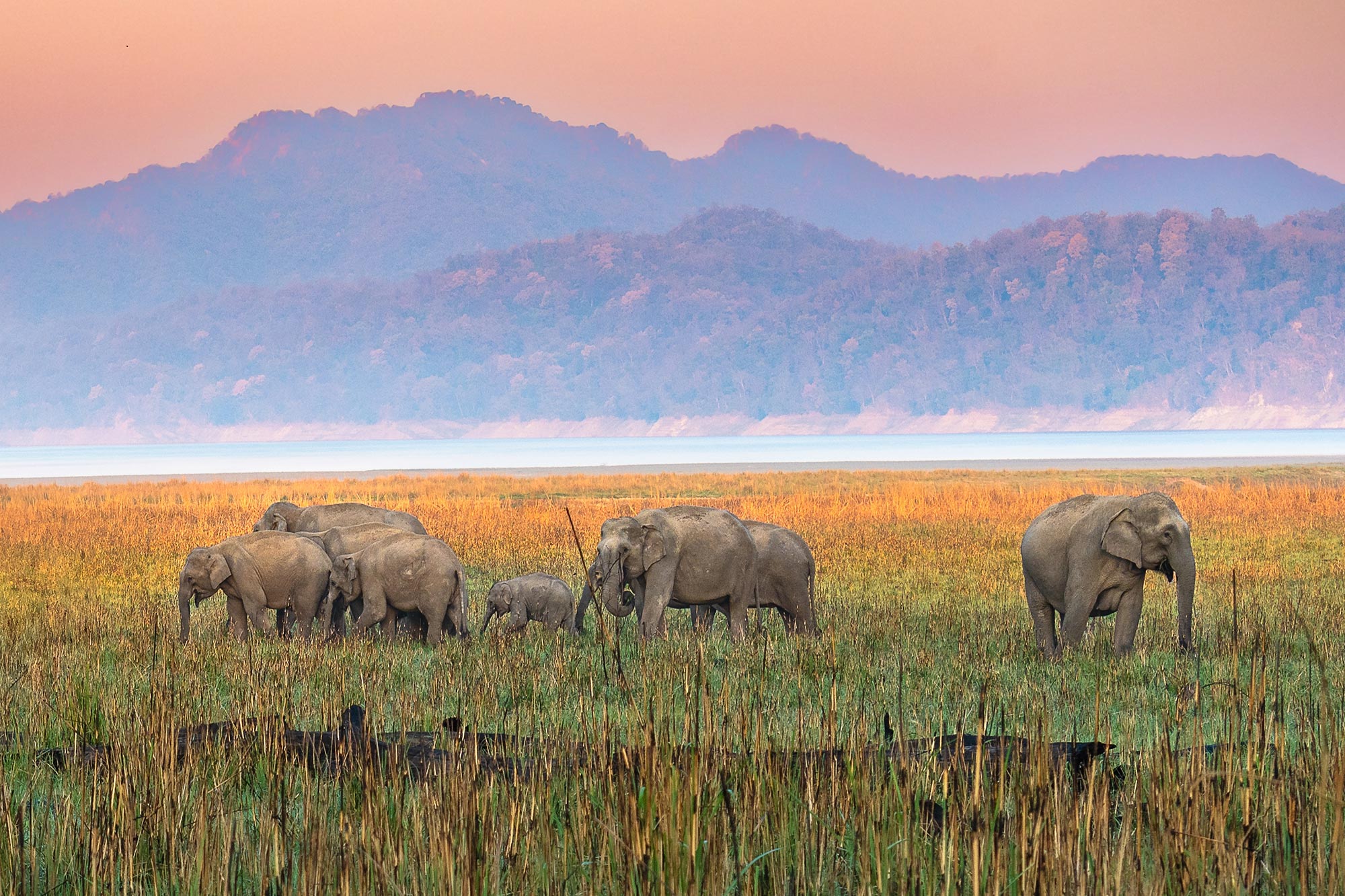
Today, researchers argue that literary works from centuries ago can offer valuable clues about how large stretches of savannas and grasslands developed. These open ecosystems cover nearly 10% of India and more than one third of the land surface of Earth.
The historical evidence suggests that tropical grasslands are not simply damaged leftovers of once-dense forests, as they are often portrayed. According to scientists, recognizing this is crucial for deciding where tree planting and forest restoration efforts should actually take place in the future.
In a new study published in the British Ecological Society journal People and Nature, researchers examined descriptions of plants in traditional stories and songs set in western India. By analyzing these historical accounts, they worked to reconstruct what kinds of vegetation once existed in the region.
“The take-home for me is how little things have changed,” said study author Ashish Nerlekar of Michigan State University. “It’s fascinating that something hundreds of years old could so closely match what is around today and contrast so much with what people romanticize the past landscape to be.”
The idea for the study first emerged during a casual conversation over coffee, as the researchers compared what they were each seeing in their own fields of work.
Insights From Folklore, Poetry, and Sacred Texts
Co-author Digvijay Patil, a PhD student in archeology at the Indian Institute of Science Education and Research in Pune, explained that he often encountered unusual plant references while examining Sanskrit and Marathi texts for his research on sacred sites in western India.
When he shared these observations, plant scientist Ashish Nerlekar immediately recognized the descriptions as real species of trees and shrubs commonly found throughout the region’s savannas.
So the team started poring over folk songs, poems and myths written or performed in Marathi and dating as far back as the 13th century — very little of which exists in databases — to find references to wild plants and map their locations.
In the state of Maharashtra, where the works were set, today some 37,485 square kilometers consist of open grassy expanses — an area two-thirds as big as Lake Michigan.
These areas are frequently misunderstood, said Nerlekar, a postdoctoral fellow in MSU’s Ecology, Evolution, and Behavior Program.
In policy and in popular imagination, tropical savannas in India and elsewhere have long been cast as the remains of former forests that were reduced by humans to their present state, and thus maligned as “wastelands.”
Under this view, they’re often earmarked for tree planting campaigns aimed at restoring forests to help absorb carbon dioxide and address the climate crisis.
But this and other studies paint a different picture of their past.
Plant References Spanning Centuries
The researchers uncovered mentions of 44 species of wild plants, nearly two thirds of which are characteristic of savannas.
For example, in one passage of the epic poem “Adi Parva,” dated to about the 16th century, cowherders are attracted to the “empty” and “thorny” landscape of the Nira River valley by its abundant grass.
Another account involving the death of a 15th-century poet-saint at a pilgrimage site called Pandharpur tells of a taraṭī tree — which scientists know as a sun-loving species called Capparis divaricata — that sprouts from her grave.
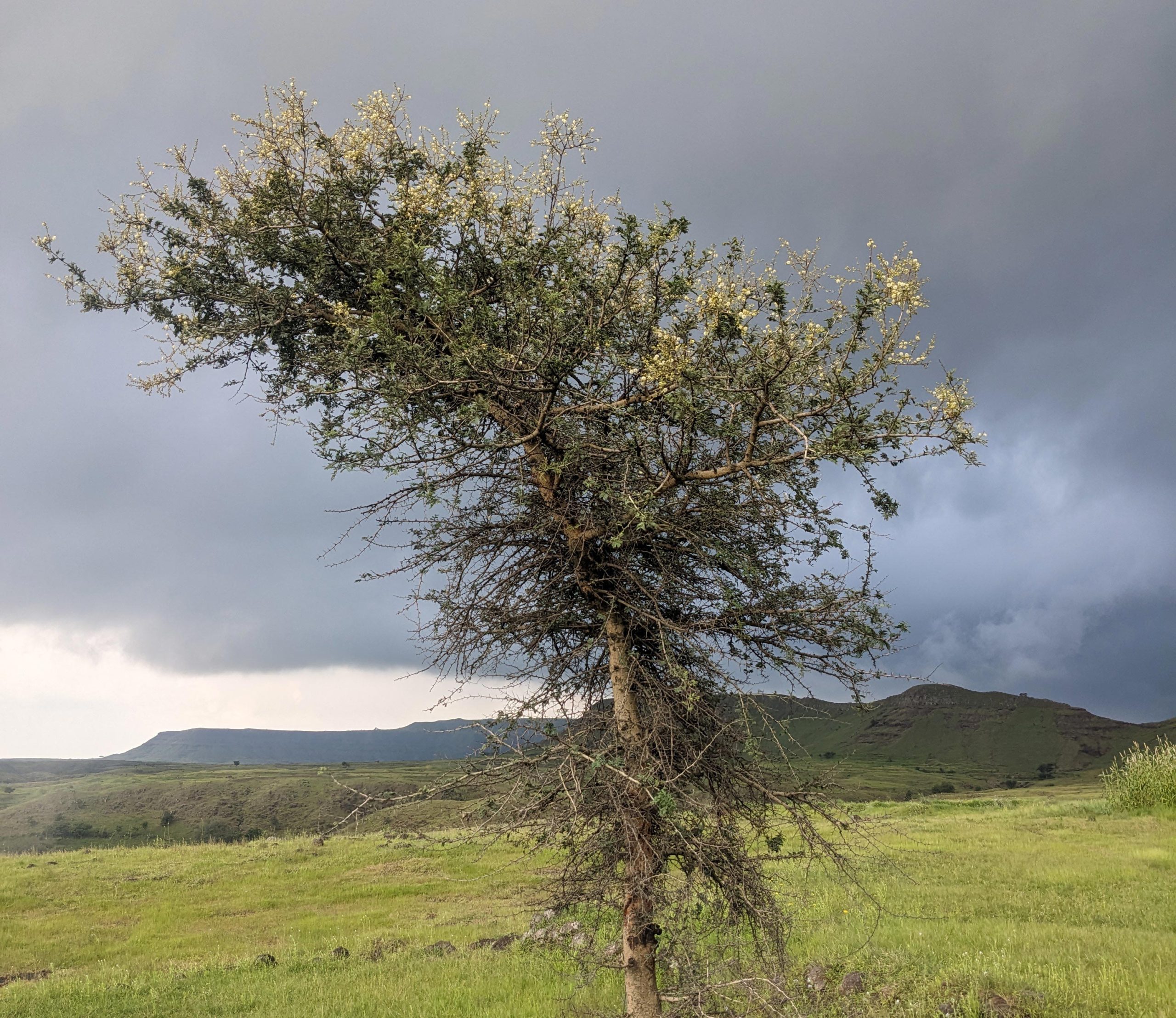
The researchers also found eight references to the thorny acacia tree that Cakradhara singled out, a feathery-leaved species with pale yellow bark and white flowers called Vachellia leucophloea.
“It’s a pretty iconic tree in the region, and it was common at that time also,” Nerlekar said.
This and other windows into the past suggest that the region’s savannas stretch back at least 750 years, existing long before the deforestation that took place in India during British rule.
Previous lines of evidence suggest that many of the world’s tropical savannas, including those in Indi,a are even more ancient.
For example, the fossilized remains of pollen grains and grass-feeding hippos and other animals suggest that the plants that grew in the region tens of thousands of years ago were typical of savannas, not forests.
There are good reasons to preserve savannas and grasslands today, Nerlekar said.
Why Savannas Matter Today
In India alone, they are home to more than 200 plant species found nowhere else on Earth — many of which were only recently described by science, and remain at risk as land is converted to farms and other uses.
“A lot of savanna biodiversity is also sacred,” which means they have cultural value in addition to ecological value, ” Nerlekar said.
Savannas also act as carbon sinks, because they absorb carbon dioxide that would otherwise stay in the atmosphere and contribute to warming.
And in Asia, Africa, Australia, and South America, they provide fodder for hundreds of millions of cattle, sheep and other grazing livestock.
An estimated 20% of the global human population rely on savannas and grasslands for their livelihoods. The researchers say these benefits could be lost if efforts to mitigate climate change include planting trees in places where there was no forest to begin with.
“These centuries-old stories provide us a rare glimpse into the past, and that the past was a savanna past, not a forested past,” Nerlekar said.
Reference: “Utilizing traditional literature to triangulate the ecological history of a tropical savanna” by Ashish N. Nerlekar and Digvijay Patil, 24 November 2025, People and Nature.
DOI: 10.1002/pan3.70201
This research was supported by grants from Michigan State University and IISER Pune.
Never miss a breakthrough: Join the SciTechDaily newsletter.
Follow us on Google and Google News.