
Close Menu
    Facebook X (Twitter) Instagram
    SciTechDaily
    • Biology
    • Chemistry
    • Earth
    • Health
    • Physics
    • Science
    • Space
    • Technology
    Facebook X (Twitter) Pinterest YouTube RSS
    SciTechDaily
    Home»Earth»Hit or Miss? Gigantic Iceberg Bears Down on South Georgia Island
    Earth

    Hit or Miss? Gigantic Iceberg Bears Down on South Georgia Island

    By European Space Agency (ESA)November 28, 20201 Comment2 Mins Read
    Facebook Twitter Pinterest Telegram LinkedIn WhatsApp Email Reddit
    Share
    Facebook Twitter LinkedIn Pinterest Telegram Email Reddit
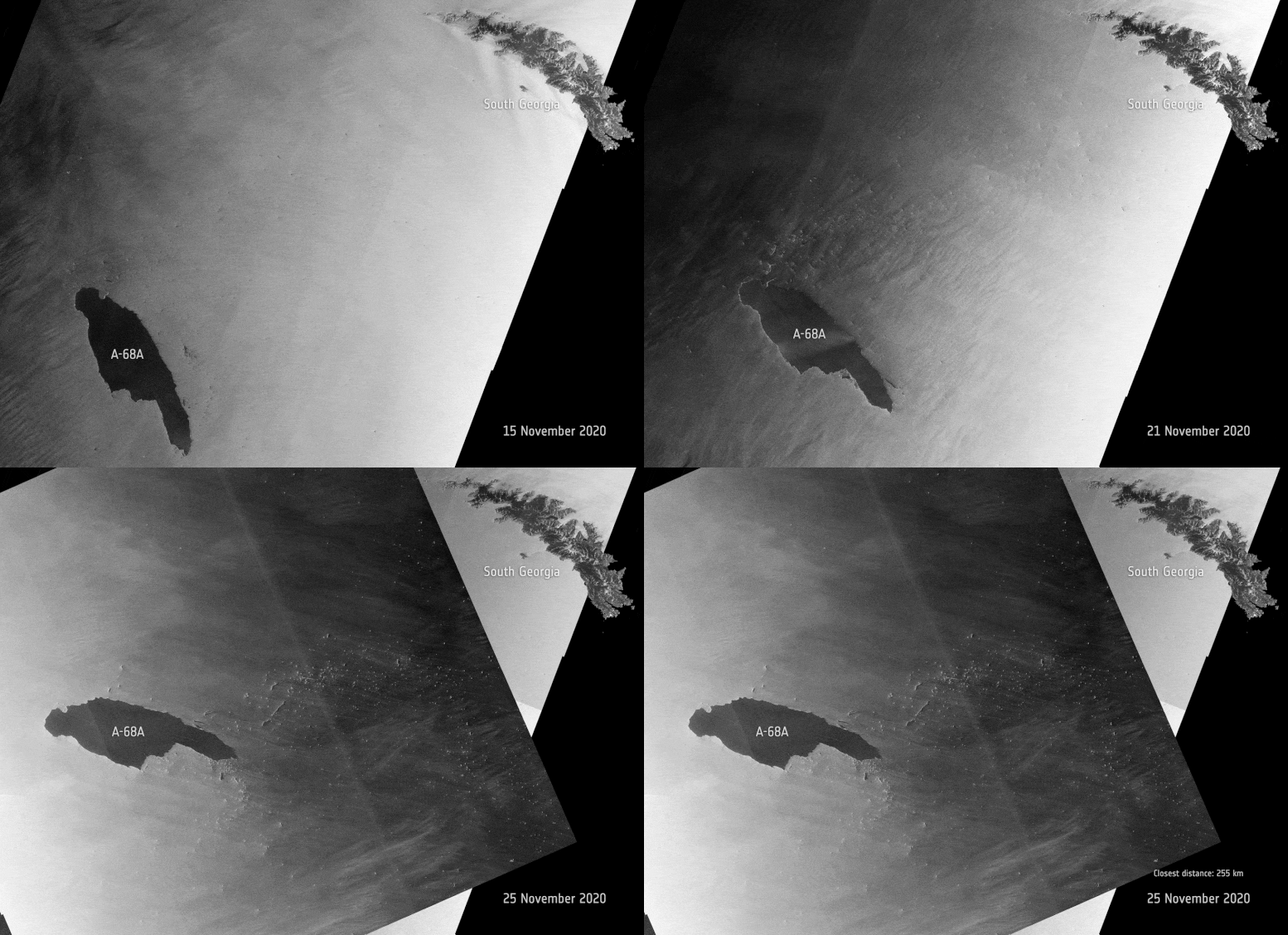
    Iceberg A-68A: Hit or Miss?
    An enormous iceberg, called A-68A, has made headlines over the past weeks as it drifts towards South Georgia in the Southern Ocean. New images, captured by the Copernicus Sentinel-1 mission, show the berg is rotating and potentially drifting westwards. Credit: Contains modified Copernicus Sentinel data (2020), processed by ESA

    An enormous iceberg, called A-68A, has made headlines over the past weeks as it drifts towards South Georgia in the Southern Ocean. New images, captured by the Copernicus Sentinel-1 mission, show the berg is rotating and potentially drifting westwards.

    In July 2017, the lump of ice, more than twice the size of Luxembourg, broke off Antarctica’s Larsen C ice shelf – spawning one of the largest icebergs on record. Now, three years later, the A68A berg is being carried by currents in open waters – thousands of kilometers from its birthplace.
    Iceberg A 68A South Georgia Annotated
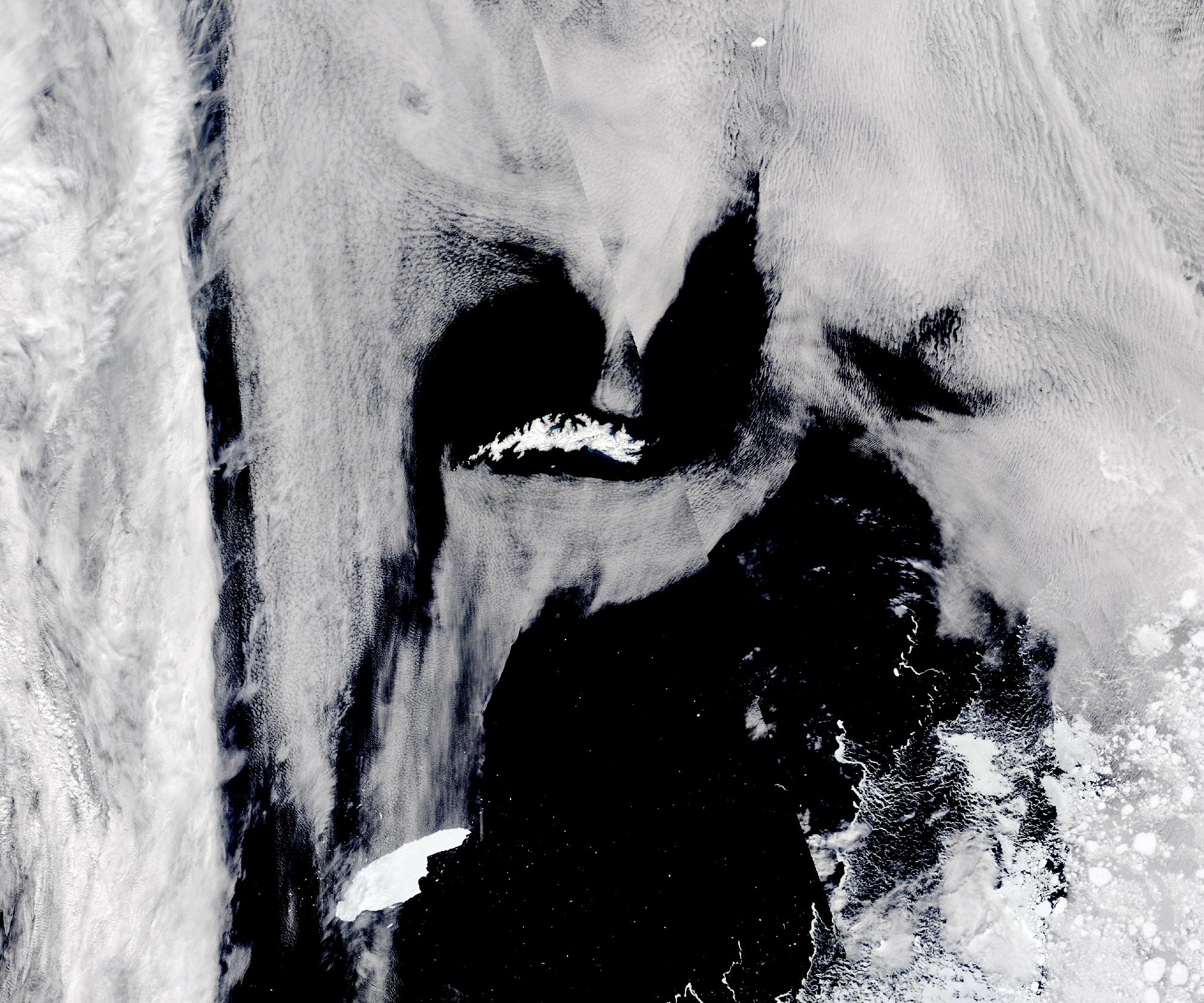
    Iceberg A-68A seen closing in on South Georgia, a remote island in the southern Atlantic Ocean, in this image taken by the Moderate Resolution Imaging Spectroradiometer (MODIS) on NASA’s Terra satellite on November 5, 2020. Credit: NASA Earth Observatory image by Lauren Dauphin

    The Copernicus Sentinel-1 mission’s latest acquisition, captured on 25 November, shows the berg’s eastern tip is now just 255 km (158 mi) from South Georgia. If the iceberg were to reach the island’s shores, it could potentially ground in the shallow waters offshore and threaten wildlife, including penguins, seals, and krill.

    As these animals need access to the sea to feed, the iceberg could easily block their foraging routes – preventing them from feeding their young. It could also disturb the ecosystem below by crushing animal and plant life on the seafloor.

    Satellite missions are being used to track the berg on its journey over the past three years. The Sentinel-1 radar mission, with its ability to see through clouds and the dark, has been instrumental in mapping the polar regions in winter.

    Never miss a breakthrough: Join the SciTechDaily newsletter.
    Follow us on Google and Google News.

    European Space Agency Iceberg
    Share. Facebook Twitter Pinterest LinkedIn Email Reddit

    Related Articles

    Halloween Crack in Antarctica

    Mega Iceberg – One of the Largest on Record – Released 150 Billion Tons of Freshwater Near Island

    Meet the World’s Largest Iceberg: A-76 Is Over 100 Miles Long

    Massive Iceberg – 10 Times the Size of San Francisco – Breaks Off Brunt Ice Shelf in Antarctica

    A-68A: Is This the End of One of the Largest Icebergs of All Time?

    Huge Chunk of Ice Breaks Off Giant Iceberg As It Drifts Alarmingly Close to South Georgia

    Giant Iceberg on Collision Course With South Georgia Could Wreak Havoc [Video]

    Massive Iceberg on Collision Course With South Georgia

    Tracking Colossal Iceberg – Larger Than Delaware – During a 3-Year, 650-Mile Journey

    1 Comment

    1. Richie on November 29, 2020 6:27 am

      Climate fear-mongering at its finest. “If this happens, then that undesirable outcome must follow.” Usually, the undesirable outcome is some negative impact on “the children”; children in South Georgia presumably don’t cavort in those icy waters, so another undesirable outcome had to be found — how the iceberg might affect wildlife too inflexible in their response to a changing environment to avoid the berg. If living creatures are really so stupid as this suggests, it’s a wonder there is any life left on this planet given the wild climate perturbations of the Quaternary.

      Reply
    Leave A Reply Cancel Reply

    • Facebook
    • Twitter
    • Pinterest
    • YouTube

    Don't Miss a Discovery

    Subscribe for the Latest in Science & Tech!

    Trending News

    New Study Suggests Vitamin C Could Help Prevent Cancer

    The Surprising Chocolate Trick That Could Boost Your Gym Performance

    Common Mouth Bacteria May Trigger Dangerous Calcium Buildup in the Heart

    Natural Supplement May Boost Cancer-Fighting Immunity

    Could Dark Matter Be Hiding in a Hidden Fifth Dimension?

    The Hidden Tradeoff Behind Today’s Most Powerful Weight-Loss Drugs

    Atlantic Ocean Slowdown Could Supercharge California Storms

    A Deadly Ebola-Like Virus Is Spreading. Are We Ready?

    Follow SciTechDaily
    • Facebook
    • Twitter
    • YouTube
    • Pinterest
    • Newsletter
    • RSS
    SciTech News
    • Biology News
    • Chemistry News
    • Earth News
    • Health News
    • Physics News
    • Science News
    • Space News
    • Technology News
    Recent Posts
    • Why AI May Never Reach Human Intelligence
    • Harvard Scientists Turned a Silicon Chip Into a DNA Factory
    • A Sea Worm’s Incredible “Bio-Metal” Jaws May Belong to an Entirely New Class of Material
    • This Ancient Sea Animal Fights Viruses in the Opposite Way Humans Do
    • Mystery Bones Found in Japan Belong to a Giant Salamander Unlike Any Known
    Copyright © 1998 - 2026 SciTechDaily. All Rights Reserved.
    • Science News
    • About
    • Contact
    • Editorial Board
    • Privacy Policy
    • Terms of Use

    Type above and press Enter to search. Press Esc to cancel.