
Close Menu
    Facebook X (Twitter) Instagram
    SciTechDaily
    • Biology
    • Chemistry
    • Earth
    • Health
    • Physics
    • Science
    • Space
    • Technology
    Facebook X (Twitter) Pinterest YouTube RSS
    SciTechDaily
    Home»Biology»Of Mice and Spacemen: Understanding Astronaut Muscle Wasting at the Molecular Level
    Biology

    Of Mice and Spacemen: Understanding Astronaut Muscle Wasting at the Molecular Level

    By University of TsukubaMay 13, 2021No Comments3 Mins Read
    Facebook Twitter Pinterest Telegram LinkedIn WhatsApp Email Reddit
    Share
    Facebook Twitter LinkedIn Pinterest Telegram Email Reddit
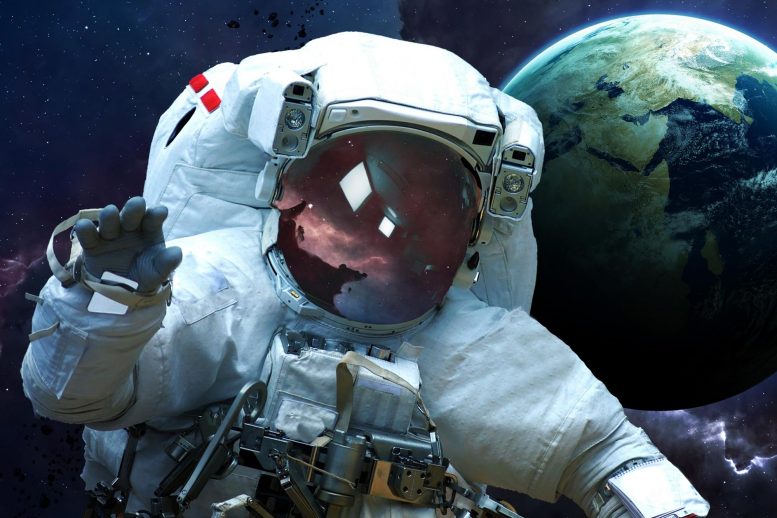
    Astronaut in Outer Space
    Spaceflight induces muscle atrophy and can result in significant medical issues upon returning to Earth.

    Researchers from the University of Tsukuba have sent mice into space to explore effects of spaceflight and reduced gravity on muscle atrophy, or wasting at the molecular level.

    Most of us have imagined how free it would feel to float around, like an astronaut, in conditions of reduced gravity. But have you ever considered what the effects of reduced gravity might have on muscles? Gravity is a constant force on Earth which all living creatures have evolved to rely on and adapt to. Space exploration has brought about many scientific and technological advances, yet manned spaceflights come at a cost to astronauts, including reduced skeletal muscle mass and strength.

    Conventional studies investigating the effects of reduced gravity on muscle mass and function have used a ground control group that is not directly comparable to the space experimental group. Researchers from the University of Tsukuba set out to explore the effects of gravity in mice subjected to the same housing conditions, including those experienced during launch and landing. “In humans, spaceflight causes muscle atrophy and can lead to serious medical problems after return to Earth,” says senior author Professor Satoru Takahashi. “This study was designed based on the critical need to understand the molecular mechanisms through which muscle atrophy occurs in conditions of microgravity and artificial gravity.”

    Two groups of mice (six per group) were housed onboard the International Space Station for 35 days. One group was subjected to artificial gravity (1 g) and the other to microgravity. All mice were alive upon return to Earth and the team compared the effects of the different onboard environments on skeletal muscles.

    Gene Expression and Potential Targets Identified

    “To understand what was happening inside the muscles and cells, at the molecular level, we examined the muscle fibers. Our results show that artificial gravity prevents the changes observed in mice subjected to microgravity, including muscle atrophy and changes in gene expression,” explained Prof. Takahashi. Transcriptional analysis of gene expression revealed that artificial gravity prevented altered expression of atrophy related genes and identified novel candidate genes associated with atrophy. Specifically, a gene called Cacng1 was identified as possibly having a functional role in myotube atrophy.

    This work supports the use of spaceflight datasets using 1 g artificial gravity for examining the effects of spaceflight in muscles. These studies will likely aid our understanding of the mechanisms of muscle atrophy and may ultimately influence the treatment of related diseases.

    Reference: “Transcriptome analysis of gravitational effects on mouse skeletal muscles under microgravity and artificial 1 g onboard environment” by Risa Okada, Shin-ichiro Fujita, Riku Suzuki, Takuto Hayashi, Hirona Tsubouchi, Chihiro Kato, Shunya Sadaki, Maho Kanai, Sayaka Fuseya, Yuri Inoue, Hyojung Jeon, Michito Hamada, Akihiro Kuno, Akiko Ishii, Akira Tamaoka, Jun Tanihata, Naoki Ito, Dai Shiba, Masaki Shirakawa, Masafumi Muratani, Takashi Kudo and Satoru Takahashi, 28 April 2021, Scientific Reports.
    DOI: 10.1038/s41598-021-88392-4

    Never miss a breakthrough: Join the SciTechDaily newsletter.
    Follow us on Google and Google News.

    Bioinformatics Popular University of Tsukuba
    Share. Facebook Twitter Pinterest LinkedIn Email Reddit

    Related Articles

    Artificial Intelligence Discovers Surprising Patterns in Earth’s Biological Mass Extinctions

    Special Genes Behind the Pressure Sensor of the Venus Flytrap

    Ferrets, Cats, Civets, and Dogs Most Susceptible to SARS-CoV-2 Coronavirus Infection After Humans

    Major Scientific Advance: DeepMind AI AlphaFold Solves 50-Year-Old Grand Challenge of Protein Structure Prediction

    Timeline Unveiled for One of the Most Important and Puzzling Events in the Evolution of Life

    Giant Lizards Learned to Fly Over Millions of Years – Pterosaurs Evolved Improved Flight Performance

    Two Major Microbial Groups Discovered That Can’t Breathe – May Predate the Evolution of Respiration

    Intriguing Genetics That Flipped the Food Chain to Allow Carnivorous Plants to Hunt Animals

    Researchers Use Bioinformatics and Epigenetics to Aid Cancer Research

    Leave A Reply Cancel Reply

    • Facebook
    • Twitter
    • Pinterest
    • YouTube

    Don't Miss a Discovery

    Subscribe for the Latest in Science & Tech!

    Trending News

    Mezcal “Worm” in a Bottle Mystery: DNA Testing Reveals a Surprise

    New Research Reveals That Your Morning Coffee Activates an Ancient Longevity Switch

    This Is What Makes You Irresistible to Mosquitoes

    Shockingly Powerful Giant Octopuses Ruled the Seas 100 Million Years Ago

    Scientists Stunned by New Organic Molecules Found on Mars

    Rewriting Dinosaur Evolution: Scientists Unearth Remarkable 150-Million-Year-Old Stegosaur Skull

    Omega-3 Supplements Linked to Cognitive Decline in Surprising New Study

    First-of-Its-Kind Discovery: Homer’s Iliad Found Embedded in a 1,600-Year-Old Egyptian Mummy

    Follow SciTechDaily
    • Facebook
    • Twitter
    • YouTube
    • Pinterest
    • Newsletter
    • RSS
    SciTech News
    • Biology News
    • Chemistry News
    • Earth News
    • Health News
    • Physics News
    • Science News
    • Space News
    • Technology News
    Recent Posts
    • This New Chip Could Make GPUs Far More Efficient
    • This Tiny World in the Outer Solar System Should Be Airless, but It Has an Atmosphere
    • NASA’s Webb Space Telescope Reveals a Dark Airless Super-Earth That Looks Like Mercury
    • These Simple Daily Habits Can Quickly Improve Blood Pressure and Heart Risk Factors
    • A Common Nutrient May Play a Surprising Role in Anxiety
    Copyright © 1998 - 2026 SciTechDaily. All Rights Reserved.
    • Science News
    • About
    • Contact
    • Editorial Board
    • Privacy Policy
    • Terms of Use

    Type above and press Enter to search. Press Esc to cancel.