
Close Menu
    Facebook X (Twitter) Instagram
    SciTechDaily
    • Biology
    • Chemistry
    • Earth
    • Health
    • Physics
    • Science
    • Space
    • Technology
    Facebook X (Twitter) Pinterest YouTube RSS
    SciTechDaily
    Home»Biology»A Fair Society Evolves From “Veil of Ignorance” – Mongooses Solve Inequality Problem
    Biology

    A Fair Society Evolves From “Veil of Ignorance” – Mongooses Solve Inequality Problem

    By University of ExeterJune 23, 2021No Comments3 Mins Read
    Facebook Twitter Pinterest Telegram LinkedIn WhatsApp Email Reddit
    Share
    Facebook Twitter LinkedIn Pinterest Telegram Email Reddit
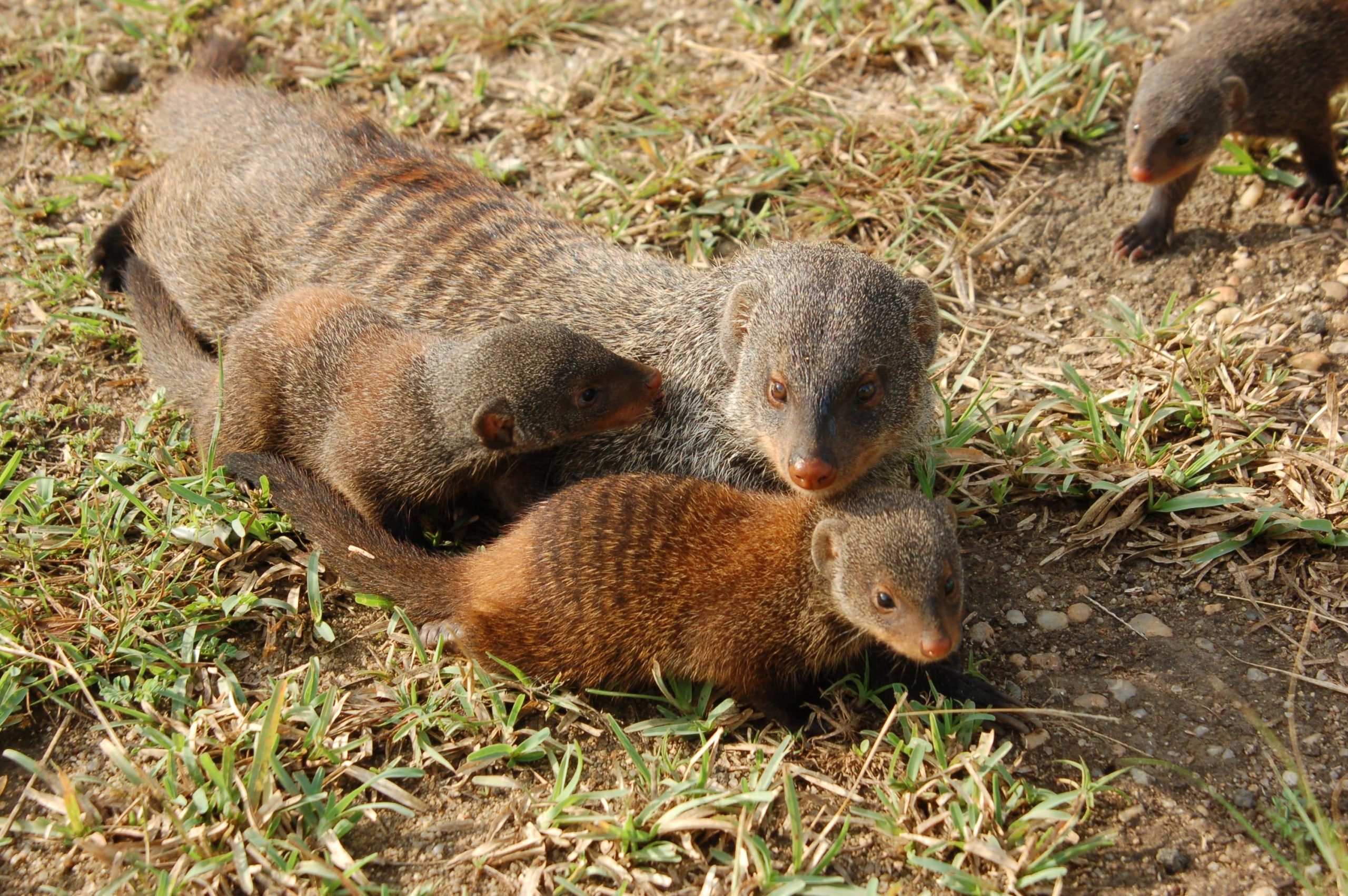
    Banded Mongooses
    Banded mongooses. Credit: Harry Marshall

    A new study reveals surprising fairness in banded mongoose societies, driven by communal birth practices.

    A fair society has evolved in banded mongooses as a result of parents not knowing which pups are their own. This is according to new research published in the journal Nature Communications.

    Mothers in banded mongoose groups all give birth on the same night, creating a “veil of ignorance” over parentage in their communal crèche of pups.

    In the new study, led by the universities of Exeter and Roehampton, half of the pregnant mothers in wild mongoose groups were regularly given extra food, leading to increased inequality in the birth weight of pups.

    But after giving birth, well-fed mothers gave extra care to the smaller pups born to the unfed mothers — rather than their own pups — and the pup size differences quickly disappeared.

    “Veil of Ignorance” Leads to Fairness

    Dr. Harry Marshall, of the Department of Life Sciences at the University of Roehampton, said: “In most of the natural world, parents favor their own young.

    “However, in banded mongooses, the evolution of remarkable birth synchrony has led to the unusual situation that mothers don’t know which pups are their own, and therefore cannot choose to give them extra care.
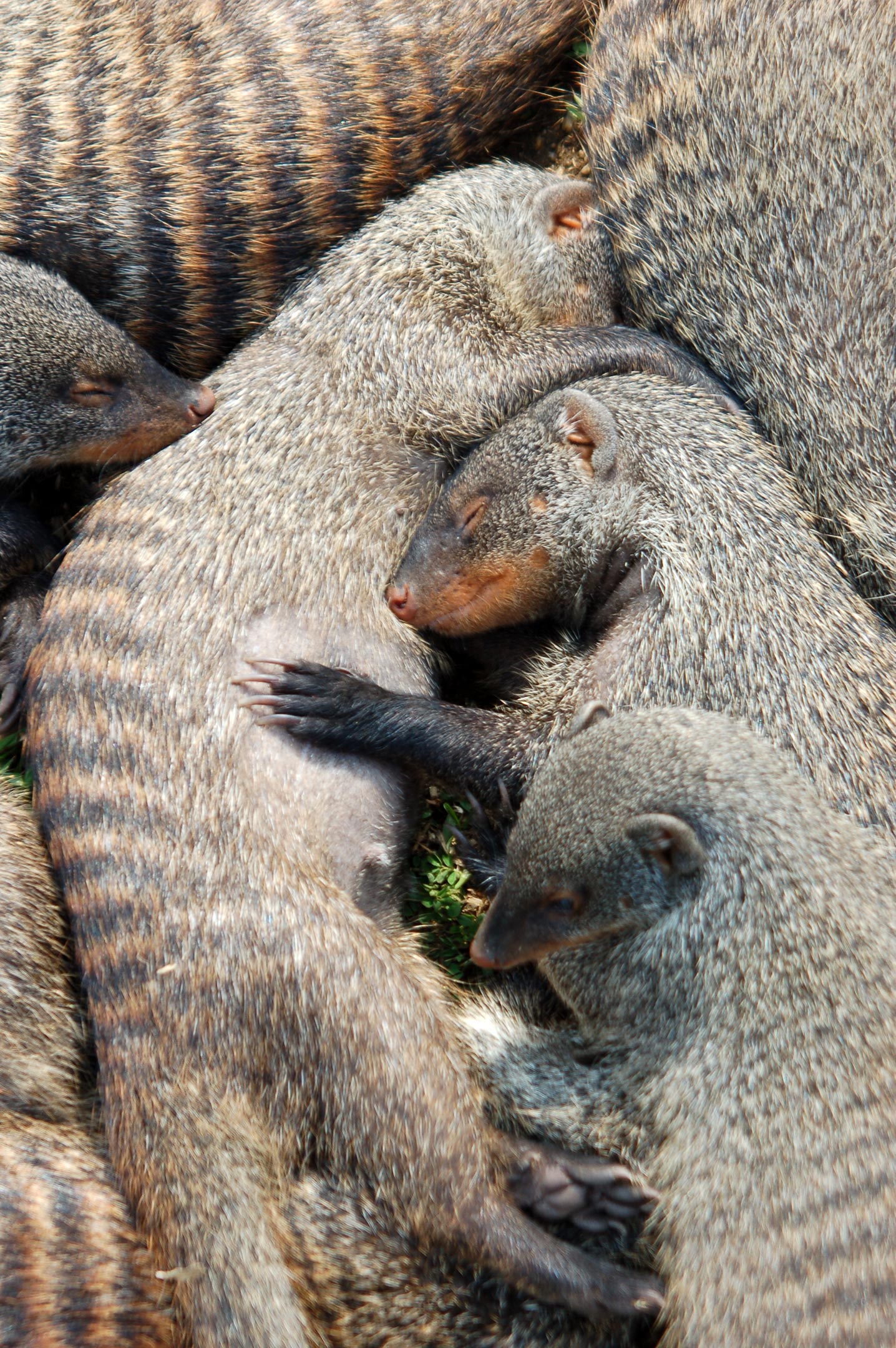
    Banded Mongooses Snuggle
    Banded mongooses. Credit: Harry Marshall

    “Our study shows that this ignorance leads to a fairer allocation of resources — in effect, a fairer society.”

    The study examined seven groups of banded mongooses in Uganda. Half of the pregnant females in each group were given 50g of cooked egg each day, while the other half were not given extra food.

    Inequality at birth (measured by weight) was wider in breeding periods when food was provided than in periods where no extra food was given.

    Professor Michael Cant, of the University of Exeter said: “We predicted that a ‘veil of ignorance’ would cause females to focus their care on the pups most in need — and this is what we found.

    “Those most able to help offer it to the most needy, and in doing so minimize the risk that their own offspring will face a disadvantage. This redistributive form of care ‘leveled up’ initial size disparities, and equalized the chances of pups surviving to adulthood.

    Philosophical Concept of Fairness in Animal Societies

    “Our results suggest that the veil of ignorance, a classic philosophical idea to achieve fairness in human societies, also applies in this non-human society.”

    The research team included Professor Rufus Johnstone, from the University of Cambridge.

    Funding for the study came from the European Research Council and the Natural Environment Research Council.

    The paper, published in the journal Nature Communications, is entitled: “A veil of ignorance can promote fairness in a mammal society.”

    Reference: “A veil of ignorance can promote fairness in a mammal society” by H. H. Marshall, R. A. Johnstone, F. J. Thompson, H. J. Nichols, D. Wells, J. I. Hoffman, G. Kalema-Zikusoka, J. L. Sanderson, E. I. K. Vitikainen, J. D. Blount and M. A. Cant, 23 June 2021, Nature Communications.
    DOI: 10.1038/s41467-021-23910-6

    Never miss a breakthrough: Join the SciTechDaily newsletter.
    Follow us on Google and Google News.

    Behavioral Science Developmental Biology Evolution University of Exeter Zoology
    Share. Facebook Twitter Pinterest LinkedIn Email Reddit

    Related Articles

    Scent Trails of Dung and Urine Could Boost Elephant Conservation

    Pace of Life: Friends and Enemies “Make Sense” for Long-Lived Animals

    Wild Animals Lose Fear of Predators Quickly After They Start Encountering Humans

    Like Humans, Chimpanzees Can Suffer for Life if They Lose Their Mother Before Adulthood

    Mountain Gorillas That Live in Large Groups Have Less Diverse Social Relationships

    Otters Juggle Stones – Now Researchers Think They Know Why [Video]

    For Narwhals – The ‘Unicorns of the Sea’ – Size Matters for Sexual Selection

    A Natural Example of a Functioning Gear Mechanism Discovered in an Insect

    Humans Are a Greater Disturbance to Elk Than Natural Predators

    Leave A Reply Cancel Reply

    • Facebook
    • Twitter
    • Pinterest
    • YouTube

    Don't Miss a Discovery

    Subscribe for the Latest in Science & Tech!

    Trending News

    What if Time Isn’t Fundamental? Physicists Just Tested the Idea in the Lab

    Scientists Say We’ve Been Wrong About the Aging Brain

    68 Quadrillion Miles: Scientists Map Earth’s Vast Hidden Fungal Network for the First Time

    Hidden Damage From Youth May Explode Into Disease Later in Life

    Climate Models May Be Wrong About How Trees Store Carbon

    Scientists Discover Brain-Protecting Peptide That Could Change Parkinson’s Treatment

    This Copper Drug Clears Alzheimer’s Brain Toxins and Boosts Memory

    Adults Over 65 Lost Massive Amounts of Weight With Ozempic

    Follow SciTechDaily
    • Facebook
    • Twitter
    • YouTube
    • Pinterest
    • Newsletter
    • RSS
    SciTech News
    • Biology News
    • Chemistry News
    • Earth News
    • Health News
    • Physics News
    • Science News
    • Space News
    • Technology News
    Recent Posts
    • Ancient Ice Man Still Hosts Mysterious Cold-Loving Organisms, Study Finds
    • Scientists Discover a Gene That Boosts Youth – but It Comes With a Cost
    • A Decade-Long Physics Mystery May Finally Be Solved
    • AI Cracks the Secrets of How the Universe’s Heaviest Elements Are Forged
    • After 50 Years, Astronomers Finally Found What the Milky Way’s Black Hole Was Hiding
    Copyright © 1998 - 2026 SciTechDaily. All Rights Reserved.
    • Science News
    • About
    • Contact
    • Editorial Board
    • Privacy Policy
    • Terms of Use

    Type above and press Enter to search. Press Esc to cancel.