
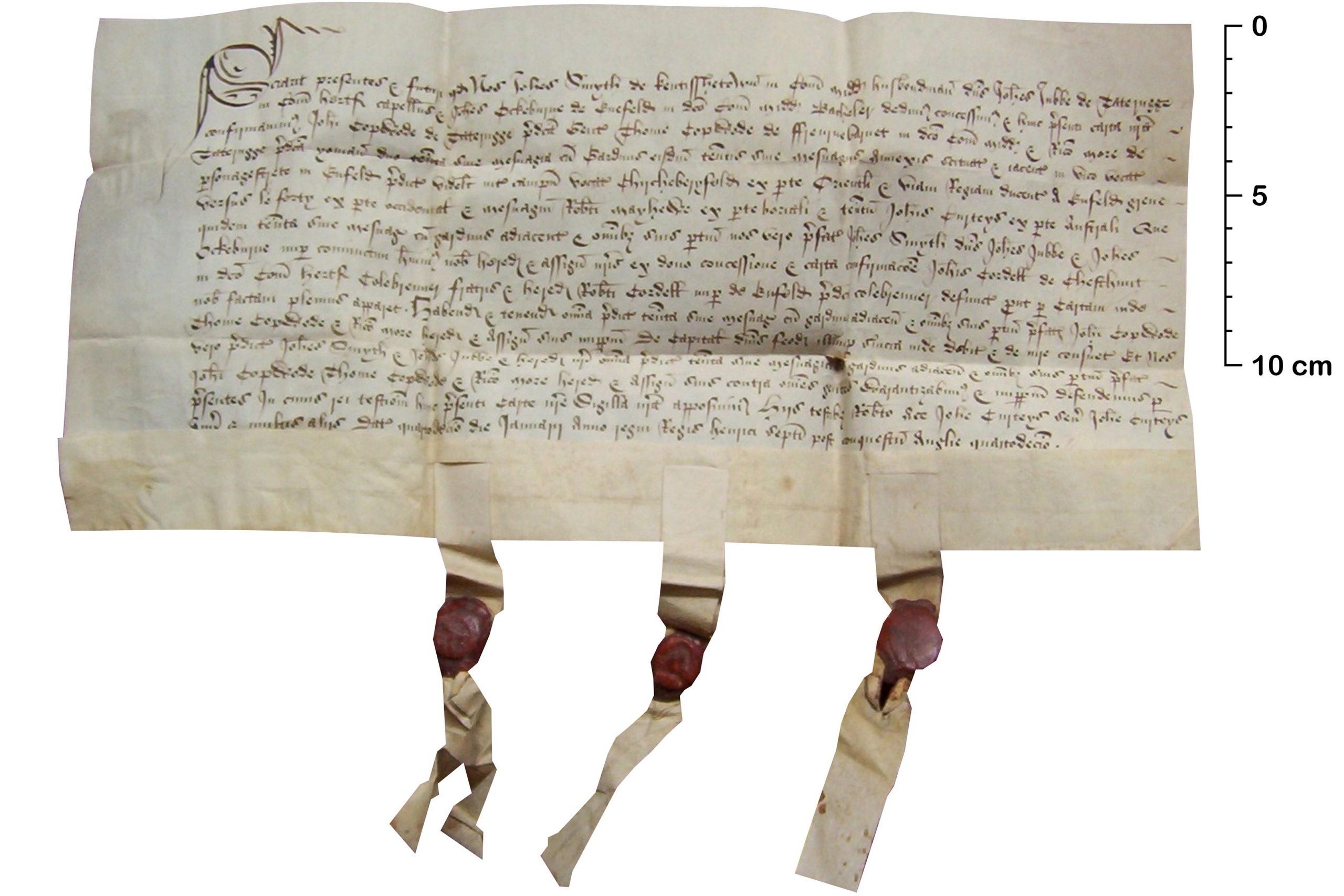
Sheepskin’s unique properties made it ideal for fraud-resistant legal documents.
Sheepskin may have been the preferred parchment for use in legal documents in Britain between the 16th and 20th century based on its utility in detecting fraud, according to research published in the open-access journal Heritage Science.
By the late 16th century in Britain, deeds — legal documents concerning the ownership and occupation of property — were primarily handwritten on parchment made from animal skin. It has not been clear which species were used to make them.
Researchers at the Universities of Exeter, York, and Cambridge, UK found that, of 477 British legal documents dating from the 16th to 20th century, most were written on sheepskins.
Sean Doherty, at the University of Exeter, the corresponding author said: “We were surprised to discover that the deeds were made almost exclusively from sheepskin, as previous research has indicated that other non-legal documents were written on skins from a range of species. This potential preference for sheepskins could indicate that there was something particularly important about their use.”
Why Sheepskin?
The authors suggest that sheepskins may have been the preferred choice for parchment, due to the higher prevalence of sheep compared to goats and calves in Britain and the resulting low cost of sheepskins compared to goat and calfskins. Additionally, the authors found passages of text in 12th and 17th century documents which indicated that sheepskins may have been preferred because they allowed for the detection of fraudulent changes to legal documents. The high fat content of sheepskins may have enabled this fraud detection, according to the authors.
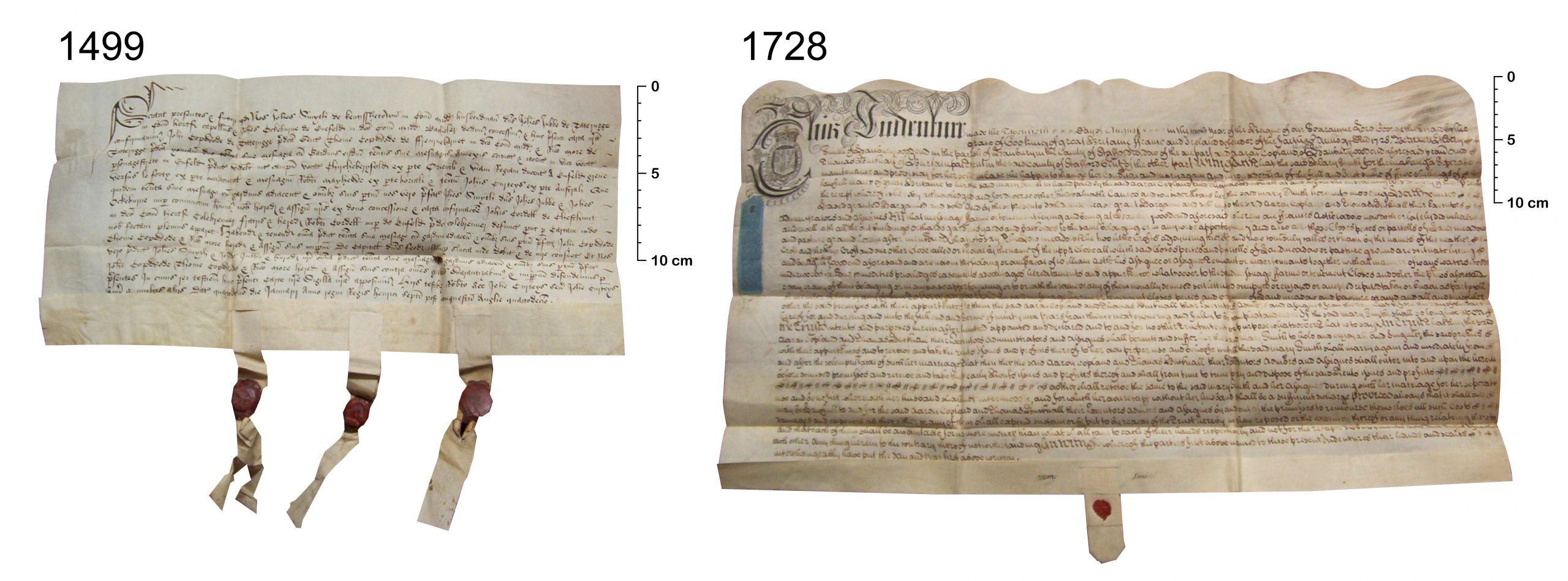
Fat Content as a Fraud-Fighting Feature
Sean Doherty said: “Removing fat during the parchment making process can cause the layers within sheepskins to separate more easily than those of other animals. To make fraudulent changes to documents after signing, the original text would have to be scraped off. This could cause the layers within sheepskin parchment to separate and leave a visible mark on the document, resulting in the fraud being easily detectable.”
The authors investigated which species of animal were used to make parchments for legal documents using 645 samples taken from 477 British property deeds dating from 1499 to 1969. They performed mass spectrometry on proteins extracted from the samples to identify if proteins characteristic of species commonly used to make parchments were present in the deeds.
All 645 samples contained proteins characteristic of animals from the Bovidae family, which includes sheep, goats, and cattle. 622 of the samples contained proteins characteristic of sheep, indicating that they were made from sheepskins. The remaining 23 were made from either sheep or goatskins but the individual species could not be identified due to a lack of characteristic proteins.
The authors caution that the presence of goatskin parchment in the documents studied cannot be ruled out as proteins characteristic of goats in the samples may have been degraded during storage, potentially affecting their analysis.
Sean Doherty said: “Historic legal deeds are one of the most abundant resources in British archives but are often considered to be of limited historic value. Our research demonstrates that, as physical objects, historic legal deeds can be used to explore centuries of craft, trade, and livestock economies.”
For more on this research, read Medieval Lawyers Wrote on Sheepskin Parchment Because It Helped Prevent Fraud.
Reference: “Scratching the Surface: the use of sheepskin parchment to deter textual erasure in early modern legal deeds” by Sean Paul Doherty, Stuart Henderson, Sarah Fiddyment, Jonathan Finch and Matthew J. Collins, 24 March 2021, Heritage Science.
DOI: 10.1186/s40494-021-00503-6
Never miss a breakthrough: Join the SciTechDaily newsletter.
Follow us on Google and Google News.