
Close Menu
    Facebook X (Twitter) Instagram
    SciTechDaily
    • Biology
    • Chemistry
    • Earth
    • Health
    • Physics
    • Science
    • Space
    • Technology
    Facebook X (Twitter) Pinterest YouTube RSS
    SciTechDaily
    Home»Space»National Radio Astronomy Observatory Congratulates Winners of Breakthrough Prize Awards
    Space

    National Radio Astronomy Observatory Congratulates Winners of Breakthrough Prize Awards

    By National Radio Astronomy ObservatorySeptember 18, 2021No Comments2 Mins Read
    Facebook Twitter Pinterest Telegram LinkedIn WhatsApp Email Reddit
    Share
    Facebook Twitter LinkedIn Pinterest Telegram Email Reddit
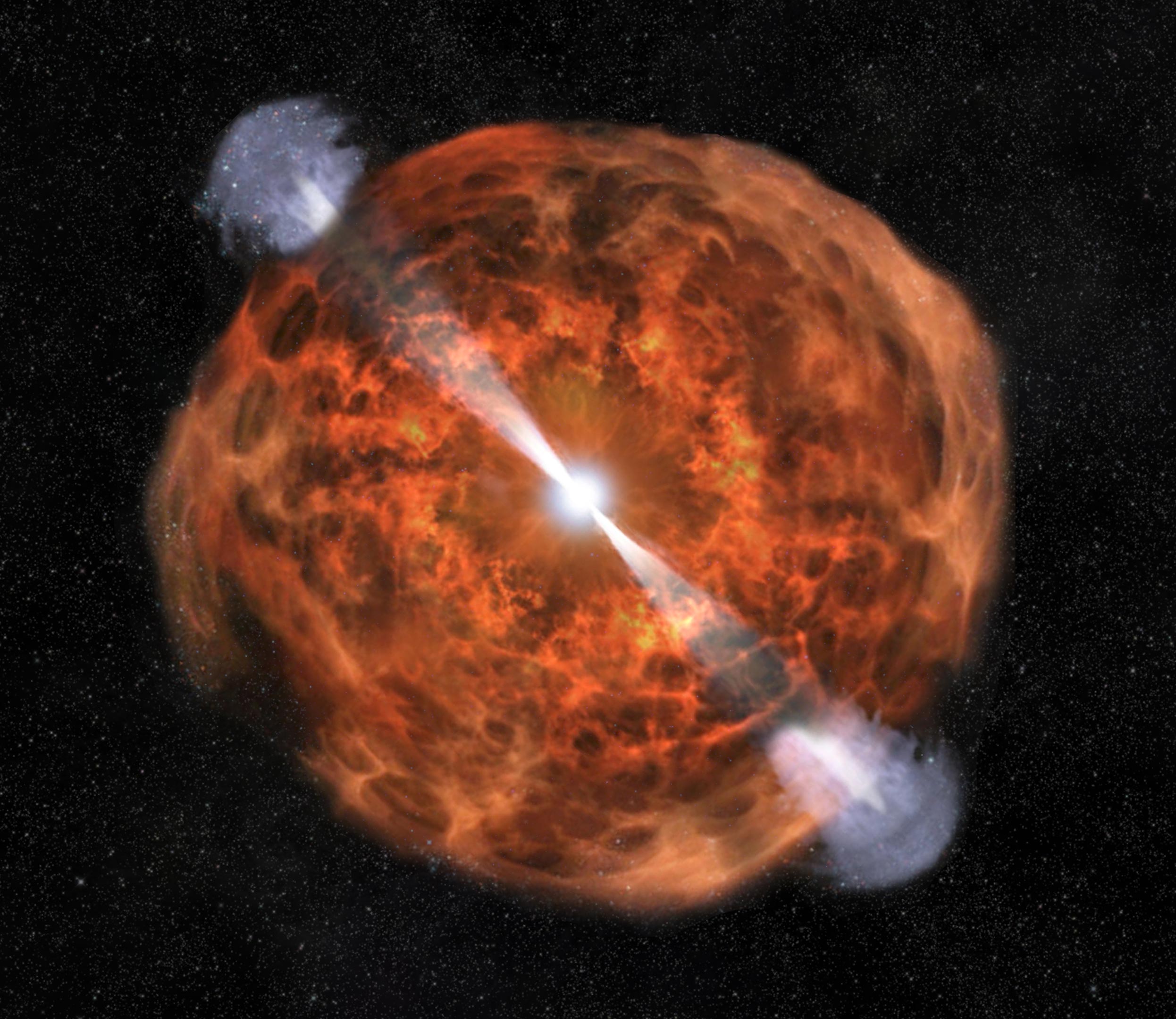
    Explosion From Collision of Two Neutron Stars
    Artist’s conception of the explosion resulting from the collision of two neutron stars. Credit: D. Berry, O. Gottlieb, K. Mooley, G. Hallinan, NRAO/AUI/NSF

    The National Radio Astronomy Observatory (NRAO) congratulates the four astronomers honored by the Breakthrough Prize Foundation which awarded them the 2022 New Horizons in Physics Prize. Alessandra Corsi of Texas Tech University; Gregg Hallinan and Mansi Manoj Kasliwal, both of Caltech; and Raffaella Margutti of the University of California, Berkeley, were recognized for “leadership in laying foundations for electromagnetic observations of sources of gravitational waves, and leadership in extracting rich information from the first observed collision of two neutron stars.”

    The researchers made landmark observations of the merger of two neutron stars in August of 2017 and the lengthy aftermath of that merger. The event generated gravitational waves that were directly detected by the LIGO and VIRGO gravitational-wave observatories. When the event later was seen emitting gamma rays, X-rays, visible light, and radio waves, it became the first astronomical event ever seen with both gravitational waves and electromagnetic waves.

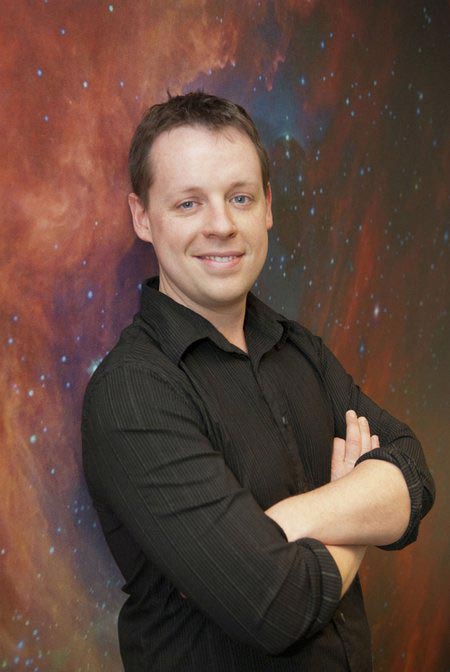
    Alessandra Corsi
    Alessandra Corsi. Credit: Texas Tech University
    Gregg Hallinan Caltech
    Gregg Hallinan. Credit: Caltech

    The prize winners used the National Science Foundation’s Karl G. Jansky Very Large Array (VLA) and Very Long Baseline Array (VLBA) to study the aftermath of the merger for months afterward, yielding key information about the nature and consequences of the collision.

    “This was a watershed in astrophysics, and NRAO’s radio telescopes were vital tools for unraveling the workings of this exciting event. We are very happy to see our scientific colleagues who made expert use of the VLA and the VLBA in that effort gain this well-deserved recognition,” said NRAO Director Tony Beasley.

    Mansi Manoj Kasliwal
    Mansi Manoj Kasliwal. Credit: Caltech
    Raffaella Margutti
    Raffaella Margutti. Credit: UC Berkeley

    “Events such as this neutron star merger are at the frontier of physics, where we can gain valuable insights available in no other way. We are proud that the VLA and VLBA contribute to this research, and look forward to providing the vastly improved capabilities of the Next Generation Very Large Array (ngVLA) to work that is so important to our understanding of the Universe,” Beasley added.

    The National Radio Astronomy Observatory is a facility of the National Science Foundation, operated under cooperative agreement by Associated Universities, Inc.

    Never miss a breakthrough: Join the SciTechDaily newsletter.
    Follow us on Google and Google News.

    Astronomy Astrophysics Gravitational Waves National Radio Astronomy Observatory
    Share. Facebook Twitter Pinterest LinkedIn Email Reddit

    Related Articles

    How Fast Is the Universe Expanding? Measuring Cosmic Expansion With Radio Astronomy and Gravitational Waves

    Astronomers View a Rare Multiple Quasar Imaging Event Caused by a Gas Cloud

    Astronomers Discover Hydrogen Clouds Between Nearby Galaxies, Andromeda and Triangulum

    VLA Identifies Discrete Sources of Radio Waves Coming From Distant Galaxies

    Signs of Star Formation Near Supermassive Black Hole at the Galactic Center

    Massive Outburst in Spiral Galaxy NGC 660 Surprises Astronomers

    Pair of Eclipsing White Dwarfs Produce Gravitational Waves

    Gravitational Wave Detection

    Using ALMA and VLA to Unveil Astronomical Mysteries

    Leave A Reply Cancel Reply

    • Facebook
    • Twitter
    • Pinterest
    • YouTube

    Don't Miss a Discovery

    Subscribe for the Latest in Science & Tech!

    Trending News

    First-of-Its-Kind Discovery: Homer’s Iliad Found Embedded in a 1,600-Year-Old Egyptian Mummy

    Beyond Inflammation: Scientists Uncover New Cause of Persistent Rheumatoid Arthritis

    A Simple Molecule Could Unlock Safer, Easier Weight Loss

    Scientists Just Built a Quantum Battery That Charges Almost Instantly

    Researchers Unveil Groundbreaking Sustainable Solution to Vitamin B12 Deficiency

    Millions of People Have Osteopenia Without Realizing It – Here’s What You Need To Know

    Researchers Discover Boosting a Single Protein Helps the Brain Fight Alzheimer’s

    World-First Study Reveals Human Hearts Can Regenerate After a Heart Attack

    Follow SciTechDaily
    • Facebook
    • Twitter
    • YouTube
    • Pinterest
    • Newsletter
    • RSS
    SciTech News
    • Biology News
    • Chemistry News
    • Earth News
    • Health News
    • Physics News
    • Science News
    • Space News
    • Technology News
    Recent Posts
    • New Research Challenges Long-Held Beliefs About How the Brain Makes Decisions
    • Breakthrough Technology Reveals New Treatment Targets for Cancer
    • Scientists Discover New Way To Make Drug-Resistant Cancer Treatable Again
    • This Simple Exercise Trick Builds Muscle With Less Effort, Study Finds
    • Middle Age Is Becoming a Breaking Point in America, Study Reveals
    Copyright © 1998 - 2026 SciTechDaily. All Rights Reserved.
    • Science News
    • About
    • Contact
    • Editorial Board
    • Privacy Policy
    • Terms of Use

    Type above and press Enter to search. Press Esc to cancel.