
Close Menu
    Facebook X (Twitter) Instagram
    SciTechDaily
    • Biology
    • Chemistry
    • Earth
    • Health
    • Physics
    • Science
    • Space
    • Technology
    Facebook X (Twitter) Pinterest YouTube RSS
    SciTechDaily
    Home»Space»Astronomy & Astrophysics 101: Active Galactic Nucleus
    Space

    Astronomy & Astrophysics 101: Active Galactic Nucleus

    By ESA/HubbleMarch 16, 20221 Comment3 Mins Read
    Facebook Twitter Pinterest Telegram LinkedIn WhatsApp Email Reddit
    Share
    Facebook Twitter LinkedIn Pinterest Telegram Email Reddit
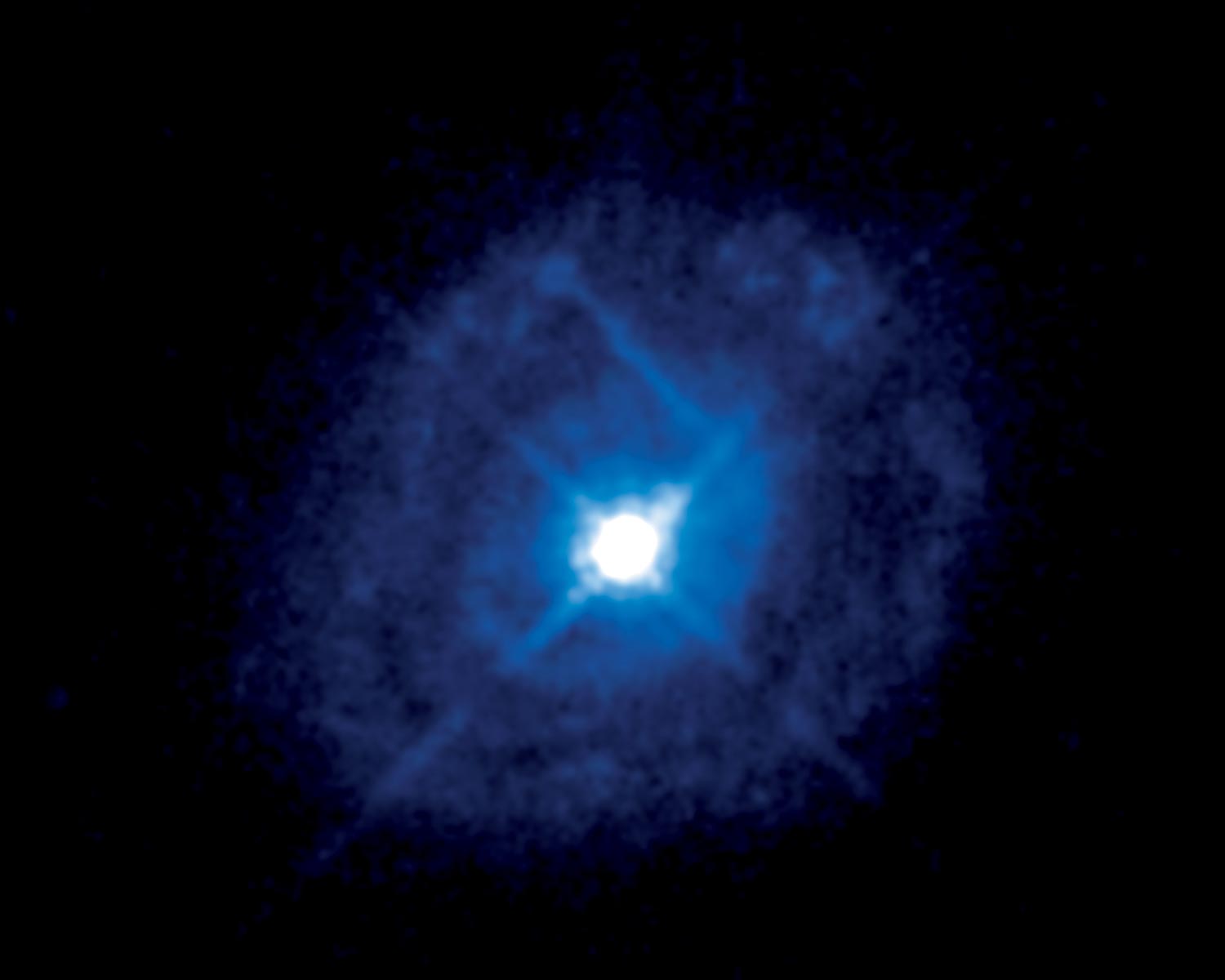
    Active Galaxy Markarian 509
    This image from the NASA/ESA Hubble Space Telescope shows the galaxy Markarian 509. The bright object at the center of the galaxy, which appears like a star, is an active galactic nucleus. This is a bright celestial phenomenon caused by matter glowing as it falls into a supermassive black hole at the heart of the galaxy. Credit: NASA, ESA, J. Kriss (STScI) and J. de Plaa (SRON)

    What Is an Active Galactic Nucleus?

    An active galactic nucleus, or AGN, is an extremely bright central region of a galaxy that is dominated by the light emitted by dust and gas as it falls into a black hole.

    An active galactic nucleus (AGN) is a small region at the center of some galaxies that is far brighter than can be explained by the stellar population alone. The extremely luminous central region is emitting so much radiation that it can outshine the rest of the galaxy altogether. AGNs emit radiation across the entire electromagnetic spectrum, from radio waves to gamma rays. This radiation is produced by the action of a central supermassive black hole that is devouring material that gets too close to it. A galaxy hosting an AGN is called an ‘active galaxy’.


    An active galactic nucleus, or AGN, is an extremely bright central region of a galaxy that is dominated by the light emitted by dust and gas as it falls into a black hole.

    AGNs are the most luminous persistent sources of electromagnetic radiation in the Universe. This means they can be used to discover distant objects. Astronomers have also classified different types of AGN based on their observed characteristics. The most powerful AGNs are known as quasars, which give rise to extremely luminous galactic centers. A blazar is an AGN with a jet of light and energy that is pointed toward the Earth.

    Over the years, Hubble’s instruments have observed various AGNs, including quasars. In 1996 Hubble’s 100,000th exposure was a quasar located 9 billion light-years from Earth. Hubble has also discovered the brightest quasar ever seen in the early Universe.
    Word Bank Active Galactic Nucleus
    Credit: ESA/Hubble, NASA, ESA, J. Kriss (STScI) and J. de Plaa (SRON)

    In 2011 Hubble captured an image (as seen on the top of this page) of the AGN at the heart of the galaxy Markarian 509, 500 million light-years away. The AGN of this galaxy was chosen for study because it is known to vary in brightness, which indicates that the flow of matter is turbulent. Hubble’s studies of AGNs have also provided insight into how supermassive black holes interact with their host galaxies.

    Some of Hubble’s most brilliant images of galaxies include those with luminous AGNs in the core, such as ESO 021-G004 and IC 4870.

    Additional Hubble contributions and observations can be explored by learning more about Hubble’s work in the study of quasars.

    Never miss a breakthrough: Join the SciTechDaily newsletter.
    Follow us on Google and Google News.

    Astronomy Astrophysics European Space Agency
    Share. Facebook Twitter Pinterest LinkedIn Email Reddit

    Related Articles

    Feared Apophis Impact Ruled Out – Asteroid Will Pass Close Enough to Earth to See With Naked Eye

    Tantalizing Evidence: Is the Nearest Star Cluster to the Sun Being Destroyed?

    Tantrums of a Baby Star: Herbig-Haro Objects

    Unexpected Discovery: Hubble Space Telescope Uncovers Concentration of Small Black Holes

    Unique Planetary System With Rhythmic Orbital Resonance Revealed by Exoplanet Watcher Cheops

    Cosmic Neon Lights: Strange New Type of Star Revealed in X-ray Light

    “Unprecedented” – Unusual Planetary Nebula Fades Mere Decades After It Arrived

    Hubble Captures Unprecedented Fading of Stingray Nebula – “This Is Very, Very Dramatic, and Very Weird”

    To the Milky Way’s Anticenter and Beyond: Gaia’s New Detailed Data From More Than 1.8 Billion Stars

    1 Comment

    1. John Ray on September 5, 2022 2:15 pm

      Cool!

      Reply
    Leave A Reply Cancel Reply

    • Facebook
    • Twitter
    • Pinterest
    • YouTube

    Don't Miss a Discovery

    Subscribe for the Latest in Science & Tech!

    Trending News

    Don’t Miss: August Brings Two Eclipses and the Perseid Meteor Shower

    Brain Waves Once Dismissed As Noise May Help Build Our Reality

    Perseverance Finds Organic Carbon Preserved Just Beneath the Martian Surface

    Tick Found in Austin Apartment Linked to Rare Relapsing Fever

    Ozempic Changes Your Body, but Does It Change Your Life? A New Study Suggests Not

    Ancient Super-Eruptions May Have Frozen Earth for Centuries

    A Common Sugar May Loosen Cancer Cells and Help Them Spread

    Scientists Discover a Major Brain Change That Starts Around Age 50

    Follow SciTechDaily
    • Facebook
    • Twitter
    • YouTube
    • Pinterest
    • Newsletter
    • RSS
    SciTech News
    • Biology News
    • Chemistry News
    • Earth News
    • Health News
    • Physics News
    • Science News
    • Space News
    • Technology News
    Recent Posts
    • Scientists Discover a Hidden Way T Cells Attack Leukemia
    • A Vegan Diet May Begin Changing Gene Activity in Just 4 Weeks
    • Belly Fat and Low Vitamin D May More Than Double the Risk of Early Death
    • Researchers Map the Hidden 3D Geometry of a Quantum Wavefunction
    • Lost in Space: Rare Cosmic Flare Exposes a Wandering Black Hole Far From Its Galaxy’s Center
    Copyright © 1998 - 2026 SciTechDaily. All Rights Reserved.
    • Science News
    • About
    • Contact
    • Editorial Board
    • Privacy Policy
    • Terms of Use

    Type above and press Enter to search. Press Esc to cancel.