
Close Menu
    Facebook X (Twitter) Instagram
    SciTechDaily
    • Biology
    • Chemistry
    • Earth
    • Health
    • Physics
    • Science
    • Space
    • Technology
    Facebook X (Twitter) Pinterest YouTube RSS
    SciTechDaily
    Home»Space»Astronomy & Astrophysics 101: Dwarf Planet
    Space

    Astronomy & Astrophysics 101: Dwarf Planet

    By ESA/HubbleMay 2, 2022No Comments3 Mins Read
    Facebook Twitter Pinterest Telegram LinkedIn WhatsApp Email Reddit
    Share
    Facebook Twitter LinkedIn Pinterest Telegram Email Reddit
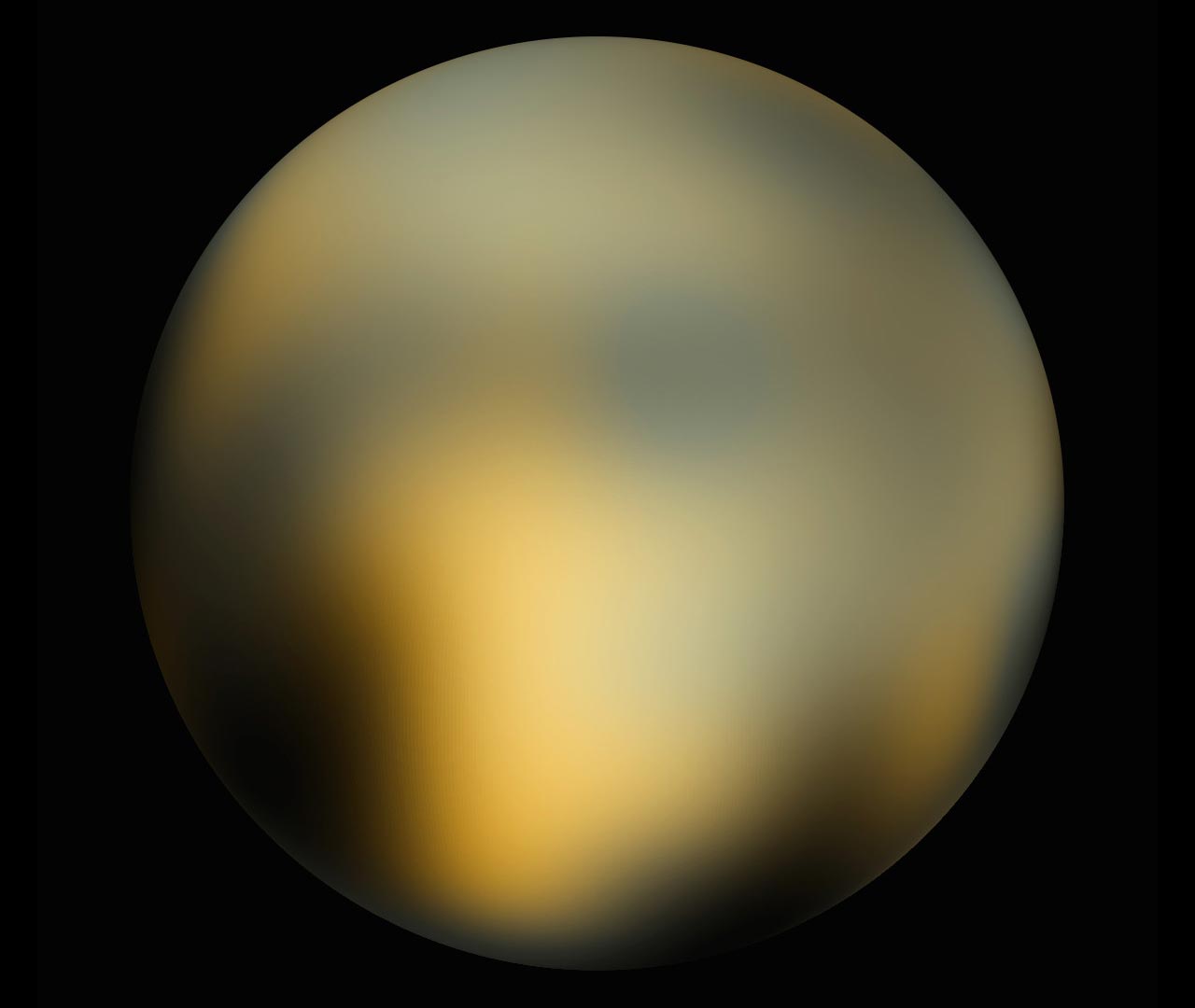
    Pluto 180° Longitude
    Pluto 180° Longitude. Pluto was reclassified from a planet to a dwarf planet in 2006. Credit: NASA, ESA and M. Buie (Southwest Research Institute)

    What Is a Dwarf Planet?

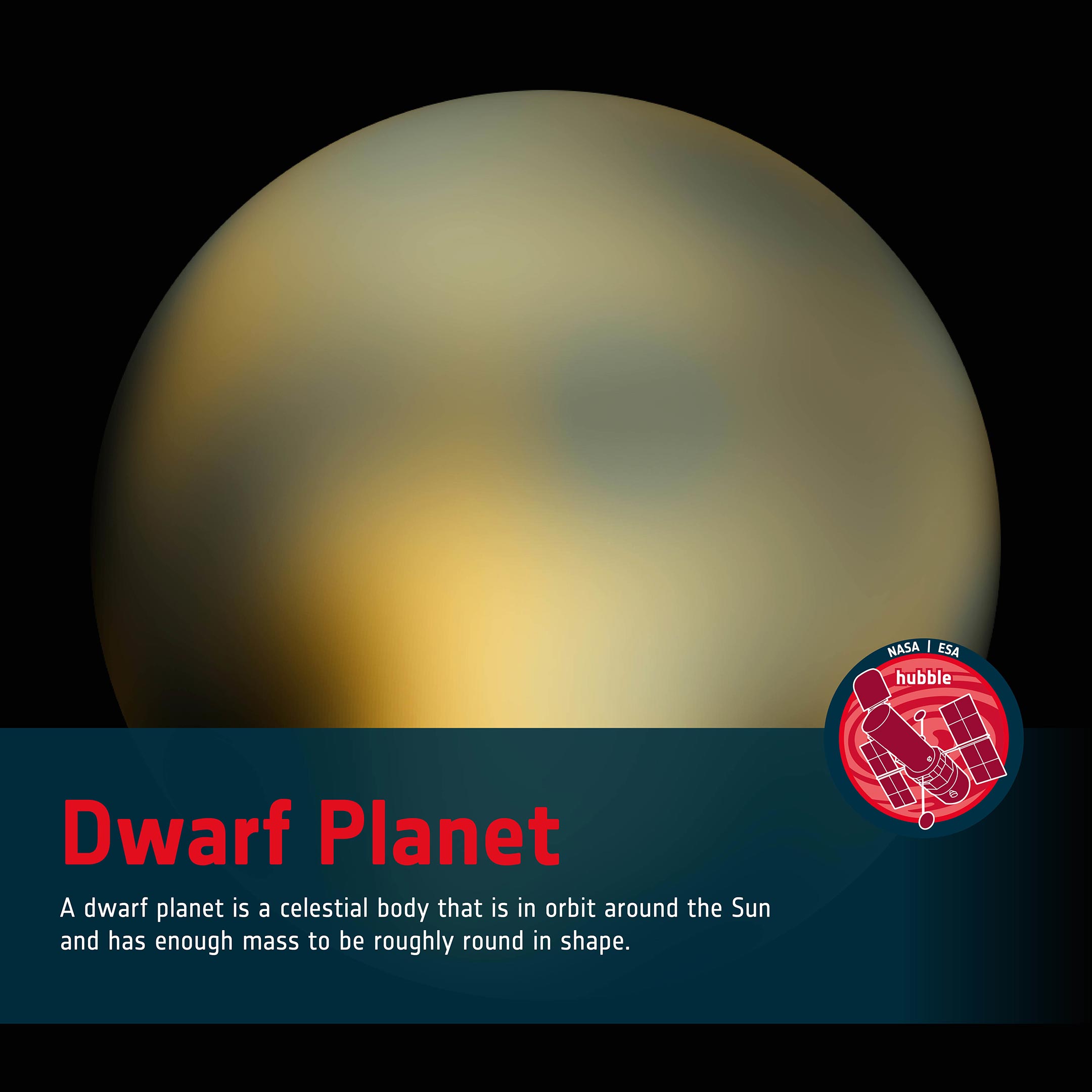
    A dwarf planet is a celestial body that is in orbit around the Sun and has enough mass to be nearly spherical in shape.

    A dwarf planet is a celestial body that only meets two out of the three official criteria to be considered a planet. These requirements were decided upon by the International Astronomical Union (IAU) in August 2006. To begin, for a celestial body to be classified as a dwarf planet, it has to orbit our Sun, which obviously means it must exist within our Solar System. Second, it must have enough mass that it has formed into a roughly spherical shape under its own gravity (in contrast to, for example, asteroids, which have irregular shapes). However, unlike a planet, a dwarf planet does not have enough gravitational pull to have cleared its neighborhood of any other celestial objects of significant mass (except for any of its satellites, such as a moon).

    Pluto was reclassified from a planet to a dwarf planet in 2006 because it is not gravitationally dominant in its neighborhood. Pluto does, however, have the distinction of being the first-ever recognized dwarf planet. There are currently five known celestial bodies in our Solar System that qualify as dwarf planets: Pluto, Eris, Ceres, Makemake, and Haumea.


    A dwarf planet is a celestial body that is in orbit around the Sun and has enough mass to be roughly round in shape. Credit: NASA & ESA

    Hubble has supported the study of various dwarf planets and their moons. For example, the telescope has helped to enhance our understanding of the Pluto system; Hubble observations in 2006 uncovered two small moons orbiting Pluto, Nix and Hydra, followed by the discoveries of two more moons in 2011 (Kerberos) and 2012 (Styx). In 2015, scientists gathered all available Hubble data on the four outer moons of Pluto to analyze the system in more depth than ever before. You can learn more about Hubble’s study of the Pluto system in this Hubblecast video.
    Word Bank Dwarf Planet
    Dwarf Planet. Credit: NASA, ESA and M. Buie (Southwest Research Institute)

    In 2016, Hubble captured an image of the dwarf planet Eris and its satellite Dysnomia. Eris is the most massive and second-largest known dwarf planet in the Solar System. Also in 2016, Hubble revealed the first moon ever discovered around the dwarf planet Makemake.

    Never miss a breakthrough: Join the SciTechDaily newsletter.
    Follow us on Google and Google News.

    Astronomy Astrophysics European Space Agency Hubble Space Telescope Planets Styx
    Share. Facebook Twitter Pinterest LinkedIn Email Reddit

    Related Articles

    Astronomy & Astrophysics 101: Jupiter

    Astronomy & Astrophysics 101: Exoplanet

    Hubble Has Directly Photographed Evidence of a Planet Forming in an Unconventional Way

    Our Giant Universe: Hubble Spots Massive Galaxy Cluster With a Wealth of Exciting Possibilities

    Tantrums of a Baby Star: Herbig-Haro Objects

    Unexpected Discovery: Hubble Space Telescope Uncovers Concentration of Small Black Holes

    “Unprecedented” – Unusual Planetary Nebula Fades Mere Decades After It Arrived

    Hubble Captures Unprecedented Fading of Stingray Nebula – “This Is Very, Very Dramatic, and Very Weird”

    Einstein’s General Theory of Relativity: Contorting Giants

    Leave A Reply Cancel Reply

    • Facebook
    • Twitter
    • Pinterest
    • YouTube

    Don't Miss a Discovery

    Subscribe for the Latest in Science & Tech!

    Trending News

    1.4-Million-Year-Old Footprints Reveal a Giant Human Relative

    Astronomers May Have Found the First Moon Beyond Our Solar System

    Underwater Cameras Expose the Secret Lives of Whale Sharks

    Why Dreaming Leaves the Brain Running Low on Energy

    CERN Experiments Detect Signs of the Universe’s Primordial Matter

    Study Finds a Surprising Link Between Gut Microbes and Aging

    Frequent Cannabis Users Wake Up With More “Stress Hormone”

    Scientists Reveal Hidden DNA Traces in the Shroud of Turin

    Follow SciTechDaily
    • Facebook
    • Twitter
    • YouTube
    • Pinterest
    • Newsletter
    • RSS
    SciTech News
    • Biology News
    • Chemistry News
    • Earth News
    • Health News
    • Physics News
    • Science News
    • Space News
    • Technology News
    Recent Posts
    • Scientists Expose Hidden Quantum Identity of a Superconductor
    • Black Holes May Not Be the Bottomless Pits We Imagined
    • Perseverance Finds Organic Carbon Preserved Just Beneath the Martian Surface
    • Beetroot Juice May Ease Pregnancy’s Strain on the Kidneys
    • Tick Found in Austin Apartment Linked to Rare Relapsing Fever
    Copyright © 1998 - 2026 SciTechDaily. All Rights Reserved.
    • Science News
    • About
    • Contact
    • Editorial Board
    • Privacy Policy
    • Terms of Use

    Type above and press Enter to search. Press Esc to cancel.