
Close Menu
    Facebook X (Twitter) Instagram
    SciTechDaily
    • Biology
    • Chemistry
    • Earth
    • Health
    • Physics
    • Science
    • Space
    • Technology
    Facebook X (Twitter) Pinterest YouTube RSS
    SciTechDaily
    Home»Space»Hubble Sees Double in M99 – A “Grand Design” Spiral Galaxy
    Space

    Hubble Sees Double in M99 – A “Grand Design” Spiral Galaxy

    By ESA/HubbleMay 1, 2022No Comments2 Mins Read
    Facebook Twitter Pinterest Telegram LinkedIn WhatsApp Email Reddit
    Share
    Facebook Twitter LinkedIn Pinterest Telegram Email Reddit
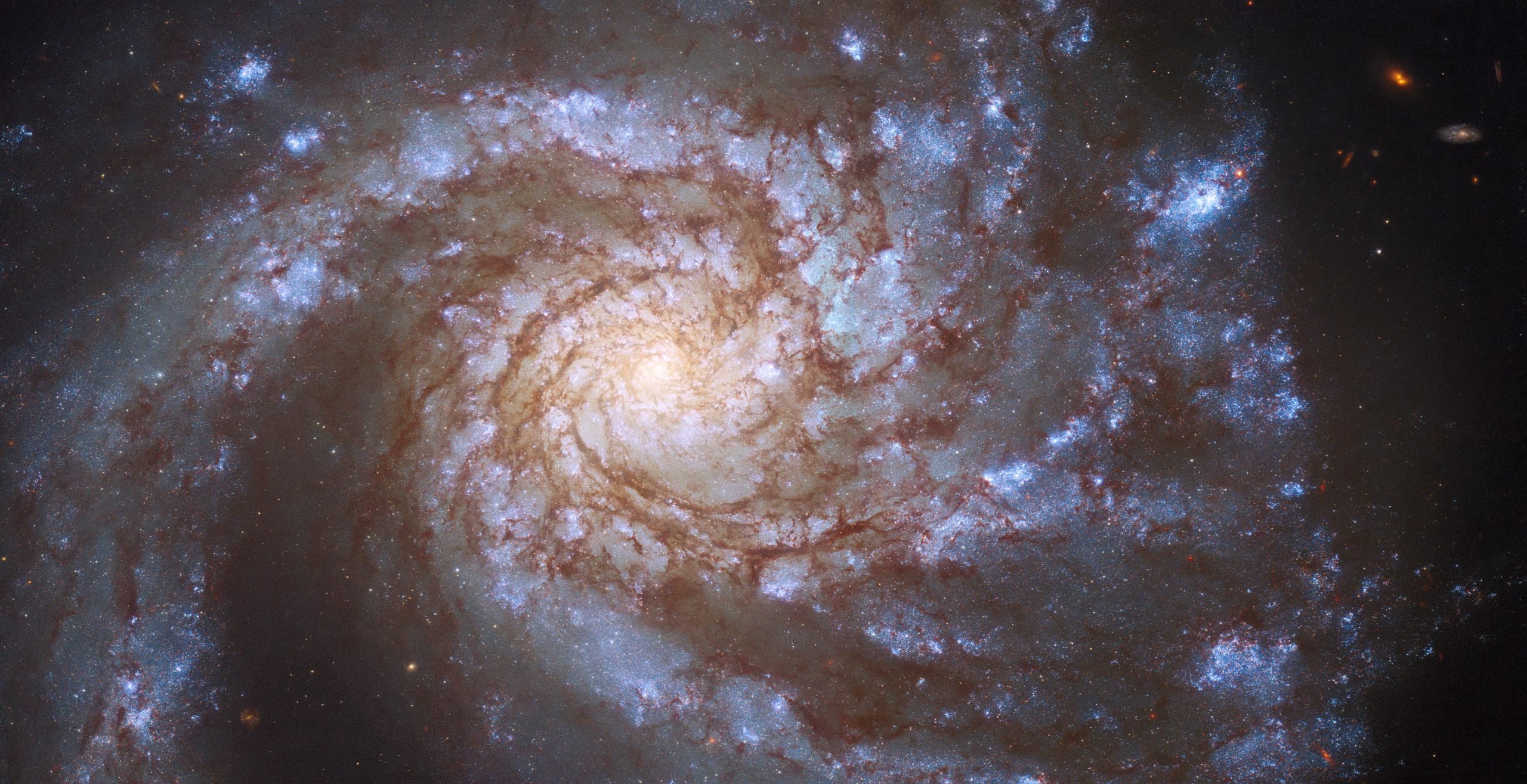
    Spiral Galaxy M99
    Hubble Space Telescope image of spiral galaxy M99, which is approximately 42 million light-years from Earth in the constellation Coma Berenices. Credit: ESA/Hubble & NASA, M. Kasliwal, J. Lee and the PHANGS-HST Team

    The magnificent spiral galaxy M99 fills the frame in this image from the NASA/ESA Hubble Space Telescope. M99 — which is located about 42 million light-years from Earth in the constellation Coma Berenices — is a “grand design” spiral galaxy, so-called because of the well-defined, prominent spiral arms visible in this image. M99 was captured by Hubble’s Wide Field Camera 3 on two separate occasions, helping astronomers study two entirely different astronomical phenomena.

    A grand design spiral galaxy is a type of spiral galaxy with prominent and well-defined spiral arms, in contract to multi-arm and flocculent spirals which have subtler structural features. A grand design galaxy’s spiral arms stretch clearly across the galaxy through many radians and can be observed over a considerable proportion of the galaxy’s radius.

    The first set of observations aimed to explore a gap between two different varieties of cosmic explosions; novae and supernovae. Novae, which are caused by the interactions between white dwarfs and larger stars in binary systems, are far less bright than the supernovae which mark the catastrophically violent deaths of massive stars. However, current astronomical theories predict that sudden, fleeting events could occur that shine with brightnesses between those of novae and supernovae. Despite being described by astronomers as being shrouded in mystery and controversy, just such an event was observed in M99. Astronomers turned to Hubble’s keen vision to take a closer look and precisely locate the fading source.

    The second set of observations was part of a large Hubble project which aims to chart the connections between young stars and the clouds of cold gas from which they form. Hubble inspected 38 nearby galaxies, identifying clusters of hot, young stars. These galaxies were also observed by the Atacama Large Millimeter/submillimeter Array (ALMA), a colossal radio telescope consisting of 66 individual dishes perched high in the Chilean Andes. The combination of Hubble’s observations of young stars and ALMA’s insight into clouds of cold gas will allow astronomers to delve into the details of star formation, and paves the way for future science with the NASA/ESA/CSA James Webb Space Telescope.

    Never miss a breakthrough: Join the SciTechDaily newsletter.
    Follow us on Google and Google News.

    Astronomy European Space Agency Hubble Space Telescope NASA
    Share. Facebook Twitter Pinterest LinkedIn Email Reddit

    Related Articles

    Hubble’s Newest Discovery Isn’t a Star, It’s a Window Into the Dark Universe

    This Nearby Galaxy Shows How Frozen Clouds Ignite Into Stars

    This Chaotic Spiral Galaxy Is Still Recovering From a Cosmic Collision

    This Strange Spiral Galaxy Is Hiding a Massive Black Hole

    Hubble Zooms In on a Galaxy That Maps the Universe’s Expansion

    Hubble Captures a Dazzling Spiral Galaxy Alive With Birth and Destruction

    Hubble Spots a Glowing “Ring of Fire” in a Distant Spiral Galaxy

    Dust, Light & Ancient Collisions: The Sombrero Galaxy Like You’ve Never Seen It

    Star Formation in Motion: Hubble Reveals Spiraling Stars and Sculpted Nebulae

    Leave A Reply Cancel Reply

    • Facebook
    • Twitter
    • Pinterest
    • YouTube

    Don't Miss a Discovery

    Subscribe for the Latest in Science & Tech!

    Trending News

    Two Drinks a Day May Be Riskier Than Many Americans Think

    A Lost Human Lineage May Have Left a Genetic Legacy in People Today

    Study Reveals a Surprising Link Between Birth Control Pills and Binge Eating

    NASA’s HiRISE Captures Perseverance Rover Completing a Marathon on Mars

    Ancient DNA Reveals the Hidden Origins of China’s Mysterious Shimao Civilization

    Scientists Discover a Surprising Link Between Sleep, Genes, and Alzheimer’s

    Popular Childhood Drinks Linked to Higher Blood Pressure Later in Life

    Scientists Just Challenged a 70-Year-Old Myth About the Human Brain

    Follow SciTechDaily
    • Facebook
    • Twitter
    • YouTube
    • Pinterest
    • Newsletter
    • RSS
    SciTech News
    • Biology News
    • Chemistry News
    • Earth News
    • Health News
    • Physics News
    • Science News
    • Space News
    • Technology News
    Recent Posts
    • Second PSMA PET Scan Finds Hidden Prostate Cancer in 56% of Patients
    • Researchers Warn Rising CO₂ May Already Be Changing Human Blood Chemistry
    • Scientists Discover a Surprising Way To Protect the Brain: Less Oxygen
    • Blue Light Breakthrough Could Speed Up Drug Discovery
    • Scientists Discover AI Models May Not Think Like the Brain After All
    Copyright © 1998 - 2026 SciTechDaily. All Rights Reserved.
    • Science News
    • About
    • Contact
    • Editorial Board
    • Privacy Policy
    • Terms of Use

    Type above and press Enter to search. Press Esc to cancel.