
Close Menu
    Facebook X (Twitter) Instagram
    SciTechDaily
    • Biology
    • Chemistry
    • Earth
    • Health
    • Physics
    • Science
    • Space
    • Technology
    Facebook X (Twitter) Pinterest YouTube RSS
    SciTechDaily
    Home»Science»Pesticides Are Corroding History
    Science

    Pesticides Are Corroding History

    By Scientific ReportsNovember 7, 2022No Comments3 Mins Read
    Facebook Twitter Pinterest Telegram LinkedIn WhatsApp Email Reddit
    Share
    Facebook Twitter LinkedIn Pinterest Telegram Email Reddit
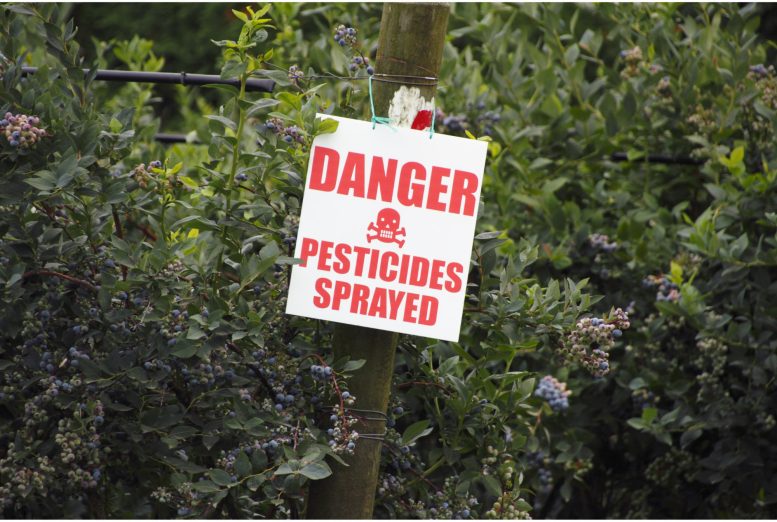
    Pesticide Warning Sign
    The authors believe that chlorobenzenes are linked with the increased corrosion in the Roman bowl.

    Scientists discover that a modern pesticide accelerated the corrosion of an ancient Roman relic.

    Chlorobenzenes, a chemical that was once used in pesticides and is known to accumulate in soil and water sources, have been detected in traces on a corroded Roman bowl that dates to the Late Iron Age (between 43 and 410 AD). According to the study, which was published in the journal Scientific Reports, soil contaminated with chlorobenzenes may continue to be a threat to the preservation of archaeological artifacts buried under the earth.

    Chlorobenzenes are synthetic compounds that may be harmful in high concentrations, and most have been banned from usage in the UK due to environmental concerns. However, it is believed that these compounds accumulated in the environment as a result of earlier industrial and agricultural activities. A copper-alloy Roman bowl was discovered in 2016 on a farm in Kent (UK), a site that has been used for agriculture since at least 1936.
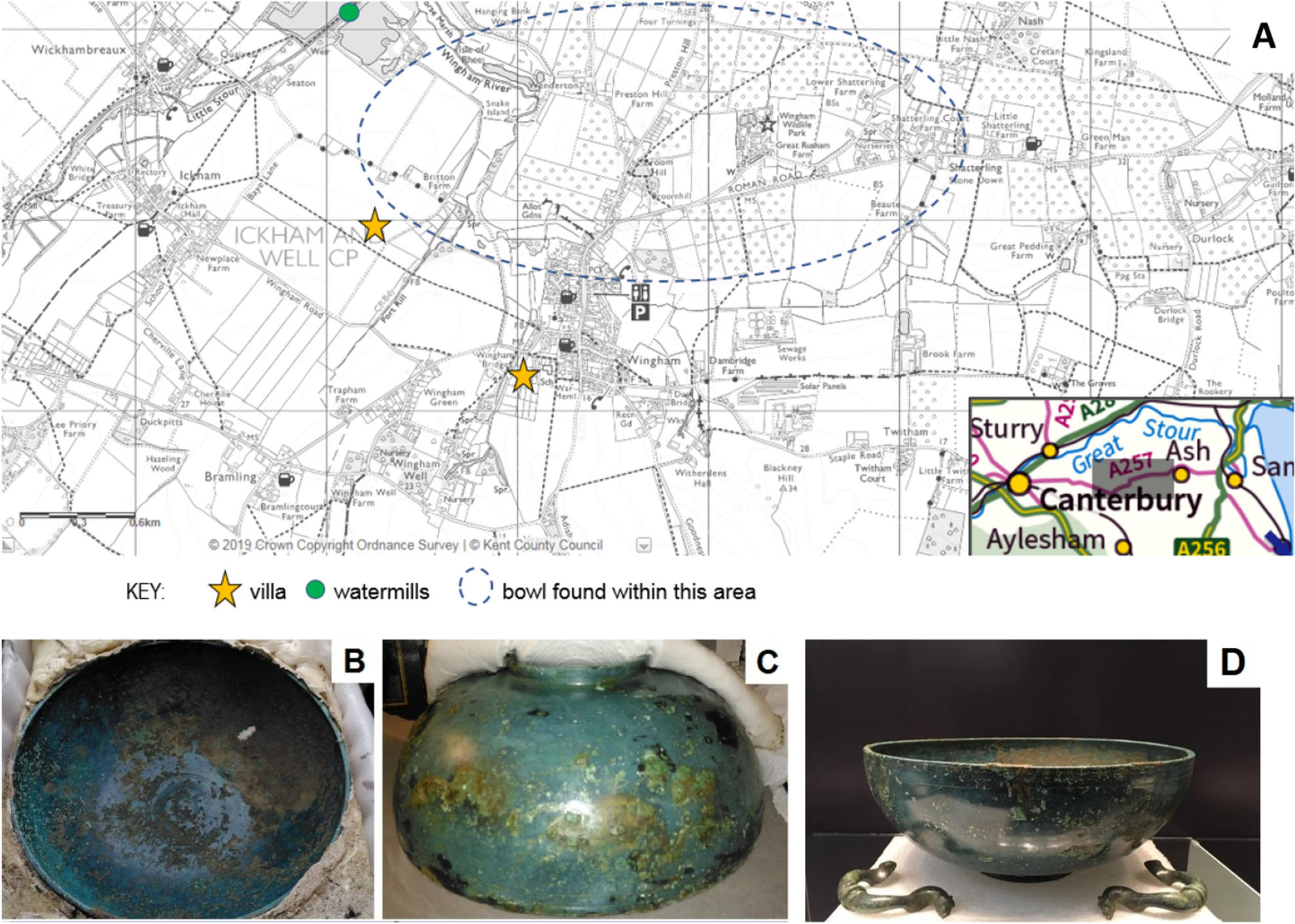
    History of Ancient Roman Bowl
    The recent history of the Roman Bowl–(A) the area where the bowl was found in relation to other Roman sites, exact findspot cannot be shown to protect the site (B) the interior and (C) exterior of the bowl during conservation and (D) the bowl on display at Sandwich Museum. Credit: Scientific Reports, Carvalho et al., map created by Luciana da Costa Carvalho using heritage maps.

    Luciana da Costa Carvalho and colleagues analyzed the green and brown-colored corrosion on the bowl to identify their different components. They found elements that were indicative of the changes over time in the soil caused by human activities. In the green-colored corrosion, the authors found chlorobenzenes were present. The authors also found diethyltoluamide (also known as DEET) in the brown-colored corrosion, a modern compound that is still used in insect repellents.

    The authors suggest that the chlorobenzenes were associated with increased corrosion in the Roman bowl. They conclude that even though chlorobenzenes are no longer used in the UK, polluted soil may still threaten the preservation of archaeological material still buried and more research needs to be undertaken to better understand the processes involved.

    Reference: “The influence of pesticides on the corrosion of a Roman bowl excavated in Kent, UK” by Luciana da Costa Carvalho, Dana Goodburn-Brown, James S. O. McCullagh and A. Mark Pollard, 6 October 2022, Scientific Reports.
    DOI: 10.1038/s41598-022-17902-9

    Never miss a breakthrough: Join the SciTechDaily newsletter.
    Follow us on Google and Google News.

    Archaeology History Pesticides
    Share. Facebook Twitter Pinterest LinkedIn Email Reddit

    Related Articles

    Hidden Murray River Rockshelter Reveals Aboriginal Art, Frontier Conflict and a Swastika

    Bones & DNA Tell the Story of Three African Slaves During Spanish Colonialism

    Recent Human Ancestor Regularly Climbed Trees Like Apes

    Dead in Unmarked Graves Identified by Combining Genetics With Genealogy

    Mystery Surrounding Dinosaur Footprints on a Cave Ceiling Finally Solved

    How Ancient Poop Debunked Myth of Native American Lost Civilization

    Mystifying Puzzle of Early Neolithic House Orientations Finally Solved

    Previously Dismissed As Myths, New Study Boosts Credibility of Columbus’ Cannibal Claims

    Cave Site Reveals 78,000-Year-Old Record of Stone Age Innovation

    Leave A Reply Cancel Reply

    • Facebook
    • Twitter
    • Pinterest
    • YouTube

    Don't Miss a Discovery

    Subscribe for the Latest in Science & Tech!

    Trending News

    Breakthrough Bowel Cancer Trial Leaves Patients Cancer-Free for Nearly 3 Years

    Natural Compound Shows Powerful Potential Against Rheumatoid Arthritis

    100,000-Year-Old Neanderthal Fossils in Poland Reveal Unexpected Genetic Connections

    Simple “Gut Reset” May Prevent Weight Gain After Ozempic or Wegovy

    2.8 Days to Disaster: Scientists Warn Low Earth Orbit Could Suddenly Collapse

    Common Food Compound Shows Surprising Power Against Superbugs

    5 Simple Ways To Remember More and Forget Less

    The Atomic Gap That Could Cost the Semiconductor Industry Billions

    Follow SciTechDaily
    • Facebook
    • Twitter
    • YouTube
    • Pinterest
    • Newsletter
    • RSS
    SciTech News
    • Biology News
    • Chemistry News
    • Earth News
    • Health News
    • Physics News
    • Science News
    • Space News
    • Technology News
    Recent Posts
    • NASA Satellite Captures First-Ever High-Res View of Massive Pacific Tsunami
    • ADHD Isn’t Just a Deficit: Study Reveals Powerful Hidden Strengths
    • Scientists Uncover “Astonishing” Hidden Property of Light
    • Scientists Discover Stem Cells That Could Regrow Teeth and Bone
    • Scientists Discover Natural Molecule That Stops Alzheimer’s Protein Clumps From Forming
    Copyright © 1998 - 2026 SciTechDaily. All Rights Reserved.
    • Science News
    • About
    • Contact
    • Editorial Board
    • Privacy Policy
    • Terms of Use

    Type above and press Enter to search. Press Esc to cancel.