
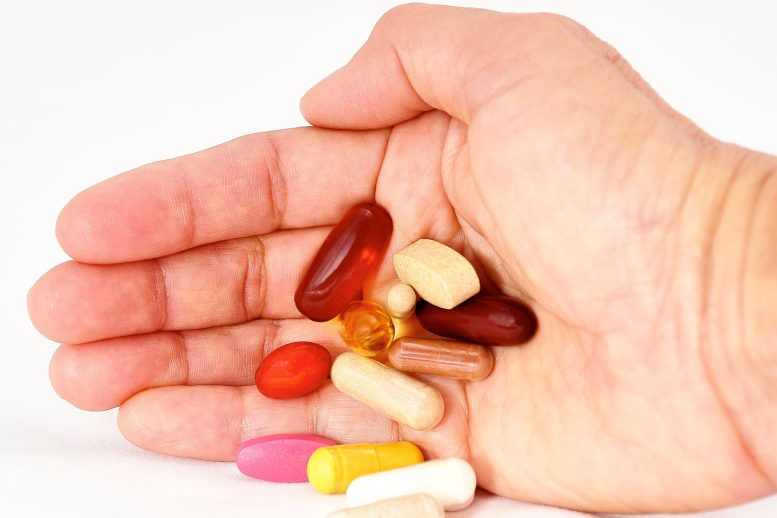
Research presented by the AHA found six heart-health supplements ineffective for lowering LDL cholesterol, unlike a low-dose statin, which significantly reduced it.
- Six widely used dietary supplements promoted for improving heart health – including brands of fish oil, garlic, cinnamon, and turmeric – were not effective at lowering “bad” cholesterol more than placebo after 28 days of use.
- However, a common, low-dose cholesterol-lowering medication (a statin) had a substantial impact on bad cholesterol during the 28-day study period.
- In addition, the dietary supplements did not reduce inflammatory markers, which suggests they may be unlikely to lower heart disease risk at least during the first month of use.
According to late-breaking science results, six widely used dietary supplements promoted for improving heart health were ineffective at lowering LDL or “bad” cholesterol in comparison to a common low-dose statin medication or placebo. The findings were presented at the American Heart Association’s Scientific Sessions 2022 on November 6. The meeting, held in person in Chicago and virtually, November 5-7, 2022, is a premier global exchange of the latest scientific advancements, research, and evidence-based clinical practice updates in cardiovascular science.
Common Misconceptions about Supplements and Heart Health
The study investigated these dietary supplements:
- Arazo Nutrition brand of red yeast rice 2,400 mg
- BioSchwartz brand turmeric curcumin with bioperine 4,500 mg
- Garlique™ brand garlic with 5,000 mcg of allicin
- Nature Made® CholestOff Plus™ with 1,600 mg of plant sterols
- Nature Made® fish oil 2,400 mg
- Nutriflair™ brand cinnamon 2,400 mg
“According to a 2020 market research analysis, Americans spend an estimated $50 billion on dietary supplements annually, and many are marketed for ‘heart protection’ or ‘cholesterol management’. Yet there is minimal-to-no research demonstrating these benefits,” said study author Luke J. Laffin, M.D. “Some people also believe supplements are as effective or more effective than cholesterol-lowering statin medications.” Laffin is co-director of the Center for Blood Pressure Disorders at the Cleveland Clinic in Cleveland, Ohio.
In the study, the effectiveness of a low-dose statin was compared to that of six common dietary supplements in lowering low-density lipoprotein (LDL) cholesterol – known as bad cholesterol. It also examined their effects on other cholesterol levels and markers of inflammation.
There are two types of cholesterol. High-density lipoprotein (HDL) cholesterol is called the “good” cholesterol because it protects the heart. In contrast, high levels of low-density lipoprotein (LDL), the “bad” cholesterol, suggest higher risk for heart disease and stroke because it forms deposits that can narrow and stiffen arteries. Elevated bad cholesterol is a growing problem worldwide. Globally in 2020, there were 4.51 million deaths attributable to high LDL cholesterol, which was up 19% from 2010, according to American Heart Association 2022 statistics.
In this study, called Supplements, Placebo or Rosuvastatin Study, or SPORT, researchers analyzed health data for 199 adults between ages 40-75 years who had no personal history of cardiovascular disease. Participants had LDL cholesterol measures between 70 mg/dL and 189 mg/dL, and a 5%- 20% risk of developing atherosclerotic cardiovascular disease within 10 years.
Researchers randomly assigned participants to one of eight groups to track any changes in LDL cholesterol and other markers of heart disease from day one to day 28 of the study. The groups included those taking: a placebo, or sham pill; 5 mg of the low-dose statin medication rosuvastatin (a standard medication sold under the brand name Crestor); or one of six dietary supplements (Nature Made® fish oil 2,400 mg; Garlique™ brand garlic with 5,000 mcg of allicin; Nutriflair™ brand cinnamon 2,400 mg; Nature Made® CholestOff Plus™ with 1,600 mg of plant sterols; BioSchwartz brand turmeric curcumin with bioperine 4,500 mg; or Arazo Nutrition brand of red yeast rice 2,400 mg).
Researchers found:
- Average LDL cholesterol reduction after 28 days was 37.9% among participants who took the statin, while changes in LDL cholesterol levels among those who took any of the dietary supplements were comparable to those in the placebo group.
- The people in the statin group had an average 24% decrease in total cholesterol, which was a more substantial decrease than among the placebo group or any dietary supplement. However, compared to placebo, there was no difference in total cholesterol measures for participants taking any of the dietary supplements.
- Compared to placebo, the garlic dietary supplement notably increased LDL cholesterol.
- Compared to placebo, the plant sterols dietary supplement notably lowered HDL cholesterol.
- Rosuvastatin resulted in a 19% decrease in blood triglycerides. Compared to placebo, there was no difference in triglycerides for any of the dietary supplements.
- There was no significant change in HDL cholesterol with rosuvastatin.
- None of the study interventions notably impacted inflammatory markers in the blood that suggest a higher risk for heart disease during the 28 days of the study.
“Although there are prior studies demonstrating that red yeast rice and plant sterol supplements may reduce LDL cholesterol, the findings of our study underscore that the contents of these dietary supplements may vary. Therefore, they do not produce consistent reductions in cholesterol,” Laffin said. “This study sends an important public health message that dietary supplements commonly taken for ‘cholesterol health’ or ‘heart health’ are unlikely to offer meaningful impact on cholesterol levels. The results also indicate that a low-dose statin offers important beneficial effects on one’s cholesterol profile. Future research should study other types of dietary supplements and their potential impact on cholesterol levels.”
Recommendations for Heart-Healthy Lifestyle
The American Heart Association in its 2018 Cholesterol Guidelines emphasizes a heart-healthy lifestyle throughout life. In addition, the association suggests people not rely on supplements and recommends that healthy people get adequate nutrients by eating a variety of foods in moderation. Moreover, the Association recommends physical activity is the optimal first treatment choice for adults with mild to moderately elevated blood pressure and blood cholesterol who otherwise have low heart disease risk
A limitation of the study is that its duration was only 28 days, which was long enough to demonstrate a reduction in LDL cholesterol with the statin medication. “However, it is unknown if some of the supplements may require a longer time to have any effect on cholesterol,” according to Laffin.
Reference: “Comparative Effects of Low-Dose Rosuvastatin, Placebo and Dietary Supplements on Lipids and Inflammatory Biomarkers” by Luke J. Laffin, Dennis Bruemmer, Michelle Garcia, Danielle M. Brennan, Ellen McErlean, Douglas S. Jacoby, Erin D. Michos, Paul M. Ridker, Tracy Y. Wang, Karol E. Watson, Howard G. Hutchinson and Steven E. Nissen, 6 November 2022, Journal of the American College of Cardiology.
DOI: 10.1016/j.jacc.2022.10.013
Co-authors are Dennis Bruemmer, M.D.; Michelle Garcia, R.N.; Danielle Brennan, M.S.; Ellen McErlean, M.S.N.; Douglas Jacoby, M.D.; Erin D. Michos, M.D., M.H.S, FAHA; Paul M. Ridker, M.D., FAHA; Tracy Y. Wang, M.D., M.H.S., M.S., FAHA; Karol E. Watson, M.D., Ph.D., FAHA; Howard Hutchinson, M.D.; and Steven E. Nissen, M.D.
The study was funded by AstraZeneca, the company that makes Crestor, a popular brand of the statin rosuvastatin.
Never miss a breakthrough: Join the SciTechDaily newsletter.
Follow us on Google and Google News.
16 Comments
Well – I did get my cholesterol levels back into normal after starting a complete diet of low-cholesterol foods – my Dr. said it could not be done – I did it ! He was not amused ! Those foods are – oatmeal. beans, brussel sprouts, fish, almonds, olive oil, whey. Plus lots of orange juice,mandarins, apples. I did not want to add any more drugs since they all have their own problems in long term use !!!
Seeing as these substances are associated with heart health, maybe then and just maybe…. the implications are that cholesterol is not the culprit…just maybe?
The study was funded by AstraZeneca, the company that makes Crestor, a popular brand of the statin rosuvastatin.
While a statin is certainly the best course of action when cholesterol is high, I wouldn’t throw the baby out with the bathwater on these findings – a lot of the ingredients that go into these supplements seem to have generally positive health benefits and could help with cholesterol over time I’d imagine. While no substitute for positive dietary changes, these supplements are a good way to fill in the gaps when the diet isn’t giving enough of these certain ingredients in a given week.
This article misses the point that serum cholesterol is not the boogeyman that it’s been made out to be. We *need* cholesterol — our bodies actually *produce* it. And dietary cholesterol does not translate directly to serum levels.
Dyslipidemia is easily rectified by eliminating processed foods and addressing hyperinsulinemia by avoiding added sugars.
You’ll be happy to know that fifty to seventy percent of heart attack victims,had normal or slightly above normal cholesterol levels.
Had Garlic beaten Statin in cholesterol reduction, the study would have disappeared forever.
Eighty years of research has failed to establish cholesterol as the cause of cardio disease. This “research” is little more than PR for a drug maker.
Bulloney on the plant sterols. I know for a fact it works. When i go off them, between my lipid tests every 6 mnths and go back on, my levels change.
Of course a company that sells its drugs will say that supplements don’t work ! I lowered my cholesterol with oatmeal and walnuts and fish and losing weight and exercise. You couldn’t pay me to take a statin. I don’t believe in big pharma
28 days is not a long enough of a study.
I take a twice a month injection of Praluent, which I’ve been on almost since it was approved a number of years ago. Within two months it reduced my LDL from 7.4 to 2.1, without any significant dietary adjustments. I only qualify for this very expensive drug (covered by insurance) as my levels were considered dangerous and I could not tolerate regular statins. (Memory loss) Over the years I’ve been on this drug, my counts has been very consistent, varying between 1.9 and 2.2.
This Is old science . New medical science has determined that the size of the cholesterol particles produced by liver is the issue . Some people have livers that produce smaller particles of cholesterol and it’s these smaller particles that are small enough to lodge into the small cracks and irregularities of artery walls , thus setting up the scenario for arterial plaque formation. Both LDL and HDL particles vary in size with the individual though LDL are naturally smaller than HDL.
Blaming cholesterol for heart attacks is like blaming fireman for the fire – just because they are there. The science is far more complex and this study is massively biased by Astra as per.
How do I know – I used to work for them and I’m now a nutritional therapist.
Do these supplements even claim to lower Cholesterol?
Half heart study with dubious results?
The intentionally designed the study parameters so that the statin would look good in the natural remedies would not. They already know that it takes significantly longer for the omega-3s to work than it does for the statins. I believe it was like 42 days is what they’ve proven in the past.