
Close Menu
    Facebook X (Twitter) Instagram
    SciTechDaily
    • Biology
    • Chemistry
    • Earth
    • Health
    • Physics
    • Science
    • Space
    • Technology
    Facebook X (Twitter) Pinterest YouTube RSS
    SciTechDaily
    Home»Health»Warning: Eating Too Much Salt Could Be Making You Stressed
    Health

    Warning: Eating Too Much Salt Could Be Making You Stressed

    By University of EdinburghJanuary 6, 2023No Comments3 Mins Read
    Facebook Twitter Pinterest Telegram LinkedIn WhatsApp Email Reddit
    Share
    Facebook Twitter LinkedIn Pinterest Telegram Email Reddit
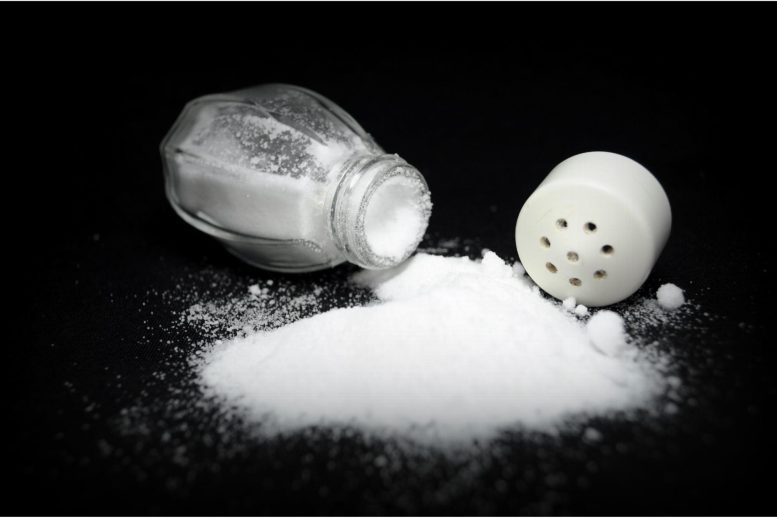
    Spilt Salt Shaker
    Stress is the body’s natural response to challenges or demands. It can be caused by both positive and negative experiences and can have physical, emotional, and mental effects on the body. Some common signs of stress include irritability, difficulty concentrating, changes in appetite, and difficulty sleeping.

    A high-salt diet increases stress hormone levels and alters brain stress responses.

    According to a recent study, a diet high in salt can contribute to stress. In experiments with mice, researchers discovered that a high-salt diet led to a 75% increase in stress hormone levels.

    These findings may prompt a review of public health policies related to salt intake, with the goal of reducing the amount of salt used in processed foods. It is recommended that adults consume no more than 6 grams of salt per day, but most people consume around 9 grams on a regular basis.

    This can contribute to higher blood pressure, which increases the risks of heart attacks, strokes, and vascular dementia. While effects on the heart and circulatory system have been well established, little was known about the impact of a high-salt diet on a person’s behavior.

    To study this, experts from the University of Edinburgh used mice, who ordinarily have a low-salt diet, and gave them high-salt food to reflect the typical intake of humans. They found that not only did resting stress hormone levels increase, but the mice’s hormone response to environmental stress was double that of mice that had a normal diet.

    Salt intake increased the activity of genes that produce the proteins in the brain which control how the body responds to stress. Experts say further studies are already underway to understand if a high-salt intake leads to other behavioral changes such as anxiety and aggression.

    Matthew Bailey, Professor of Renal Physiology at the University of Edinburgh’s Centre for Cardiovascular Science, said: “We are what we eat and understanding how high-salt food changes our mental health is an important step to improving well-being. We know that eating too much salt damages our heart, blood vessels, and kidneys. This study now tells us that high salt in our food also changes the way our brain handles stress.”

    Reference: “High salt intake activates the hypothalamic–pituitary–adrenal axis, amplifies the stress response, and alters tissue glucocorticoid exposure in mice” by Hannah M Costello, Georgios Krilis, Celine Grenier, David Severs, Alicja Czopek, Jessica R Ivy, Mark Nixon, Megan C Holmes, Dawn E W Livingstone, Ewout J Hoorn, Neeraj Dhaun and Matthew A Bailey, 11 November 2022, Cardiovascular Research.
    DOI: 10.1093/cvr/cvac160

    The study was funded by the British Heart Foundation and Kidney Research UK.

    Never miss a breakthrough: Join the SciTechDaily newsletter.
    Follow us on Google and Google News.

    Diet Nutrition Popular Stress University of Edinburgh
    Share. Facebook Twitter Pinterest LinkedIn Email Reddit

    Related Articles

    Scientists Uncover Stress-Relief Benefits of the Mediterranean Diet

    Making This Simple Dietary Change Could Significantly Reduce Your Risk of Diabetes and Cancer

    Science Shows a Healthy Diet Significantly Reduces Depression

    Fountain of Youth: Cutting Calories and Eating at the Right Time of Day Leads to a Longer Life

    Low-Frequency Intermittent Fasting Helps Fight Inflammation

    Researchers Find Belly Fat Is Resistant to Intermittent Fasting – “The Location Makes a Big Difference”

    Low-Fat, Plant-Based Diet Compared to Low-Carb, Animal-Based Diet in Clinical Trial – Here Are the Results

    Study Links Diet Soda With Depression in Older Adults

    Diets High in Fructose Lead to Overeating

    Leave A Reply Cancel Reply

    • Facebook
    • Twitter
    • Pinterest
    • YouTube

    Don't Miss a Discovery

    Subscribe for the Latest in Science & Tech!

    Trending News

    Wasp Colonies Explode Into Violence After Losing Their Queen

    Scientists Create “Living Plastic” That Self-Destructs in Just Six Days

    Your Blood May Carry a 700-Million-Year-Old Secret

    Scientists Discover Some “Zombie Cells” May Actually Help You Live Longer

    Earth May Be Seeding Venus With Life, According to New Research

    What Scientists Found Inside a 117-Year-Old Woman Reveals New Clues to Long Life

    Scientists Discover Mysterious Creature Living in the Great Salt Lake – and It Exists Nowhere Else on Earth

    It’s Alive? Surprising Discovery Changes What We Know About Fog

    Follow SciTechDaily
    • Facebook
    • Twitter
    • YouTube
    • Pinterest
    • Newsletter
    • RSS
    SciTech News
    • Biology News
    • Chemistry News
    • Earth News
    • Health News
    • Physics News
    • Science News
    • Space News
    • Technology News
    Recent Posts
    • A Psychologist Explains Why 40% of People Are Avoiding the News
    • Scientists Discover Alzheimer’s-Linked Proteion’s Surprising Role in Making Memories Last
    • Vitamin D Drug Shows Surprising Promise Against One of the Deadliest Cancers
    • Scientists Crack Major Ammonia Problem With a Platinum Catalyst Breakthrough
    • MIT Engineers Solve a Major Lidar Problem That Has Stumped Researchers for Years
    Copyright © 1998 - 2026 SciTechDaily. All Rights Reserved.
    • Science News
    • About
    • Contact
    • Editorial Board
    • Privacy Policy
    • Terms of Use

    Type above and press Enter to search. Press Esc to cancel.