Close Menu
    Facebook X (Twitter) Instagram
    SciTechDaily
    • Biology
    • Chemistry
    • Earth
    • Health
    • Physics
    • Science
    • Space
    • Technology
    Facebook X (Twitter) Pinterest YouTube RSS
    SciTechDaily
    Home»Space»Explosive X1.9 Class Solar Flare Erupts From the Sun
    Space

    Explosive X1.9 Class Solar Flare Erupts From the Sun

    By NASAJanuary 12, 2023No Comments3 Mins Read
    Facebook Twitter Pinterest Telegram LinkedIn WhatsApp Email Reddit
    Share
    Facebook Twitter LinkedIn Pinterest Telegram Email Reddit
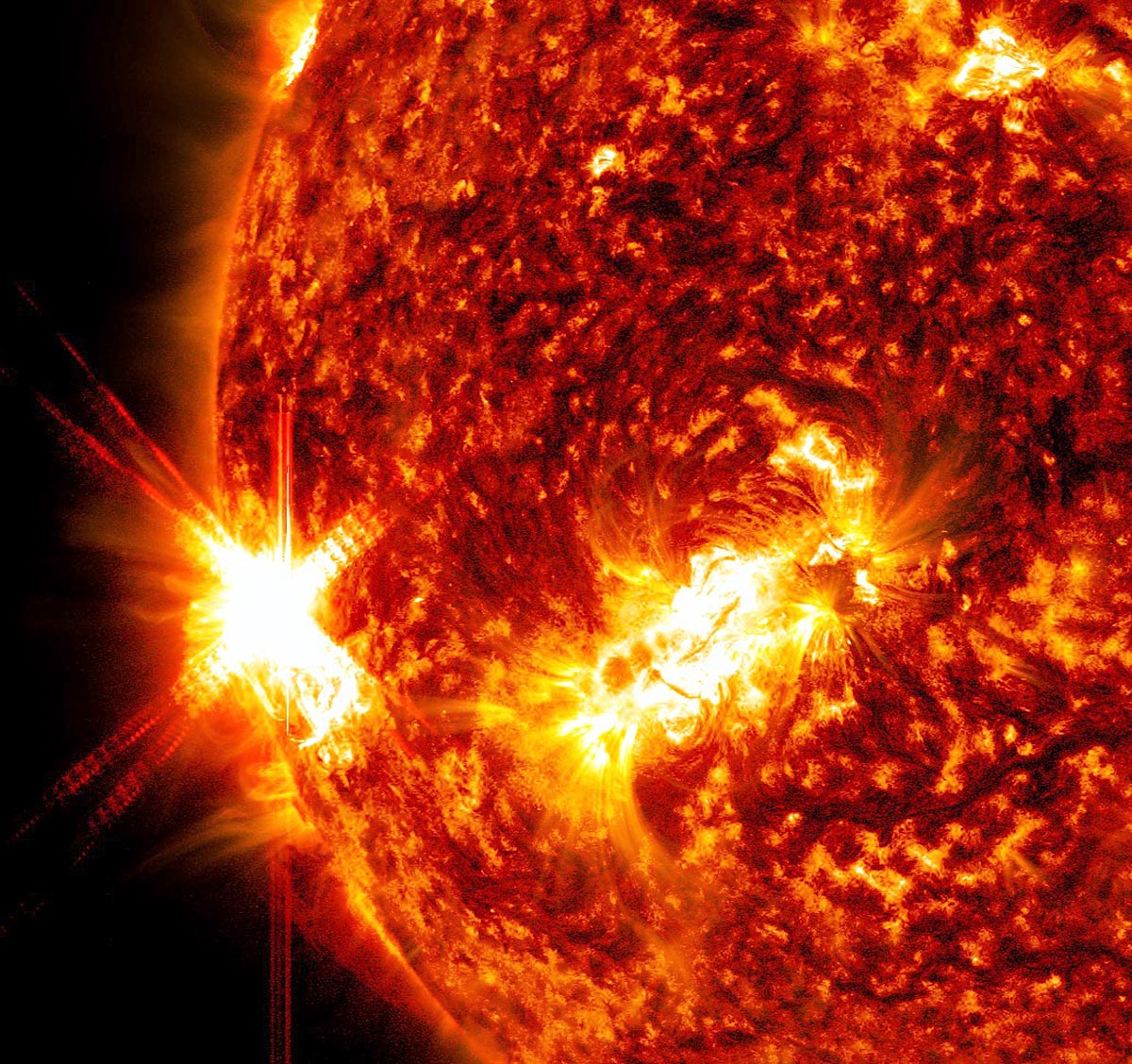
    X1.9 Solar Flare January 9 2023
    An X1.9 class solar flare flashes on the left edge of the Sun on January 9, 2023. This image was captured by NASA’s Solar Dynamics Observatory and shows a blend of light from the 171, 131, and 304 angstrom wavelengths. Credit: NASA/GSFC/SDO

    The Sun emitted a strong solar flare, peaking at 1:50 p.m. EST on January 9, 2023. Imagery of the event was captured by NASA’s Solar Dynamics Observatory, which constantly watches the Sun.

    Solar flares are intense explosions of energy that can disrupt radio communications, damage power grids, and affect navigation signals. They also pose a threat to spacecraft and astronauts.


    An X1.9 class solar flare flashes on the left edge of the Sun on January 9, 2023. This video was captured by NASA’s Solar Dynamics Observatory and shows a blend of light from the 171, 131 and 304 angstrom wavelengths. Credit: NASA/GSFC/SDO

    This flare is classified as an X1.9 flare.  It is categorized as an X-class flare, which is the most powerful class of solar flares. The number following the “X” indicates the relative strength of the flare, with larger numbers indicating stronger flares. An X1.9 flare is therefore a relatively strong flare, but less intense than an X2.0 or higher. These flares can cause disruptions to radio communications and power grids on Earth, and can also be potentially dangerous for spacecraft and astronauts.
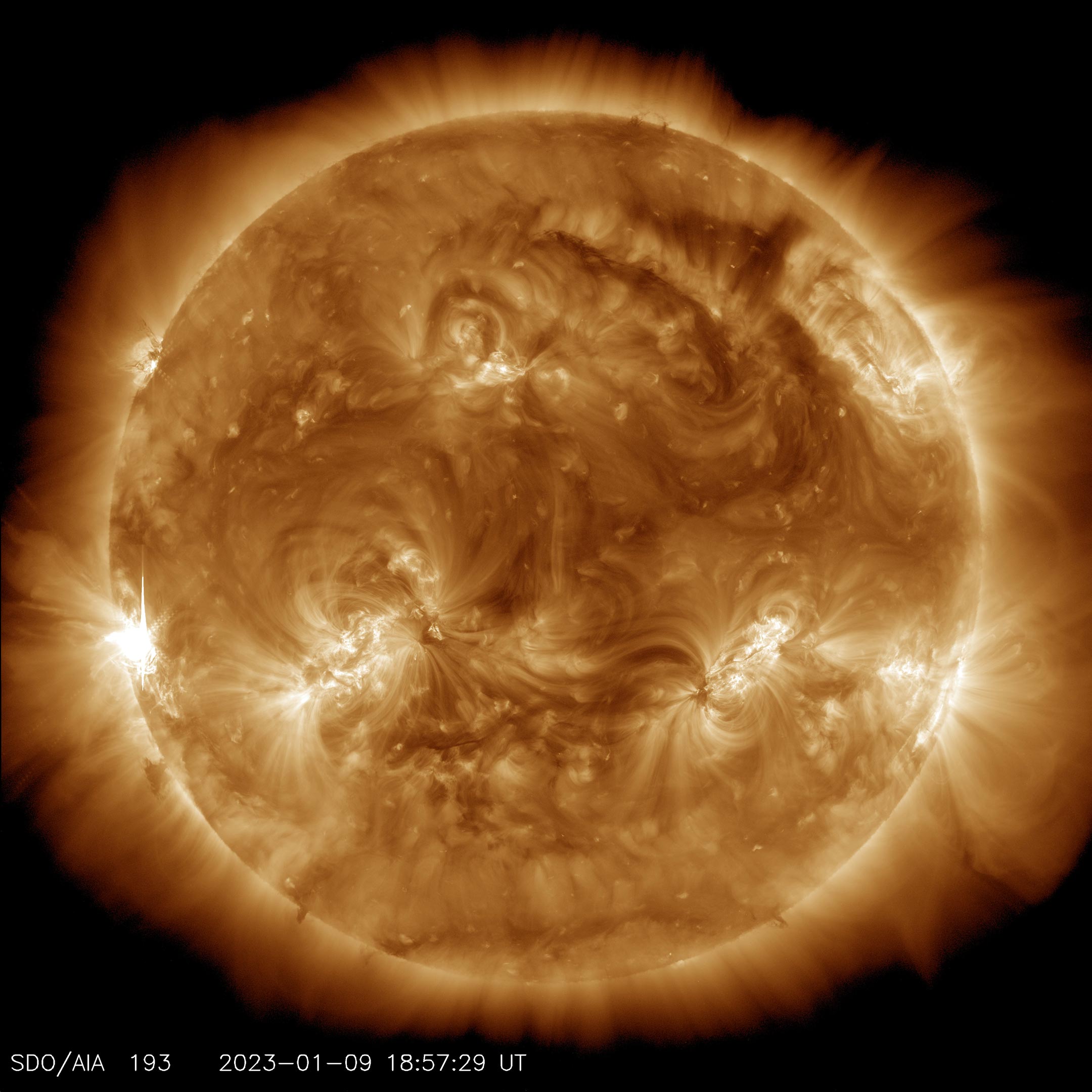
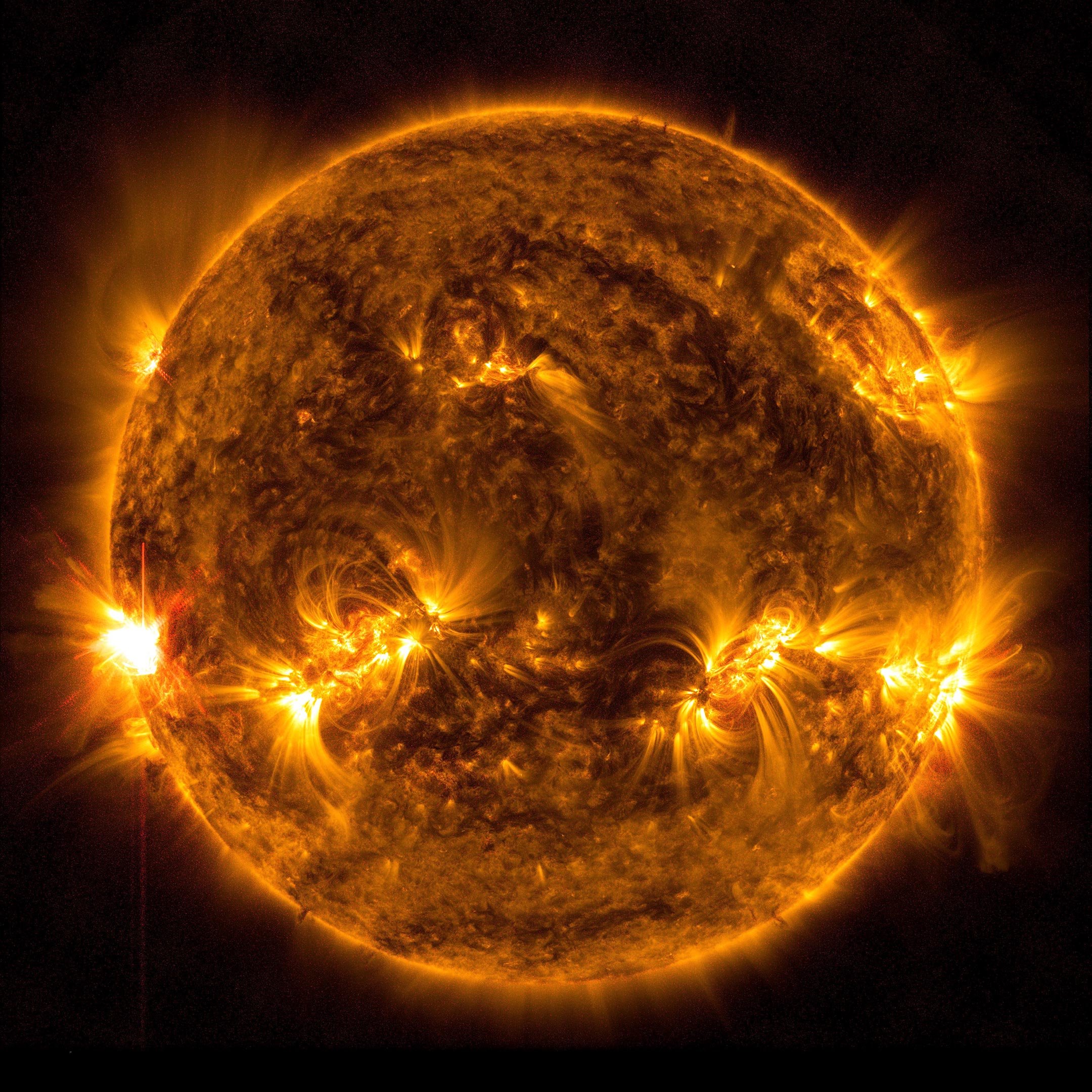
    X1.9 Solar Flare January 9 2023 193 Angstrom
    An X1.9 class solar flare flashes on the left of the Sun on January 9, 2023. This image was captured by NASA’s Solar Dynamics Observatory at 1:57 EST and shows light in the 193 angstrom wavelength. Credit: NASA/SDO
    X1.9 Solar Flare January 9 2023 171 and 131 Angstrom
    An X1.9 class solar flare flashes on the left edge of the Sun on January 9, 2023. This image was captured by NASA’s Solar Dynamics Observatory and shows a blend of light from the 171 and 131 angstrom wavelengths. Credit: NASA/GSFC/SDO
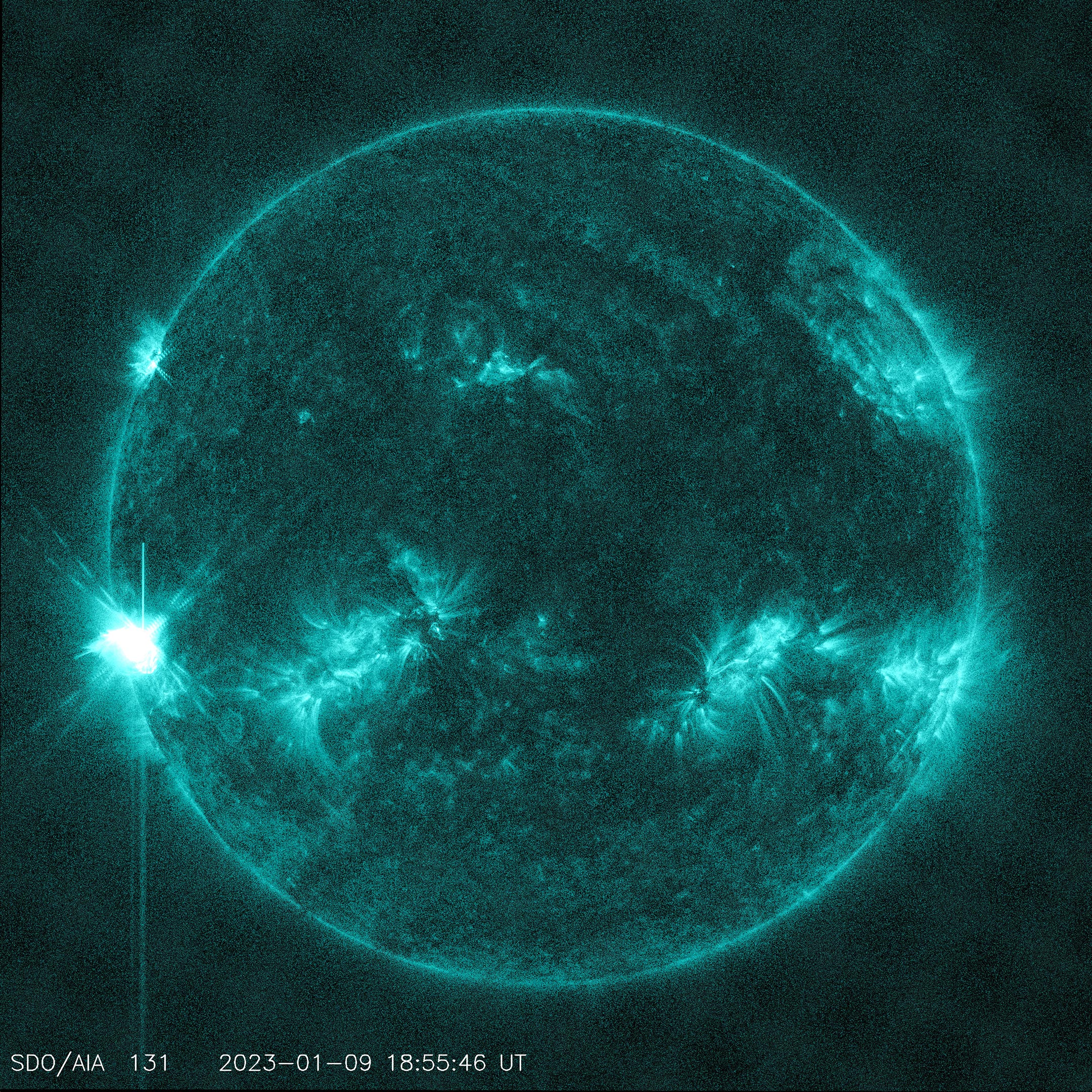
    X1.9 Solar Flare January 9 2023 131 Angstrom
    An X1.9 class solar flare flashes on the left of the Sun on January 9, 2023. This image was captured by NASA’s Solar Dynamics Observatory at 1:55 EST and shows light in the 131 angstrom wavelength. Credit: NASA/SDO

    For more details on how such space weather may affect Earth, please visit NOAA’s Space Weather Prediction Center, the U.S. government’s official source for space weather forecasts, watches, warnings, and alerts. NASA works as a research arm of the nation’s space weather effort. NASA observes the Sun and our space environment constantly with a fleet of spacecraft that study everything from the Sun’s activity to the solar atmosphere, and to the particles and magnetic fields in the space surrounding Earth.
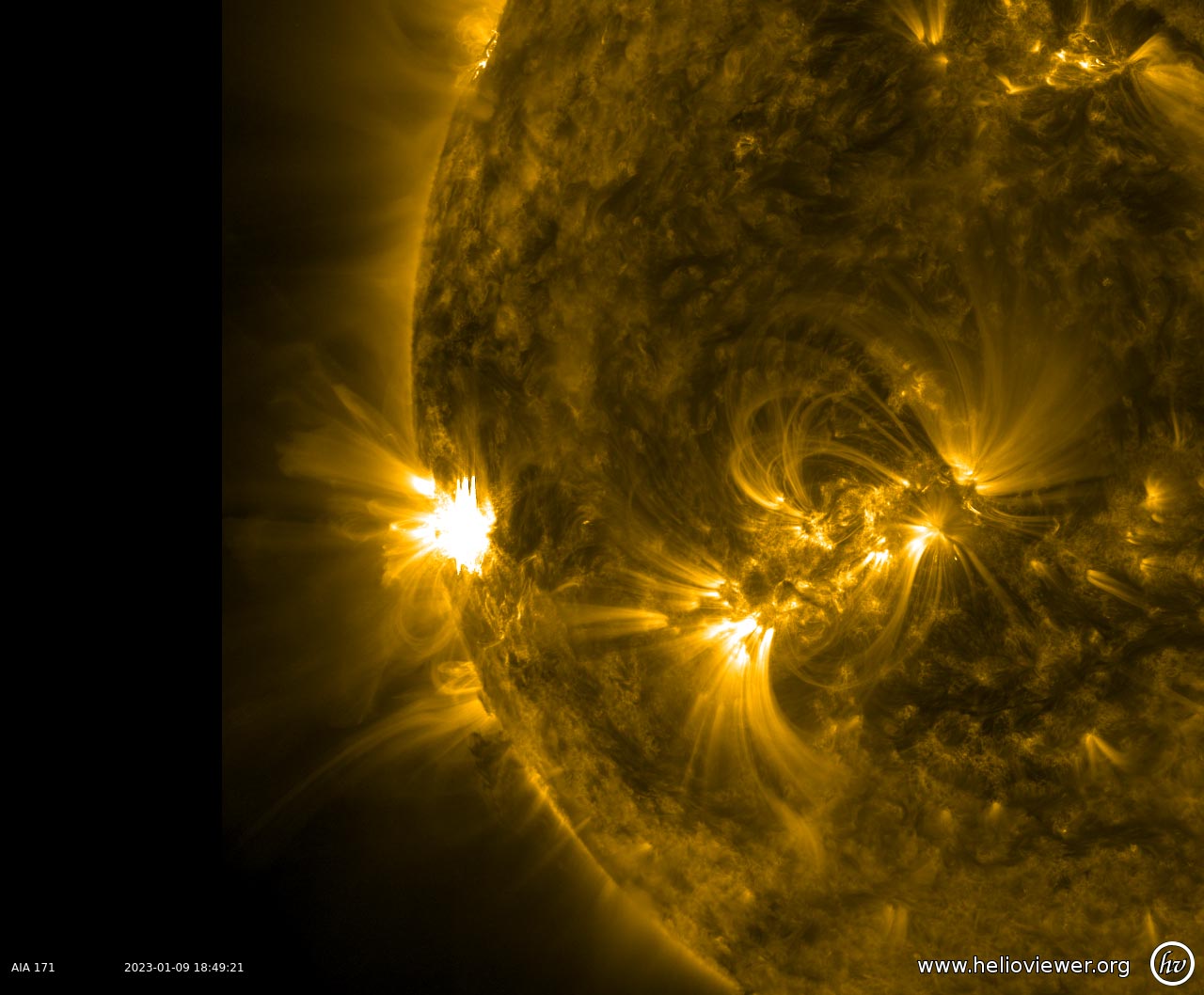
    X1.9 Solar Flare January 9 2023 SDO 171 Angstrom
    An X1.9 class solar flare flashes on the left of the Sun on January 9, 2023. This image was captured by NASA’s Solar Dynamics Observatory at 1:49 EST and shows light in the 171 angstrom wavelength. Credit: NASA/SDO
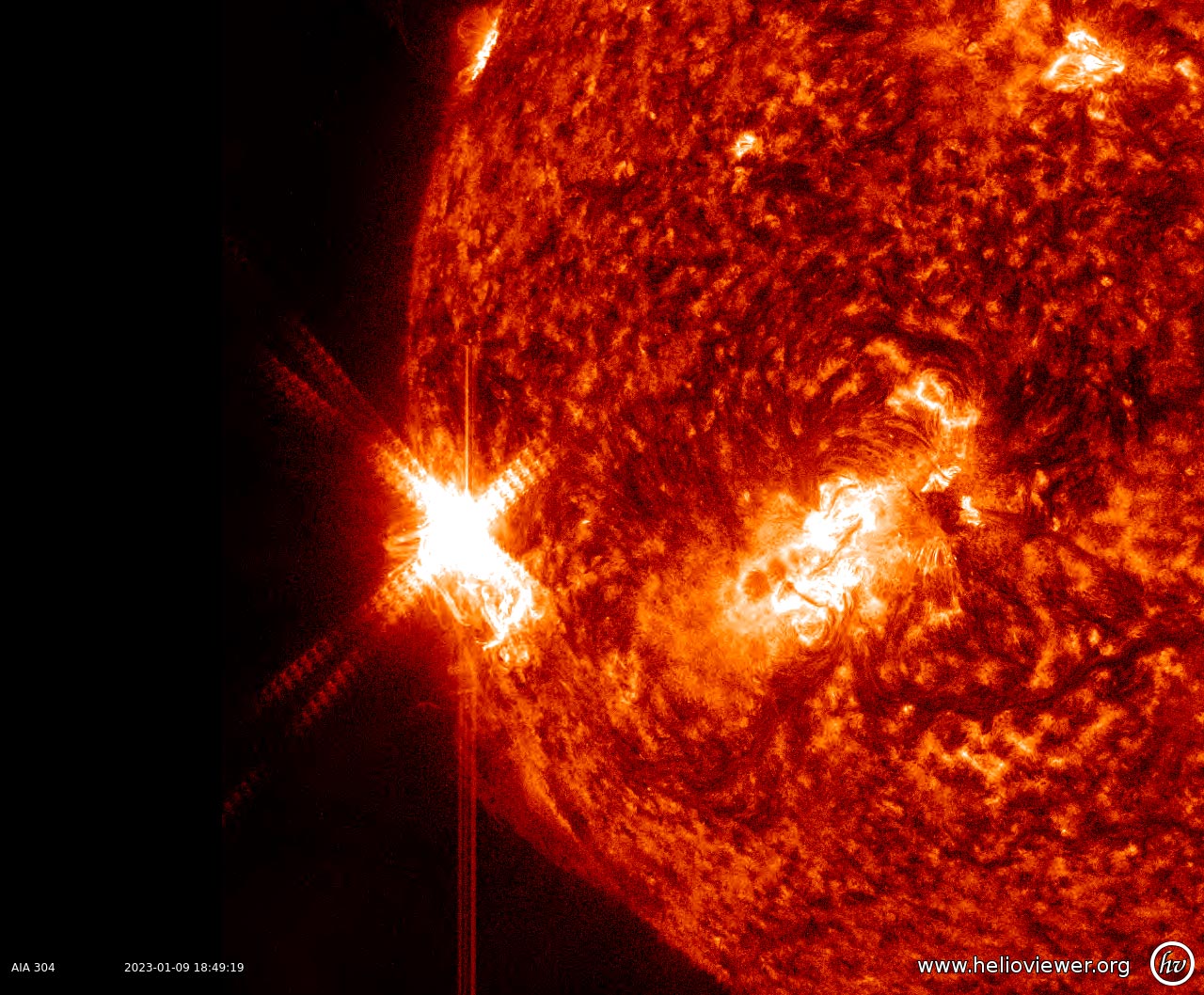
    X1.9 Solar Flare January 9 2023 SDO 304 Angstrom
    An X1.9 class solar flare flashes on the left of the Sun on January 9, 2023. This image was captured by NASA’s Solar Dynamics Observatory at 1:49 EST and shows light in the 304 angstrom wavelength. Credit: NASA/SDO
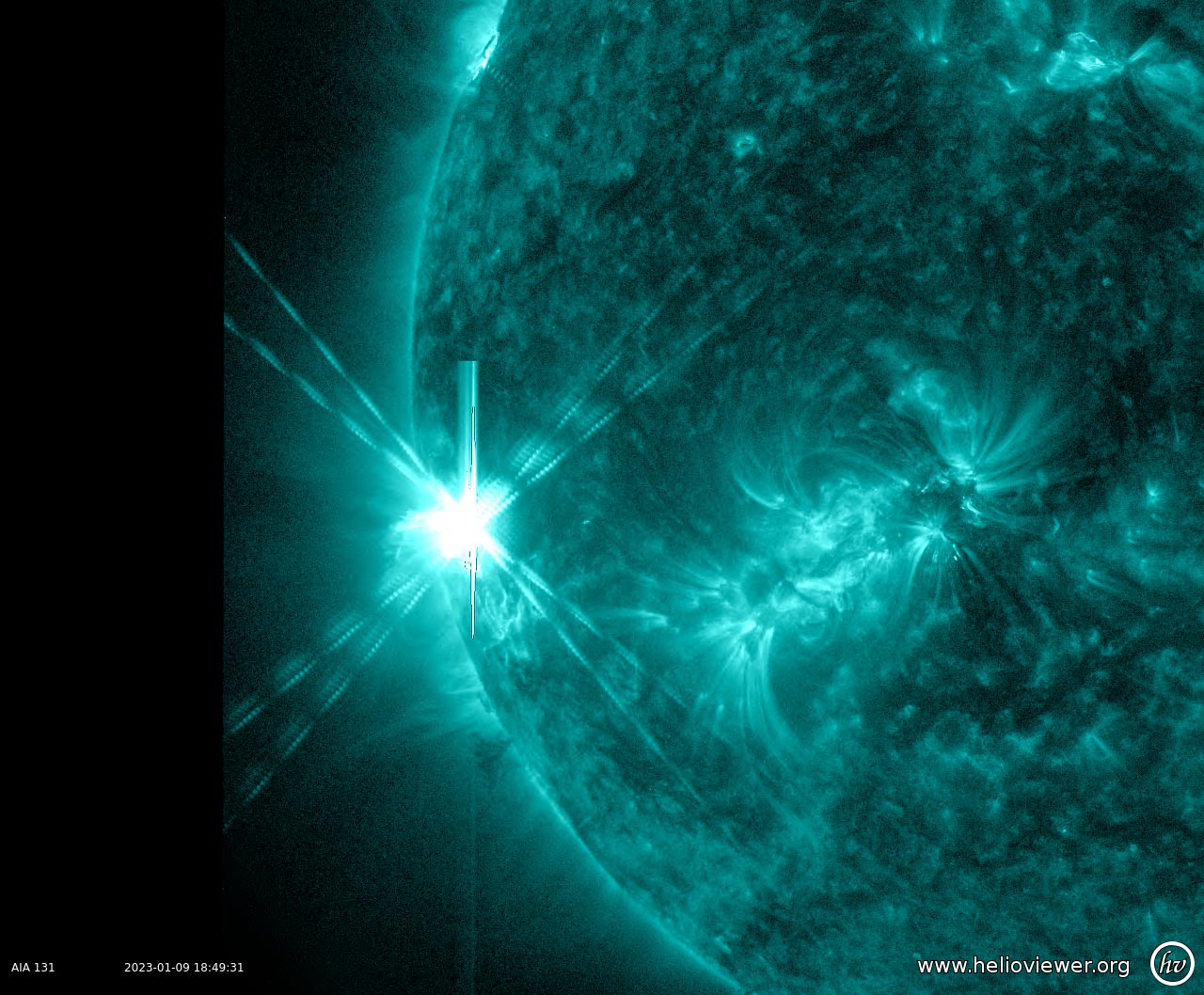
    X1.9 Solar Flare January 9 2023 SDO 131 Angstrom
    An X1.9 class solar flare flashes on the left of the Sun on January 9, 2023. This image was captured by NASA’s Solar Dynamics Observatory at 1:49 EST and shows light in the 131 angstrom wavelength. Credit: NASA/SDO


    The Solar Dynamics Observatory (SDO) is a NASA mission that was launched in 2010 to study the sun and its effects on Earth. The spacecraft is equipped with a suite of instruments that allow it to observe the sun’s magnetic field, track the movement of material on the sun’s surface, and measure the sun’s output of various forms of radiation. The data collected by the SDO is used to improve our understanding of the sun’s inner workings, as well as its impact on Earth’s climate and environment. The SDO has helped to improve our ability to predict solar flares and other space weather events, which can have significant effects on satellite and ground-based technology.

    Never miss a breakthrough: Join the SciTechDaily newsletter.
    Follow us on Google and Google News.

    NASA Solar Dynamics Observatory Solar Flares Space Weather Sun
    Share. Facebook Twitter Pinterest LinkedIn Email Reddit

    Related Articles

    NASA Just Found the Sun’s Secret Warning Before Massive Solar Flares

    Rapid-Fire Solar Flares Unleashed: NASA Witnesses 82 Intense Flares This Week [Video]

    NASA Captures Sun’s Fury: Strongest Solar Flare Since 2017

    Powerful X-Class Solar Flare Erupts From Sun – Captured by NASA’s Solar Dynamics Observatory

    New SDO Image of X-Class Solar Flare

    NASA’s SDO Reveals Images of X4.9-Class Solar Flare

    NASA’s Solar Dynamics Observatory Views Two New Solar Flares

    NASA Spacecraft Observe Magnetic Reconnection in Action

    New Light Shed on the Origins of Extreme Space Storms

    Leave A Reply Cancel Reply

    • Facebook
    • Twitter
    • Pinterest
    • YouTube

    Don't Miss a Discovery

    Subscribe for the Latest in Science & Tech!

    Trending News

    Breakthrough Bowel Cancer Trial Leaves Patients Cancer-Free for Nearly 3 Years

    Natural Compound Shows Powerful Potential Against Rheumatoid Arthritis

    100,000-Year-Old Neanderthal Fossils in Poland Reveal Unexpected Genetic Connections

    Simple “Gut Reset” May Prevent Weight Gain After Ozempic or Wegovy

    2.8 Days to Disaster: Scientists Warn Low Earth Orbit Could Suddenly Collapse

    Common Food Compound Shows Surprising Power Against Superbugs

    5 Simple Ways To Remember More and Forget Less

    The Atomic Gap That Could Cost the Semiconductor Industry Billions

    Follow SciTechDaily
    • Facebook
    • Twitter
    • YouTube
    • Pinterest
    • Newsletter
    • RSS
    SciTech News
    • Biology News
    • Chemistry News
    • Earth News
    • Health News
    • Physics News
    • Science News
    • Space News
    • Technology News
    Recent Posts
    • After 37 Years, the World’s Longest-Running Soil Warming Experiment Uncovers a Startling Climate Secret
    • NASA Satellite Captures First-Ever High-Res View of Massive Pacific Tsunami
    • ADHD Isn’t Just a Deficit: Study Reveals Powerful Hidden Strengths
    • Scientists Uncover “Astonishing” Hidden Property of Light
    • Scientists Discover Stem Cells That Could Regrow Teeth and Bone
    Copyright © 1998 - 2026 SciTechDaily. All Rights Reserved.
    • Science News
    • About
    • Contact
    • Editorial Board
    • Privacy Policy
    • Terms of Use

    Type above and press Enter to search. Press Esc to cancel.