
Close Menu
    Facebook X (Twitter) Instagram
    SciTechDaily
    • Biology
    • Chemistry
    • Earth
    • Health
    • Physics
    • Science
    • Space
    • Technology
    Facebook X (Twitter) Pinterest YouTube RSS
    SciTechDaily
    Home»Space»Rapid-Fire Solar Flares Unleashed: NASA Witnesses 82 Intense Flares This Week [Video]
    Space

    Rapid-Fire Solar Flares Unleashed: NASA Witnesses 82 Intense Flares This Week [Video]

    By NASA's Goddard Space Flight CenterMay 11, 2024No Comments4 Mins Read
    Facebook Twitter Pinterest Telegram LinkedIn WhatsApp Email Reddit
    Share
    Facebook Twitter LinkedIn Pinterest Telegram Email Reddit
    Coronal Mass Ejection Art
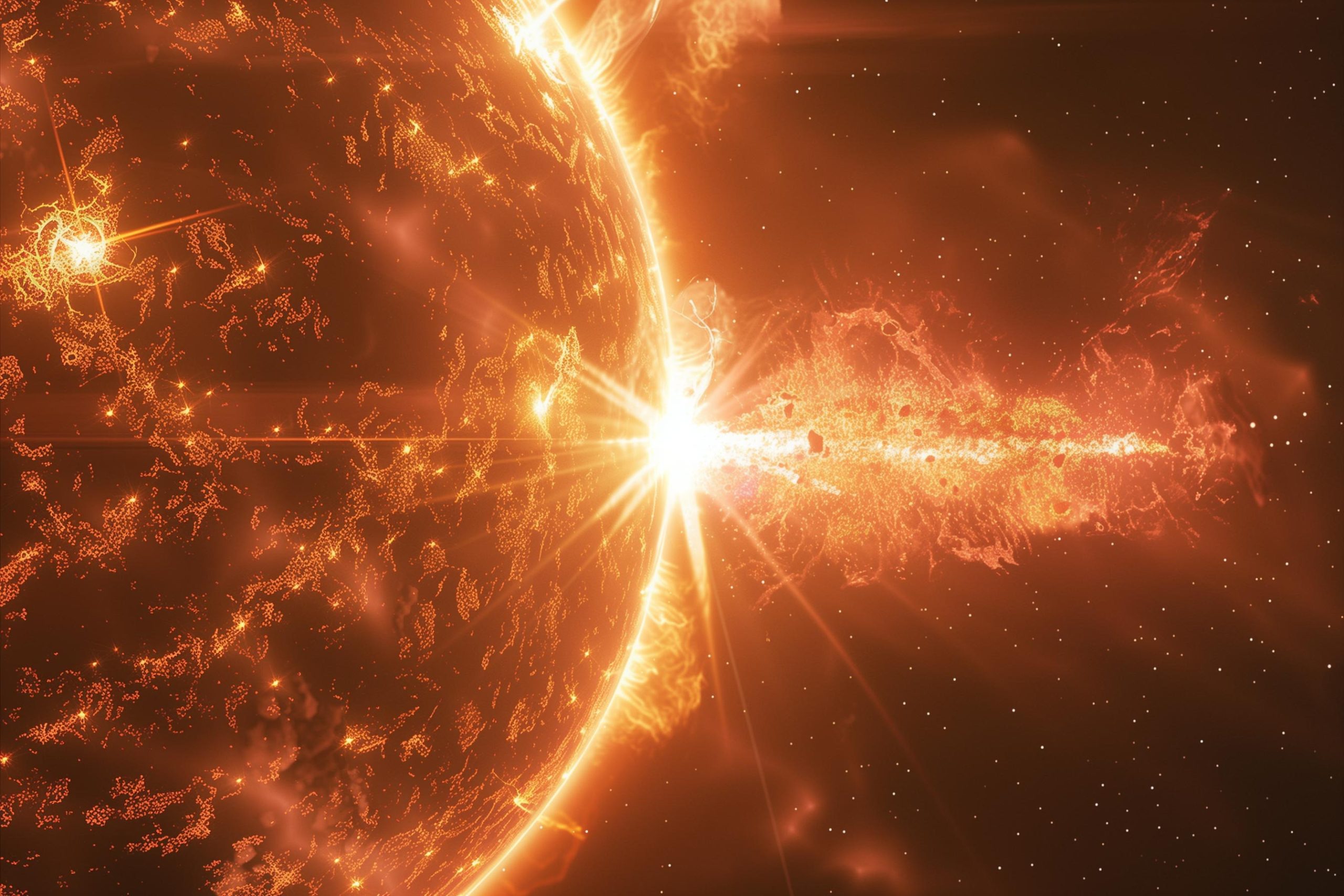
    NASA recorded 82 solar flares between May 3 and 9, 2024, showcasing intense solar activity that can affect space technology and astronauts, despite Earth’s protective atmosphere. Credit: SciTechDaily.com

    From May 3 through May 9, 2024, NASA’s Solar Dynamics Observatory observed 82 notable solar flares. The flares came mainly from two active regions on the Sun called AR 13663 and AR 13664. This video highlights all flares classified at M5 or higher with nine categorized as X-class solar flares.

    A solar flare is an intense burst of radiation, or light, on the Sun. Flares are our solar system’s most powerful explosive events. Light only takes about 8 minutes to travel from the Sun to Earth, so that’s how long it would take the energy from a flare to reach our planet.

    Solar flares are rated into different classes based on their strength, or energy output, and the effect a flare will have on Earth depends on what class it is (B, C, M, and X classes, with X being the most intense). Earth’s atmosphere absorbs most of the Sun’s intense radiation, so flares are not directly harmful to humans on the ground. However, the radiation from a flare can be harmful to astronauts outside of Earth’s atmosphere, and it can affect the technology we rely on.

    Stronger solar flares — those rated class M5 or above — can have impacts on technology that depends on Earth’s ionosphere (our electrically charged upper atmosphere), like high-frequency radio used for navigation and GPS.

    To see how such space weather may affect Earth, please visit NOAA’s Space Weather Prediction Center, the U.S. government’s official source for space weather forecasts, watches, warnings, and alerts. NASA works as a research arm of the nation’s space weather effort. NASA observes the Sun and our space environment constantly with a fleet of spacecraft that study everything from the Sun’s activity to the solar atmosphere, and to the particles and magnetic fields in the space surrounding Earth.
    NASA Solar Dynamics Observatory
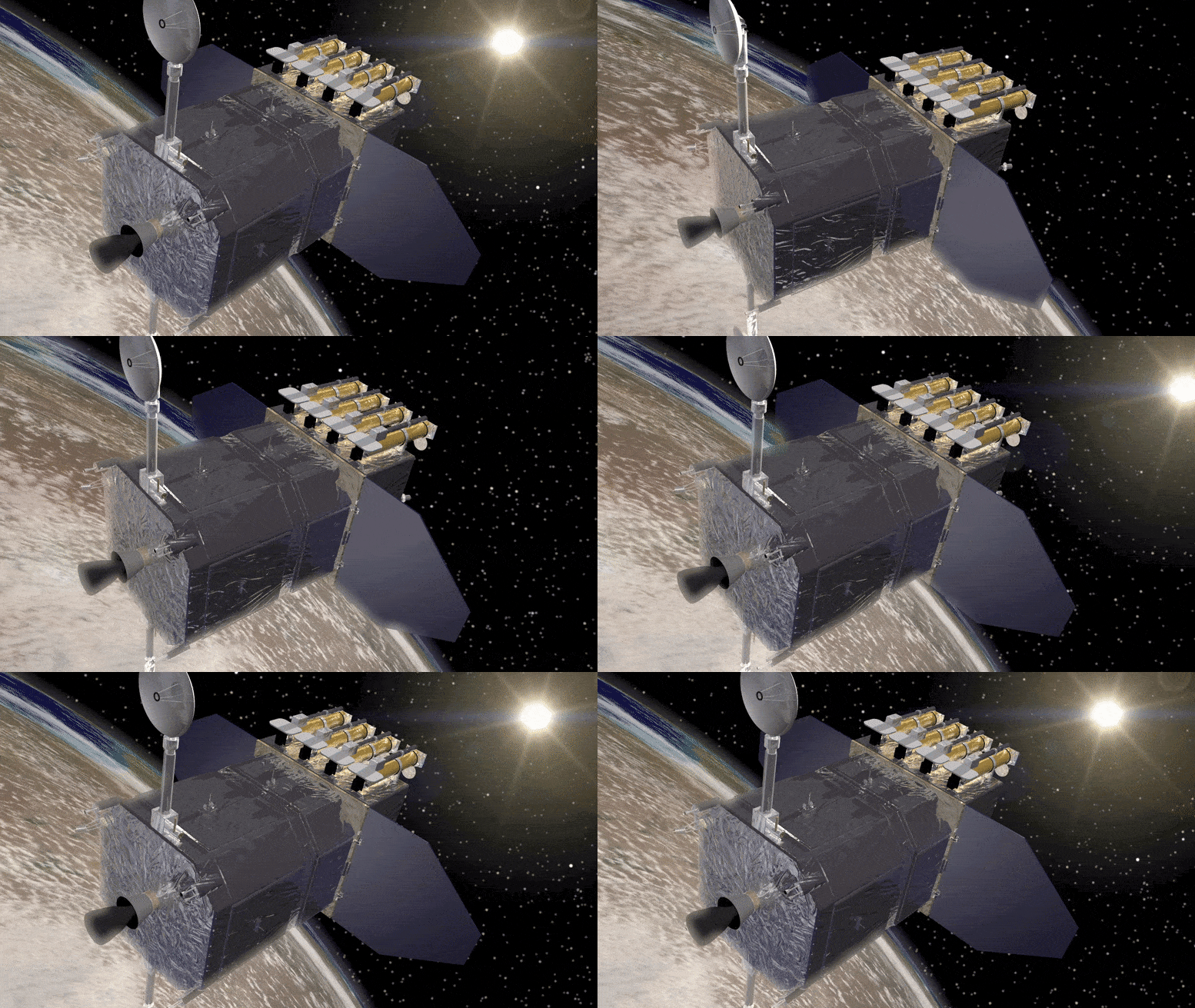
    This animation of the Solar Dynamics Observatory shows it above the earth as it faces toward the Sun. SDO is designed to help us understand the Sun’s influence on Earth and Near-Earth space by studying the solar atmosphere on small scales of space and time and in many wavelengths simultaneously. Credit: NASA/Goddard Space Flight Center Conceptual Image Lab

    NASA’s Solar Dynamics Observatory (SDO) is a mission primarily aimed at understanding the Sun’s influence on Earth and near-Earth space by observing the solar atmosphere in multiple wavelengths. Launched in February 2010, SDO is a part of NASA’s Living With a Star (LWS) program, which intends to develop the scientific understanding necessary to address those aspects of the connected Sun-Earth system that directly affect life and society.

    SDO’s observations provide high-resolution images of the Sun in 13 different wavelengths every 10 seconds. This allows for detailed monitoring of solar activity, including solar flares, which are sudden, intense bursts of radiation coming from the release of magnetic energy associated with sunspots. Solar flares are significant because they can release immense amounts of energy that heat up the solar atmosphere, increase solar luminosity, and produce enhanced radiation that can have profound effects on Earth. This includes potential impacts on satellite operations, communications systems, and even power grids, especially during intense flares.

    SDO’s data is crucial for understanding the dynamics of solar flares and their development. It helps scientists improve their models of the solar atmosphere and forecast space weather events with greater accuracy. By providing a continuous stream of data, SDO plays a vital role in our ability to predict and mitigate the effects of solar activity on modern technological systems.

    Never miss a breakthrough: Join the SciTechDaily newsletter.
    Follow us on Google and Google News.

    NASA NASA Goddard Space Flight Center Solar Dynamics Observatory Solar Flares Space Weather Sun
    Share. Facebook Twitter Pinterest LinkedIn Email Reddit

    Related Articles

    NASA Just Found the Sun’s Secret Warning Before Massive Solar Flares

    NASA Confirms Solar Maximum: Brace for Massive Flares and Epic Geomagnetic Storms

    NASA Captures Sun’s Fury: Strongest Solar Flare Since 2017

    Intensely Powerful X1.0 Solar Flare Witnessed by NASA’s Solar Dynamics Observatory

    Explosive X1.9 Class Solar Flare Erupts From the Sun

    Powerful X-Class Solar Flare Erupts From Sun – Captured by NASA’s Solar Dynamics Observatory

    NASA’s Solar Dynamics Observatory Spots Burst of Light and Energy on the Sun: A B-Class Flare

    NASA’s SDO Reveals Images of X4.9-Class Solar Flare

    New Light Shed on the Origins of Extreme Space Storms

    Leave A Reply Cancel Reply

    • Facebook
    • Twitter
    • Pinterest
    • YouTube

    Don't Miss a Discovery

    Subscribe for the Latest in Science & Tech!

    Trending News

    289-Million-Year-Old Reptile Mummy Reveals Origin of Human Breathing System

    New Brain Discovery Challenges Long-Held Theory of Teenage Brain Development

    Scientists Discover Plants “Scream” – We Just Couldn’t Hear Them Until Now

    Scientists Discover a Surprising Reason Intermittent Fasting Extends Life

    This Simple Fruit Wash Could Make Produce Safer and Last Days Longer

    Scientists Say Adding This Unusual Seafood to Your Diet Could Reverse Signs of Aging

    Scientists Say a Hidden Structure May Exist Inside Earth’s Core

    Doctors Surprised by the Power of a Simple Drug Against Colon Cancer

    Follow SciTechDaily
    • Facebook
    • Twitter
    • YouTube
    • Pinterest
    • Newsletter
    • RSS
    SciTech News
    • Biology News
    • Chemistry News
    • Earth News
    • Health News
    • Physics News
    • Science News
    • Space News
    • Technology News
    Recent Posts
    • Missing Medieval Relic of Legendary English King Found After Being Missing for 40 Years
    • New Study Challenges Long-Held Assumptions About Cancer and Aging
    • Major Review Finds Alzheimer’s Amyloid Drugs Offer No Real Benefit
    • Could This New Weight-Loss Pill Disrupt the Entire Market? Here’s What You Should Know About Orforglipron
    • Nearly 1 in 5 Gray Whales That Enter San Francisco Bay Die There
    Copyright © 1998 - 2026 SciTechDaily. All Rights Reserved.
    • Science News
    • About
    • Contact
    • Editorial Board
    • Privacy Policy
    • Terms of Use

    Type above and press Enter to search. Press Esc to cancel.