
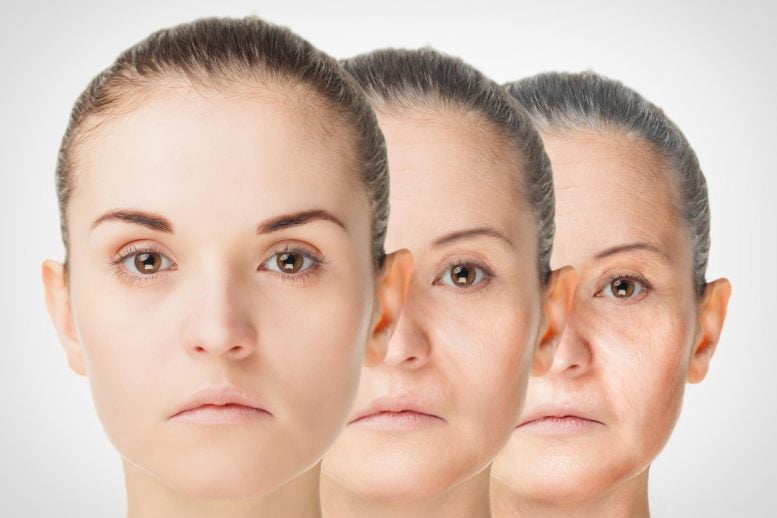
Researchers Discovered a Promising Path To Delay Aging
Scientists from the University of Virginia (UVA) have identified a promising approach to delay aging by detoxifying the body of glycerol and glyceraldehyde, harmful by-products of fat that naturally accumulate over time.
The new findings come from UVA researcher Eyleen Jorgelina O’Rourke, PhD, and her team, who are seeking to identify the mechanisms driving healthy aging and longevity. Their new work suggests a potential way to do so by reducing glycerol and glyceraldehyde’s health-draining effects.

“The discovery was unexpected. We went after a very well-supported hypothesis that the secret to longevity was the activation of a cell-rejuvenating process named autophagy and ended up finding an unrecognized mechanism of health and lifespan extension,” said O’Rourke, of UVA’s Department of Biology and the UVA School of Medicine’s Department of Cell Biology. “An exciting aspect of the discovery is that the key to switch on this longevity mechanism is the activation of two enzymes that are very well studied because of their role in ethanol detoxification. [Ethanol is the alcohol contained in beer and bourbon]. This existing knowledge greatly facilitates our search for drugs that can specifically activate this anti-aging process.”
Anti-Aging Discovery
In their search for the secrets to slow down aging, O’Rourke and her graduate student Abbas Ghaddar and postdoc Vinod Mony turned to microscopic worms called C. elegans. These soil dwellers share more than 70% of our genes and are an invaluable tool for biomedical research; two Nobel prizes in medicine were awarded to discoveries made using this worm exclusively.
Prior aging research in worms, mice and human cells made O’Rourke and others in the field suspect that the key to extending lifespan was to activate autophagy, a process that renews broken and old parts in our cells. But O’Rourke and her collaborators were surprised to find that wasn’t necessary – the scientists improved the worms’ health and lifespan by 50% with no increase in autophagy at all.
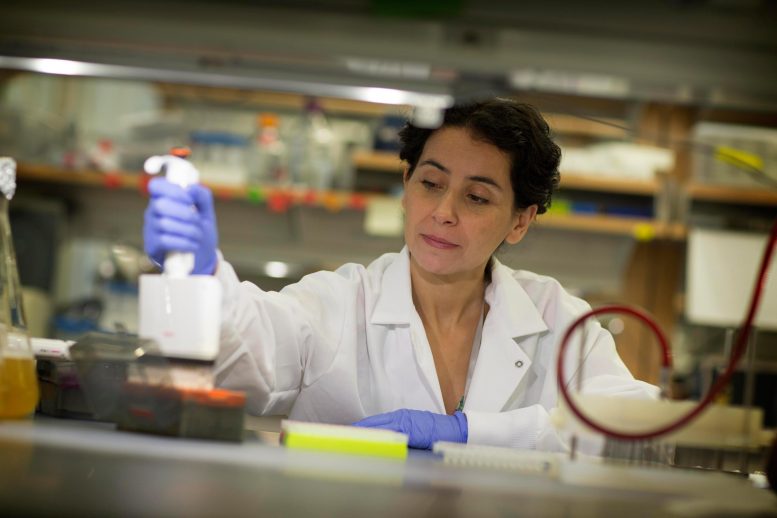
They did this by capitalizing on a mechanism they discovered and named AMAR, the Sanskrit word for immortality. AMAR, in this instance, stands for “Alcohol and aldehyde-dehydrogenase Mediated Anti-aging Response.” In short, the scientists found that they could prompt an anti-aging response by putting the spurs to a particular gene, adh-1. Doing so prompted the gene to produce more of an enzyme, alcohol dehydrogenase, that prevented the toxicity caused by glycerol and, indirectly, glyceraldehyde. The result was that the worms lived longer, healthier lives.
Findings in lab models such as worms and mice don’t always hold true in people, of course. So the researchers took several more steps to see if their lead was as promising as it appeared. First, they confirmed that the enzyme had similar beneficial effects on lifespan in another lab model, yeast. Then they scoured through research looking at gene activity in creatures, including humans, who had undergone fasting or calorie restriction because both fasting and calorie restriction are known to extend healthspan and lifespan. Sure enough, the scientists found increased levels of the anti-aging enzymes in all the mammals tested, including in humans.

The scientists suspect that our levels of glycerol and glyceraldehyde naturally increase over time because they are toxic byproducts of fat, which we store more of as we age. Thus, AMAR may offer a way to head off the fat-derived toxicity, extend the number of years we live in good health, and maybe help us shed some extra pounds, too.
“We hope to attract interest in developing therapeutics that target AMAR,” said O’Rourke, who is part of UVA’s Robert M. Berne Cardiovascular Research Center. “With age-related diseases currently being the major health burden for patients, their families and the healthcare system, targeting the process of aging itself would be most effective way to reduce this burden and increase the number of years of independent healthy living for all of us.”
Findings Published
The researchers have published their findings in the scientific journal Current Biology. The team consisted of Abbas Ghaddar, Vinod K. Mony, Swarup Mishra, Samuel Berhanu, James C. Johnson, Elisa Enriquez-Hesles, Emma Harrison, Aaroh Patel, Mary Kate Horak, Jeffrey S. Smith, and O’Rourke. The researchers have no financial interests in the work.
Reference: “Increased alcohol dehydrogenase 1 activity promotes longevity” by Abbas Ghaddar, Vinod K. Mony, Swarup Mishra, Samuel Berhanu, James C. Johnson, Elisa Enriquez-Hesles, Emma Harrison, Aaroh Patel, Mary Kate Horak, Jeffrey S. Smith and Eyleen J. O’Rourke, 17 February 2023, Current Biology.
DOI: 10.1016/j.cub.2023.01.059
The research was supported by the National Institutes of Health, grants RO1GM075240, RO1GM127394 and DK087928, and National Research Service Award F30AG067760. Additional funders include the Pew Charitable Trusts, the Jeffress Trust, the W.M. Keck Foundation, the Jefferson Scholars Foundation and UVA’s Society of Fellows, Medical Scientist Training Program and a cell and molecular biology training grant.
Never miss a breakthrough: Join the SciTechDaily newsletter.
Follow us on Google and Google News.
5 Comments
What foods can we eat to support the AMAR process in our bodies? Any foods to avoid? Fasting is mentioned in the research. Are there any specific beneficial fasting methods to report on? Research will take years, while we can implement some behaviors now. I believe it was recently discovered that intense exercise creates more Autophagy than fasting.
Presumably, a low fat diet should result in less of these byproducts being made in the first place. I am also guessing a diet/fast that reduces IGF-1 temporarily, would also stimulate the cleanup of these toxins, the same as it would do in a real fast. Volter Longo’s Fasting mimicking diet is an example. To reduce IGF-1 you want a fraction of your normal calories, perhaps 1/3 or 1/4 normal, and 9% or less of that should be protein. The low protein shifts the gears reducing IGF-1, and stimulates a general clean up in the cells and the need for protein causes the body to kill cells, to get it. Sounds bad, but it isn’t, because the body sacrifices the crummy cells first, like senescent cells which put out chemicals generating inflammation. Low IGF-1 is not something you want long term. You want it to go back up and replace the lost cells.
Intense exercise, especially HIIT, is known to stimulate mitophagy, which is the recycling of mitochondria.
I am not a doctor or professional researcher and this is speculative, so treat it as such.
Fasting has been a staple of cultures for eons. Fasting and meditation/prayer (not for wish granting but for communion and peace of mind) are good for the body and soul (consciousness and mental/emotional well-being, not immortal metaphysical spiritual mumbo jumbo). Ancient cultures knowing the benefits of fasting on the body being backed up by science, finally, is rather satisfying.
Ridiculous
Interesting article and research. A quick Google search shows the an IV drug fomepizole is given to patients with methanol and ethylene glycol poisoning and works by competitive inhibition of alcohol dehydrogenase