
Close Menu
    Facebook X (Twitter) Instagram
    SciTechDaily
    • Biology
    • Chemistry
    • Earth
    • Health
    • Physics
    • Science
    • Space
    • Technology
    Facebook X (Twitter) Pinterest YouTube RSS
    SciTechDaily
    Home»Space»Preparing for Asteroid Bennu: NASA’s OSIRIS-REx Astromaterials Lab Opens Doors to Media
    Space

    Preparing for Asteroid Bennu: NASA’s OSIRIS-REx Astromaterials Lab Opens Doors to Media

    By NASAJuly 2, 2023No Comments3 Mins Read
    Facebook Twitter Pinterest Telegram LinkedIn WhatsApp Email Reddit
    Share
    Facebook Twitter LinkedIn Pinterest Telegram Email Reddit
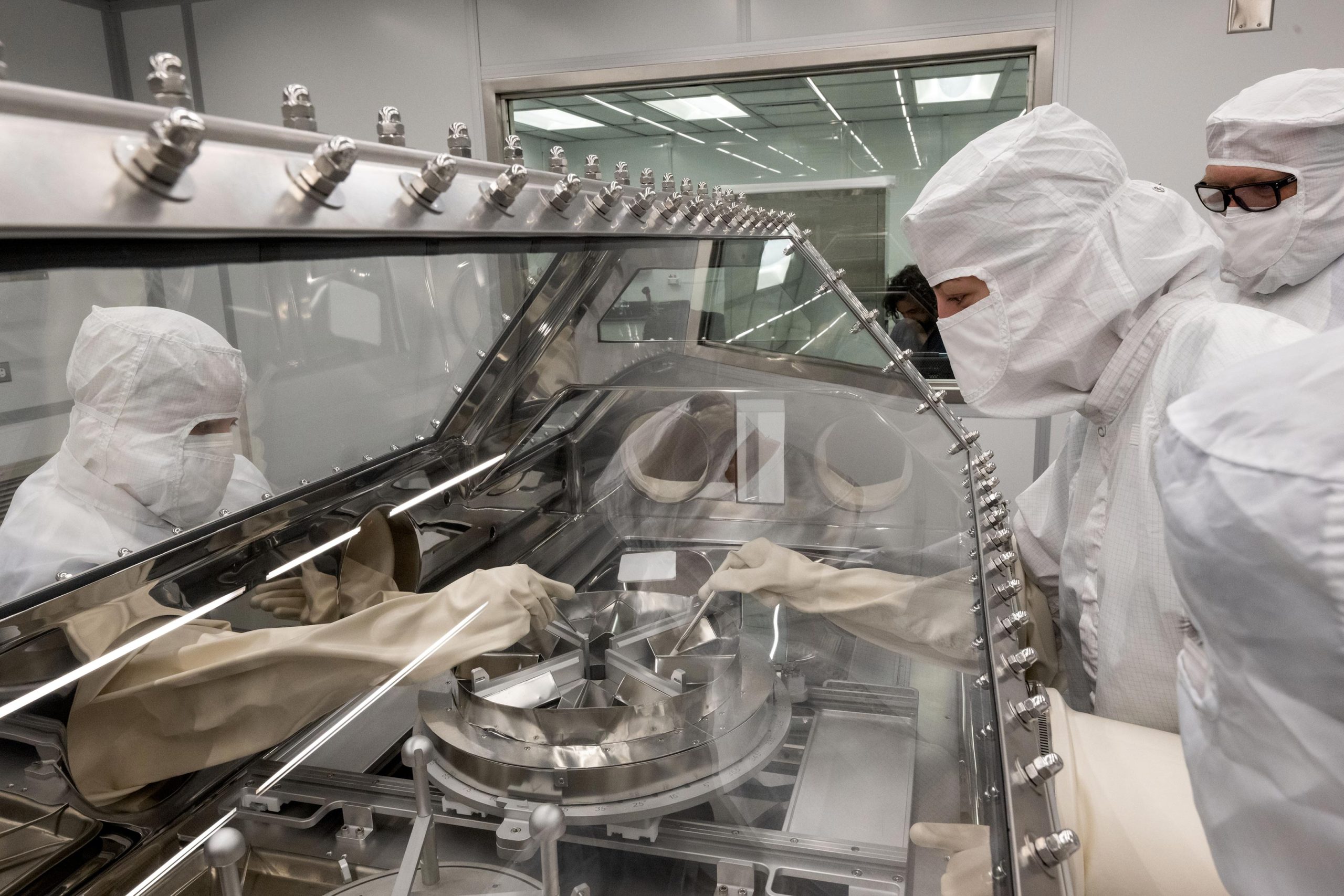
    NASA OSIRIS REx Curation Team Rehearses Opening Asteroid Sample Canister
    NASA’s OSIRIS-REx curation team rehearse the opening of the asteroid sample canister in the newly built OSIRIS-REx Curation lab at Johnson Space Center. Credit: NASA

    NASA’s OSIRIS-REx mission is bringing back a sample from asteroid Bennu, set to land on Earth in September 2023. The sample could reveal insights into planetary formation and life’s origins.

    Ahead of the first asteroid sample collected by the U.S. arriving on Earth in September, media are invited on Monday, July 24, to meet mission scientists and see NASA’s newly-built OSIRIS-REx Sample Curation Laboratory where the agency will study the sample at its Johnson Space Center in Houston.

    The asteroid Bennu, the target of the OSIRIS-REx (Origins, Spectral Interpretation, Resource Identification and Security – Regolith Explorer) mission, is a carbonaceous asteroid whose regolith may record the earliest history of our solar system. The Bennu sample may contain the molecular precursors to the origin of life and Earth’s oceans, and its study also will help scientists understand planet formation.
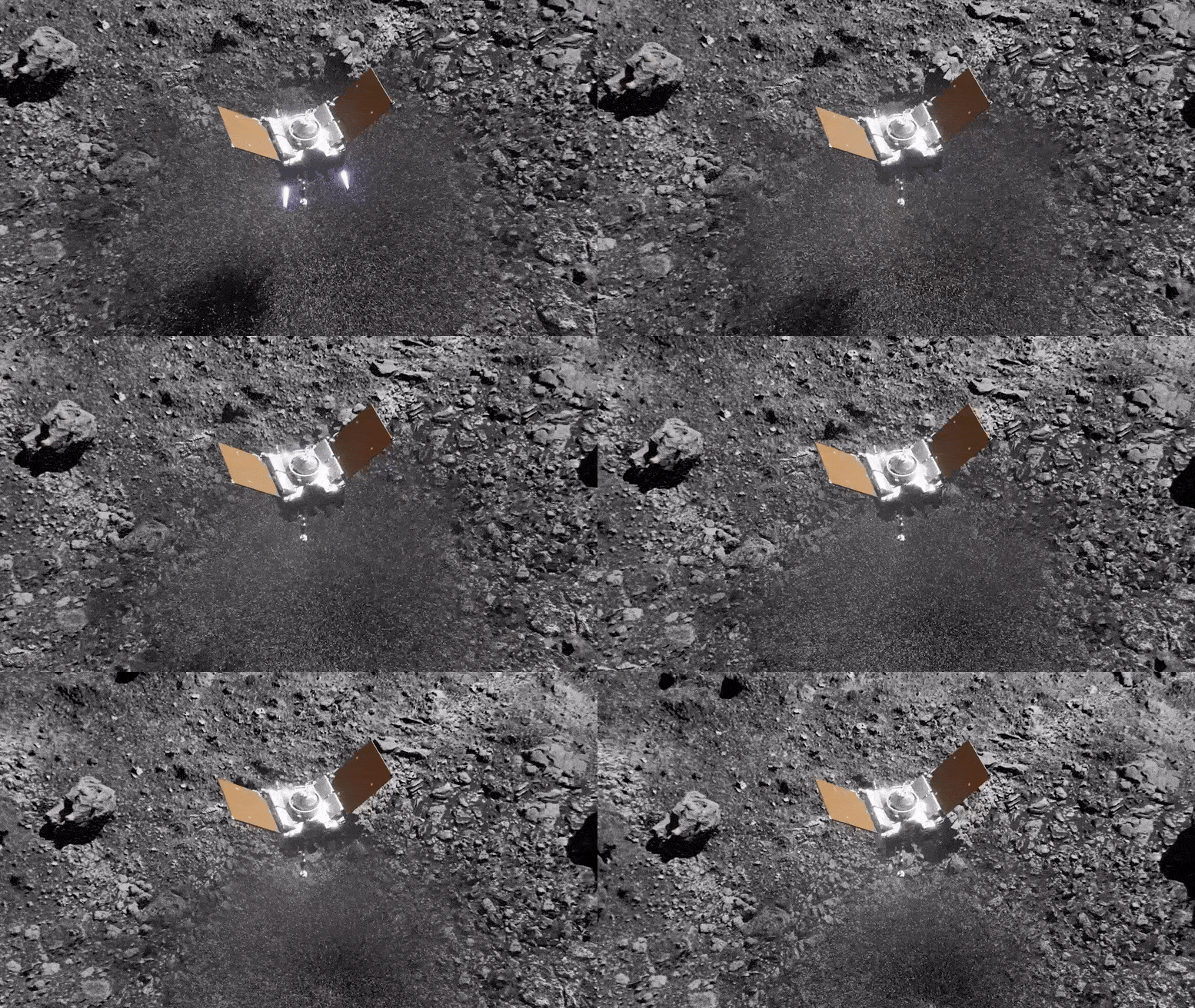
    OSIRIS REx Spacecraft Leaving Bennu Surface
    NASA’s OSIRIS-REx spacecraft leaving the surface of asteroid Bennu after collecting a sample. Credit: NASA’s Goddard Space Flight Center/CI Lab/SVS

    The media day will include opportunities to speak with subject matter experts and capture still and moving imagery at the curation lab. Full interviews with subject matter experts will be available after the lab tour concludes.

    Johnson houses the world’s largest collection of astromaterials from the solar system under one roof, including samples from asteroids, comets, Mars, the Moon, Sun, and dust from other stars. Scientists use world-class laboratories to perform research on planetary materials and the space environment to investigate the origin and evolution of our solar system and beyond.

    NASA’s OSIRIS-REx (Origins, Spectral Interpretation, Resource Identification, Security – Regolith Explorer) mission is an asteroid study and sample-return mission. Launched in 2016, the spacecraft rendezvoused with the near-Earth asteroid Bennu in 2018 to study its composition, geological properties, and to collect a sample.

    The mission aims to bring back at least 60 grams of the asteroid’s surface material to Earth in 2023. This will help scientists understand more about the formation and evolution of the solar system, the sources of water and organic molecules on Earth, the resources in near-Earth space, as well as improve our understanding of asteroids that could impact Earth.

    The spacecraft has successfully collected the sample and is on its way back to Earth. It is expected to drop the sample capsule on September 24, which will parachute down into the Utah desert, where a team will be ready to recover it and transport it to a new lab built for the material at NASA’s Johnson Space Center in Houston.

    Never miss a breakthrough: Join the SciTechDaily newsletter.
    Follow us on Google and Google News.

    Asteroid Asteroid Bennu Johnson Space Center NASA OSIRIS-REx
    Share. Facebook Twitter Pinterest LinkedIn Email Reddit

    Related Articles

    NASA’s OSIRIS-REx Team Triumphs Over Fasteners – Gains Access to Remaining Asteroid Sample

    NASA’s OSIRIS-REx Will Deliver 4.5 Billion-Year-Old Asteroid Samples to Specially Designed Facility

    NASA’s OSIRIS-REx Spacecraft Discovers Sunlight Cracking Rocks on Asteroid Bennu

    OSIRIS-REx Spacecraft Swoops Over Asteroid Sample Site Osprey

    NASA One Step Closer to Touching Asteroid Bennu and Collecting a Sample to Return to Earth

    Global Map of Asteroid Bennu in Unprecedented Detail – Collected by NASA’s OSIRIS-REx Spacecraft

    Features on Asteroid Bennu Now Have Official Names – Based on Mythological Creatures

    NASA Selects Nightingale Crater on Bennu for Asteroid Sample Collection

    Daring Rescue of Monumental Asteroid Mission – Here’s How Engineers Pulled It Off

    Leave A Reply Cancel Reply

    • Facebook
    • Twitter
    • Pinterest
    • YouTube

    Don't Miss a Discovery

    Subscribe for the Latest in Science & Tech!

    Trending News

    Sitting Up Straight Could Actually Help You Make Better Decisions

    Never-Before-Seen Vortices Are Swirling Across the Sun

    This Common Amino Acid May Help the Body Fight Cancer and Viruses

    Low-Protein “Longevity Diet” Linked to Fat Loss, Muscle Preservation, and Healthy Aging

    How Prehistoric Poop Changed Earth’s Ecosystems Forever

    This Fossil Upends a Decades-Old Debate About Snake Evolution

    A Blood Test Years Before Cancer May Reveal a Hidden Warning Sign

    Starlink Satellites Reveal a Hidden Atmosphere 300 Miles Above Earth

    Follow SciTechDaily
    • Facebook
    • Twitter
    • YouTube
    • Pinterest
    • Newsletter
    • RSS
    SciTech News
    • Biology News
    • Chemistry News
    • Earth News
    • Health News
    • Physics News
    • Science News
    • Space News
    • Technology News
    Recent Posts
    • A Simple Feeding Change Makes Zoo Lions Behave More Like They Do in the Wild
    • Scientists Discover a Hidden World of Fungi 1,640 Feet Beneath Michigan
    • Where Were All the Tiny Dinosaurs? Scientists May Finally Have an Answer
    • Astronomers Caught a Star Exploding Almost the Instant It Began
    • Empty Space May Not Be Empty After All: Magnetar Reveals a Bizarre Quantum Effect
    Copyright © 1998 - 2026 SciTechDaily. All Rights Reserved.
    • Science News
    • About
    • Contact
    • Editorial Board
    • Privacy Policy
    • Terms of Use

    Type above and press Enter to search. Press Esc to cancel.