
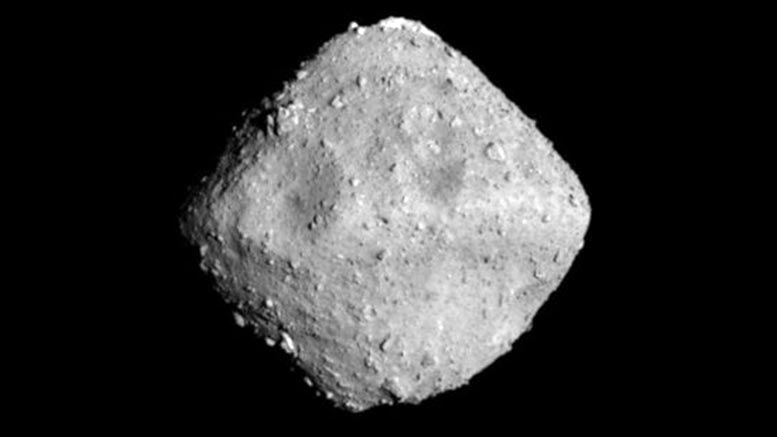
Just weeks after NASA’s OSIRIS-REx spacecraft made a successful touch-and-go grab of samples from asteroid Bennu, researchers at the agency’s Johnson Space Center in Houston are looking forward to receiving a sample from asteroid Ryugu via the Japanese Aerospace Exploration Agency’s (JAXA) Hayabusa2 spacecraft.
On Sunday, December 6, Hayabusa2 delivered a sample of material from asteroid Ryugu to Earth. Thanks to an agreement between JAXA and NASA, NASA will receive a portion of the Hayabusa2 sample, in exchange for a percentage of the Bennu regolith when it is delivered back to Earth by OSIRIS-REx in 2023.
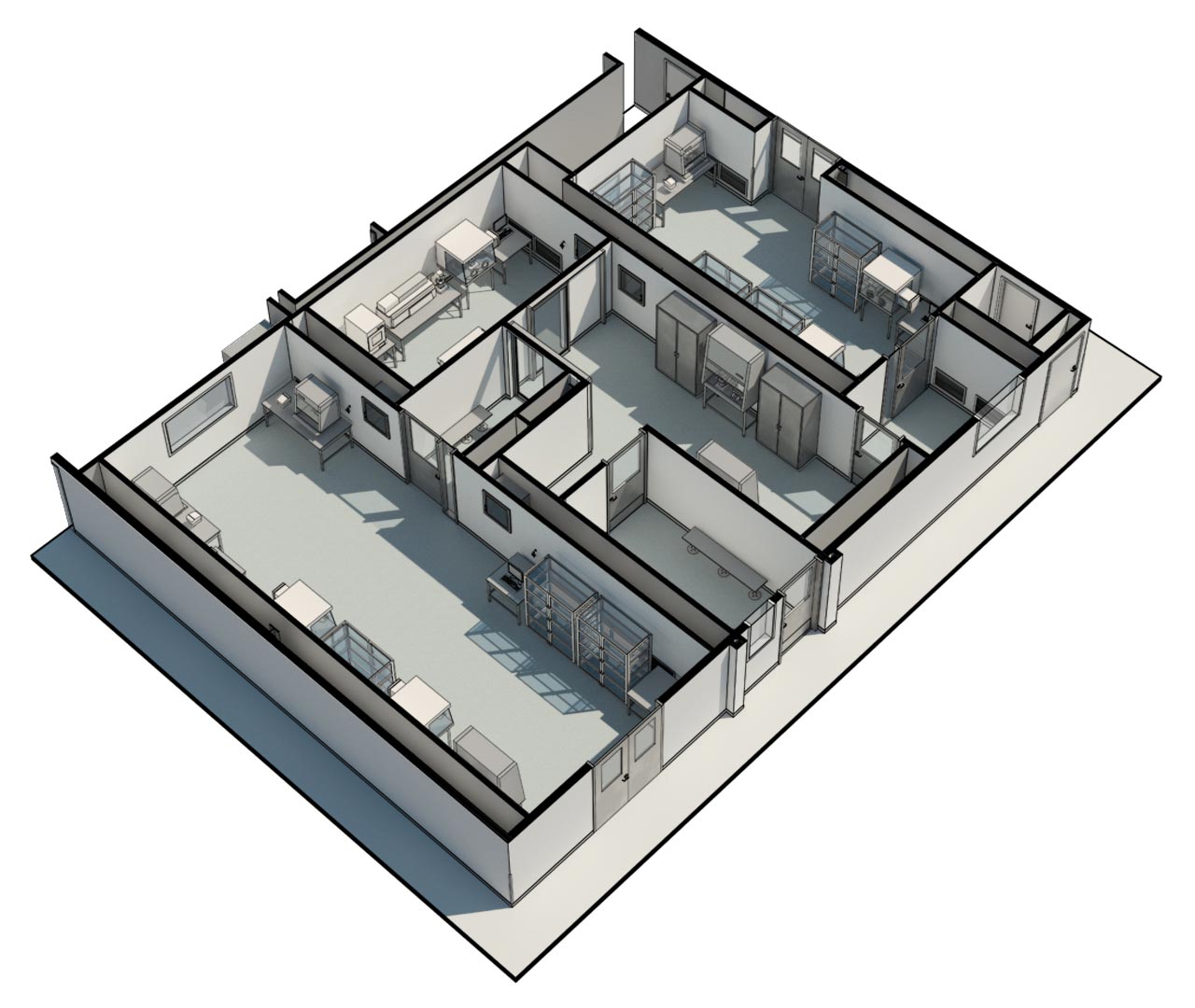
Keiko Nakamura-Messenger, a scientist and collection curator with NASA’s Astromaterials Research and Exploration Science Division (ARES), will oversee the care and safe handling of the U.S. portion of the Hayabusa2 sample. She and her colleagues will go to work inside a brand new lab in Houston built specifically for characterizing, documenting, storing, and preparing samples for study by ARES and other researchers.
The Hayabusa2 sample will become the seventh curated extraterrestrial collection humans have curated from beyond our planet, and serve as precursor for the important curation work that lies ahead in the new ARES lab when the Bennu samples arrive.
“When I was in college in Japan in the 1990s, my college adviser told me about how the only samples we had were from the Apollo missions, plus meteorites that landed on Earth or cosmic dust found floating in the stratosphere,” said Nakamura-Messenger. “Now, I’m going to be one of the first people to touch this new astromaterial. It’s a great honor to see the sample before virtually anyone else can.”
Joining Nakamura-Messenger in the work are fellow ARES researchers Christopher Snead, Ann Nguyen, and Mike Zolensky.
“It’s exciting that this will be the first asteroid sample of its kind in-house,” said Snead. “To get ready, we’re finishing a new lab, as well as installing and configuring special equipment in order to work with samples that we expect will be made up of small particles and very, very tricky to handle.”
Bringing Ryugu Home
The Hayabusa2 mission launched in December 2014 on a six-year voyage to study the asteroid Ryugu and collect samples to bring back to Earth for analysis.
The mission is similar in nature to NASA’s OSIRIS-REx flight to asteroid Bennu. OSIRIS-REx successfully collected a large sample from Bennu in November and will return it in 2023. Both missions aim to explore what are known as carbonaceous asteroids, which are thought to be the rocky building blocks of the early solar system and could hold the keys to understanding how it formed and how life later emerged.
NASA and JAXA forged an agreement to share samples from each mission in order to give scientists everywhere as much material as possible to closely study and compare. The plan also means the OSIRIS-REx mission team will certainly benefit from any early discoveries or lessons learned from the Hayabusa2 mission.
The Hayabusa2 spacecraft arrived at the asteroid in June 2018. There, the spacecraft deployed rovers and landers onto Ryugu’s surface, and collected a sample from near the surface of the asteroid.
Almost two years later, Hayabusa2 is bringing the asteroid sample to Earth. On December 6, the spacecraft will swing by Earth to drop a landing capsule containing the asteroid sample. The capsule made a fiery entry through our planet’s atmosphere and parachute to a soft landing inside the Woomera Range Complex in the South Australian outback. A JAXA recovery team retrieved the capsule, and then took it to a nearby portable lab to inspect and secure it for travel back to Japan. In Japan, the researchers will perform an initial study of the sample and prepare a portion of it to allocate to its science team and to NASA.
Nakamura-Messenger and Snead will personally travel to Japan in December 2021 to bring the NASA sample back to Johnson.
New Labs for Little Work
In Houston, the two scientists and their team will go to work inside the new lab. They hope the sample from JAXA will yield big discoveries despite its likely small size: probably just 10 milligrams of asteroid material. In contrast, the OSIRIS-REx spacecraft collected at least two ounces (60 grams) of the Bennu asteroid’s surface material.
Hayabusa2 researchers expect to see a mix of organic and water-bearing compounds and minerals that will give them a lot to investigate and understand. Snead is leading the effort to work with the individual bits of the sample, many of which will be microscopic and many times smaller than a human hair.
“Right now, we’re experimenting with how to work with small particles and mineral grains using bulky gloves reaching into sealed metal and glass boxes,” says Snead. “The boxes are filled with nitrogen to keep the samples from reacting with water and air, but that also means it’s very dry, and static electricity becomes an issue.”
Snead’s other important preparation work includes developing a joystick-operated device that uses miniature mechanical tools to pick up and work with the tiny asteroid particles.
Sharing with Others
In analyzing, describing, and cataloging the sample, the ARES team will be one of the first teams to study material from Ryugu. But their work also will enable other qualified scientists to conduct their own research.
ARES scientists and researchers from around the world will make requests to perform their own studies of the Ryugu sample for decades to come. When they do, Nakamura-Messenger and Snead will work with the researchers to expertly select, prepare, and deliver portions of the sample for their studies. Once the scientists are finished with the material, they’ll return it to Johnson, where ARES staff will maintain detailed records of where it went and what analyses were conducted with it before passing the material on again to more researchers.
For Nakamura-Messenger, Snead, and scientists around the world, the wait to study a sample of Ryugu firsthand is almost over. Soon, they’ll have the opportunity to personally study its structure and chemistry in ways once impossible. Let the discoveries begin!
Never miss a breakthrough: Join the SciTechDaily newsletter.
Follow us on Google and Google News.