

Close Menu
    Facebook X (Twitter) Instagram
    SciTechDaily
    • Biology
    • Chemistry
    • Earth
    • Health
    • Physics
    • Science
    • Space
    • Technology
    Facebook X (Twitter) Pinterest YouTube RSS
    SciTechDaily
    Home»Space»Japan Successfully Launches XRISM Space Telescope and SLIM Lunar Lander
    Space

    Japan Successfully Launches XRISM Space Telescope and SLIM Lunar Lander

    By JAXA (Japan Aerospace Exploration Agency)September 8, 2023No Comments3 Mins Read
    Facebook Twitter Pinterest Telegram LinkedIn WhatsApp Email Reddit
    Share
    Facebook Twitter LinkedIn Pinterest Telegram Email Reddit
    XRISM Launch
    Mitsubishi Heavy Industries, Ltd.(MHI) launched the H-IIA Launch Vehicle No. 47 (H-IIA F47) which carried XRISM and SLIM aboard at 8:42:11am, September 7, 2023. Credit: MHI

    The X-ray Imaging and Spectroscopy Mission (XRISM), and the Smart Lander for Investigating Moon (SLIM), were launched onboard the H-IIA Launch Vehicle No. 47 (H-IIA F47) at 8:42:11 am on September 7, 2023 (Japan Standard Time, JST) from the Tanegashima Space Center.

    The launch vehicle flew as planned, and it was confirmed that XRISM was successfully separated from the launch vehicle at about 14 minutes and 9 seconds after launch and SLIM at about 47 minutes and 33 seconds after launch.

    The X-ray Imaging and Spectroscopy Mission (XRISM) and the Smart Lander for Investigating Moon (SLIM) are significant missions from the Japanese space agency.

    X-Ray Imaging and Spectroscopy Mission (XRISM) in Space
    X-ray Imaging and Spectroscopy Mission (XRISM) in space conceptual Illustration. Credit: JAXA

    XRISM

    The XRISM mission is centered on studying X-ray emissions from celestial objects. Its primary objective is to better understand the structure and evolution of the universe by observing X-rays emanating from astronomical phenomena like black holes, neutron stars, and galaxy clusters. The name, XRISM, which stands for X-ray Imaging and Spectroscopy Mission, underscores its dual focus on both imaging and spectroscopy.

    XRISM aims to deliver groundbreaking insights in various scientific domains, including the evolution of the universe’s most expansive structures, the behavior of matter under intense gravitational forces, the spin of black holes, the inner architecture of neutron stars, and the intricate physics of particle jets.
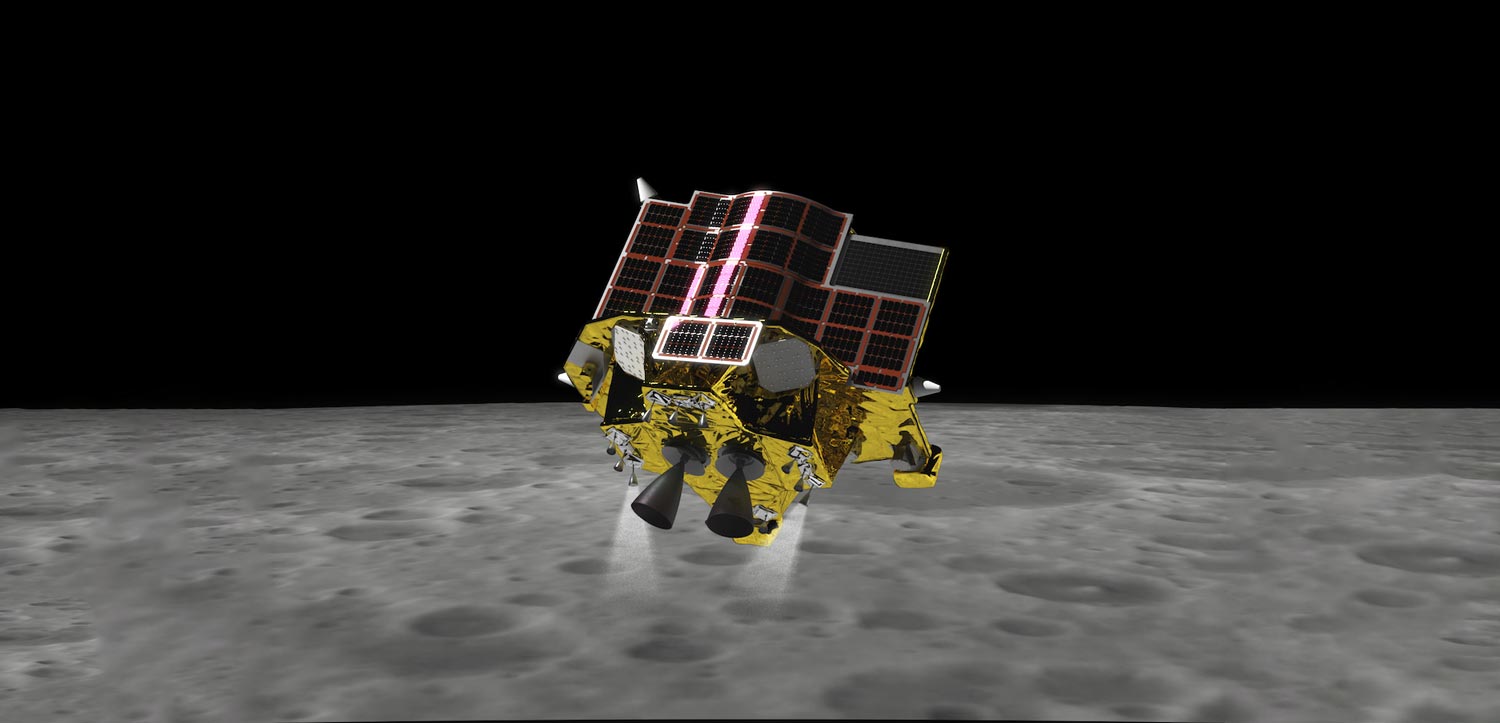
    Smart Lander for Investigating Moon (SLIM)
    SLIM (Smart Lander for Investigating Moon) aims to demonstrate “landing where it is desired to land,” pin-point landing technique and obstacle detection technique. Credit: JAXA

    SLIM

    As the name suggests, the Smart Lander for Investigating Moon aims to explore the Moon’s surface. SLIM’s primary goal is to demonstrate precision landing capabilities on the Moon. This would be a significant step forward from previous missions, which had broader landing areas. Achieving a high level of precision in lunar landings can pave the way for more targeted scientific investigations and the safe placement of future crewed and uncrewed landers in areas of interest.

    The mission incorporates advanced guidance, navigation, and control technologies. These technologies help the lander make real-time decisions during its descent, allowing it to avoid obstacles like boulders and craters.

    SLIM’s intended landing site is around the Procellarum KREEP Terrane region on the Moon. This area is of particular scientific interest due to the presence of specific types of lunar rocks that can offer insights into the Moon’s early volcanic activity and its overall geological history.

    SLIM is relatively compact compared to some other lunar landers, underscoring JAXA’s emphasis on “smart” and efficient design. Its smaller footprint can also be a model for future small-scale lunar exploration missions.

    Never miss a breakthrough: Join the SciTechDaily newsletter.
    Follow us on Google and Google News.

    JAXA Popular Rocket XRISM
    Share. Facebook Twitter Pinterest LinkedIn Email Reddit

    Related Articles

    Resolving the Cosmos: XRISM Unravels Astrophysical Mysteries With Just 36 Pixels

    XRISM Spacecraft Detects Iron Signatures in Nearby Active Galaxy

    X-Ray Vision to the Cosmos: JAXA, NASA XRISM Mission Ready for Liftoff!

    World’s First Gas Sample From Deep Space Returned With Asteroid Ryugu Material From Hayabusa2

    Asteroid Ryugu Sample Collected in Space and Delivered to Earth – Now NASA Astrobiologists Prepare to Probe It

    Australia-Bound Asteroid Sample From Japan’s Hayabusa2 Mission May Reveal Life’s Origins

    Venus’ Atmosphere Rotates Far Faster Than Its Surface Because of Thermal Tides

    See Last Stunning Snaps of Earth as Spacecraft Completes Flyby on Journey to Mercury

    ESA’s Vega Rocket Has Launched on Its Maiden Voyage, Carries 9 Satellites

    Leave A Reply Cancel Reply

    • Facebook
    • Twitter
    • Pinterest
    • YouTube

    Don't Miss a Discovery

    Subscribe for the Latest in Science & Tech!

    Trending News

    125-Million-Year-Old Crocodile Fossil Reveals Astonishing New Secrets

    Scientists Discover an “Impossible” Way Muscle Filaments Can Grow

    A Star’s Spin Could Solve a Longstanding Black Hole Mystery

    NASA Finds Earth Microbes Could Hide in the Moon’s Deep Shadows

    New Study: Intermittent Fasting Lowers Blood Sugar in Type 1 Diabetes

    Alzheimer’s Brain Changes May Begin 7 Years Earlier Than Scientists Thought

    This New Molecule Could Transform How We Recover Gold From Electronic Waste

    A Billion Years Before the Grand Canyon, a Giant Cliff May Have Stretched Across America

    Follow SciTechDaily
    • Facebook
    • Twitter
    • YouTube
    • Pinterest
    • Newsletter
    • RSS
    SciTech News
    • Biology News
    • Chemistry News
    • Earth News
    • Health News
    • Physics News
    • Science News
    • Space News
    • Technology News
    Recent Posts
    • How Insects Conquered Land Was Stranger Than Scientists Thought
    • A 250-Year-Old Heat Mystery Leads to a Surprising Discovery About Human Sweat
    • Thousands of Giant Whales Are Suddenly Flooding Into an Arctic “Feeding Frenzy”
    • AI Searched 150 Million Materials – and Found Two Promising Candidates for Future Electronics
    • A Major Quantum Computing Problem May Finally Have an Answer: Can We Trust the Results?
    Copyright © 1998 - 2026 SciTechDaily. All Rights Reserved.
    • Science News
    • About
    • Contact
    • Editorial Board
    • Privacy Policy
    • Terms of Use

    Type above and press Enter to search. Press Esc to cancel.