
Close Menu
    Facebook X (Twitter) Instagram
    SciTechDaily
    • Biology
    • Chemistry
    • Earth
    • Health
    • Physics
    • Science
    • Space
    • Technology
    Facebook X (Twitter) Pinterest YouTube RSS
    SciTechDaily
    Home»Space»Stellar Sextants: Charting the Course of Celestial Bodies
    Space

    Stellar Sextants: Charting the Course of Celestial Bodies

    By ESA/HubbleSeptember 10, 2023No Comments3 Mins Read
    Facebook Twitter Pinterest Telegram LinkedIn WhatsApp Email Reddit
    Share
    Facebook Twitter LinkedIn Pinterest Telegram Email Reddit
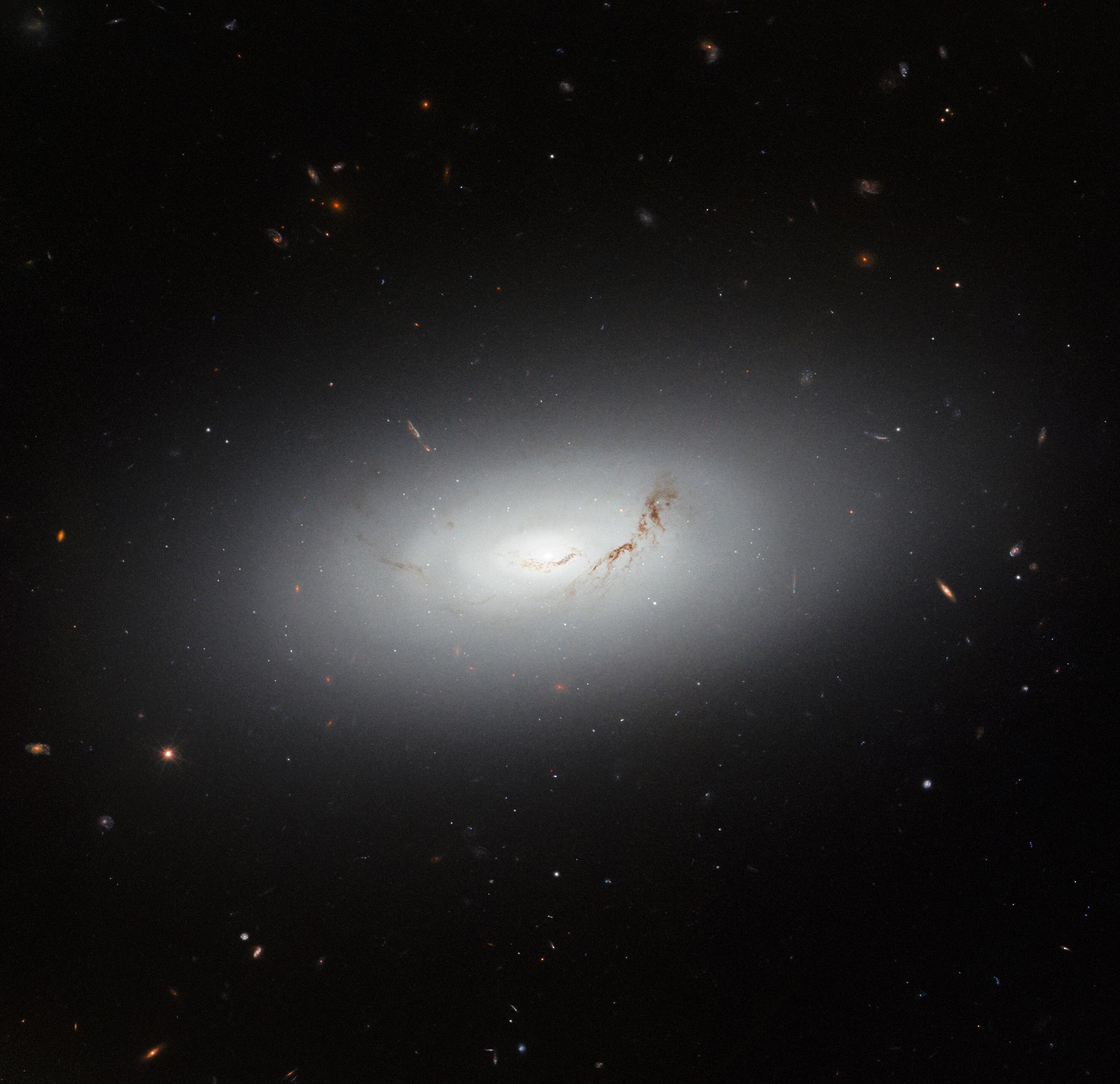
    Galaxy NGC 3156
    Galaxy NGC 3156 captured by the Hubble Space Telescope. Credit: ESA/Hubble & NASA, R. Sharples, S. Kaviraj, W. Keel

    This dream-like Hubble Space Telescope Picture of the Week features the galaxy known as NGC 3156. It is a lenticular galaxy, meaning that it falls somewhere between an elliptical and a spiral galaxy. It lies about 73 million light-years from Earth, in the minor equatorial constellation Sextans.

    The Historical Significance of Sextans

    Sextans is a small constellation that belongs to the Hercules family of constellations. It itself is a constellation with an astronomical theme, being named for the instrument known as the sextant. Sextants are often thought of as navigational instruments that were invented in the 18th century. However, the sextant as an astronomical tool has been around for much longer than that: Islamic scholars developed astronomical sextants many hundreds of years earlier in order to measure angles in the sky.

    Ulugh Beg Observatory in Samarkand, Uzbekistan

    The Ulugh Beg Observatory in Samarkand, Uzbekistan. Built by the Timurid astronomer Ulugh Beg. Credit: ESA

    A particularly striking example is the enormous sextant with a radius of 36 meters that was developed by Ulugh Beg of the Timurid dynasty in the fifteenth century, located in Samarkand in present-day Uzbekistan. These early sextants may have been a development of the quadrant, a measuring device proposed by Ptolemy. A sextant, as the name suggests, is shaped like one-sixth of a circle, approximately the shape of the constellation.

    Modern Astronomy and NGC 3156

    Sextants are no longer in use in modern astronomy, having been replaced by instruments that are capable of measuring the positions of stars and astronomical objects much more accurately and precisely. NGC 3156 has been studied in many ways other than determining its precise position — from its cohort of globular clusters, to its relatively recent star formation, to the stars that are being destroyed by the supermassive black hole at its center.
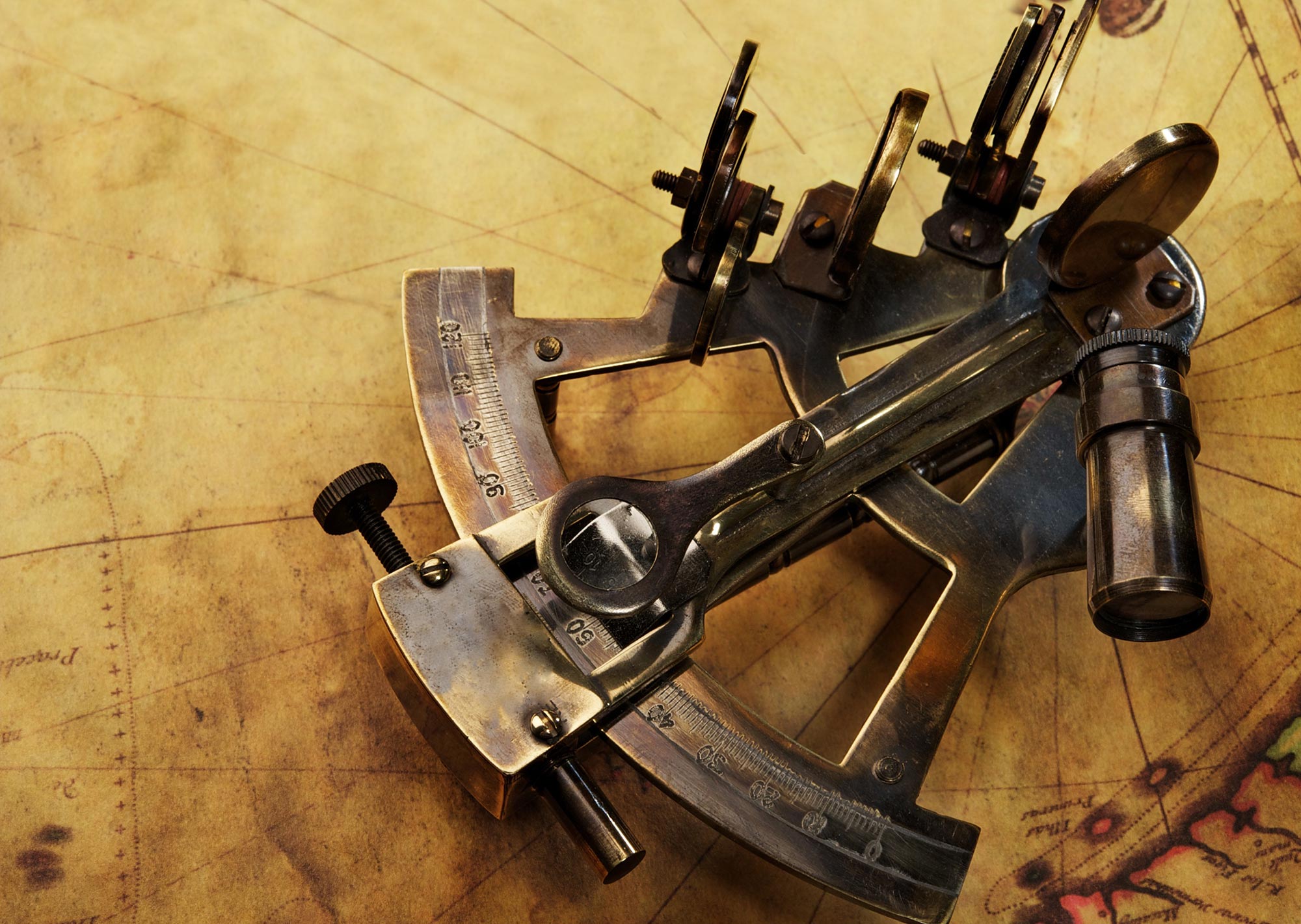
    Sextant Navigational Tool
    A sextant is a navigational instrument used to measure the angle between a celestial object and the horizon, aiding in determining one’s latitude during marine and aerial navigation.

    More About Sextants

    A sextant is a navigational instrument used primarily to measure the angle between a celestial object and the horizon, aiding in marine and aerial navigation. This precision tool, which is shaped like one-sixth of a circle, utilizes a small telescope and reflective mirrors. By observing the altitude of stars, the sun, or the moon, mariners and aviators can determine their latitude, and sometimes their longitude, with respect to the Earth’s surface. Historically, the sextant has been instrumental for explorers and navigators, enabling them to chart their courses accurately over vast, unmarked expanses of ocean or air.

    Never miss a breakthrough: Join the SciTechDaily newsletter.
    Follow us on Google and Google News.

    Astronomy European Space Agency Hubble Space Telescope
    Share. Facebook Twitter Pinterest LinkedIn Email Reddit

    Related Articles

    A Diamond Necklace of Cosmic Proportions

    Hubble Snaps a Stunning Close-Up of a Magnificent Spiral Galaxy

    Extraordinary Hubble Image: Light Bends From the Beyond

    Hubble Space Telescope Sees Volcanic Activity Reforming the Atmosphere on a Rocky Exoplanet

    Hubble Spies a Luminous Heart With Dark Tendrils

    Spectacular Return to the Veil Nebula

    Hubble Spots a Peculiar Sight: Unusual Spiral Galaxy With a Heavy Arm

    A Flash of Life: Hubble Spies an Unusual Planetary Nebula

    Through the Cosmic Clouds: Hubble Spots a Beautiful Stellar Nursery

    Leave A Reply Cancel Reply

    • Facebook
    • Twitter
    • Pinterest
    • YouTube

    Don't Miss a Discovery

    Subscribe for the Latest in Science & Tech!

    Trending News

    JWST Finds a “Star” 100 Billion Times Brighter Than Any Star Should Be

    Scientists Find a Hidden Biological Link Across Different Forms of Autism

    Astronomers Discover a Ghostly River of Stars That Could Reveal Dark Matter

    Why Is Colorectal Cancer Rising in People Under 50? New Clues Point to the Environment

    Quantum Fluctuations Break a Crystal’s Symmetry Rules

    Why Does an Irregular Heartbeat Strike 40 Years Early in Some People?

    Scientists Reveal How ADHD Could Fuel Creative Thinking

    Scientists Find Just 3 Minutes of Sprinting Can Transform Blood Chemistry

    Follow SciTechDaily
    • Facebook
    • Twitter
    • YouTube
    • Pinterest
    • Newsletter
    • RSS
    SciTech News
    • Biology News
    • Chemistry News
    • Earth News
    • Health News
    • Physics News
    • Science News
    • Space News
    • Technology News
    Recent Posts
    • A 150-Million-Year-Old Dinosaur Flight Mystery May Finally Have an Answer
    • Giant Crocodylians Ruled South America’s Ancient Food Chain
    • 236-Million-Year-Old Fossil Reveals a Stunning Secret About the Origins of Mammal Birth
    • This Suitcase-Sized Spacecraft Could Detect a Signal From Before Stars Existed
    • Three Supermassive Black Holes Found in a Galaxy From the Dawn of the Universe
    Copyright © 1998 - 2026 SciTechDaily. All Rights Reserved.
    • Science News
    • About
    • Contact
    • Editorial Board
    • Privacy Policy
    • Terms of Use

    Type above and press Enter to search. Press Esc to cancel.