
Close Menu
    Facebook X (Twitter) Instagram
    SciTechDaily
    • Biology
    • Chemistry
    • Earth
    • Health
    • Physics
    • Science
    • Space
    • Technology
    Facebook X (Twitter) Pinterest YouTube RSS
    SciTechDaily
    Home»Space»This Week @NASA: A Journey to a Metal World, Simulated Mars Mission, Anniversary Celebration
    Space

    This Week @NASA: A Journey to a Metal World, Simulated Mars Mission, Anniversary Celebration

    By NASAOctober 8, 2023No Comments3 Mins Read
    Facebook Twitter Pinterest Telegram LinkedIn WhatsApp Email Reddit
    Share
    Facebook Twitter LinkedIn Pinterest Telegram Email Reddit
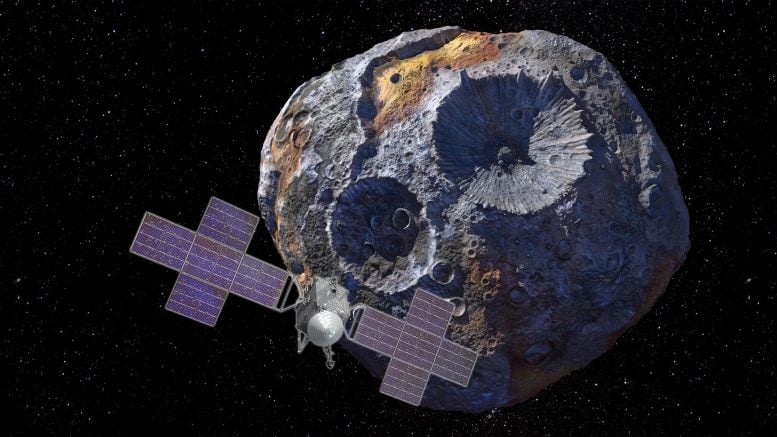
    Psyche Spacecraft Asteroid Composite
    NASA’s Psyche mission to a distant metal asteroid will carry a revolutionary Deep Space Optical Communications (DSOC) package. Credit: NASA/JPL-Caltech/ASU

    Preparing to journey to a metal world…

    A milestone for a simulated Mars mission…

    And celebrating an anniversary for NASA…

    A few of the stories to tell you about – This Week at NASA!

    Preparing to Journey to a Metal World

    NASA targeting no earlier than October 12 for the launch of the Psyche spacecraft on a 2.2-billion-mile journey to study a metal-rich asteroid of the same name. The Psyche asteroid lies in the outer portion of the main asteroid belt between Mars and Jupiter, and may be able to tell us more about the formation of rocky planets like Earth.

    This is NASA’s first mission to study an asteroid that has more metal than rock or ice.
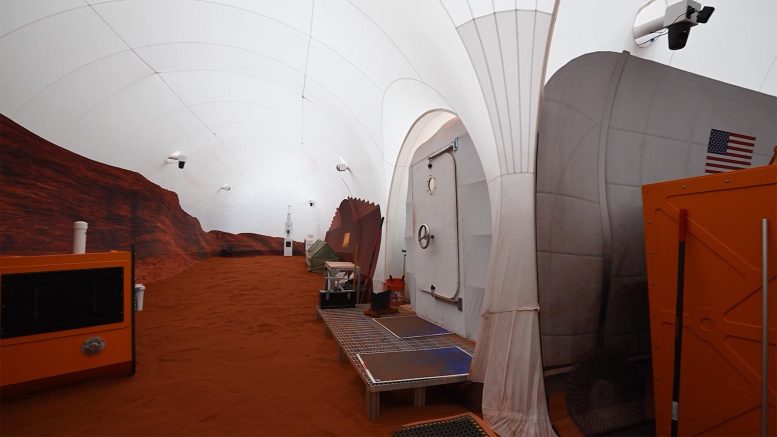
    CHAPEA (Crew Health and Performance Exploration Analog) Habitat
    NASA’s simulated Mars habitat includes a 1,200-square-foot sandbox with red sand to simulate the Martian landscape. The area will be used to conduct simulated spacewalks or “Marswalks” during the analog missions. Credit: NASA

    Yearlong Simulated Mars Mission Reaches 100 Days

    The four-person volunteer crew of NASA’s first yearlong CHAPEA Mars analog mission recently spent its 100th day inside the mission’s 1,700-square-foot habitat at NASA’s Johnson Space Center. The crew is simulating activities astronauts will do during future human missions on Mars.

    Lessons learned through Artemis missions on and around the Moon along with simulated missions, like CHAPEA, will help us prepare to send astronauts to Mars.
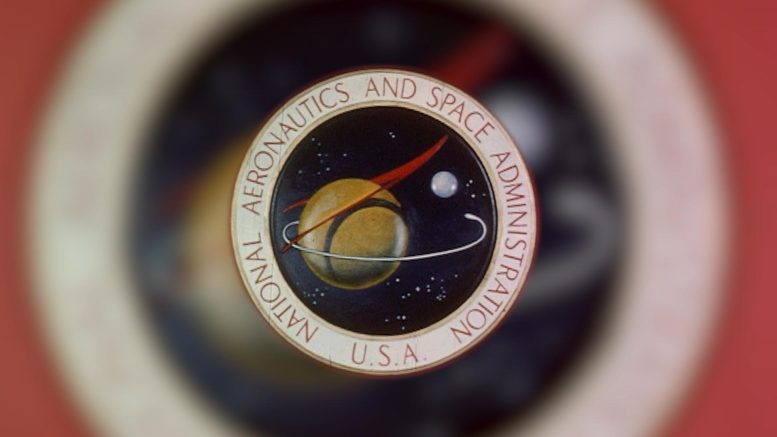
    National Aeronautics and Space Administration (NASA) Old Logo
    On October 1, 1958, the National Aeronautics and Space Administration (NASA) officially began operations. President Dwight D. Eisenhower signed into law the National Aeronautics and Space Act the previous July, creating NASA to lead America’s civilian space program in response to Soviet advances in space exploration. Credit: NASA

    October 1, 1958: NASA Begins Operations

    October 1 marked the 65th anniversary of NASA officially opening for business. The agency was created to lead America’s civilian space program in response to Soviet advances in space exploration.

    It also incorporated elements of its predecessor – the National Advisory Committee for Aeronautics, which had been founded to advance aeronautics research.

    Within days of opening, NASA began work on America’s first human spaceflight program.
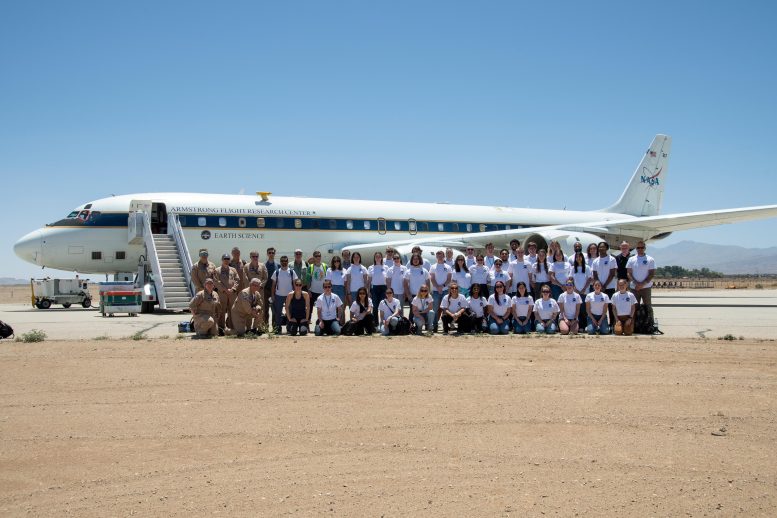
    NASA Student Airborne Research Program (SARP)
    A group of university students and mentors flew aboard NASA Armstrong Flight Research Center’s DC-8 aircraft to study air quality as part of NASA’s Student Airborne Research Program (SARP). Based at NASA’s Armstrong Building 703 in Palmdale, California, the DC-8 flew over the Central Valley to measure pollution and monitor air quality on Tuesday, June 21, 2022. Credit: NASA

    NASA Student Airborne Research Program Celebrates 15 Years

    This summer, NASA’s Student Airborne Research Program, or SARP, celebrated its 15th anniversary.

    The summer internship program offers upper-level undergraduate students hands-on research experience as part of real science campaigns onboard NASA Airborne Science Program flying science laboratories – aircraft outfitted specifically for research projects.

    That’s what’s up this week @NASA.

    Never miss a breakthrough: Join the SciTechDaily newsletter.
    Follow us on Google and Google News.

    NASA
    Share. Facebook Twitter Pinterest LinkedIn Email Reddit

    Related Articles

    Scientists Stunned by New Organic Molecules Found on Mars

    Scientists Discover a New Meteor Shower From a Mysterious Crumbling Asteroid

    NASA Artemis II Splashdown and Astronaut Recovery Operation [Image Gallery]

    Splashdown! NASA Artemis II Returns From Record-Breaking Moon Mission

    NASA Artemis II Nears Dramatic Moon Flyby With Record-Breaking Moment Ahead

    A Fiery Finale: How NASA’s Artemis II Moon Mission Returns to Earth

    NASA Artemis II Skips Burn As Astronaut Captures Stunning View of Earth

    NASA’s Artemis II: Humans Just Left Earth Orbit for the First Time Since 1972

    Liftoff! NASA’s Artemis II Launch Sends Astronauts Around the Moon for First Time in 50 Years

    Leave A Reply Cancel Reply

    • Facebook
    • Twitter
    • Pinterest
    • YouTube

    Don't Miss a Discovery

    Subscribe for the Latest in Science & Tech!

    Trending News

    Common Laxative May Help Reverse Depression-Related Brain Fog

    Younger Generations Are Aging Faster – and It May Be Fueling a Surge in Cancer

    New Discovery Could Unlock Quantum Computers the Size of a Coin

    Shingles Vaccine Linked to 24% Lower Dementia Risk in Older Adults

    Scientists Found a Wordle Trick That Solves 99% of Puzzles

    A Hidden Galaxy Called Shadow Blaster May Explain One of Astronomy’s Biggest Mysteries

    These 3 Common Sleep Habits May Be Aging Your Brain Faster

    Rare Goblin Shark Spotted Alive in Its Natural Habitat for the First Time

    Follow SciTechDaily
    • Facebook
    • Twitter
    • YouTube
    • Pinterest
    • Newsletter
    • RSS
    SciTech News
    • Biology News
    • Chemistry News
    • Earth News
    • Health News
    • Physics News
    • Science News
    • Space News
    • Technology News
    Recent Posts
    • New Fossils Show the Arctic Was an Evolutionary Powerhouse During the Age of Dinosaurs
    • What Happened to Australasia’s Lost Crocodiles? New Research Reveals a Dramatic Extinction Story
    • 520-Million-Year-Old Fossils Solve One of Evolution’s Biggest Mysteries
    • This Extraordinary Desert Mouse Defies Aging – and It Could Change Human Longevity
    • A Simple Blood Test Can Reveal the True Age of Your Brain, Heart, and Other Organs
    Copyright © 1998 - 2026 SciTechDaily. All Rights Reserved.
    • Science News
    • About
    • Contact
    • Editorial Board
    • Privacy Policy
    • Terms of Use

    Type above and press Enter to search. Press Esc to cancel.