
Close Menu
    Facebook X (Twitter) Instagram
    SciTechDaily
    • Biology
    • Chemistry
    • Earth
    • Health
    • Physics
    • Science
    • Space
    • Technology
    Facebook X (Twitter) Pinterest YouTube RSS
    SciTechDaily
    Home»Space»NASA’s Dawn Spacecraft Views Ceres’ North Pole
    Space

    NASA’s Dawn Spacecraft Views Ceres’ North Pole

    By Elizabeth Landau, NASA's Jet Propulsion LaboratoryApril 17, 2015No Comments2 Mins Read
    Facebook Twitter Pinterest Telegram LinkedIn WhatsApp Email Reddit
    Share
    Facebook Twitter LinkedIn Pinterest Telegram Email Reddit
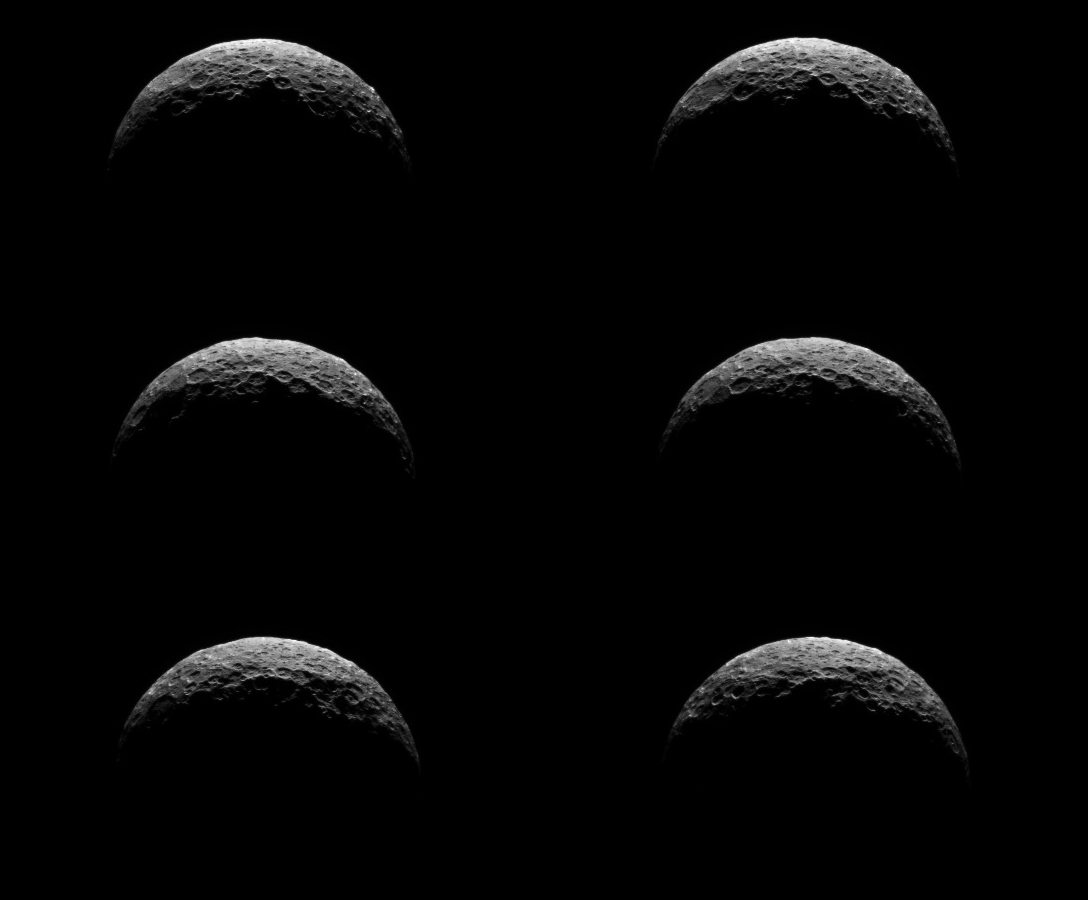
    Dawn Glimpses Ceres
    This animation shows the north pole of dwarf planet Ceres as seen by the Dawn spacecraft on April 10, 2015. Dawn was at a distance of 21,000 miles (33,000 kilometers) when its framing camera took these images. Credit: NASA/JPL-Caltech/UCLA/MPS/DLR/IDA

    NASA’s Dawn spacecraft has captured the highest-resolution views of Ceres to date.

    After spending more than a month in orbit on the dark side of dwarf planet Ceres, NASA’s Dawn spacecraft has captured several views of the sunlit north pole of this intriguing world. These images were taken on April 10 from a distance of 21,000 miles (33,000 kilometers), and they represent the highest-resolution views of Ceres to date.

    Subsequent images of Ceres will show surface features at increasingly better resolution.

    Dawn arrived at Ceres on March 6, marking the first time a spacecraft has orbited a dwarf planet. Previously, the spacecraft explored giant asteroid Vesta for 14 months from 2011 to 2012. Dawn has the distinction of being the only spacecraft to orbit two extraterrestrial targets.

    Ceres, with an average diameter of about 590 miles (950 kilometers), is the largest body in the main asteroid belt between Mars and Jupiter. Dawn has been using its ion propulsion system to maneuver to its first science orbit at Ceres, which it will reach on April 23. The spacecraft will remain at a distance of 8,400 miles (13,500 kilometers) from the dwarf planet until May 9. Afterward, it will make its way to lower orbits.

    Dawn’s mission is managed by NASA’s Jet Propulsion Laboratory, Pasadena, California, for NASA’s Science Mission Directorate in Washington. Dawn is a project of the directorate’s Discovery Program, managed by NASA’s Marshall Space Flight Center in Huntsville, Alabama. UCLA is responsible for overall Dawn mission science. Orbital ATK, Inc., in Dulles, Virginia, designed and built the spacecraft. The German Aerospace Center, the Max Planck Institute for Solar System Research, the Italian Space Agency and the Italian National Astrophysical Institute are international partners on the mission team.

    Never miss a breakthrough: Join the SciTechDaily newsletter.
    Follow us on Google and Google News.

    Astronomy Dawn Spacecraft Planetary Science Popular
    Share. Facebook Twitter Pinterest LinkedIn Email Reddit

    Related Articles

    What’s Creating Those Unusual Bright Spots on Ceres? Dawn Heads Toward Low-Altitude Mapping Orbit

    Dawn Spacecraft Reveals New Maps and Insights about Ceres

    New Up-Close View of the Bright Spots on Ceres

    NASA’s Dawn Reveals Topography of Dwarf Planet Ceres

    Ceres Spots Remain a Mystery in Latest Dawn Images

    New Color Map of Ceres Reveals Surface Diversity

    Dawn Spacecraft Shows Crater Shapes on Ceres’ Surface

    NASA’s Dawn Captures Sharper Images of Ceres

    NASA’s Dawn Mission Reveals Hydrated Minerals on Vesta

    Leave A Reply Cancel Reply

    • Facebook
    • Twitter
    • Pinterest
    • YouTube

    Don't Miss a Discovery

    Subscribe for the Latest in Science & Tech!

    Trending News

    This Copper Drug Clears Alzheimer’s Brain Toxins and Boosts Memory

    Adults Over 65 Lost Massive Amounts of Weight With Ozempic

    How Flocking Birds “Defy” One of Physics’ Most Fundamental Laws

    Physicists Create a New Kind of Schrödinger’s Cat State From Exotic Quantum Building Blocks

    Your Diet Could Be Missing the Key Ingredient for Heart Protection

    Researchers Warn Widely Prescribed Blood Pressure Drugs Could Be Harming Diabetic Kidneys

    James Webb Spots Something Strange Between Day and Night on an Alien Planet

    How Ancient People Moved a 6-Ton Stone 700 Kilometers to Stonehenge

    Follow SciTechDaily
    • Facebook
    • Twitter
    • YouTube
    • Pinterest
    • Newsletter
    • RSS
    SciTech News
    • Biology News
    • Chemistry News
    • Earth News
    • Health News
    • Physics News
    • Science News
    • Space News
    • Technology News
    Recent Posts
    • Scientists Uncover Cause of Inflammatory Bowel Disease Solving Decades-Old Mystery
    • The Surprising Reason Swimming Could Be Better for Your Heart Than Running
    • Could Vitamin C Be the Secret to Keeping Your Brain Younger?
    • The Surprising Fix for Robot Traffic Jams
    • Near Absolute Zero, This Transistor Starts Acting Like a Brain Cell
    Copyright © 1998 - 2026 SciTechDaily. All Rights Reserved.
    • Science News
    • About
    • Contact
    • Editorial Board
    • Privacy Policy
    • Terms of Use

    Type above and press Enter to search. Press Esc to cancel.