
Close Menu
    Facebook X (Twitter) Instagram
    SciTechDaily
    • Biology
    • Chemistry
    • Earth
    • Health
    • Physics
    • Science
    • Space
    • Technology
    Facebook X (Twitter) Pinterest YouTube RSS
    SciTechDaily
    Home»Space»Hubble’s Legacy: Unraveling the Spiral Wonders of the Universe
    Space

    Hubble’s Legacy: Unraveling the Spiral Wonders of the Universe

    By ESA/HubbleJuly 22, 2024No Comments2 Mins Read
    Facebook Twitter Pinterest Telegram LinkedIn WhatsApp Email Reddit
    Share
    Facebook Twitter LinkedIn Pinterest Telegram Email Reddit
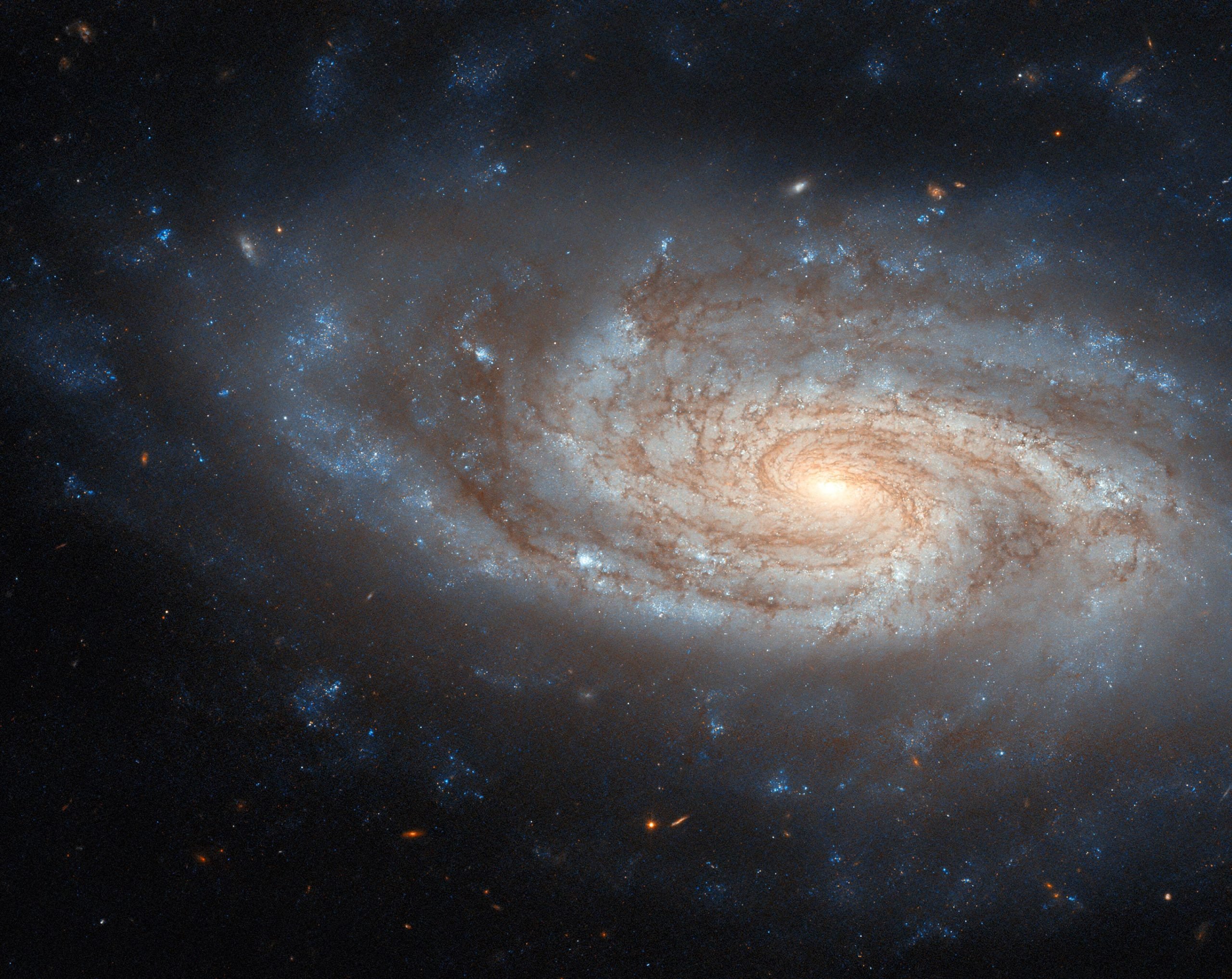
    Spiral Galaxy NGC 3430
    This Hubble Space Telescope image presents a detailed look at NGC 3430, a spiral galaxy located in the constellation Leo Minor, 100 million light-years away. Credit: ESA/Hubble & NASA, C. Kilpatrick

    NGC 3430, a spiral galaxy in Leo Minor, is spotlighted in this New Hubble Image

    In this stunning Hubble Space Telescope image, we are treated to a wonderfully detailed snapshot of NGC 3430. A spiral galaxy, it lies 100 million light-years from Earth in the constellation Leo Minor. Several other galaxies are located relatively near to this one, just out of frame. In fact, oone is close enough that gravitational interaction drives some star formation in NGC 3430.

    Hubble’s Galactic Classification

    That NGC 3430 is such a fine example of a galactic spiral may be why it ended up as part of the sample that Edwin Hubble used to define his classification of galaxies. Namesake of the Hubble Space Telescope, in 1926 he authored a paper that classified some four hundred galaxies by their appearance — as either spiral, barred spiral, lenticular, elliptical, or irregular. This straightforward typology proved immensely influential, and the modern, more detailed schemes that astronomers use today are still based on it. NGC 3430 itself is an SAc galaxy, a spiral lacking a central bar with open, clearly defined arms.

    Evolution of Galaxy Terminology

    At the time of Hubble’s paper, the study of galaxies in their own right was in its infancy. With the benefit of Henrietta Leavitt’s work on Cepheid variable stars, Hubble had only a couple of years before settled the debate about whether these ‘nebulae’, as they were called then, were situated within our galaxy or were distant and independent. He himself referred to ‘extragalactic nebulae’ in his paper, indicating that they lay beyond the Milky Way galaxy. Once it became clear that these distant objects were very different from actual nebulae, the favored term for a while was the quite poetic ‘island universe’. While NGC 3430 may look as if it still deserves this moniker, today we simply call it and the objects like it a ‘galaxy’.

    Never miss a breakthrough: Join the SciTechDaily newsletter.
    Follow us on Google and Google News.

    Astronomy European Space Agency Hubble Space Telescope
    Share. Facebook Twitter Pinterest LinkedIn Email Reddit

    Related Articles

    A Diamond Necklace of Cosmic Proportions

    Hubble Snaps a Stunning Close-Up of a Magnificent Spiral Galaxy

    Extraordinary Hubble Image: Light Bends From the Beyond

    Hubble Space Telescope Sees Volcanic Activity Reforming the Atmosphere on a Rocky Exoplanet

    Hubble Spies a Luminous Heart With Dark Tendrils

    Spectacular Return to the Veil Nebula

    Hubble Spots a Peculiar Sight: Unusual Spiral Galaxy With a Heavy Arm

    A Flash of Life: Hubble Spies an Unusual Planetary Nebula

    Through the Cosmic Clouds: Hubble Spots a Beautiful Stellar Nursery

    Leave A Reply Cancel Reply

    • Facebook
    • Twitter
    • Pinterest
    • YouTube

    Don't Miss a Discovery

    Subscribe for the Latest in Science & Tech!

    Trending News

    Popular GLP-1 Weight-Loss Drugs Linked to 30% Lower Breast Cancer Risk

    A Deadly Fungus Has Found the Perfect Hiding Place: Human Hair Follicles

    Ancient Neanderthal DNA May Give Some People More Muscle

    How a Low-Fat Vegan Diet Helped People Lose Weight Without Counting Calories

    MIT Physicists Zapped a Quantum Crystal With Lasers – and Discovered Something Surprising

    Mushroom Mystery: The Fungus That Makes People See Tiny Humans

    Popular Erectile Dysfunction Drug Linked to Vision-Threatening Eye Disease

    Scientists Find a Smarter Way To Turn Used Coffee Grounds Into Clean Fuel

    Follow SciTechDaily
    • Facebook
    • Twitter
    • YouTube
    • Pinterest
    • Newsletter
    • RSS
    SciTech News
    • Biology News
    • Chemistry News
    • Earth News
    • Health News
    • Physics News
    • Science News
    • Space News
    • Technology News
    Recent Posts
    • Scientists Steer Infrared Light Through an “Invisible” Waveguide
    • Electrons Mysteriously Slow to a Crawl Inside This Magnetic Material
    • “Entirely Surprising” – Scientists Have Found a Martian Meteorite Unlike Any Known Before
    • Cancer Stem Cells Have an “Energy Addiction” – and Scientists Found a Way To Exploit It
    • Scientists Say This Simple Habit Could Lead to a Happier Marriage
    Copyright © 1998 - 2026 SciTechDaily. All Rights Reserved.
    • Science News
    • About
    • Contact
    • Editorial Board
    • Privacy Policy
    • Terms of Use

    Type above and press Enter to search. Press Esc to cancel.