
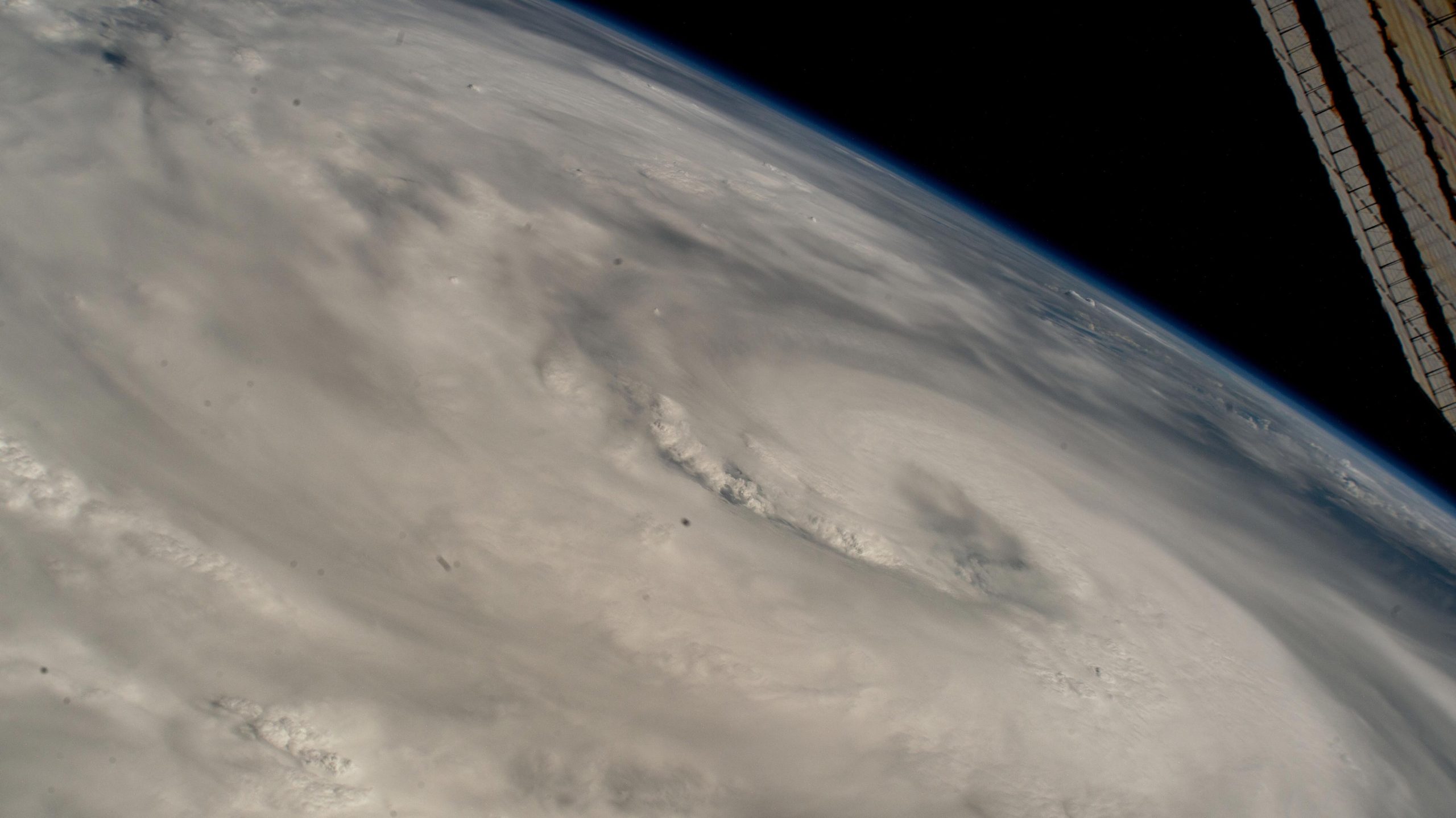
On September 26, 2024, NASA observed atmospheric gravity waves generated by Hurricane Helene over Florida.
This data, captured by the AWE instrument aboard the ISS, helps explain the terrestrial impact on space weather, affecting modern technological systems.
Hurricane Helene’s Impact and NASA’s Atmospheric Research
On September 26, 2024, Hurricane Helene struck Florida’s Gulf Coast, bringing powerful storm surges and impacting many coastal communities. Simultaneously, NASA’s Atmospheric Waves Experiment (AWE) recorded massive atmospheric disturbances created by the hurricane roughly 55 miles above Earth. This data is vital to NASA’s research on how weather on Earth affects conditions in space, with implications for the stability of satellites, communication systems, and other technology.
These massive disturbances through the upper atmosphere, called atmospheric gravity waves, appear in AWE’s images as colorful, concentric bands—highlighted in red, yellow, and blue—radiating out from northern Florida.
This video shows images taken by AWE as the International Space Station traveled over the southeastern United States on September 26, 2024. The curved bands extending to the northwest of Florida, artificially colored red, yellow, and blue, show changes in brightness (or radiance) in a wavelength of infrared light produced by airglow in Earth’s mesosphere and reveal the gravity waves produced by Hurricane Helene. The dots on the continent mark the locations of cities. Credit: Utah State University
Insights From AWE’s High-Altitude Observations
“Like rings of water spreading from a drop in a pond, circular waves from Helene are seen billowing westward from Florida’s northwest coast,” said Ludger Scherliess, who is the AWE principal investigator at Utah State University in Logan.
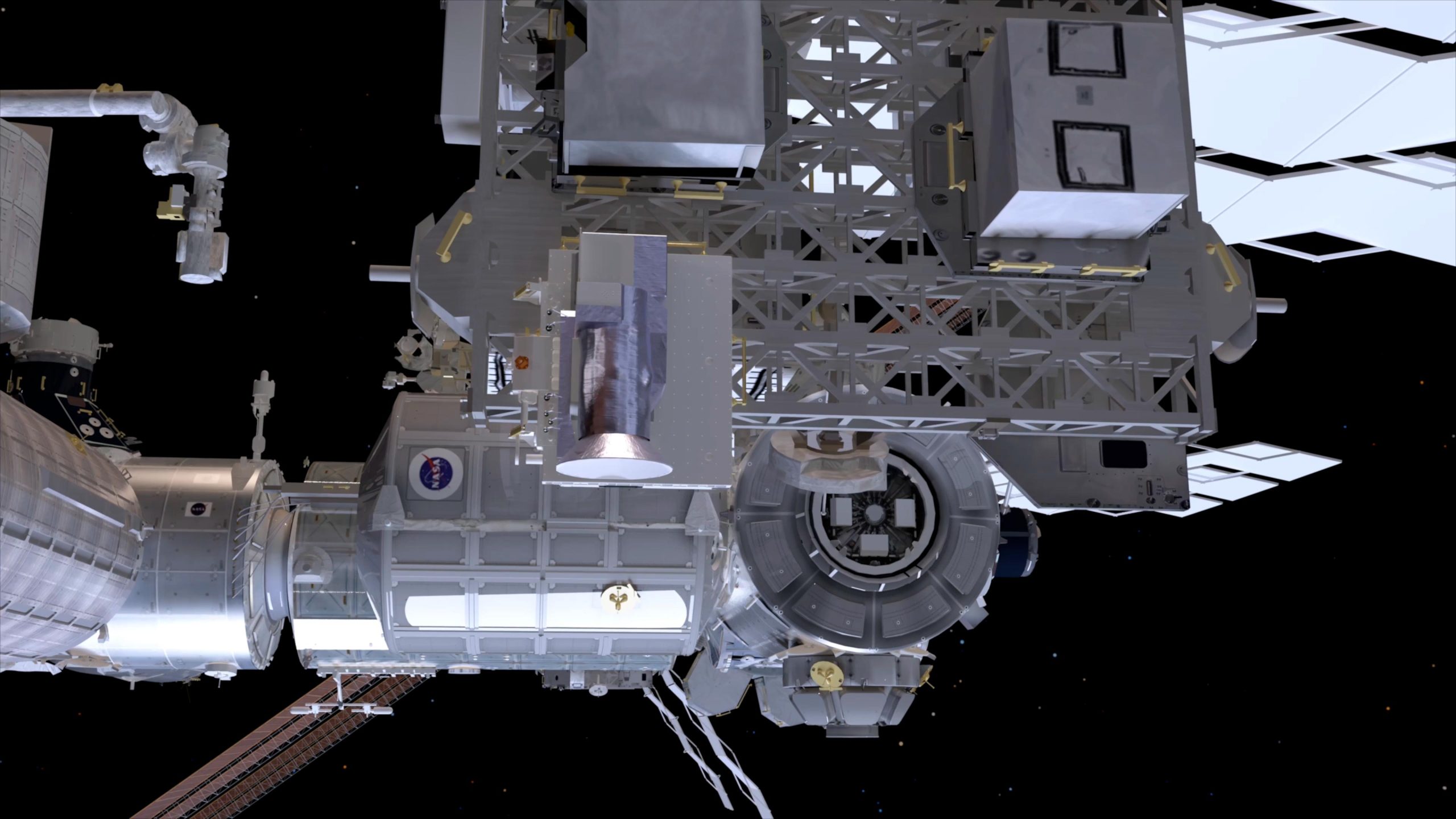
Launched in November 2023 and mounted on the outside of the International Space Station (ISS), the AWE instrument looks down at Earth, scanning for atmospheric gravity waves, ripple-like patterns in the air generated by atmospheric disturbances such as violent thunderstorms, tornadoes, tsunamis, wind bursts over mountain ranges, and hurricanes. It does this by looking for brightness fluctuations in colorful bands of light called airglow in Earth’s mesosphere. AWE’s study of these gravity waves created by terrestrial weather helps NASA pinpoint how they affect space weather.
These views of gravity waves from Hurricane Helene are among the first publicly released images from AWE, confirming that the instrument has the sensitivity to reveal the impacts hurricanes have on Earth’s upper atmosphere.
Atmospheric Gravity Waves vs. Gravitational Waves
Note that atmospheric gravity waves and gravitational waves are two very different phenomena, though they share similar-sounding names and both involve “waves.”
- Atmospheric Gravity Waves occur in Earth’s atmosphere and are generated when air is disturbed by events like storms, hurricanes, or terrain features (such as mountains). These waves propagate through the atmosphere, creating ripple effects as gravity works to restore balance, causing air to oscillate in wave-like patterns. They are part of meteorological and atmospheric studies because they influence weather patterns, air flow, and even space weather interactions within Earth’s upper atmosphere.
- Gravitational Waves, on the other hand, are ripples in space-time itself, predicted by Einstein’s theory of general relativity and first directly detected in 2015. They are produced by massive cosmic events, such as black holes merging or neutron stars colliding, and propagate across the universe at the speed of light. Unlike atmospheric gravity waves, gravitational waves are not related to Earth’s atmosphere but are fundamental distortions in the fabric of space-time and are studied within the field of astrophysics.
In essence, atmospheric gravity waves are disturbances within the Earth’s atmosphere, while gravitational waves are ripples in space-time that can traverse the entire universe.
Never miss a breakthrough: Join the SciTechDaily newsletter.
Follow us on Google and Google News.
1 Comment
Amazing data accumulation accomplishment. It will be interesting to hear how this info enhances our collective awareness.