
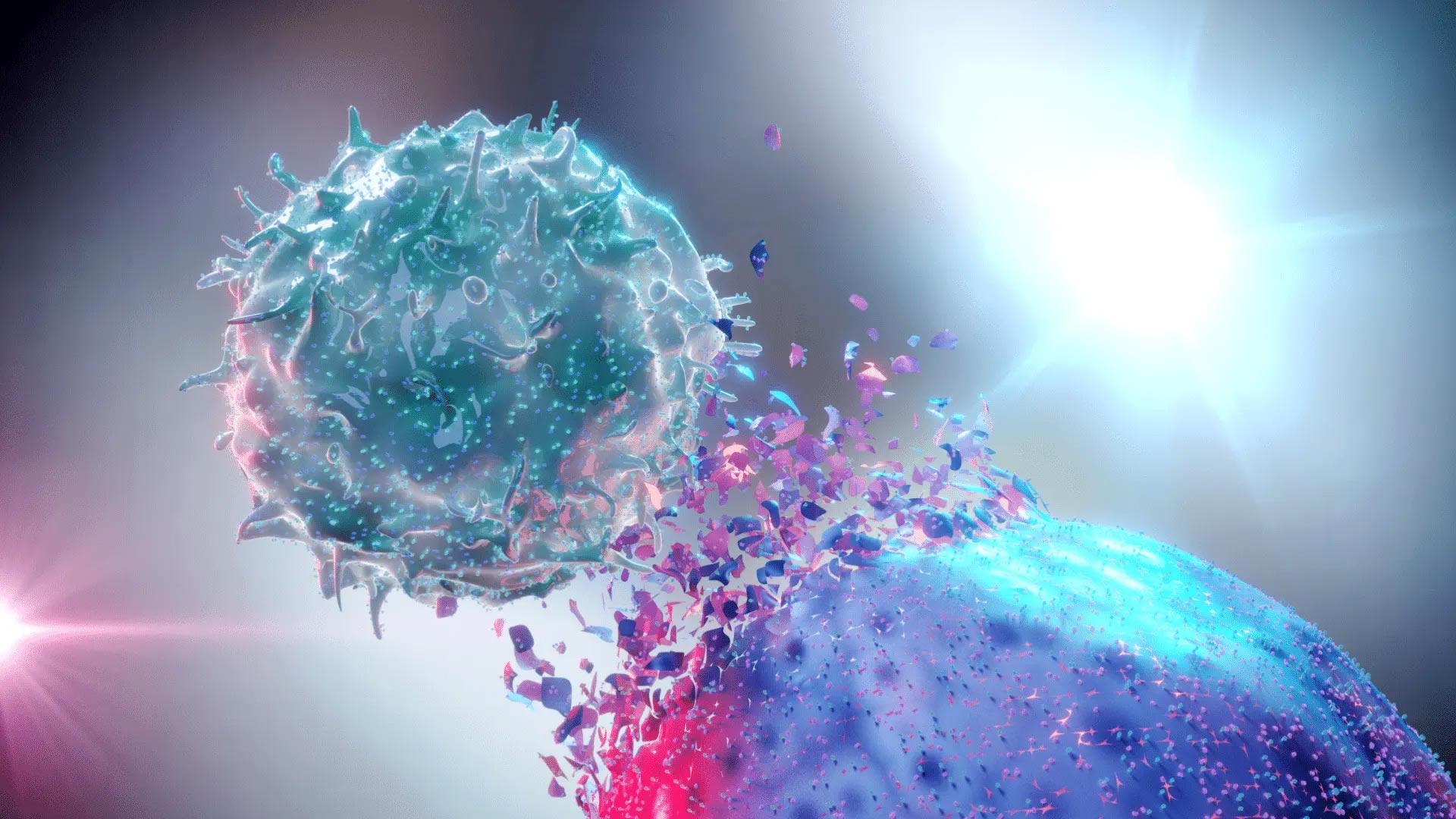
The bidirectional research examines both laboratory findings and human clinical trial data, revealing that the medicinal use of white button mushrooms reduces the type of cells that suppress the immune system and facilitate the spread of prostate cancer.
Researchers at City of Hope, one of the largest and most advanced cancer research and treatment organizations in the United States—ranked among the nation’s top five cancer centers by U.S. News & World Report and a national leader in providing cancer patients with best-in-class, integrated supportive care programs—have now uncovered why taking an investigational white button mushroom supplement shows promise in slowing and even preventing the spread of prostate cancer. This discovery comes from a phase 2 clinical trial exploring the concept of “food as medicine.”
Looking at preclinical and preliminary human data, the City of Hope scientists found that taking white button mushroom pills reduces a class of immune cells called myeloid-derived suppressor cells (MDSCs), which has been linked to cancer development and spread.
Exploring the Potential of Plant-Derived Therapies
“City of Hope researchers are investigating foods like white button mushroom, grape seed extract, pomegranate, blueberries, and ripe purple berries called Jamun for their potential medicinal properties. We’re finding that plant-derived substances may one day be used to support traditional cancer treatment and prevention practices,” said Shiuan Chen, Ph.D., the Lester M. and Irene C. Finkelstein Chair in Biology, professor and chair of the Department of Cancer Biology and Molecular Medicine at Beckman Research Institute of City of Hope, and senior author of the new Clinical and Translational Medicine study.
“This study suggests that ‘food as medicine’ treatments could eventually become normal, evidence-based cancer care that is recommended for everyone touched by cancer.”

The use of naturally derived therapies for cancer treatment — called integrative oncology — is growing in popularity as people become more health-conscious and aware of the benefits of whole-person cancer care. Supported by a $100 million gift from Panda Express Co-CEOs Andrew and Peggy Cherng, City of Hope’s Cherng Family Center for Integrative Oncology is accelerating the research, education, and clinical care needed to ensure cancer patients and their doctors have access to safe, proven approaches.
Translating Lab Discoveries Into Clinical Care
At City of Hope, lab researchers work closely with physicians, allowing for streamlined bidirectional research so that laboratory findings can be taken to patients and what is observed in patients can be taken and put back under the microscope for the development of expedited, more effective cancer treatments.
In mouse models, researchers found that administration of white button mushroom extract significantly delayed the growth of tumors and extended the survival of mice. It also improved T cell immune response through the reduction of MDSC levels in animal models, meaning it improved the immune system’s ability to kill cancer.
The researchers profiled blood draws from some of the men participating in City of Hope’s phase 2 clinical trial. The men were under active surveillance as they took white button mushroom supplements. Focusing on eight participants’ samples before and after three months of white button mushroom treatment, the scientists found that there were less tumor-creating MDSCs and more anti-tumor T and natural killer cells, suggesting white button mushroom rebuilds anti-cancer immune defense and slows cancer growth.
“Our study emphasizes the importance of seeking professional guidance to ensure safety and to avoid self-prescribing supplements without consulting a health care provider,” said Xiaoqiang Wang, M.D., Ph.D., City of Hope staff scientist and first author of the study. “Some people are buying mushroom products or extract online, but these are not FDA-approved. While our research has promising early results, the study is ongoing. That said, it couldn’t hurt if people wanted to add more fresh white button mushrooms to their everyday diet.”
People interested in joining the National Cancer Institute-funded phase 2 clinical trial should visit https://www.cityofhope.org/research/clinical-trials. City of Hope researchers are now focusing on whether the reduction in MDSCs is associated with improved clinical outcomes in patients with prostate cancer.
Reference: “Reduction of myeloid-derived suppressor cells in prostate cancer murine models and patients following white button mushroom treatment” by Xiaoqiang Wang, Shoubao Ma, Przemyslaw Twardowski, Clayton Lau, Yin S. Chan, Kelly Wong, Sai Xiao, Jinhui Wang, Xiwei Wu, Paul Frankel, Timothy G. Wilson, Timothy W Synold, Cary Presant, Tanya Dorff, Jianhua Yu, David Sadava and Shiuan Chen, 10 October 2024, Clinical and Translational Medicine.
DOI: 10.1002/ctm2.70048
The study was supported by a National Institutes of Health grant for City of Hope Core Facilities (P30CA033572), a National Cancer Institute grant to Dr. Chen (CA227230) and a pilot study grant from the Panda Charitable Foundation.
Never miss a breakthrough: Join the SciTechDaily newsletter.
Follow us on Google and Google News.
2 Comments
Is this just a news release from City of Hype?
Please, SciTech Daily; what is a “cold” tumour and one which is “hot”. “Active” and “inactive’ are better words to work with.