
Close Menu
    Facebook X (Twitter) Instagram
    SciTechDaily
    • Biology
    • Chemistry
    • Earth
    • Health
    • Physics
    • Science
    • Space
    • Technology
    Facebook X (Twitter) Pinterest YouTube RSS
    SciTechDaily
    Home»Space»ESA’s Mars Express MARSIS Radar Explores Martian Oceans
    Space

    ESA’s Mars Express MARSIS Radar Explores Martian Oceans

    By SciTechDailyFebruary 7, 2012No Comments2 Mins Read
    Facebook Twitter Pinterest Telegram LinkedIn WhatsApp Email Reddit
    Share
    Facebook Twitter LinkedIn Pinterest Telegram Email Reddit
    marsis-esa-express
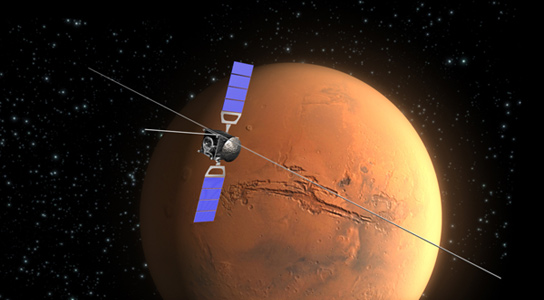
    The Mars Express from the European Space Agency has brought back strong evidence confirming the presence of oceans on Mars.

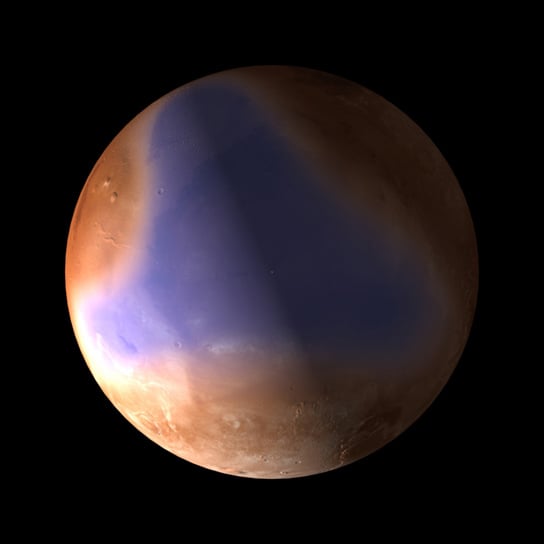
    The European Space Agency’s Mars Express has finally returned with some strong evidence of Martian oceans. Using its MARSIS radar, it detected sediments reminiscent of an ocean floor, within the boundaries of previously identified shorelines.

    The MARSIS radar was deployed in 2005 and has been collecting data since then. Jérémie Mouginot, from the Institut de Planétologie et d’Astrophysique de Grenoble (IPAG), and his colleagues have been analyzing the data for more than two years. They discovered that the northern plains are covered in low-density materials.
    mars-ocean-north-pole

    They think that these materials are sedimentary deposits, possibly rich in ice, which is a strong indication that there was once an ocean there. Martian oceans have been suspected for years, thanks to the shorelines that were identified by various spacecraft, but it has remained a somewhat controversial issue.

    One ocean might have existed around 4 billion years ago, when Mars was warmer and another one was possibly there 3 billion years ago, when the subsurface ice melted, possibly as a result of enhanced geothermal activity.

    MARSIS penetrates 60 to 80 meters (200 to 260 feet) into the planet’s surface, and even at this depth, they see evidence of sedimentary materials and ice. The sediments hare low-density granular materials that have been carried away by water.

    The later ocean would have been temporary, since within a million years or less, the water would have been either frozen or preserved underground. To find evidence of life, astrobiologists will have to look even further into Mars’ history when liquid water was around for more extended periods of time.

    Never miss a breakthrough: Join the SciTechDaily newsletter.
    Follow us on Google and Google News.

    Astrobiology Astronomy European Space Agency Mars Mars Express Oceanography Probe
    Share. Facebook Twitter Pinterest LinkedIn Email Reddit

    Related Articles

    Mars Express Spacecraft Has Discovered Liquid Water Ponds Buried Under the Martian Surface

    Mars Express Provides a Window to a Watery Past on Mars

    ESA’s Mars Express View Remnants of Mega-Flood on Mars

    Mars Express Image of the Rim of the Schiaparelli Crater

    ESA’s Mars Express Sheds New Light on the Red Planet’s Rare Aurora

    New Fly-Through Video of the Ancient Flood Plain Kasei Valles

    Mars Express Captures a Radar View of the Southern Highlands of Mars

    ESA’s Mars Express Captures New Images of Sulci Gordii

    Images From ESA’s Mars Express Reveals the Features of Ladon Basin

    Leave A Reply Cancel Reply

    • Facebook
    • Twitter
    • Pinterest
    • YouTube

    Don't Miss a Discovery

    Subscribe for the Latest in Science & Tech!

    Trending News

    Common Laxative May Help Reverse Depression-Related Brain Fog

    Younger Generations Are Aging Faster – and It May Be Fueling a Surge in Cancer

    New Discovery Could Unlock Quantum Computers the Size of a Coin

    Shingles Vaccine Linked to 24% Lower Dementia Risk in Older Adults

    Scientists Found a Wordle Trick That Solves 99% of Puzzles

    A Hidden Galaxy Called Shadow Blaster May Explain One of Astronomy’s Biggest Mysteries

    These 3 Common Sleep Habits May Be Aging Your Brain Faster

    Rare Goblin Shark Spotted Alive in Its Natural Habitat for the First Time

    Follow SciTechDaily
    • Facebook
    • Twitter
    • YouTube
    • Pinterest
    • Newsletter
    • RSS
    SciTech News
    • Biology News
    • Chemistry News
    • Earth News
    • Health News
    • Physics News
    • Science News
    • Space News
    • Technology News
    Recent Posts
    • This Extraordinary Desert Mouse Defies Aging – and It Could Change Human Longevity
    • A Simple Blood Test Can Reveal the True Age of Your Brain, Heart, and Other Organs
    • This Popular Workout Supplement May Give Cancer Immunotherapy a Big Boost
    • Scientists Built a Mars Rover That “Swims” Through Sand
    • This Strange New Magnet Could Transform Future Electronics
    Copyright © 1998 - 2026 SciTechDaily. All Rights Reserved.
    • Science News
    • About
    • Contact
    • Editorial Board
    • Privacy Policy
    • Terms of Use

    Type above and press Enter to search. Press Esc to cancel.