
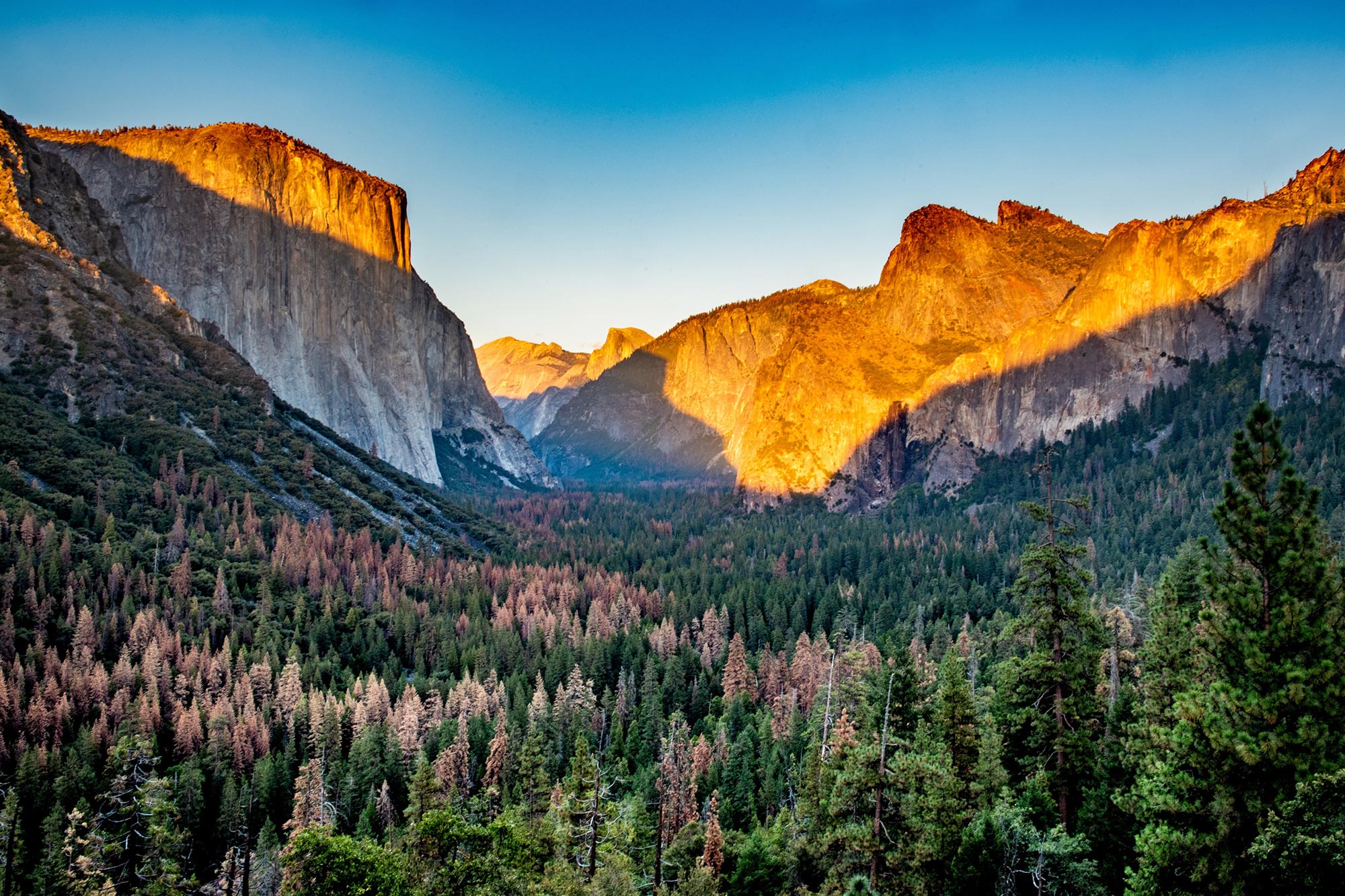
Conservation scientists are challenging the old-school mindset of preserving natural areas in a fixed, untouched state. Instead, they argue that embracing the natural ebb and flow of ecosystem, especially wildfire and other disturbances, is crucial to resilience in the face of climate change.
Suppressing natural forces has backfired, leading to worse outcomes like increased forest loss even in supposedly protected areas. The solution? Shifting focus toward dynamic conservation, guided by Indigenous practices like cultural burning, which have sustained ecosystems for generations.
Rethinking Conservation in Protected Areas
A new article in BioScience, the journal of the American Institute of Biological Sciences, challenges long-standing conservation approaches. The authors argue that protected areas, such as national parks and designated wilderness zones, should focus on maintaining natural landscape dynamics instead of trying to preserve fixed conditions or static features.
Dr. Gavin M. Jones of the USDA Forest Service and his colleagues suggest that many current conservation strategies actively suppress natural processes like wildfire. This resistance, they argue, leads to a “backfire effect” by increasing ecosystem vulnerability to climate change and other major disturbances.
“Under climatic change, resisting natural landscape dynamics will backfire and heighten vulnerability to ecosystem transformation through large-scale disturbance,” say the authors.
Unintended Consequences in Forest Management
The authors highlight an example from western U.S. forests, where efforts to protect mature and old-growth trees by preventing natural disturbances have, ironically, led to more severe habitat loss. In California, they note, mature forest habitats within protected spotted owl zones experienced greater losses from drought and wildfire between 2011 and 2020 than areas outside those zones, likely due to the breakdown of forest conditions that would normally be more resilient to fire and drought.
The proposed shift to protecting landscape dynamics will involve greater intentional human action and may, in the short term, generate conditions unseen in recent times, such as lower tree stand densities. To help guide the process, Jones and colleagues argue for the inclusion of Indigenous knowledge and practices, such as cultural burning, which were typically suppressed within traditional “fortress conservation” models. The authors highlight that, in many areas, Indigenous approaches have millennia-long track records of successfully maintaining ecosystem dynamics.
A Call for a Conservation Paradigm Shift
The authors conclude by noting that, despite the need for a significant paradigm shift, “protecting a place and embracing change are not mutually exclusive. We must consider reducing our focus on conserving landscapes, and move toward the conservation of landscape dynamics.”
Reference: “Conserving landscape dynamics, not just landscapes” by Gavin M Jones, Craig Thompson, Sarah C Sawyer, Kari E Norman, Sean A Parks, Tanya M Hayes and Don L Hankins, 24 March 2025, BioScience.
DOI: 10.1093/biosci/biaf023
Never miss a breakthrough: Join the SciTechDaily newsletter.
Follow us on Google and Google News.
7 Comments
I am an environmental anthropologist. I agree with this article. Let ecosystems change and adapt. This should also apply to so-called invasive species control. Many beneficial species are considered by conservationists to be invasive because these species are from other parts of the planet and are “alien”. Lots of damage to plants and animals is done in the name of invasive species control/eradication efforts in the name of habitat restoration. Change is inevitable, and novel ecosystems and introduced species are part of that change, and these help ecosystems adapt to that change. It’s also time to change the Endangered Species Act, which is used to justify ecosystem destruction in the name of restoration. That’s why the spotted owls were given “critical habitat”, which the article shows was ineffective and even harmful.
See my article, It’s Time for the Endangered Species Act to Become Extinct. https://www.academia.edu/116281174/Its_Time_for_the_Endangered_Species_Act_to_Become_Extinct
I just looked at your ‘article.’. It’s ridiculously simplistic, suggesting that we can ‘bioengineer’ biodiversity, as well as have the knowledge to choose which species should go extinct depending on their ‘merit.’. Physical scientists (not social scientists) engaged in studying ecosystems rarely exhibit such irrational hubris.
I think it’s hubris for environmentalists to poison and destroy plants and animals simply because they are not native. Novel ecosystems need to be allowed to develop.
d’uh – of course – like it always has done ! Including 12000 years ago. Niches will always refill.
This is entirely site specific. Take the tens of millions of aces of public usage steppe land that are threatened by exotic weeds such as cheatgrass and meduasahead, and encourage more fire, perhaps as indigenous did on some areas associated with hunting or other management practices. Today that will simplify spread the biological deserts that occur once these weeds smother native regeneration, along with positive feedback that accelerates the fire regime. We’ve already seen what happens with increased human causes fire on these landscapes, and it results in an impoverished, desolate, and low diversity ecotype that leaks nutrients.
“Shifting focus toward dynamic conservation, guided by Indigenous practices like cultural burning, which have sustained ecosystems for generations.”
Those indigenous practices, such as burning off, do not preserve the natural habitat. They change it. And they changed it for the comfort of the of the local people of the day, whether it be for the easier killing of other species so that they can be hunted more easily and eaten and thus expand the tribe because of easier access to meat, or whatever . Once hominims had learnt how to light a fire and cook something, it was all on for the invention of the steam engine and the burning of coal etc. The myth about the “noble savage” is pure middle-class Victorian fantasy. We humans are the “noble savage” and there is nothing noble about us, despite Hollywood’s pandering to the notion.
One wonders if this article was written by a petroleum conglomerate funded writer. Science does not yet understand, in any way or manner whatsoever, exactly how global warming effects will destroy (irrevocably change) our natural landscapes and forests, our oceans acidity, our oceans currents, our weather patterns, and most especially, mass life destroying global warming caused natural disasters.
As species die out by the millions over the next 50 years because of the ravages of global warming, the idea of giving up and just watching the life sustaining earth we live on be destroyed only profits the corporations depending on petroleum extraction, the leading cause of global warming.