

A groundbreaking study has revealed over 200 misfolded proteins in the brains of aging rats with cognitive impairment, far beyond the well-known amyloid and tau plaques.
These newly identified proteins don’t form the typical clumps seen under microscopes, making them harder to detect but potentially just as dangerous. Scientists believe these stealthy molecules might be disrupting brain function in subtle, previously overlooked ways.
A New Twist in the Alzheimer’s Protein War
For many years, Alzheimer’s research has largely focused on two harmful proteins: A-beta and tau amyloids. These sticky substances are known to damage neurons and interfere with normal brain activity. But a new study suggests they may not be acting alone.
Scientists at Johns Hopkins University have discovered over 200 different misfolded proteins in rats that appear to be linked to age-related cognitive decline.
This discovery could pave the way for new treatment options aimed at protecting memory and brain function in the millions of older adults affected by Alzheimer’s, dementia, and other degenerative brain conditions.
Beyond Amyloids: Hundreds of Misfolded Proteins
“Amyloids are the buildup of misshapen proteins. They’re big and ugly and easy to see under the microscope, so it makes sense that they catch our attention. But we’re seeing hundreds of proteins misfolding in ways that don’t clump together in an amyloid and yet still seem to impact how the brain functions,” said Stephen Fried, an assistant professor of chemistry and protein scientist who studies how molecules in the brain change during aging. “Our research is showing that amyloids are just the tip of the iceberg.”
The results were published in Science Advances.
To understand the molecular differences between older brains that are mentally sharp and those that are experiencing decline, Fried and his team studied 17 2-year-old rats that grew up in the same colony. Seven rats performed poorly on memory and problem-solving tests and were considered cognitively impaired, while 10 performed as well as 6-month-old rats.
Protein Profiling Reveals Hidden Brain Changes
The researchers then measured more than 2,500 types of protein in the hippocampus, the part of the brain associated with spatial learning and memory. For the first time, scientists were able to determine for a large number of proteins whether individual proteins were misshapen or folded incorrectly, allowing the researchers to work out which proteins misfold for all the rats and are associated with aging in general versus which proteins specifically misfold in cognitively impaired rats.
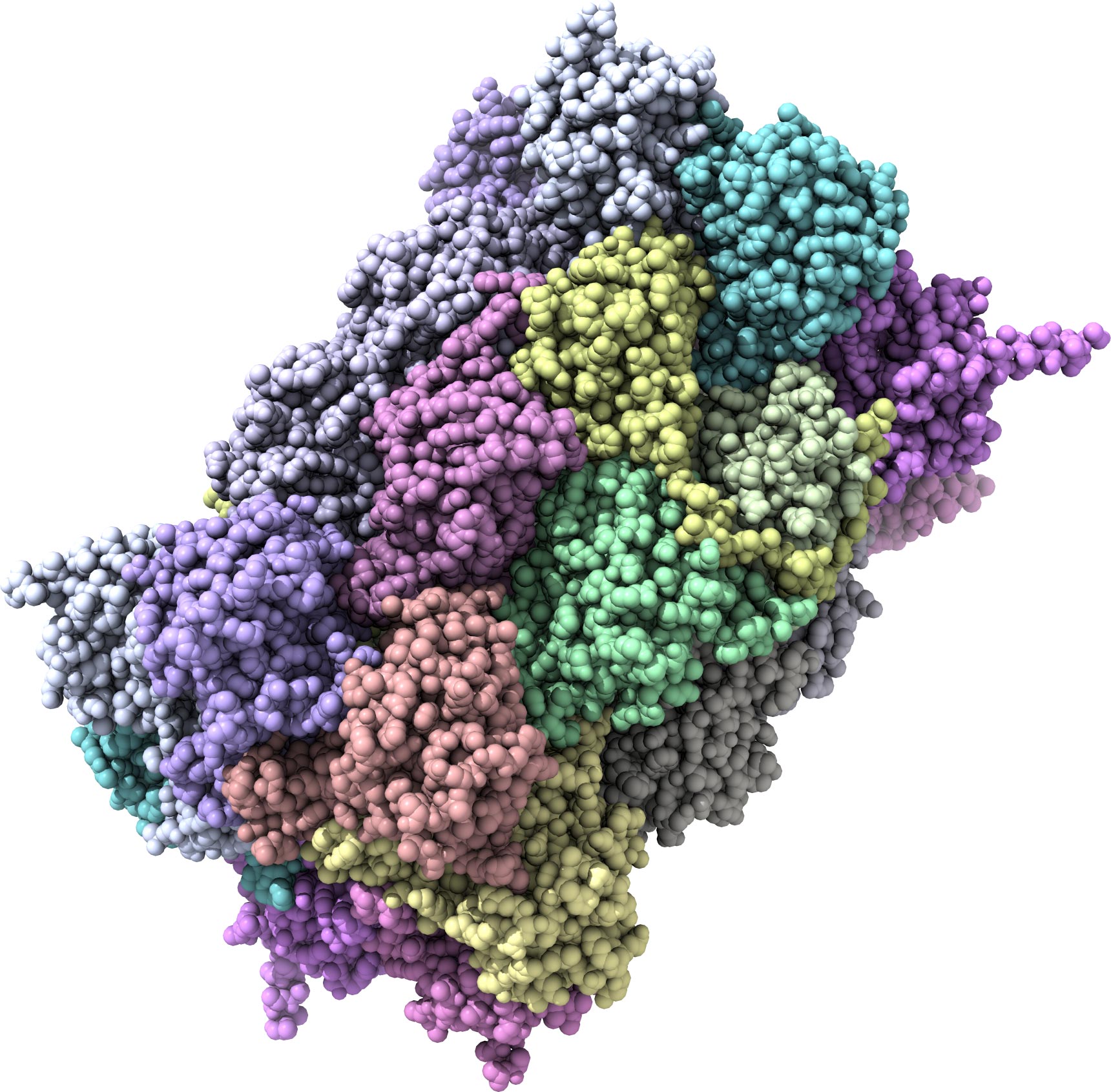
More than 200 proteins were misfolded in the cognitively impaired rats yet maintained their shapes in the cognitively healthy rats. The findings suggest that some of those proteins are contributing to cognitive decline, the researchers said.
Misfolded proteins are unable to carry out tasks necessary for a cell to function properly, so cells have a natural surveillance system that identifies and destroys these misbehaving proteins. Previously, researchers thought misfolded proteins—specifically A-beta and tau proteins—were only disruptive when they clumped into amyloids.
Escaping Detection: A Cellular Mystery
“We think there are a lot of proteins that can be misfolded, not form amyloids, and still be problematic,” Fried said. “And that suggests these misfolded proteins have ways of escaping this surveillance system in the cell.”
But exactly how those misfolded proteins slip past a cell’s security system remains a mystery.
Next, the team plans to look at misfolded proteins under high-resolution microscopes to get a more detailed picture of what their deformities look like at the molecular level.
Toward Better Treatments and Understanding
“A lot of us have experienced a loved one or a relative who has become less capable of doing those everyday tasks that require cognitive abilities,” Fried said. “Understanding what’s physically going on in the brain could lead to better treatments and preventive measures.”
Reference: “Proteins with cognition-associated structural changes in a rat model of aging exhibit reduced refolding capacity” by Haley E. Tarbox, Audrey Branch and Stephen D. Fried, 11 July 2025, Science Advances.
DOI: 10.1126/sciadv.adt3778
Funding: U.S. National Science Foundation, NIH/National Institutes of Health, Camille Dreyfus Teacher-Scholar Award, Alfred P. Sloan Foundation, Longevity Impetus Grants
Never miss a breakthrough: Join the SciTechDaily newsletter.
Follow us on Google and Google News.