
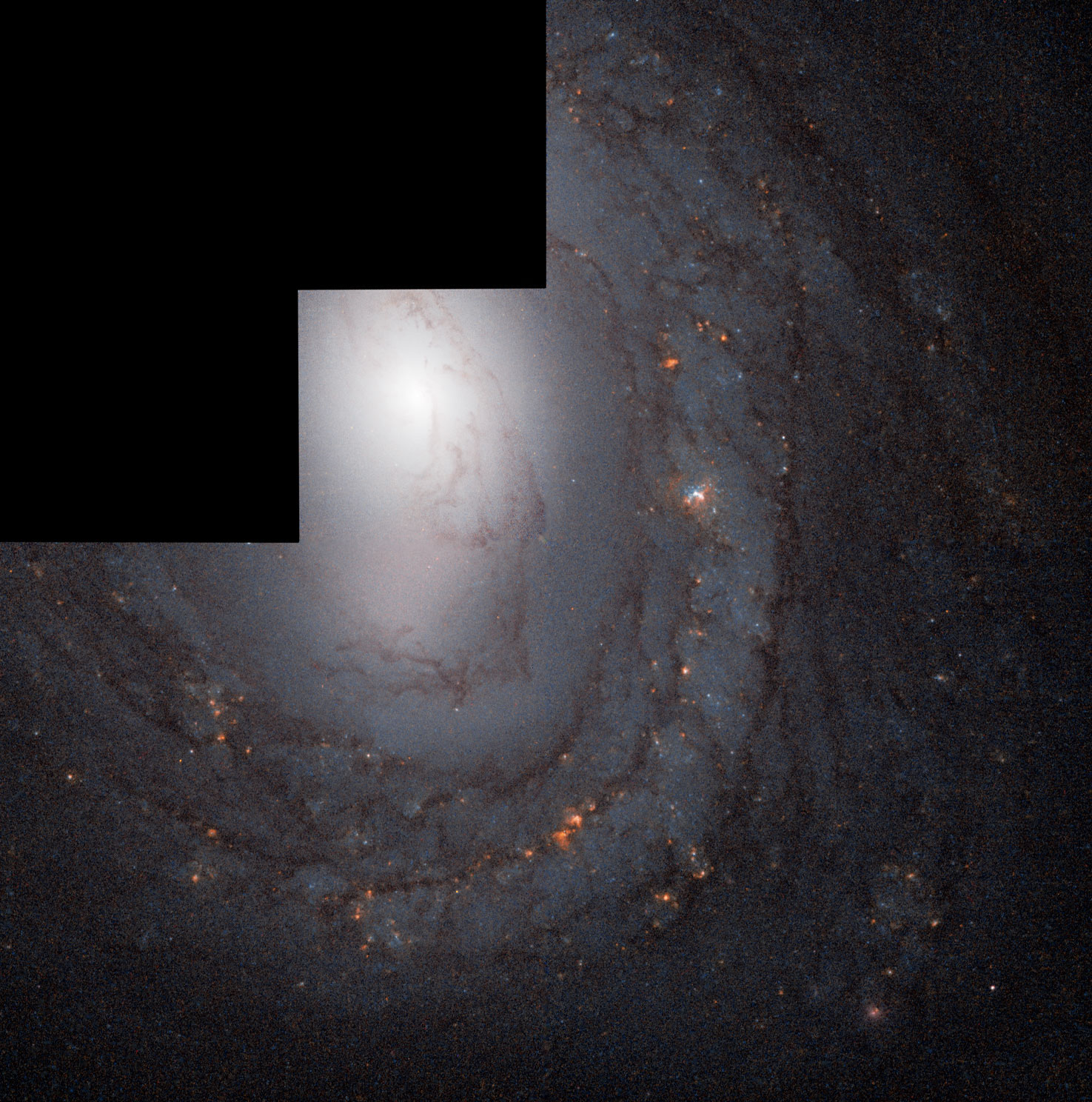
Although it appears bright, M58’s core is relatively dim compared to other spiral galaxies. The core contains high rates of star formation, known as starburst activity. It also houses a supermassive black hole around 70 million times the mass of our Sun. A very small ring around the galaxy’s nucleus, known as an ultra-compact nuclear ring, is a main region of widespread starburst activity in M58 and is a rare phenomenon among galaxies.
Long arms extend out from the galaxy’s bright nucleus. However, a lack of hydrogen means that there is very little star formation activity in the arms. This could be the result of gravitational interactions with the nearby galaxies of the Virgo cluster. Two supernovas have been detected in M58, one in 1988 and the other in 1989.
The best time to view M58 is in May. With a magnitude of 9.8, the galaxy is best observed with an 8-inch or larger telescope, but it can be seen with large binoculars on clear nights as well. Small telescopes will only reveal the galaxy’s core.
This Hubble observation was taken in ultraviolet and visible light using the Wide Field and Planetary Camera 2. The image’s stair-step appearance results from the design of the camera. It shows about half of M58, with the galaxy’s core and arms filling the image. Hubble took these observations of M58 to study the properties of its nucleus (classified as a LINER, or low-ionization nuclear emission-line region) and compare it with active galactic nuclei in the centers of other galaxies.
The Hubble Space Telescope has not produced images of every object in the Messier catalog, it has observed 93 of them as of February 2018. Scroll down to see all 12 of Hubble’s newly released Messier images.
Some of Hubble’s photographs offer views of a given object in its entirety, but many focus on specific areas of interest. While Hubble is able to magnify objects very effectively, it has a relatively small field of view. This means that, in some cases, Hubble would need to take many exposures to capture an entire object. Although this is not always an efficient use of its time, as is the case for the widely spaced “open” star clusters in the Messier catalog, many exposures are taken when the scientific value justifies the time spent. One of these objects is the Andromeda galaxy (designated M31 in Messier’s catalog). In order to create a mosaic image that depicts almost half of Andromeda, Hubble has taken nearly 7,400 exposures of the galaxy.
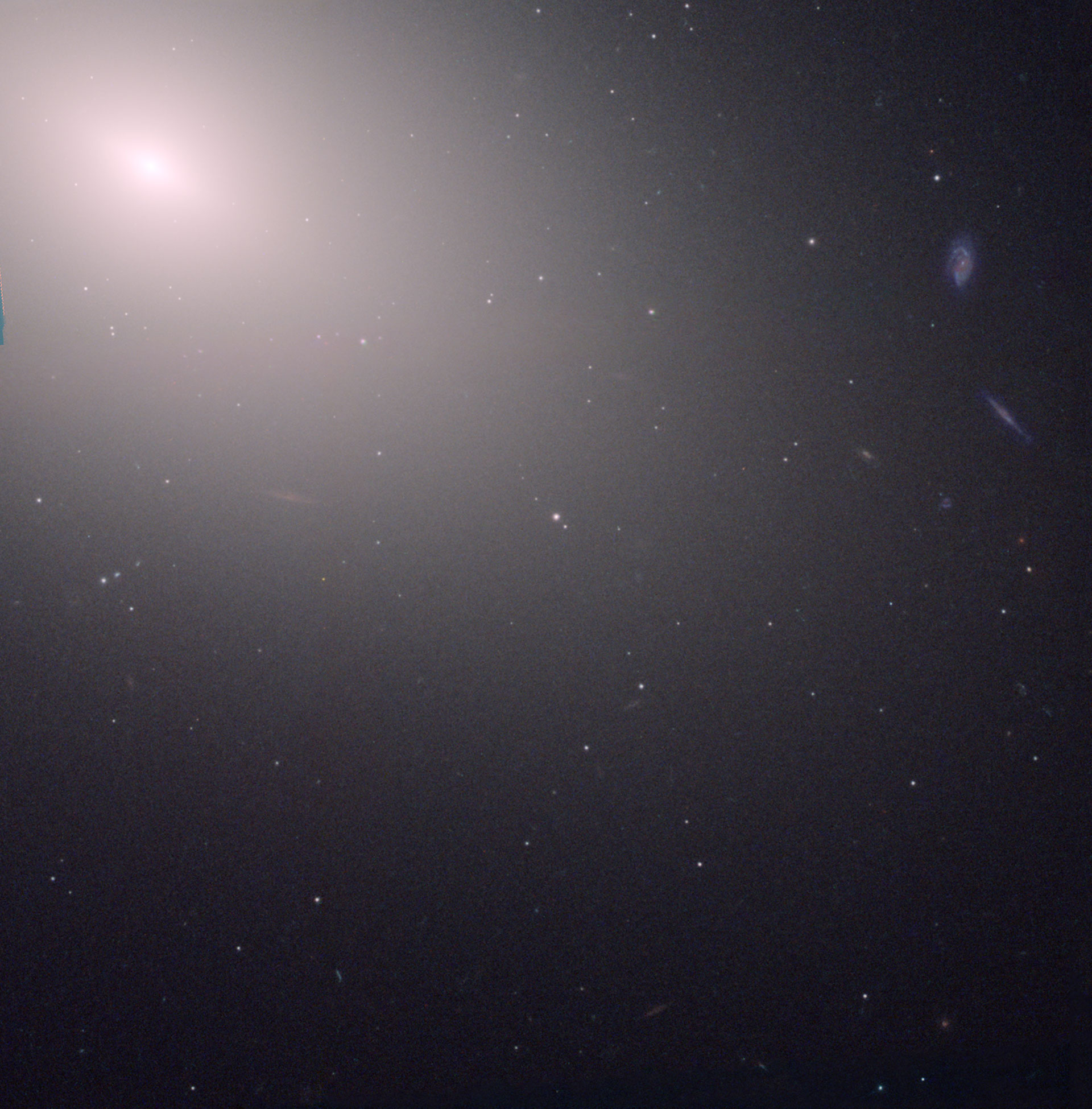
A supermassive black hole around 270 million times as massive as the Sun resides at the center of M59. The galaxy also has an inner disk of stars and around 2,200 globular clusters, an exceptionally high number of such clusters. The central region of the galaxy, the inner 200 light-years, rotates in the opposite direction than the rest of the galaxy and is the smallest region in a galaxy known to exhibit this behavior.
Approximately 60 million light-years from Earth, M59 can be found near M58 and M60 in the constellation Virgo. It is best seen in May. Small telescopes might reveal an ellipsoidal shape with a bright center, but even larger scopes do not reveal much detail.
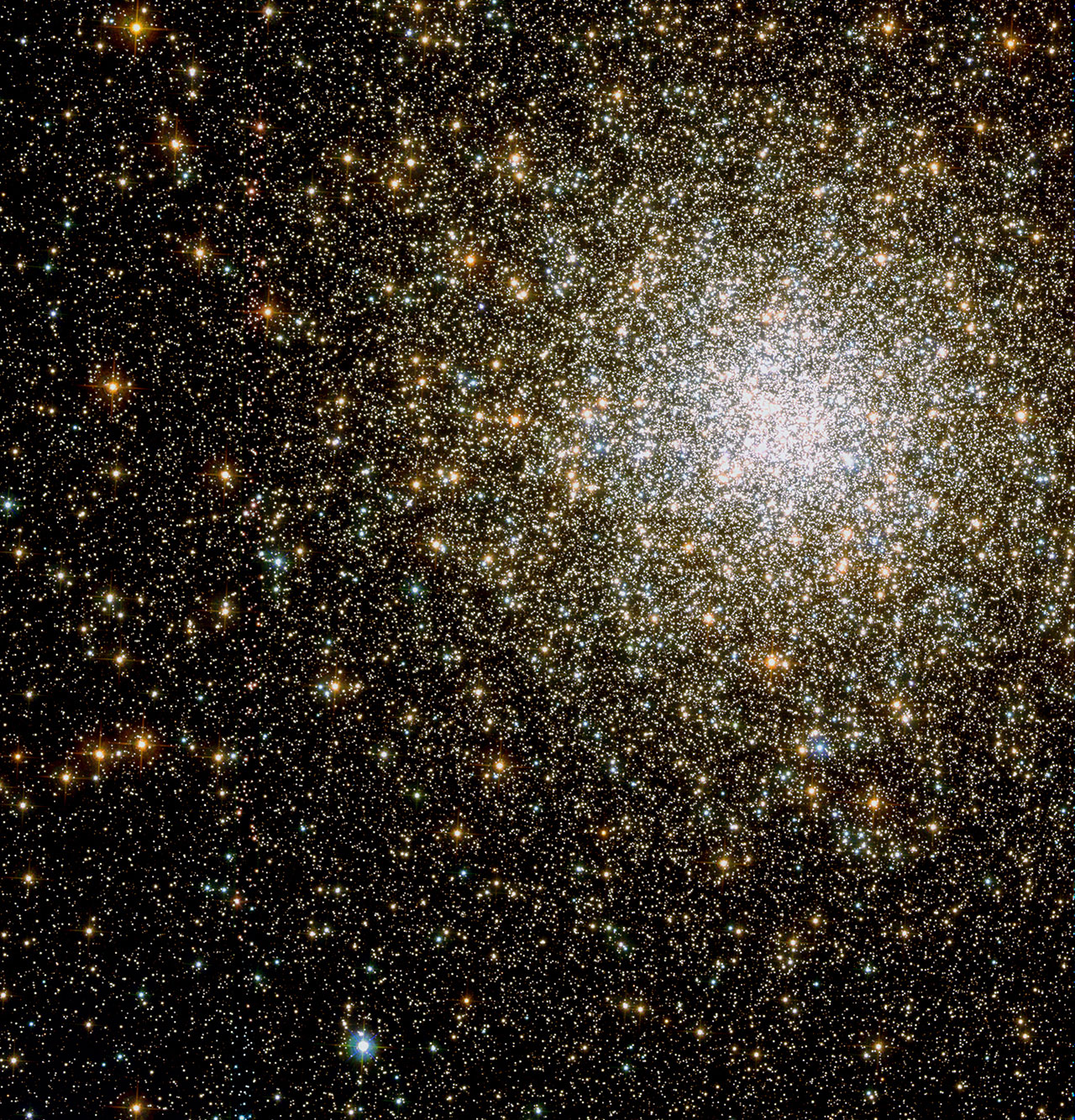
M62 has an extremely dense core of 150,000 stars. In 2007, astronomers discovered a stellar-mass black hole in M62, one of the first to ever be found in a globular cluster. According to observations from NASA’s Chandra X-ray Observatory, M62 also contains a large number of X-ray binaries, which formed in close encounters between stars in the cluster.
This Hubble observation was taken in ultraviolet and visible light using the Advanced Camera for Surveys and Wide Field Camera 3. Most of the globular cluster is featured in this observation, with the core focused toward the top right. Hubble made these observations to help astronomers study the characteristics of globular clusters, measure the mass of M62’s black hole, and help determine the formation and evolution of cluster binaries.
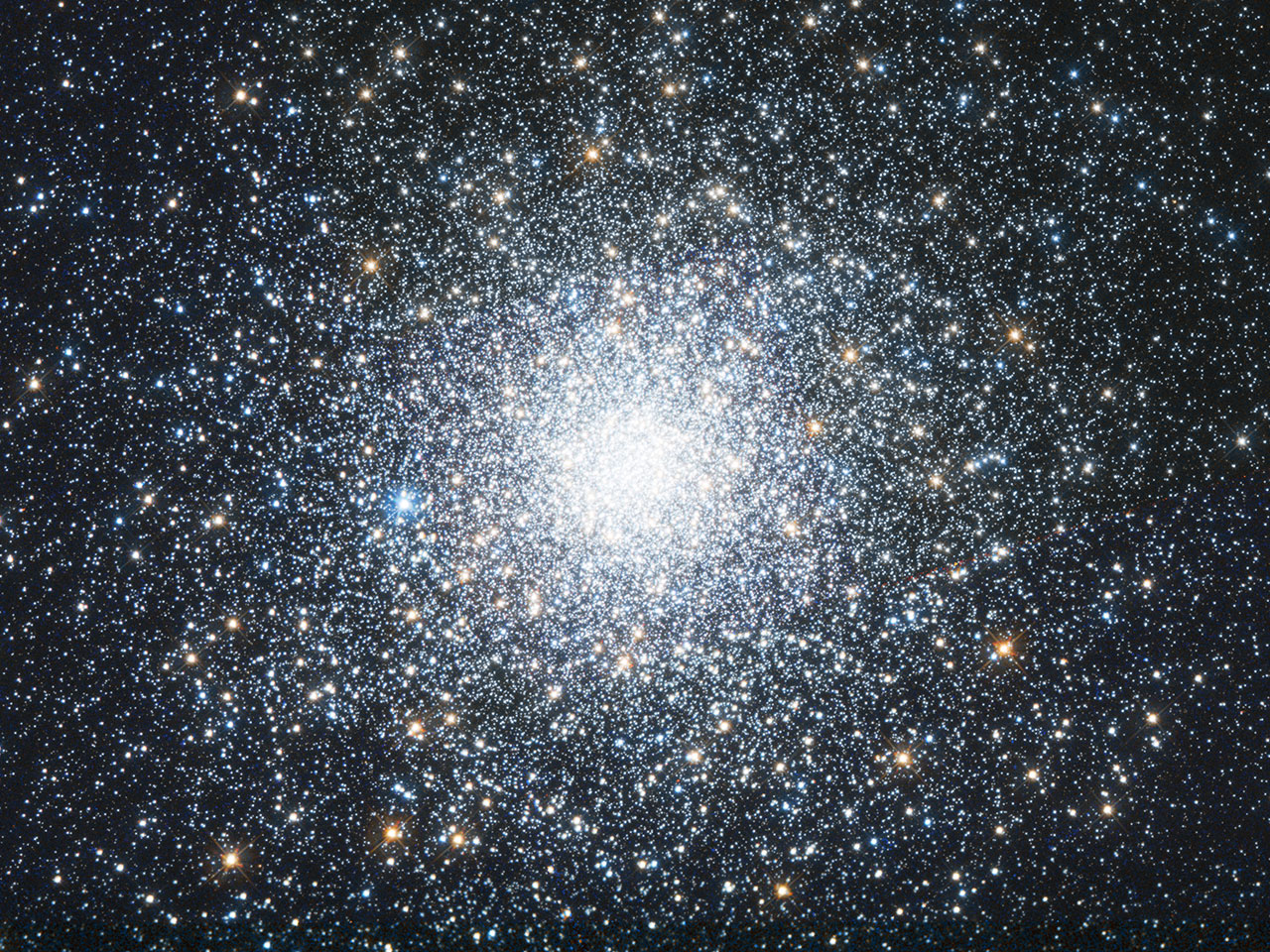
M75 is the most centrally concentrated globular cluster in Messier’s catalog, with the majority of its stars located in a large nucleus. In total, there are about 400,000 stars in the globular cluster. M75 is believed to be around 13 billion years old and sits approximately 67,500 light-years away from Earth.
Located in the western part of Sagittarius, M75 has a magnitude of 8.6. The cluster is surprisingly easy to see in binoculars and telescopes thanks to it being extremely condensed in the center. However, because of its compact nature, M75 can barely be distinguished from a star when viewed in binoculars. Telescopes that are 10 inches across or larger are needed to resolve some of the stars in the cluster. August is the best month to observe M75.
This Hubble image of M75 is a composite of observations taken in near-infrared and visible light using the Wide Field and Planetary Camera 2 and the Wide Field Camera 3. The image features the bright central core of M75 and its surrounding stars. The Hubble observations were made to help astronomers better understand the stellar populations in globular clusters and to investigate the clusters’ potential for harboring central, intermediate-mass black holes (with approximately one hundred to one million times the mass of our Sun).
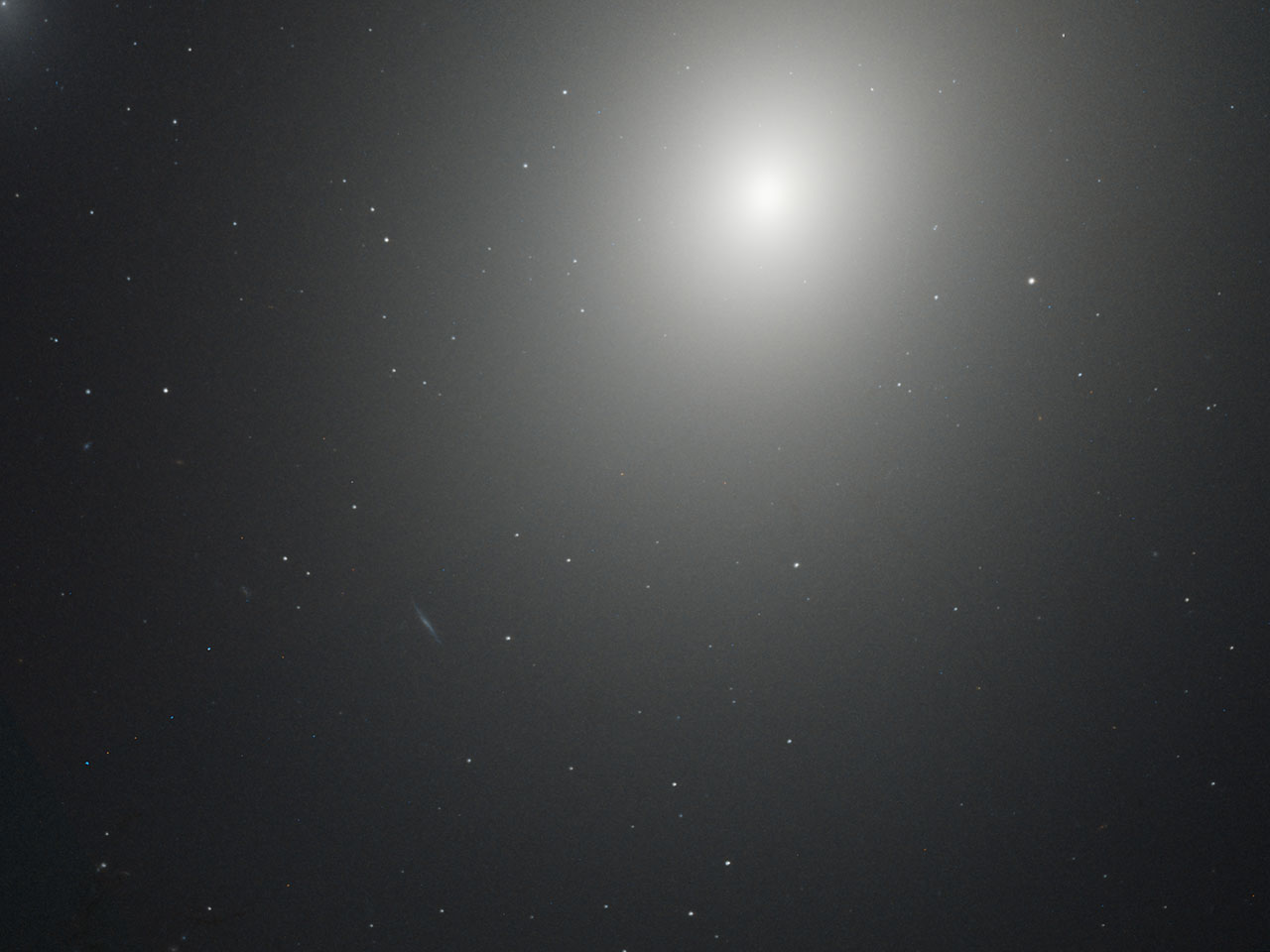
M86 was discovered in 1781 by Charles Messier and is one of the brightest members of the Virgo cluster of galaxies. It contains approximately 3,800 globular clusters.
While the majority of the Virgo cluster is receding from the Milky Way, M86 is getting closer to our galaxy. This is because M86 is located on the far side of the Virgo cluster from us and is moving toward the center of the cluster. Of all the galaxies in Messier’s catalog, M86 is moving the fastest in our direction but is still approximately 52 million light-years away from Earth.
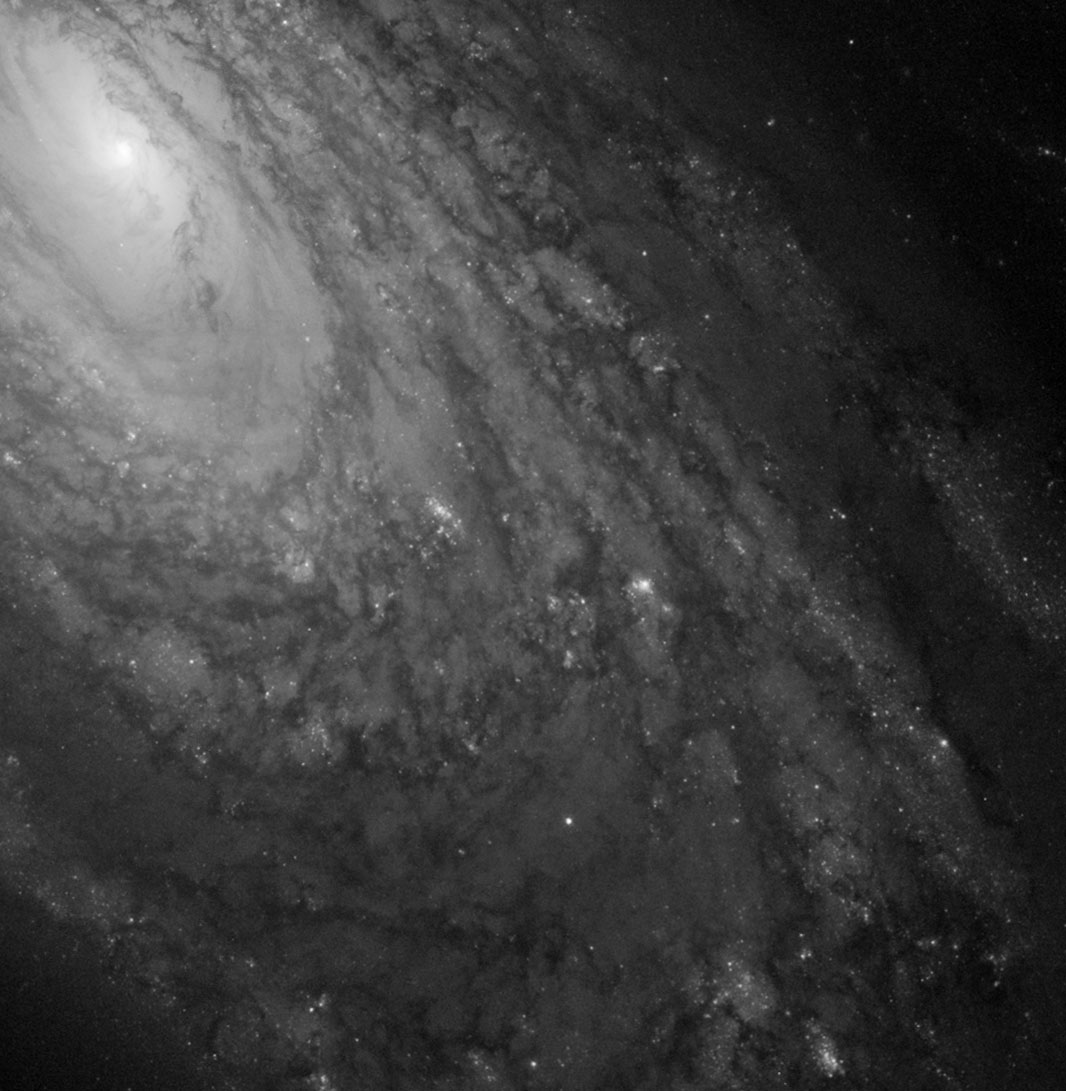
M88 contains an active galactic nucleus, meaning the central region of the galaxy is more luminous than the rest of the galaxy. At the galaxy’s core resides a supermassive black hole estimated to be 100 million times more massive than our Sun. M88 contains around 400 billion stars and is traveling away from our galaxy.
Charles Messier discovered M88 in 1781 on the same night that he discovered eight other Messier objects. Today, it can be observed with binoculars under clear viewing conditions. Smaller telescopes will reveal an elongated object with a brighter core, while larger telescopes will unveil further details, such as a more defined core. M88 has a magnitude of 9.5 and is best observed in May.
This Hubble observation was taken using the Wide Field and Planetary Camera 2 with a single visible-light filter. With Hubble, observations in multiple filters are needed to produce color images, so this image is in black and white only. Nearly half of the galaxy is shown in this Hubble view. Hubble took these observations as part of a survey of spiral galaxies to better assess the properties of spiral galaxies, including their galactic cores, their globular cluster populations, and the occurrence of multiple and off-centered nuclei.
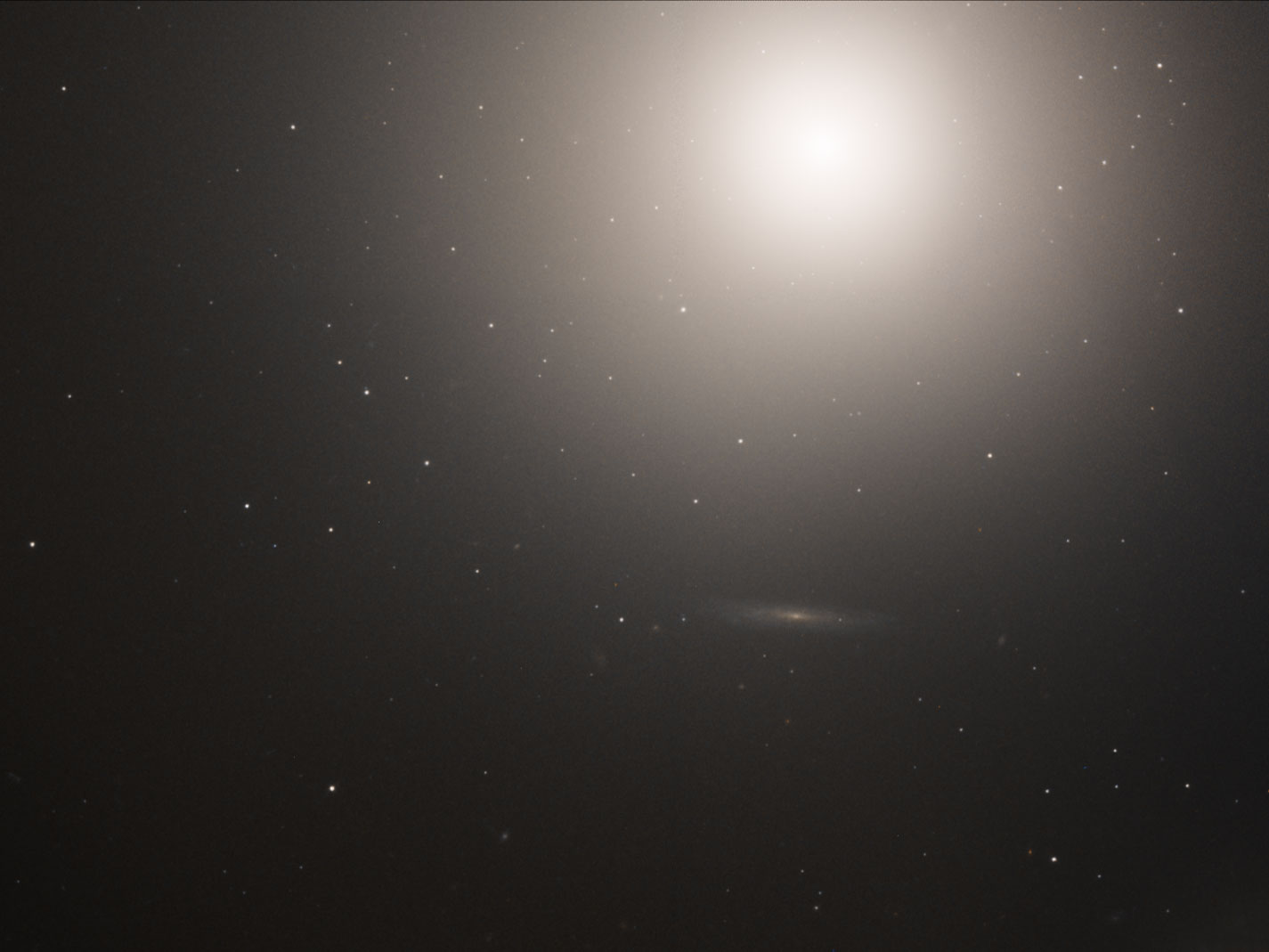
M89 contains approximately 100 billion stars and well over 2,000 globular clusters. It was the first galaxy discovered to have an extended envelope, which means that it has a larger region of light surrounding it than other elliptical galaxies, most likely because of its high number of stars and globular clusters. At the center of M89 is a supermassive black hole estimated to have one billion times the mass of our Sun.
This image combines Hubble observations of M89 taken in near-infrared and visible light using the Wide Field and Planetary Camera 2. It features most of the galaxy, with M89’s bright central nucleus at the top right of the image and many of its globular clusters appearing as star-like points of light throughout the field. The image also captures a separate edge-on spiral galaxy below M89’s core. These Hubble observations were taken to help determine the structure and formation of elliptical galaxies, as well as searching for evidence of black holes in the hearts of these galaxies.
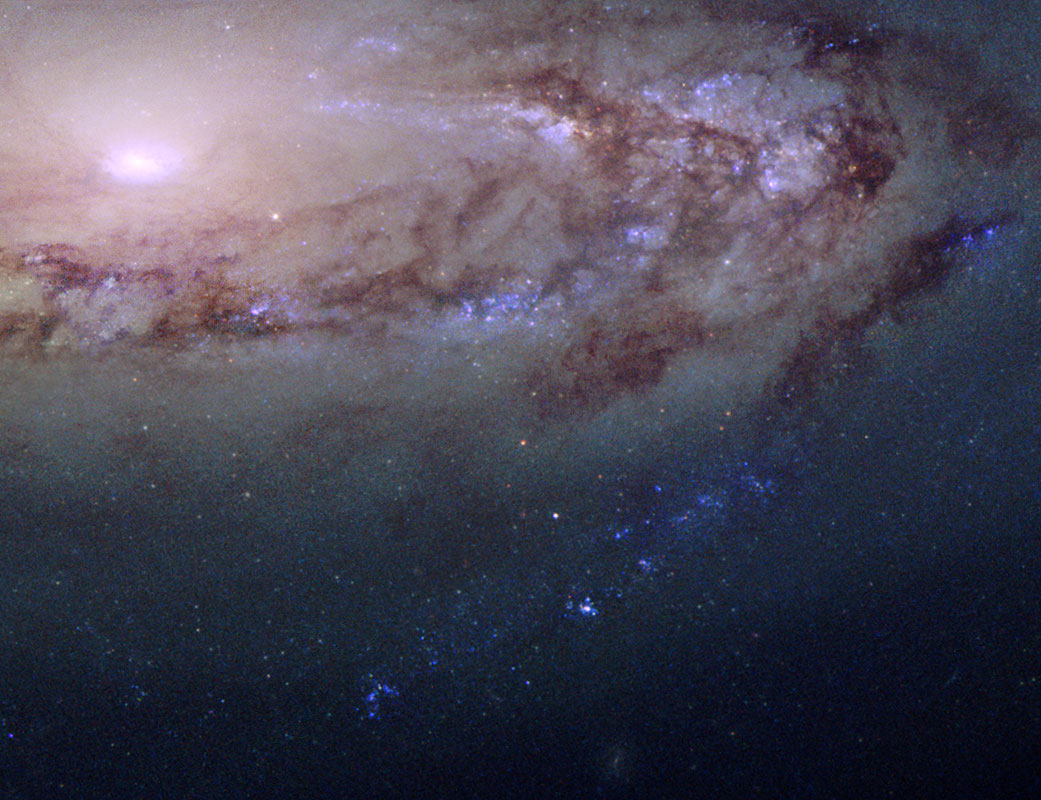
Charles Messier found M90 in 1781 while looking at other galaxies in the Virgo cluster. M90 contains approximately a trillion stars and a thousand globular clusters. With the exception of the inner disk region, the galaxy’s arms contain very little star formation. Interactions with neighboring galaxies likely stripped away the gas and material that M90 needs to have active star formation in its outer regions. In the future, M90 is expected to evolve into a lenticular galaxy, which is a galaxy that has qualities of both a spiral and an elliptical galaxy.
This Hubble observation was taken in infrared, ultraviolet and visible light with the telescope’s Wide Field and Planetary Camera 2. Less than half of the galaxy is visible in this image. Astronomers used these Hubble observations to help study the properties of galactic bulges and the cores of nearby galaxies.
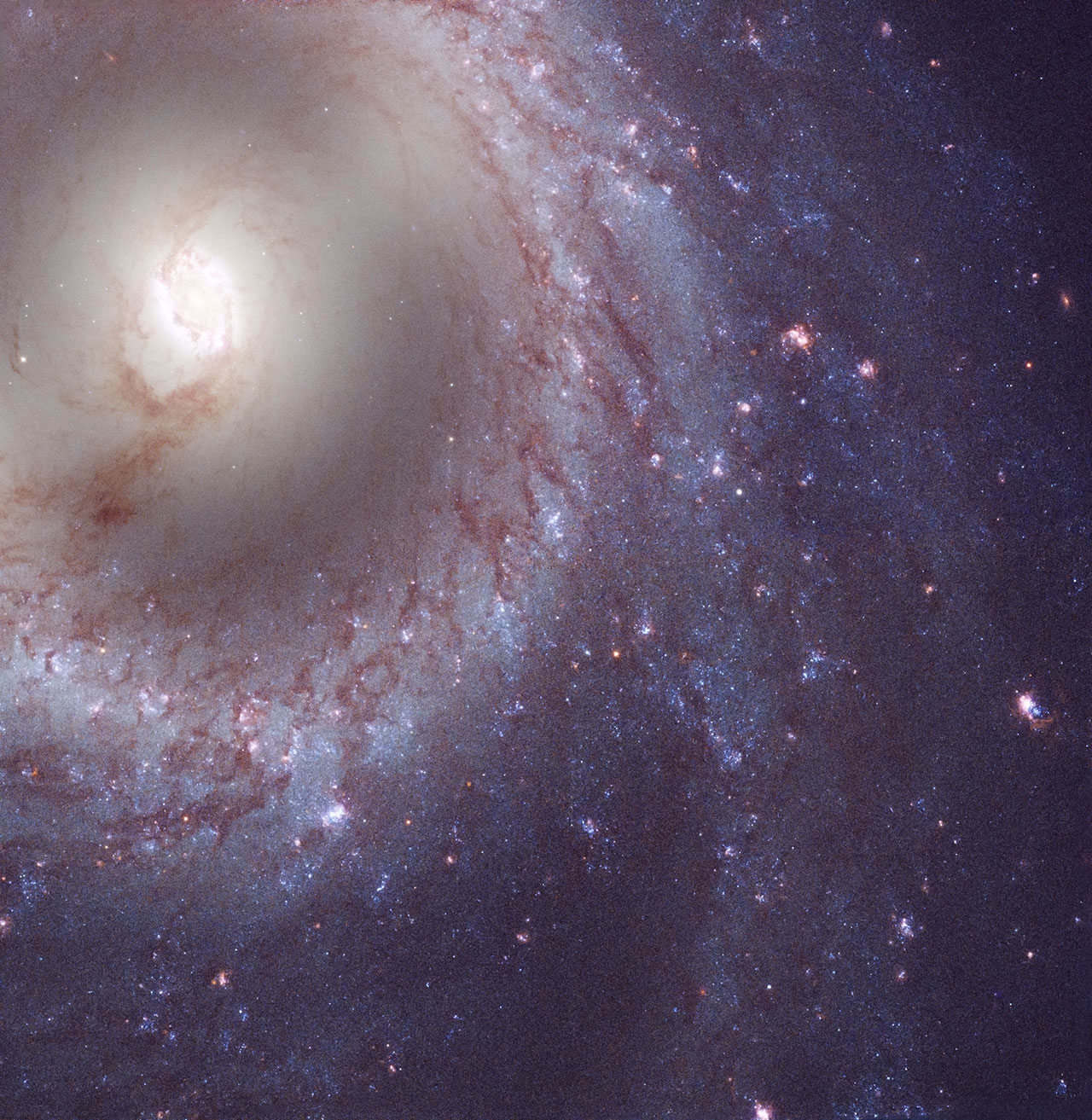
This Hubble observation reveals a section of M95 featuring its central bar of stars in the upper left and one of its spiral arms extending to the lower right. The observations were taken in near-infrared, visible and ultraviolet wavelengths of light with Hubble’s Advanced Camera for Surveys and Wide Field Camera 3. Hubble took these observations of M95 to better understand star formation in nearby galaxies.
M95 is located approximately 33 million light-years away and has a magnitude of 9.7. It has around 40 billion stars. Its spiral arms host a flurry of star birth activity and sparkle with the light of countless young, blue stars. The arms themselves are very tightly wound around the galaxy’s core and are nearly circular.
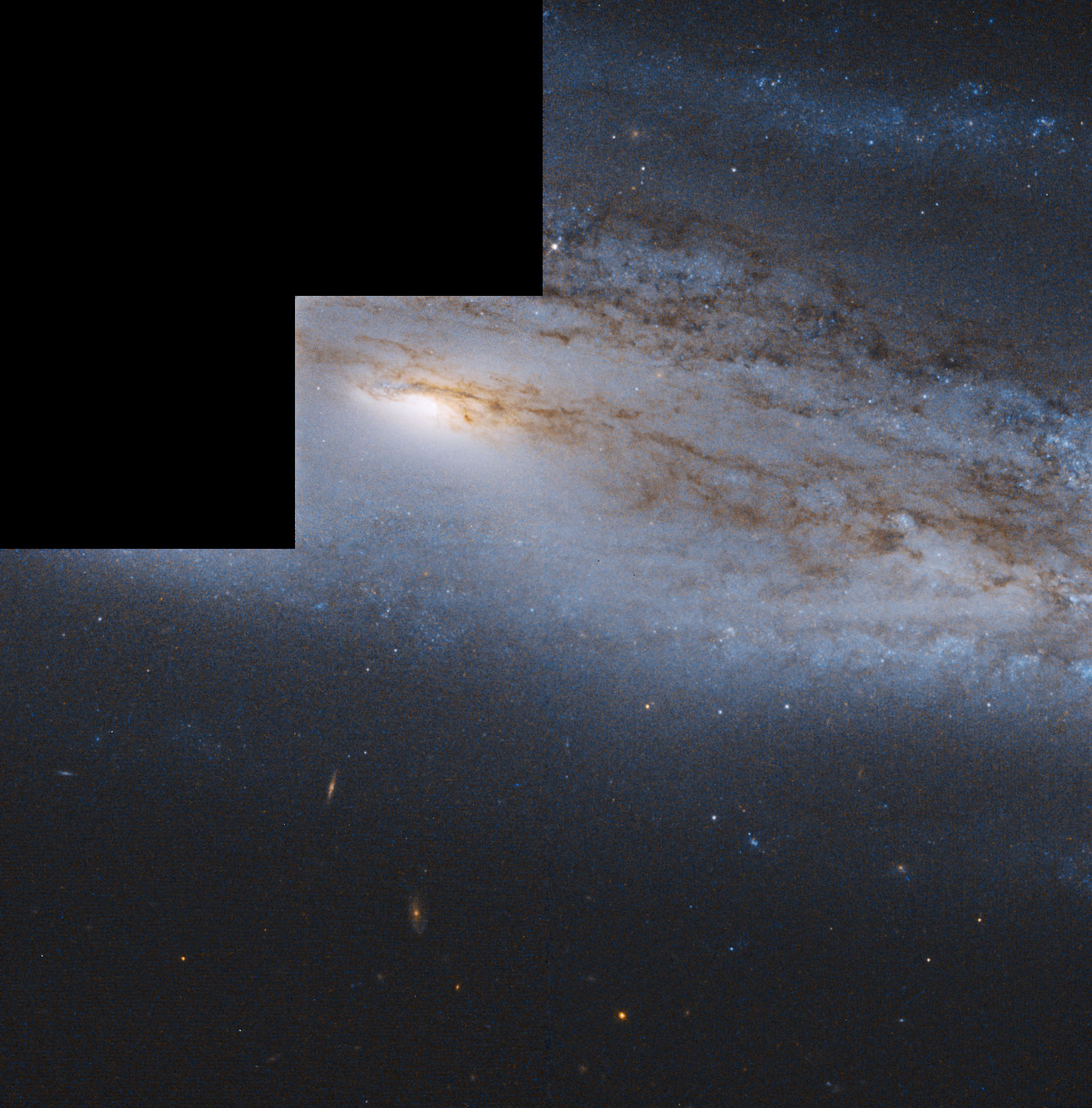
M98 contains about a trillion stars as well as an abundance of neutral hydrogen gas and interstellar dust. Because of the high amounts of gas and dust, there are numerous star-forming regions in the galaxy, especially in its nucleus and arms. The nucleus itself is “active,” meaning that the center of the galaxy is more luminous than the rest of the galaxy. M98 is located approximately 44 million light-years away and is traveling toward our Milky Way galaxy.
M98 was discovered in 1781 by Pierre Méchain, a colleague of Charles Messier, and is one of the faintest objects in Messier’s catalog. It has a magnitude of 10.1, and observers will need at least a medium-sized telescope to see M98 well. The best time to observe this galaxy is in May.
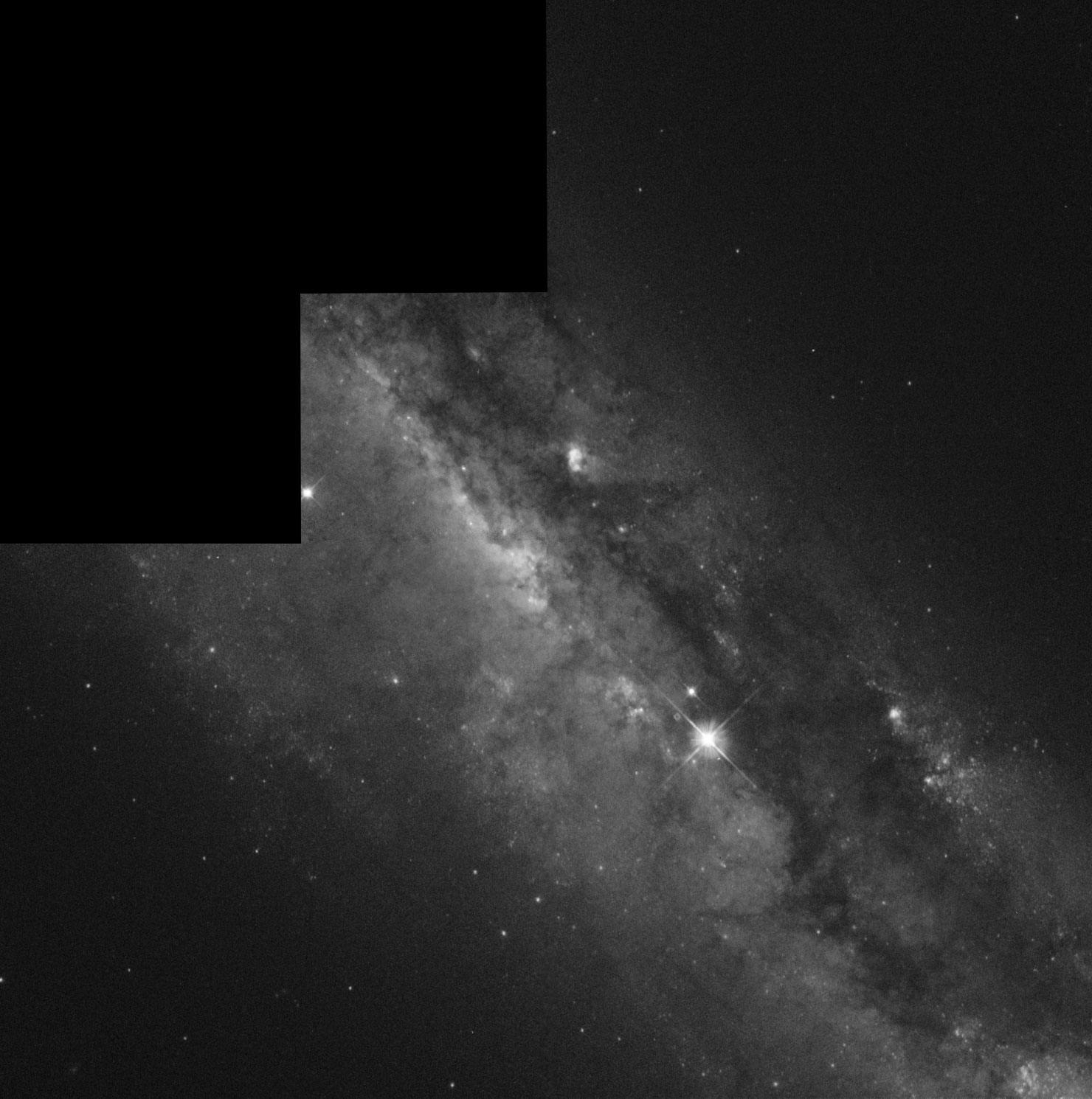
M108 was discovered by Pierre Méchain in 1781 three days after he discovered M97. Charles Messier’s notes state that he observed the galaxy in 1781 but never took an accurate position of it or officially added it to his catalog. M108 was finally added to Messier’s catalog in 1953 by astronomer Owen Gingerich.
There is little evidence of a well-defined spiral pattern in the galaxy, but M108 is classified as a barred spiral galaxy with loosely wound spiral arms. Observations show young star clusters exposed against a mottled and detail-rich background. M108 also contains supershells, which are shells of gas driven by bursts of star formation and resulting supernova explosions. The supershells could also be driven by stellar jets or an infall of gas from outside the galaxy.
At the center of M108 is a supermassive black hole estimated to be 24 million times as massive as the Sun. The Chandra X-ray Observatory discovered multiple X-ray sources in M108, with the brightest X-ray source suspected to be an intermediately sized black hole that is actively accreting material.
M108 is one of the largest and brightest members of the Ursa Major cluster, as well as part of the Virgo supercluster of galaxies. It has a magnitude of 10 and is located just under the bowl of the Big Dipper. M108 can be seen with small telescopes as an elliptical streak of light with a brighter core, while telescopes 8 inches or larger will reveal more detail. The best time to observe M108 is in April, but it can be seen throughout the year for those in the Northern Hemisphere.
This Hubble image was taken using the Wide Field and Planetary Camera 2 and features only a portion of the galaxy. Its stair-step appearance results from the design of the camera, and because Hubble’s observations were taken in only one filter, it is in black and white. The observations were taken to help astronomers understand various features in the nuclei of nearby disk galaxies.
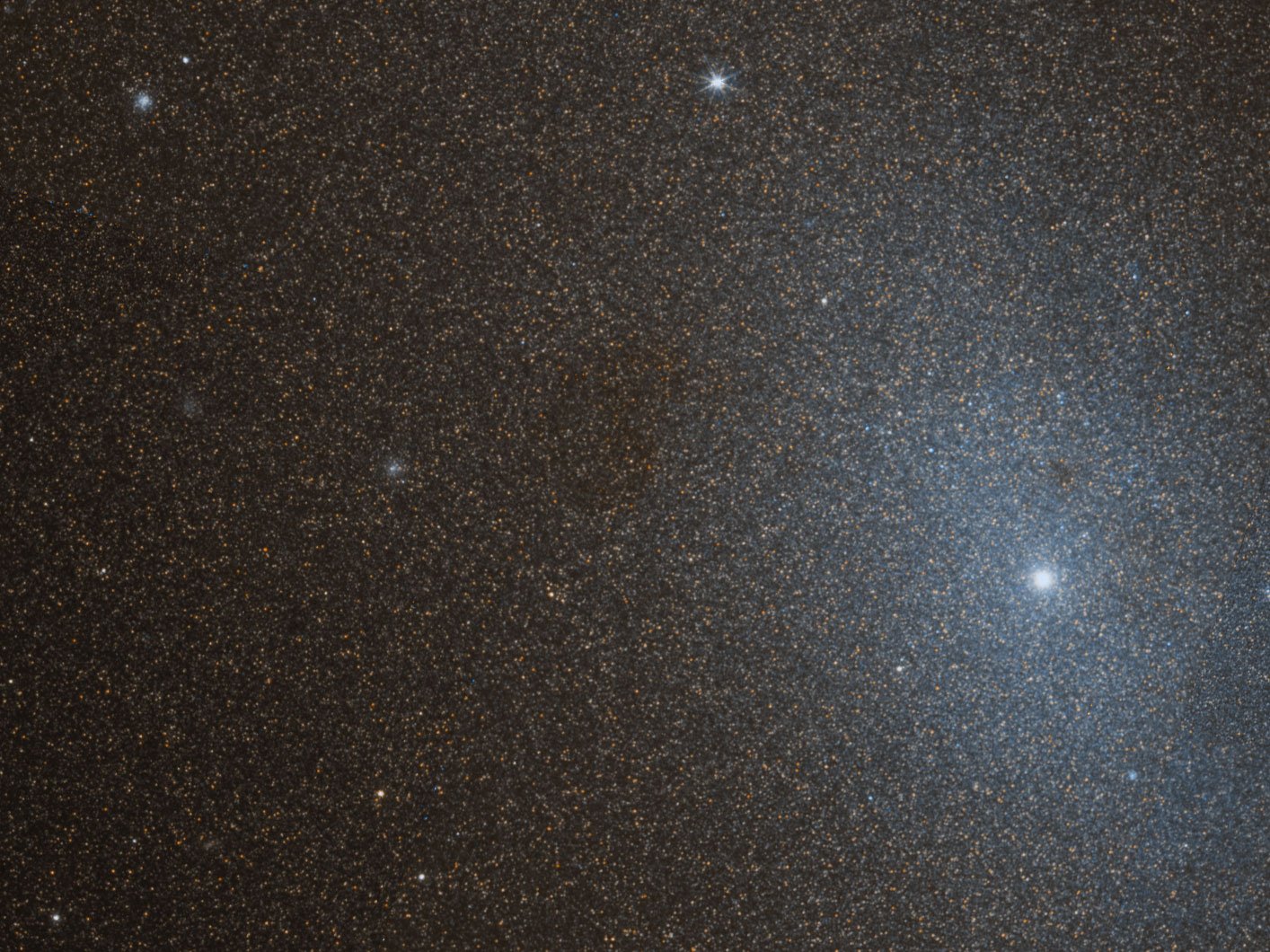
M110 is an elliptical galaxy, which means that it has a smooth and nearly featureless structure. Elliptical galaxies do not have arms or regions of star formation. They are oftentimes considered “dead” compared to spiral galaxies, and the stars in elliptical galaxies are often older than those in other galaxies. However, there is evidence that a population of young blue stars exists at the center of M110. This small elliptical galaxy has approximately 10 billion stars, as well as at least eight globular clusters (the brightest of which can be seen with large telescopes).
This Hubble observation was taken in visible and near-infrared light with the Wide Field and Planetary Camera 2. The core of M110 is seen toward the lower right of the image, with the galaxy’s globular clusters and numerous stars shown as points of light throughout the frame. Also featured in this Hubble image are large clouds of gas and dust, seen as dark splotches (one large region is located near the middle of the image and another, smaller one appears above the galaxy’s core). Hubble took these observations of M110 to study the development of globular clusters located in the galaxy.
Never miss a breakthrough: Join the SciTechDaily newsletter.
Follow us on Google and Google News.
5 Comments
+
Fantastic!
Thanks to NASA and Hubble team. These images are mind blowing…I had to close my eyes to save my brain resisting the views and the magnanimity of the images.
Truly tremendous
These Hubble images should be added to the next addition of the photo album book of GALAXIES
Isro
Chandaryaan2 3D images https://www.sarthtya.tech/2019/11/chandaryaan2-chandaryaan2-send-their.html?m=1